Shiva Kavacham
वज्रदंष्ट्रं त्रिनयनं कालकण्ठमरिन्दमम् । सहस्रकरमत्युग्रं वन्दे शम्भुमुमापतिम् ॥Also known as Amogha Shiva Kavacham
In Devanagari, Tamil, Telugu, Kannada, Malayalam and English — with the meaning of every word, and the one syllable most people pronounce wrongly.
 A reading of your birth chartBook →
What the Shiva Kavacham is
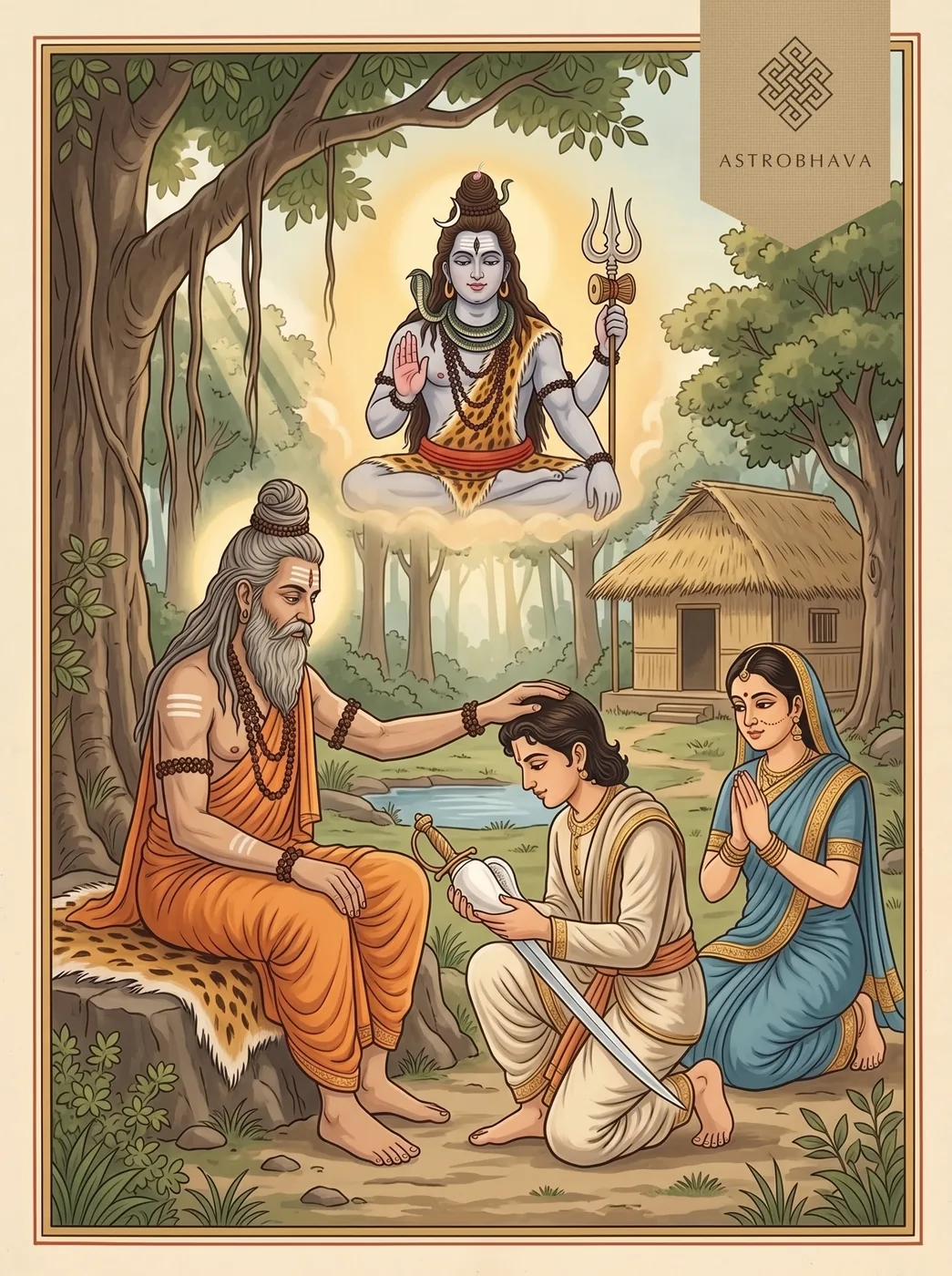
The Shiva Kavacham, printed in many editions as the Amogha Shiva Kavacham, is the armour of Shiva that the yogi Rishabha teaches the young prince Bhadrayu in the twelfth chapter of the Brahmottara Khanda of the Skanda Purana. Three meditation verses come first: Shiva as Uma's fierce, dark-throated consort, the devotee marked with ash and rudraksha, and Rishabha's promise to reveal a secret of the Puranas. The armour proper runs to 27 verses. After an inner meditation on Shiva in the lotus of the heart, he is asked to guard against earth, water, fire and storm. Verses 9 to 13 post his five faces at east, south, west, north and overhead, verses 14 to 18 guard the body from crown to feet, and the rest cover each watch of day and night, every posture, roads, forests and enemy armies. A long prose mantra of salutations and commands follows, and sixteen closing verses finish the episode.
The poisoned prince Rishabha brought back
According to the Skanda Purana, Sumati, senior queen of King Vajrabahu of Dasharna, was secretly poisoned by her co-wives while she was carrying her child. Mother and son survived, but both were covered in sores no physician could heal, and the king, partial to his other wives, had his charioteer leave them deep in the forest. Sumati wandered until she reached a town of merchants, where its leading merchant, Padmakara, took her in, honoured her as his own mother and kept her in a private apartment. The boy still died of his wounds. As she grieved, the Shiva yogi Rishabha, whom she had once served, arrived, placed ash charged with Shiva's mantras in the child's mouth and restored his breath, then healed both of them with the same ash. He named the boy Bhadrayu and foretold that he would win back his lost kingdom. When the prince turned sixteen, Rishabha returned, gave him a long lesson on a ruler's conduct, and then taught this armour. The next chapter tells how Hemaratha, king of Magadha, seized Dasharna and captured Vajrabahu, and how Bhadrayu, carrying the sword and conch and protected by the armour, routed the invaders and freed the father who had cast him out. On Rishabha's advice he later married Kirtimalini, daughter of Simantini, whose Monday vow fills the earlier chapters of the same book.
The mantra, in six scripts
- वज्रदंष्ट्रं
- vajradaṃṣṭraṃ — with adamantine fangs
- त्रिनयनं
- trinayanaṃ — three-eyed
- कालकण्ठमरिन्दमम्
- kālakaṇṭhamarindamam — dark-throated, subduer of foes
- सहस्रकरमत्युग्रं
- sahasrakaramatyugraṃ — thousand-armed, exceedingly fierce
- वन्दे
- vande — I bow to
- शम्भुमुमापतिम्
- śambhumumāpatim — Shambhu, consort of Uma
Shiva Kavacham lyrics in full
Three meditation verses, the 27-verse armour, the three-part prose mantra and sixteen closing verses that end the Bhadrayu episode.
All 49 verses, in Sanskrit, Tamil, Telugu, Kannada, Malayalam and English, each with its meaning. Choose a script:
Download the Shiva Kavacham PDFAll 49 verses with their meanings, in Sanskrit. Free to print and keep.
वज्रदंष्ट्रं त्रिनयनं कालकण्ठमरिन्दमम् ।
सहस्रकरमत्युग्रं वन्दे शम्भुमुमापतिम् ॥
வஜ்ரதம்ஷ்ட்ரம் த்ரிநயநம் காலகண்டமரிந்தமம் ।
ஸஹஸ்ரகரமத்யுக்ரம் வந்தே ஶம்புமுமாபதிம் ॥
వజ్రదంష్ట్రం త్రినయనం కాలకణ్ఠమరిన్దమమ్ ।
సహస్రకరమత్యుగ్రం వన్దే శమ్భుముమాపతిమ్ ॥
ವಜ್ರದಂಷ್ಟ್ರಂ ತ್ರಿನಯನಂ ಕಾಲಕಣ್ಠಮರಿನ್ದಮಮ್ ।
ಸಹಸ್ರಕರಮತ್ಯುಗ್ರಂ ವನ್ದೇ ಶಮ್ಭುಮುಮಾಪತಿಮ್ ॥
വജ്രദംഷ്ട്രം ത്രിനയനം കാലകണ്ഠമരിന്ദമമ് ।
സഹസ്രകരമത്യുഗ്രം വന്ദേ ശമ്ഭുമുമാപതിമ് ॥
vajradaṃṣṭraṃ trinayanaṃ kālakaṇṭhamarindamam |
sahasrakaramatyugraṃ vande śambhumumāpatim ||
I bow to Shambhu, the consort of Uma, with adamantine fangs and three eyes, dark-throated, the subduer of foes, thousand-armed and exceedingly fierce.
रुद्राक्षकङ्कणलसत्करदण्डयुग्मः पालान्तरालसितभस्मधृतत्रिपुण्ड्रः ।
पञ्चाक्षरं परिपठन् वरमन्त्रराजं ध्यायन् सदा पशुपतिं शरणं व्रजेथाः ॥
ருத்ராக்ஷகங்கணலஸத்கரதண்டயுக்மஃ பாலாந்தராலஸிதபஸ்மத்ருதத்ரிபுண்ட்ரஃ ।
பஞ்சாக்ஷரம் பரிபடந் வரமந்த்ரராஜம் த்யாயந் ஸதா பஶுபதிம் ஶரணம் வ்ரஜேதாஃ ॥
రుద్రాక్షకఙ్కణలసత్కరదణ్డయుగ్మః పాలాన్తరాలసితభస్మధృతత్రిపుణ్డ్రః ।
పఞ్చాక్షరం పరిపఠన్ వరమన్త్రరాజం ధ్యాయన్ సదా పశుపతిం శరణం వ్రజేథాః ॥
ರುದ್ರಾಕ್ಷಕಙ್ಕಣಲಸತ್ಕರದಣ್ಡಯುಗ್ಮಃ ಪಾಲಾನ್ತರಾಲಸಿತಭಸ್ಮಧೃತತ್ರಿಪುಣ್ಡ್ರಃ ।
ಪಞ್ಚಾಕ್ಷರಂ ಪರಿಪಠನ್ ವರಮನ್ತ್ರರಾಜಂ ಧ್ಯಾಯನ್ ಸದಾ ಪಶುಪತಿಂ ಶರಣಂ ವ್ರಜೇಥಾಃ ॥
രുദ്രാക്ഷകങ്കണലസത്കരദണ്ഡയുഗ്മഃ പാലാന്തരാലസിതഭസ്മധൃതത്രിപുണ്ഡ്രഃ ।
പഞ്ചാക്ഷരം പരിപഠന് വരമന്ത്രരാജം ധ്യായന് സദാ പശുപതിം ശരണം വ്രജേഥാഃ ॥
rudrākṣakaṅkaṇalasatkaradaṇḍayugmaḥ pālāntarālasitabhasmadhṛtatripuṇḍraḥ |
pañcākṣaraṃ paripaṭhan varamantrarājaṃ dhyāyan sadā paśupatiṃ śaraṇaṃ vrajethāḥ ||
With rudraksha bracelets shining on both forearms and the three lines of white ash drawn across the forehead, reciting the five-syllable king of mantras, meditate always on Pashupati and take refuge in him.
अतः परं सर्वपुराणगुह्यं निःशेषपापौघहरं पवित्रम् ।
जयप्रदं सर्वविपत्प्रमोचनं वक्ष्यामि शैवं कवचं हिताय ते ॥
அதஃ பரம் ஸர்வபுராணகுஹ்யம் நிஃஶேஷபாபௌகஹரம் பவித்ரம் ।
ஜயப்ரதம் ஸர்வவிபத்ப்ரமோசநம் வக்ஷ்யாமி ஶைவம் கவசம் ஹிதாய தே ॥
అతః పరం సర్వపురాణగుహ్యం నిఃశేషపాపౌఘహరం పవిత్రమ్ ।
జయప్రదం సర్వవిపత్ప్రమోచనం వక్ష్యామి శైవం కవచం హితాయ తే ॥
ಅತಃ ಪರಂ ಸರ್ವಪುರಾಣಗುಹ್ಯಂ ನಿಃಶೇಷಪಾಪೌಘಹರಂ ಪವಿತ್ರಮ್ ।
ಜಯಪ್ರದಂ ಸರ್ವವಿಪತ್ಪ್ರಮೋಚನಂ ವಕ್ಷ್ಯಾಮಿ ಶೈವಂ ಕವಚಂ ಹಿತಾಯ ತೇ ॥
അതഃ പരം സര്വപുരാണഗുഹ്യം നിഃശേഷപാപൌഘഹരം പവിത്രമ് ।
ജയപ്രദം സര്വവിപത്പ്രമോചനം വക്ഷ്യാമി ശൈവം കവചം ഹിതായ തേ ॥
ataḥ paraṃ sarvapurāṇaguhyaṃ niḥśeṣapāpaughaharaṃ pavitram |
jayapradaṃ sarvavipatpramocanaṃ vakṣyāmi śaivaṃ kavacaṃ hitāya te ||
Next, for your good, I shall tell you the armour of Shiva: the secret of all the Puranas, pure, removing the whole flood of sins, granting victory and releasing from every calamity.
नमस्कृत्य महादेवं विश्वव्यापिनमीश्वरम् ।
वक्ष्ये शिवमयं वर्म सर्वरक्षाकरं नृणाम् ॥
நமஸ்க்ருத்ய மஹாதேவம் விஶ்வவ்யாபிநமீஶ்வரம் ।
வக்ஷ்யே ஶிவமயம் வர்ம ஸர்வரக்ஷாகரம் ந்ருணாம் ॥
నమస్కృత్య మహాదేవం విశ్వవ్యాపినమీశ్వరమ్ ।
వక్ష్యే శివమయం వర్మ సర్వరక్షాకరం నృణామ్ ॥
ನಮಸ್ಕೃತ್ಯ ಮಹಾದೇವಂ ವಿಶ್ವವ್ಯಾಪಿನಮೀಶ್ವರಮ್ ।
ವಕ್ಷ್ಯೇ ಶಿವಮಯಂ ವರ್ಮ ಸರ್ವರಕ್ಷಾಕರಂ ನೃಣಾಮ್ ॥
നമസ്കൃത്യ മഹാദേവം വിശ്വവ്യാപിനമീശ്വരമ് ।
വക്ഷ്യേ ശിവമയം വര്മ സര്വരക്ഷാകരം നൃണാമ് ॥
namaskṛtya mahādevaṃ viśvavyāpinamīśvaram |
vakṣye śivamayaṃ varma sarvarakṣākaraṃ nṛṇām ||
Rishabha said: Bowing to Mahadeva, the Lord who pervades the universe, I shall describe the armour made of Shiva, which gives people protection in every way.
शुचौ देशे समासीनो यथावत्कल्पितासनः ।
जितेन्द्रियो जितप्राणश्चिन्तयेच्छिवमव्ययम् ॥
ஶுசௌ தேஶே ஸமாஸீநோ யதாவத்கல்பிதாஸநஃ ।
ஜிதேந்த்ரியோ ஜிதப்ராணஶ்சிந்தயேச்சிவமவ்யயம் ॥
శుచౌ దేశే సమాసీనో యథావత్కల్పితాసనః ।
జితేన్ద్రియో జితప్రాణశ్చిన్తయేచ్ఛివమవ్యయమ్ ॥
ಶುಚೌ ದೇಶೇ ಸಮಾಸೀನೋ ಯಥಾವತ್ಕಲ್ಪಿತಾಸನಃ ।
ಜಿತೇನ್ದ್ರಿಯೋ ಜಿತಪ್ರಾಣಶ್ಚಿನ್ತಯೇಚ್ಛಿವಮವ್ಯಯಮ್ ॥
ശുചൌ ദേശേ സമാസീനോ യഥാവത്കല്പിതാസനഃ ।
ജിതേന്ദ്രിയോ ജിതപ്രാണശ്ചിന്തയേച്ഛിവമവ്യയമ് ॥
śucau deśe samāsīno yathāvatkalpitāsanaḥ |
jitendriyo jitaprāṇaścintayecchivamavyayam ||
Seated in a clean place on a properly prepared seat, with the senses mastered and the breath controlled, one should meditate on the imperishable Shiva.
हृत्पुण्डरीकान्तरसन्निविष्टं स्वतेजसा व्याप्तनभोऽवकाशम् ।
अतीन्द्रियं सूक्ष्ममनन्तमाद्यं ध्यायेत्परानन्दमयं महेशम् ॥
ஹ்ருத்புண்டரீகாந்தரஸந்நிவிஷ்டம் ஸ்வதேஜஸா வ்யாப்தநபோவகாஶம் ।
அதீந்த்ரியம் ஸூக்ஷ்மமநந்தமாத்யம் த்யாயேத்பராநந்தமயம் மஹேஶம் ॥
హృత్పుణ్డరీకాన్తరసన్నివిష్టం స్వతేజసా వ్యాప్తనభోఽవకాశమ్ ।
అతీన్ద్రియం సూక్ష్మమనన్తమాద్యం ధ్యాయేత్పరానన్దమయం మహేశమ్ ॥
ಹೃತ್ಪುಣ್ಡರೀಕಾನ್ತರಸನ್ನಿವಿಷ್ಟಂ ಸ್ವತೇಜಸಾ ವ್ಯಾಪ್ತನಭೋಽವಕಾಶಮ್ ।
ಅತೀನ್ದ್ರಿಯಂ ಸೂಕ್ಷ್ಮಮನನ್ತಮಾದ್ಯಂ ಧ್ಯಾಯೇತ್ಪರಾನನ್ದಮಯಂ ಮಹೇಶಮ್ ॥
ഹൃത്പുണ്ഡരീകാന്തരസന്നിവിഷ്ടം സ്വതേജസാ വ്യാപ്തനഭോഽവകാശമ് ।
അതീന്ദ്രിയം സൂക്ഷ്മമനന്തമാദ്യം ധ്യായേത്പരാനന്ദമയം മഹേശമ് ॥
hṛtpuṇḍarīkāntarasanniviṣṭaṃ svatejasā vyāptanabho'vakāśam |
atīndriyaṃ sūkṣmamanantamādyaṃ dhyāyetparānandamayaṃ maheśam ||
One should meditate on Mahesha, seated within the lotus of the heart, who fills the expanse of the sky with his own radiance, beyond the senses, subtle, endless, the first, made of supreme bliss.
ध्यानावधूताखिलकर्मबन्धश्चिरं चिदानन्दनिमग्नचेताः ।
षडक्षरन्याससमाहितात्मा शैवेन कुर्यात्कवचेन रक्षाम् ॥
த்யாநாவதூதாகிலகர்மபந்தஶ்சிரம் சிதாநந்தநிமக்நசேதாஃ ।
ஷடக்ஷரந்யாஸஸமாஹிதாத்மா ஶைவேந குர்யாத்கவசேந ரக்ஷாம் ॥
ధ్యానావధూతాఖిలకర్మబన్ధశ్చిరం చిదానన్దనిమగ్నచేతాః ।
షడక్షరన్యాససమాహితాత్మా శైవేన కుర్యాత్కవచేన రక్షామ్ ॥
ಧ್ಯಾನಾವಧೂತಾಖಿಲಕರ್ಮಬನ್ಧಶ್ಚಿರಂ ಚಿದಾನನ್ದನಿಮಗ್ನಚೇತಾಃ ।
ಷಡಕ್ಷರನ್ಯಾಸಸಮಾಹಿತಾತ್ಮಾ ಶೈವೇನ ಕುರ್ಯಾತ್ಕವಚೇನ ರಕ್ಷಾಮ್ ॥
ധ്യാനാവധൂതാഖിലകര്മബന്ധശ്ചിരം ചിദാനന്ദനിമഗ്നചേതാഃ ।
ഷഡക്ഷരന്യാസസമാഹിതാത്മാ ശൈവേന കുര്യാത്കവചേന രക്ഷാമ് ॥
dhyānāvadhūtākhilakarmabandhaściraṃ cidānandanimagnacetāḥ |
ṣaḍakṣaranyāsasamāhitātmā śaivena kuryātkavacena rakṣām ||
Having shaken off all the bonds of karma through meditation, the mind long immersed in the bliss of consciousness, and the self composed by placing the six syllables on the body, one should make protection with the armour of Shiva.
मां पातु देवोऽखिलदेवतात्मा संसारकूपे पतितं गभीरे ।
तन्नाम दिव्यं वरमन्त्रमूलं धुनोतु मे सर्वमघं हृदिस्थम् ॥
மாம் பாது தேவோகிலதேவதாத்மா ஸம்ஸாரகூபே பதிதம் கபீரே ।
தந்நாம திவ்யம் வரமந்த்ரமூலம் துநோது மே ஸர்வமகம் ஹ்ருதிஸ்தம் ॥
మాం పాతు దేవోఽఖిలదేవతాత్మా సంసారకూపే పతితం గభీరే ।
తన్నామ దివ్యం వరమన్త్రమూలం ధునోతు మే సర్వమఘం హృదిస్థమ్ ॥
ಮಾಂ ಪಾತು ದೇವೋಽಖಿಲದೇವತಾತ್ಮಾ ಸಂಸಾರಕೂಪೇ ಪತಿತಂ ಗಭೀರೇ ।
ತನ್ನಾಮ ದಿವ್ಯಂ ವರಮನ್ತ್ರಮೂಲಂ ಧುನೋತು ಮೇ ಸರ್ವಮಘಂ ಹೃದಿಸ್ಥಮ್ ॥
മാം പാതു ദേവോഽഖിലദേവതാത്മാ സംസാരകൂപേ പതിതം ഗഭീരേ ।
തന്നാമ ദിവ്യം വരമന്ത്രമൂലം ധുനോതു മേ സര്വമഘം ഹൃദിസ്ഥമ് ॥
māṃ pātu devo'khiladevatātmā saṃsārakūpe patitaṃ gabhīre |
tannāma divyaṃ varamantramūlaṃ dhunotu me sarvamaghaṃ hṛdistham ||
May the God who is the self of all the gods protect me, fallen into the deep well of worldly existence. May his divine name, the root of the finest mantras, shake off all the sin lodged in my heart.
सर्वत्र मां रक्षतु विश्वमूर्तिर्ज्योतिर्मयानन्दघनश्चिदात्मा ।
अणोरणीयानुरुशक्तिरेकः स ईश्वरः पातु भयादशेषात् ॥
ஸர்வத்ர மாம் ரக்ஷது விஶ்வமூர்திர்ஜ்யோதிர்மயாநந்தகநஶ்சிதாத்மா ।
அணோரணீயாநுருஶக்திரேகஃ ஸ ஈஶ்வரஃ பாது பயாதஶேஷாத் ॥
సర్వత్ర మాం రక్షతు విశ్వమూర్తిర్జ్యోతిర్మయానన్దఘనశ్చిదాత్మా ।
అణోరణీయానురుశక్తిరేకః స ఈశ్వరః పాతు భయాదశేషాత్ ॥
ಸರ್ವತ್ರ ಮಾಂ ರಕ್ಷತು ವಿಶ್ವಮೂರ್ತಿರ್ಜ್ಯೋತಿರ್ಮಯಾನನ್ದಘನಶ್ಚಿದಾತ್ಮಾ ।
ಅಣೋರಣೀಯಾನುರುಶಕ್ತಿರೇಕಃ ಸ ಈಶ್ವರಃ ಪಾತು ಭಯಾದಶೇಷಾತ್ ॥
സര്വത്ര മാം രക്ഷതു വിശ്വമൂര്തിര്ജ്യോതിര്മയാനന്ദഘനശ്ചിദാത്മാ ।
അണോരണീയാനുരുശക്തിരേകഃ സ ഈശ്വരഃ പാതു ഭയാദശേഷാത് ॥
sarvatra māṃ rakṣatu viśvamūrtirjyotirmayānandaghanaścidātmā |
aṇoraṇīyānuruśaktirekaḥ sa īśvaraḥ pātu bhayādaśeṣāt ||
May he whose form is the universe, made of light, dense with bliss, whose self is consciousness, guard me everywhere. May that Lord, the One, subtler than the atom yet of vast power, protect me from every fear.
यो भूस्वरूपेण बिभर्ति विश्वं पायात्स भूमेर्गिरिशोऽष्टमूर्तिः ।
योऽपां स्वरूपेण नृणां करोति सञ्जीवनं सोऽवतु मां जलेभ्यः ॥
யோ பூஸ்வரூபேண பிபர்தி விஶ்வம் பாயாத்ஸ பூமேர்கிரிஶோஷ்டமூர்திஃ ।
யோபாம் ஸ்வரூபேண ந்ருணாம் கரோதி ஸஞ்ஜீவநம் ஸோவது மாம் ஜலேப்யஃ ॥
యో భూస్వరూపేణ బిభర్తి విశ్వం పాయాత్స భూమేర్గిరిశోఽష్టమూర్తిః ।
యోఽపాం స్వరూపేణ నృణాం కరోతి సఞ్జీవనం సోఽవతు మాం జలేభ్యః ॥
ಯೋ ಭೂಸ್ವರೂಪೇಣ ಬಿಭರ್ತಿ ವಿಶ್ವಂ ಪಾಯಾತ್ಸ ಭೂಮೇರ್ಗಿರಿಶೋಽಷ್ಟಮೂರ್ತಿಃ ।
ಯೋಽಪಾಂ ಸ್ವರೂಪೇಣ ನೃಣಾಂ ಕರೋತಿ ಸಞ್ಜೀವನಂ ಸೋಽವತು ಮಾಂ ಜಲೇಭ್ಯಃ ॥
യോ ഭൂസ്വരൂപേണ ബിഭര്തി വിശ്വം പായാത്സ ഭൂമേര്ഗിരിശോഽഷ്ടമൂര്തിഃ ।
യോഽപാം സ്വരൂപേണ നൃണാം കരോതി സഞ്ജീവനം സോഽവതു മാം ജലേഭ്യഃ ॥
yo bhūsvarūpeṇa bibharti viśvaṃ pāyātsa bhūmergiriśo'ṣṭamūrtiḥ |
yo'pāṃ svarūpeṇa nṛṇāṃ karoti sañjīvanaṃ so'vatu māṃ jalebhyaḥ ||
May Girisha of the eight forms, who bears the world in the form of the earth, protect me from the earth. May he who in the form of the waters gives life to people protect me from the waters.
कल्पावसाने भुवनानि दग्ध्वा सर्वाणि यो नृत्यति भूरिलीलः ।
स कालरुद्रोऽवतु मां दवाग्नेर्वात्यादिभीतेरखिलाच्च तापात् ॥
கல்பாவஸாநே புவநாநி தக்த்வா ஸர்வாணி யோ ந்ருத்யதி பூரிலீலஃ ।
ஸ காலருத்ரோவது மாம் தவாக்நேர்வாத்யாதிபீதேரகிலாச்ச தாபாத் ॥
కల్పావసానే భువనాని దగ్ధ్వా సర్వాణి యో నృత్యతి భూరిలీలః ।
స కాలరుద్రోఽవతు మాం దవాగ్నేర్వాత్యాదిభీతేరఖిలాచ్చ తాపాత్ ॥
ಕಲ್ಪಾವಸಾನೇ ಭುವನಾನಿ ದಗ್ಧ್ವಾ ಸರ್ವಾಣಿ ಯೋ ನೃತ್ಯತಿ ಭೂರಿಲೀಲಃ ।
ಸ ಕಾಲರುದ್ರೋಽವತು ಮಾಂ ದವಾಗ್ನೇರ್ವಾತ್ಯಾದಿಭೀತೇರಖಿಲಾಚ್ಚ ತಾಪಾತ್ ॥
കല്പാവസാനേ ഭുവനാനി ദഗ്ധ്വാ സര്വാണി യോ നൃത്യതി ഭൂരിലീലഃ ।
സ കാലരുദ്രോഽവതു മാം ദവാഗ്നേര്വാത്യാദിഭീതേരഖിലാച്ച താപാത് ॥
kalpāvasāne bhuvanāni dagdhvā sarvāṇi yo nṛtyati bhūrilīlaḥ |
sa kālarudro'vatu māṃ davāgnervātyādibhīterakhilācca tāpāt ||
May Kalarudra, who at the end of the aeon burns all the worlds and dances in boundless play, protect me from forest fire, from the terror of storms and the like, and from every torment.
प्रदीप्तविद्युत्कनकावभासो विद्यावराभीतिकुठारपाणिः ।
चतुर्मुखस्तत्पुरुषस्त्रिनेत्रः प्राच्यां स्थितं रक्षतु मामजस्रम् ॥
ப்ரதீப்தவித்யுத்கநகாவபாஸோ வித்யாவராபீதிகுடாரபாணிஃ ।
சதுர்முகஸ்தத்புருஷஸ்த்ரிநேத்ரஃ ப்ராச்யாம் ஸ்திதம் ரக்ஷது மாமஜஸ்ரம் ॥
ప్రదీప్తవిద్యుత్కనకావభాసో విద్యావరాభీతికుఠారపాణిః ।
చతుర్ముఖస్తత్పురుషస్త్రినేత్రః ప్రాచ్యాం స్థితం రక్షతు మామజస్రమ్ ॥
ಪ್ರದೀಪ್ತವಿದ್ಯುತ್ಕನಕಾವಭಾಸೋ ವಿದ್ಯಾವರಾಭೀತಿಕುಠಾರಪಾಣಿಃ ।
ಚತುರ್ಮುಖಸ್ತತ್ಪುರುಷಸ್ತ್ರಿನೇತ್ರಃ ಪ್ರಾಚ್ಯಾಂ ಸ್ಥಿತಂ ರಕ್ಷತು ಮಾಮಜಸ್ರಮ್ ॥
പ്രദീപ്തവിദ്യുത്കനകാവഭാസോ വിദ്യാവരാഭീതികുഠാരപാണിഃ ।
ചതുര്മുഖസ്തത്പുരുഷസ്ത്രിനേത്രഃ പ്രാച്യാം സ്ഥിതം രക്ഷതു മാമജസ്രമ് ॥
pradīptavidyutkanakāvabhāso vidyāvarābhītikuṭhārapāṇiḥ |
caturmukhastatpuruṣastrinetraḥ prācyāṃ sthitaṃ rakṣatu māmajasram ||
May Tatpurusha, four-faced and three-eyed, shining like blazing lightning and gold, holding the book of knowledge, the gestures of boon and fearlessness, and an axe, guard me ceaselessly in the east.
कुठारवेदाङ्कुशपाशशूलकपालढक्काक्षगुणान्दधानः ।
चतुर्मुखो नीलरुचिस्त्रिनेत्रः पायादघोरो दिशि दक्षिणस्याम् ॥
குடாரவேதாங்குஶபாஶஶூலகபாலடக்காக்ஷகுணாந்ததாநஃ ।
சதுர்முகோ நீலருசிஸ்த்ரிநேத்ரஃ பாயாதகோரோ திஶி தக்ஷிணஸ்யாம் ॥
కుఠారవేదాఙ్కుశపాశశూలకపాలఢక్కాక్షగుణాన్దధానః ।
చతుర్ముఖో నీలరుచిస్త్రినేత్రః పాయాదఘోరో దిశి దక్షిణస్యామ్ ॥
ಕುಠಾರವೇದಾಙ್ಕುಶಪಾಶಶೂಲಕಪಾಲಢಕ್ಕಾಕ್ಷಗುಣಾನ್ದಧಾನಃ ।
ಚತುರ್ಮುಖೋ ನೀಲರುಚಿಸ್ತ್ರಿನೇತ್ರಃ ಪಾಯಾದಘೋರೋ ದಿಶಿ ದಕ್ಷಿಣಸ್ಯಾಮ್ ॥
കുഠാരവേദാങ്കുശപാശശൂലകപാലഢക്കാക്ഷഗുണാന്ദധാനഃ ।
ചതുര്മുഖോ നീലരുചിസ്ത്രിനേത്രഃ പായാദഘോരോ ദിശി ദക്ഷിണസ്യാമ് ॥
kuṭhāravedāṅkuśapāśaśūlakapālaḍhakkākṣaguṇāndadhānaḥ |
caturmukho nīlarucistrinetraḥ pāyādaghoro diśi dakṣiṇasyām ||
May Aghora, four-faced, dark blue in hue and three-eyed, holding an axe, the Veda, a goad, a noose, a trident, a skull, a drum and a rosary, protect me in the southern direction.
कुन्देन्दुशङ्खस्फटिकावभासो वेदाक्षमालावरदाभयाङ्कः ।
त्र्यक्षश्चतुर्वक्त्र उरुप्रभावः सद्योऽधिजातोऽवतु मां प्रतीच्याम् ॥
குந்தேந்துஶங்கஸ்படிகாவபாஸோ வேதாக்ஷமாலாவரதாபயாங்கஃ ।
த்ர்யக்ஷஶ்சதுர்வக்த்ர உருப்ரபாவஃ ஸத்யோதிஜாதோவது மாம் ப்ரதீச்யாம் ॥
కున్దేన్దుశఙ్ఖస్ఫటికావభాసో వేదాక్షమాలావరదాభయాఙ్కః ।
త్ర్యక్షశ్చతుర్వక్త్ర ఉరుప్రభావః సద్యోఽధిజాతోఽవతు మాం ప్రతీచ్యామ్ ॥
ಕುನ್ದೇನ್ದುಶಙ್ಖಸ್ಫಟಿಕಾವಭಾಸೋ ವೇದಾಕ್ಷಮಾಲಾವರದಾಭಯಾಙ್ಕಃ ।
ತ್ರ್ಯಕ್ಷಶ್ಚತುರ್ವಕ್ತ್ರ ಉರುಪ್ರಭಾವಃ ಸದ್ಯೋಽಧಿಜಾತೋಽವತು ಮಾಂ ಪ್ರತೀಚ್ಯಾಮ್ ॥
കുന്ദേന്ദുശങ്ഖസ്ഫടികാവഭാസോ വേദാക്ഷമാലാവരദാഭയാങ്കഃ ।
ത്ര്യക്ഷശ്ചതുര്വക്ത്ര ഉരുപ്രഭാവഃ സദ്യോഽധിജാതോഽവതു മാം പ്രതീച്യാമ് ॥
kundenduśaṅkhasphaṭikāvabhāso vedākṣamālāvaradābhayāṅkaḥ |
tryakṣaścaturvaktra uruprabhāvaḥ sadyo'dhijāto'vatu māṃ pratīcyām ||
May Sadyojata, gleaming like jasmine, the moon, the conch and crystal, marked with the Veda, the rosary and the gestures of boon and fearlessness, three-eyed, four-faced and mighty, protect me in the west.
वराक्षमालाभयटङ्कहस्तः सरोजकिञ्जल्कसमानवर्णः ।
त्रिलोचनश्चारुचतुर्मुखो मां पायादुदीच्यां दिशि वामदेवः ॥
வராக்ஷமாலாபயடங்கஹஸ்தஃ ஸரோஜகிஞ்ஜல்கஸமாநவர்ணஃ ।
த்ரிலோசநஶ்சாருசதுர்முகோ மாம் பாயாதுதீச்யாம் திஶி வாமதேவஃ ॥
వరాక్షమాలాభయటఙ్కహస్తః సరోజకిఞ్జల్కసమానవర్ణః ।
త్రిలోచనశ్చారుచతుర్ముఖో మాం పాయాదుదీచ్యాం దిశి వామదేవః ॥
ವರಾಕ್ಷಮಾಲಾಭಯಟಙ್ಕಹಸ್ತಃ ಸರೋಜಕಿಞ್ಜಲ್ಕಸಮಾನವರ್ಣಃ ।
ತ್ರಿಲೋಚನಶ್ಚಾರುಚತುರ್ಮುಖೋ ಮಾಂ ಪಾಯಾದುದೀಚ್ಯಾಂ ದಿಶಿ ವಾಮದೇವಃ ॥
വരാക്ഷമാലാഭയടങ്കഹസ്തഃ സരോജകിഞ്ജല്കസമാനവര്ണഃ ।
ത്രിലോചനശ്ചാരുചതുര്മുഖോ മാം പായാദുദീച്യാം ദിശി വാമദേവഃ ॥
varākṣamālābhayaṭaṅkahastaḥ sarojakiñjalkasamānavarṇaḥ |
trilocanaścārucaturmukho māṃ pāyādudīcyāṃ diśi vāmadevaḥ ||
May Vamadeva, holding the boon gesture, a rosary, the gesture of fearlessness and a chisel, coloured like the filaments of a lotus, three-eyed and with four handsome faces, protect me in the northern direction.
वेदाभयेष्टाङ्कुशटङ्कपाशकपालढक्काक्षकशूलपाणिः ।
सितद्युतिः पञ्चमुखोऽवतान्मामीशान ऊर्ध्वं परमप्रकाशः ॥
வேதாபயேஷ்டாங்குஶடங்கபாஶகபாலடக்காக்ஷகஶூலபாணிஃ ।
ஸிதத்யுதிஃ பஞ்சமுகோவதாந்மாமீஶாந ஊர்த்வம் பரமப்ரகாஶஃ ॥
వేదాభయేష్టాఙ్కుశటఙ్కపాశకపాలఢక్కాక్షకశూలపాణిః ।
సితద్యుతిః పఞ్చముఖోఽవతాన్మామీశాన ఊర్ధ్వం పరమప్రకాశః ॥
ವೇದಾಭಯೇಷ್ಟಾಙ್ಕುಶಟಙ್ಕಪಾಶಕಪಾಲಢಕ್ಕಾಕ್ಷಕಶೂಲಪಾಣಿಃ ।
ಸಿತದ್ಯುತಿಃ ಪಞ್ಚಮುಖೋಽವತಾನ್ಮಾಮೀಶಾನ ಊರ್ಧ್ವಂ ಪರಮಪ್ರಕಾಶಃ ॥
വേദാഭയേഷ്ടാങ്കുശടങ്കപാശകപാലഢക്കാക്ഷകശൂലപാണിഃ ।
സിതദ്യുതിഃ പഞ്ചമുഖോഽവതാന്മാമീശാന ഊര്ധ്വം പരമപ്രകാശഃ ॥
vedābhayeṣṭāṅkuśaṭaṅkapāśakapālaḍhakkākṣakaśūlapāṇiḥ |
sitadyutiḥ pañcamukho'vatānmāmīśāna ūrdhvaṃ paramaprakāśaḥ ||
May Ishana, white in lustre, five-faced, the supreme light, holding the Veda, the gestures of fearlessness and boon, a goad, a chisel, a noose, a skull, a drum, a rosary and a trident, protect me from above.
मूर्धानमव्यान्मम चन्द्रमौलिर्भालं ममाव्यादथ भालनेत्रः ।
नेत्रे ममाव्याद्भगनेत्रहारी नासां सदा रक्षतु विश्वनाथः ॥
மூர்தாநமவ்யாந்மம சந்த்ரமௌலிர்பாலம் மமாவ்யாதத பாலநேத்ரஃ ।
நேத்ரே மமாவ்யாத்பகநேத்ரஹாரீ நாஸாம் ஸதா ரக்ஷது விஶ்வநாதஃ ॥
మూర్ధానమవ్యాన్మమ చన్ద్రమౌలిర్భాలం మమావ్యాదథ భాలనేత్రః ।
నేత్రే మమావ్యాద్భగనేత్రహారీ నాసాం సదా రక్షతు విశ్వనాథః ॥
ಮೂರ್ಧಾನಮವ್ಯಾನ್ಮಮ ಚನ್ದ್ರಮೌಲಿರ್ಭಾಲಂ ಮಮಾವ್ಯಾದಥ ಭಾಲನೇತ್ರಃ ।
ನೇತ್ರೇ ಮಮಾವ್ಯಾದ್ಭಗನೇತ್ರಹಾರೀ ನಾಸಾಂ ಸದಾ ರಕ್ಷತು ವಿಶ್ವನಾಥಃ ॥
മൂര്ധാനമവ്യാന്മമ ചന്ദ്രമൌലിര്ഭാലം മമാവ്യാദഥ ഭാലനേത്രഃ ।
നേത്രേ മമാവ്യാദ്ഭഗനേത്രഹാരീ നാസാം സദാ രക്ഷതു വിശ്വനാഥഃ ॥
mūrdhānamavyānmama candramaulirbhālaṃ mamāvyādatha bhālanetraḥ |
netre mamāvyādbhaganetrahārī nāsāṃ sadā rakṣatu viśvanāthaḥ ||
May the moon-crested one protect my head, and the one with an eye on his forehead protect my forehead. May the one who took away Bhaga's eyes protect my eyes, and may Vishvanatha always guard my nose.
पायाच्छ्रुती मे श्रुतिगीतकीर्तिः कपोलमव्यात्सततं कपाली ।
वक्त्रं सदा रक्षतु पञ्चवक्त्रो जिह्वां सदा रक्षतु वेदजिह्वः ॥
பாயாச்ச்ருதீ மே ஶ்ருதிகீதகீர்திஃ கபோலமவ்யாத்ஸததம் கபாலீ ।
வக்த்ரம் ஸதா ரக்ஷது பஞ்சவக்த்ரோ ஜிஹ்வாம் ஸதா ரக்ஷது வேதஜிஹ்வஃ ॥
పాయాచ్ఛ్రుతీ మే శ్రుతిగీతకీర్తిః కపోలమవ్యాత్సతతం కపాలీ ।
వక్త్రం సదా రక్షతు పఞ్చవక్త్రో జిహ్వాం సదా రక్షతు వేదజిహ్వః ॥
ಪಾಯಾಚ್ಛ್ರುತೀ ಮೇ ಶ್ರುತಿಗೀತಕೀರ್ತಿಃ ಕಪೋಲಮವ್ಯಾತ್ಸತತಂ ಕಪಾಲೀ ।
ವಕ್ತ್ರಂ ಸದಾ ರಕ್ಷತು ಪಞ್ಚವಕ್ತ್ರೋ ಜಿಹ್ವಾಂ ಸದಾ ರಕ್ಷತು ವೇದಜಿಹ್ವಃ ॥
പായാച്ഛ്രുതീ മേ ശ്രുതിഗീതകീര്തിഃ കപോലമവ്യാത്സതതം കപാലീ ।
വക്ത്രം സദാ രക്ഷതു പഞ്ചവക്ത്രോ ജിഹ്വാം സദാ രക്ഷതു വേദജിഹ്വഃ ॥
pāyācchrutī me śrutigītakīrtiḥ kapolamavyātsatataṃ kapālī |
vaktraṃ sadā rakṣatu pañcavaktro jihvāṃ sadā rakṣatu vedajihvaḥ ||
May he whose fame the Vedas sing protect my ears, and may the skull-bearer always protect my cheeks. May the five-faced one always guard my mouth, and may he whose tongue is the Veda always guard my tongue.
कण्ठं गिरीशोऽवतु नीलकण्ठः पाणिद्वयं पातु पिनाकपाणिः ।
दोर्मूलमव्यान्मम धर्मबाहुर्वक्षःस्थलं दक्षमखान्तकोऽव्यात् ॥
கண்டம் கிரீஶோவது நீலகண்டஃ பாணித்வயம் பாது பிநாகபாணிஃ ।
தோர்மூலமவ்யாந்மம தர்மபாஹுர்வக்ஷஃஸ்தலம் தக்ஷமகாந்தகோவ்யாத் ॥
కణ్ఠం గిరీశోఽవతు నీలకణ్ఠః పాణిద్వయం పాతు పినాకపాణిః ।
దోర్మూలమవ్యాన్మమ ధర్మబాహుర్వక్షఃస్థలం దక్షమఖాన్తకోఽవ్యాత్ ॥
ಕಣ್ಠಂ ಗಿರೀಶೋಽವತು ನೀಲಕಣ್ಠಃ ಪಾಣಿದ್ವಯಂ ಪಾತು ಪಿನಾಕಪಾಣಿಃ ।
ದೋರ್ಮೂಲಮವ್ಯಾನ್ಮಮ ಧರ್ಮಬಾಹುರ್ವಕ್ಷಃಸ್ಥಲಂ ದಕ್ಷಮಖಾನ್ತಕೋಽವ್ಯಾತ್ ॥
കണ്ഠം ഗിരീശോഽവതു നീലകണ്ഠഃ പാണിദ്വയം പാതു പിനാകപാണിഃ ।
ദോര്മൂലമവ്യാന്മമ ധര്മബാഹുര്വക്ഷഃസ്ഥലം ദക്ഷമഖാന്തകോഽവ്യാത് ॥
kaṇṭhaṃ girīśo'vatu nīlakaṇṭhaḥ pāṇidvayaṃ pātu pinākapāṇiḥ |
dormūlamavyānmama dharmabāhurvakṣaḥsthalaṃ dakṣamakhāntako'vyāt ||
May Girisha the blue-throated protect my throat, and may the bearer of the Pinaka bow protect my two hands. May he whose arms are dharma protect my shoulders, and may the destroyer of Daksha's sacrifice protect my chest.
ममोदरं पातु गिरीन्द्रधन्वा मध्यं ममाव्यान्मदनान्तकारी ।
हेरम्बतातो मम पातु नाभिं पायात्कटी धूर्जटिरीश्वरो मे ॥
மமோதரம் பாது கிரீந்த்ரதந்வா மத்யம் மமாவ்யாந்மதநாந்தகாரீ ।
ஹேரம்பதாதோ மம பாது நாபிம் பாயாத்கடீ தூர்ஜடிரீஶ்வரோ மே ॥
మమోదరం పాతు గిరీన్ద్రధన్వా మధ్యం మమావ్యాన్మదనాన్తకారీ ।
హేరమ్బతాతో మమ పాతు నాభిం పాయాత్కటీ ధూర్జటిరీశ్వరో మే ॥
ಮಮೋದರಂ ಪಾತು ಗಿರೀನ್ದ್ರಧನ್ವಾ ಮಧ್ಯಂ ಮಮಾವ್ಯಾನ್ಮದನಾನ್ತಕಾರೀ ।
ಹೇರಮ್ಬತಾತೋ ಮಮ ಪಾತು ನಾಭಿಂ ಪಾಯಾತ್ಕಟೀ ಧೂರ್ಜಟಿರೀಶ್ವರೋ ಮೇ ॥
മമോദരം പാതു ഗിരീന്ദ്രധന്വാ മധ്യം മമാവ്യാന്മദനാന്തകാരീ ।
ഹേരമ്ബതാതോ മമ പാതു നാഭിം പായാത്കടീ ധൂര്ജടിരീശ്വരോ മേ ॥
mamodaraṃ pātu girīndradhanvā madhyaṃ mamāvyānmadanāntakārī |
herambatāto mama pātu nābhiṃ pāyātkaṭī dhūrjaṭirīśvaro me ||
May he whose bow is the king of mountains protect my belly, and the slayer of Madana protect my waist. May the father of Heramba (Ganesha) protect my navel, and may Lord Dhurjati protect my hips.
ऊरुद्वयं पातु कुबेरमित्रो जानुद्वयं मे जगदीश्वरोऽव्यात् ।
जङ्घायुगं पुङ्गवकेतुरव्यात्पादौ ममाव्यात्सुरवन्द्यपादः ॥
ஊருத்வயம் பாது குபேரமித்ரோ ஜாநுத்வயம் மே ஜகதீஶ்வரோவ்யாத் ।
ஜங்காயுகம் புங்கவகேதுரவ்யாத்பாதௌ மமாவ்யாத்ஸுரவந்த்யபாதஃ ॥
ఊరుద్వయం పాతు కుబేరమిత్రో జానుద్వయం మే జగదీశ్వరోఽవ్యాత్ ।
జఙ్ఘాయుగం పుఙ్గవకేతురవ్యాత్పాదౌ మమావ్యాత్సురవన్ద్యపాదః ॥
ಊರುದ್ವಯಂ ಪಾತು ಕುಬೇರಮಿತ್ರೋ ಜಾನುದ್ವಯಂ ಮೇ ಜಗದೀಶ್ವರೋಽವ್ಯಾತ್ ।
ಜಙ್ಘಾಯುಗಂ ಪುಙ್ಗವಕೇತುರವ್ಯಾತ್ಪಾದೌ ಮಮಾವ್ಯಾತ್ಸುರವನ್ದ್ಯಪಾದಃ ॥
ഊരുദ്വയം പാതു കുബേരമിത്രോ ജാനുദ്വയം മേ ജഗദീശ്വരോഽവ്യാത് ।
ജങ്ഘായുഗം പുങ്ഗവകേതുരവ്യാത്പാദൌ മമാവ്യാത്സുരവന്ദ്യപാദഃ ॥
ūrudvayaṃ pātu kuberamitro jānudvayaṃ me jagadīśvaro'vyāt |
jaṅghāyugaṃ puṅgavaketuravyātpādau mamāvyātsuravandyapādaḥ ||
May the friend of Kubera protect my two thighs, and the Lord of the world protect my two knees. May he whose banner bears the bull protect my shins, and may he whose feet the gods worship protect my feet.
महेश्वरः पातु दिनादियामे मां मध्ययामेऽवतु वामदेवः ।
त्रियम्बकः पातु तृतीययामे वृषध्वजः पातु दिनान्त्ययामे ॥
மஹேஶ்வரஃ பாது திநாதியாமே மாம் மத்யயாமேவது வாமதேவஃ ।
த்ரியம்பகஃ பாது த்ருதீயயாமே வ்ருஷத்வஜஃ பாது திநாந்த்யயாமே ॥
మహేశ్వరః పాతు దినాదియామే మాం మధ్యయామేఽవతు వామదేవః ।
త్రియమ్బకః పాతు తృతీయయామే వృషధ్వజః పాతు దినాన్త్యయామే ॥
ಮಹೇಶ್ವರಃ ಪಾತು ದಿನಾದಿಯಾಮೇ ಮಾಂ ಮಧ್ಯಯಾಮೇಽವತು ವಾಮದೇವಃ ।
ತ್ರಿಯಮ್ಬಕಃ ಪಾತು ತೃತೀಯಯಾಮೇ ವೃಷಧ್ವಜಃ ಪಾತು ದಿನಾನ್ತ್ಯಯಾಮೇ ॥
മഹേശ്വരഃ പാതു ദിനാദിയാമേ മാം മധ്യയാമേഽവതു വാമദേവഃ ।
ത്രിയമ്ബകഃ പാതു തൃതീയയാമേ വൃഷധ്വജഃ പാതു ദിനാന്ത്യയാമേ ॥
maheśvaraḥ pātu dinādiyāme māṃ madhyayāme'vatu vāmadevaḥ |
triyambakaḥ pātu tṛtīyayāme vṛṣadhvajaḥ pātu dināntyayāme ||
May Maheshvara protect me in the first watch of the day and Vamadeva in the middle watch. May Tryambaka protect me in the third watch, and the bull-bannered one in the last watch of the day.
पायान्निशादौ शशिशेखरो मां गङ्गाधरो रक्षतु मां निशीथे ।
गौरीपतिः पातु निशावसाने मृत्युञ्जयो रक्षतु सर्वकालम् ॥
பாயாந்நிஶாதௌ ஶஶிஶேகரோ மாம் கங்காதரோ ரக்ஷது மாம் நிஶீதே ।
கௌரீபதிஃ பாது நிஶாவஸாநே ம்ருத்யுஞ்ஜயோ ரக்ஷது ஸர்வகாலம் ॥
పాయాన్నిశాదౌ శశిశేఖరో మాం గఙ్గాధరో రక్షతు మాం నిశీథే ।
గౌరీపతిః పాతు నిశావసానే మృత్యుఞ్జయో రక్షతు సర్వకాలమ్ ॥
ಪಾಯಾನ್ನಿಶಾದೌ ಶಶಿಶೇಖರೋ ಮಾಂ ಗಙ್ಗಾಧರೋ ರಕ್ಷತು ಮಾಂ ನಿಶೀಥೇ ।
ಗೌರೀಪತಿಃ ಪಾತು ನಿಶಾವಸಾನೇ ಮೃತ್ಯುಞ್ಜಯೋ ರಕ್ಷತು ಸರ್ವಕಾಲಮ್ ॥
പായാന്നിശാദൌ ശശിശേഖരോ മാം ഗങ്ഗാധരോ രക്ഷതു മാം നിശീഥേ ।
ഗൌരീപതിഃ പാതു നിശാവസാനേ മൃത്യുഞ്ജയോ രക്ഷതു സര്വകാലമ് ॥
pāyānniśādau śaśiśekharo māṃ gaṅgādharo rakṣatu māṃ niśīthe |
gaurīpatiḥ pātu niśāvasāne mṛtyuñjayo rakṣatu sarvakālam ||
May the moon-crested one protect me at nightfall and the bearer of the Ganga guard me at midnight. May the husband of Gauri protect me at the end of the night, and may Mrityunjaya guard me at all times.
अन्तःस्थितं रक्षतु शङ्करो मां स्थाणुः सदा पातु बहिःस्थितं माम् ।
तदन्तरे पातु पतिः पशूनां सदाशिवो रक्षतु मां समन्तात् ॥
அந்தஃஸ்திதம் ரக்ஷது ஶங்கரோ மாம் ஸ்தாணுஃ ஸதா பாது பஹிஃஸ்திதம் மாம் ।
ததந்தரே பாது பதிஃ பஶூநாம் ஸதாஶிவோ ரக்ஷது மாம் ஸமந்தாத் ॥
అన్తఃస్థితం రక్షతు శఙ్కరో మాం స్థాణుః సదా పాతు బహిఃస్థితం మామ్ ।
తదన్తరే పాతు పతిః పశూనాం సదాశివో రక్షతు మాం సమన్తాత్ ॥
ಅನ್ತಃಸ್ಥಿತಂ ರಕ್ಷತು ಶಙ್ಕರೋ ಮಾಂ ಸ್ಥಾಣುಃ ಸದಾ ಪಾತು ಬಹಿಃಸ್ಥಿತಂ ಮಾಮ್ ।
ತದನ್ತರೇ ಪಾತು ಪತಿಃ ಪಶೂನಾಂ ಸದಾಶಿವೋ ರಕ್ಷತು ಮಾಂ ಸಮನ್ತಾತ್ ॥
അന്തഃസ്ഥിതം രക്ഷതു ശങ്കരോ മാം സ്ഥാണുഃ സദാ പാതു ബഹിഃസ്ഥിതം മാമ് ।
തദന്തരേ പാതു പതിഃ പശൂനാം സദാശിവോ രക്ഷതു മാം സമന്താത് ॥
antaḥsthitaṃ rakṣatu śaṅkaro māṃ sthāṇuḥ sadā pātu bahiḥsthitaṃ mām |
tadantare pātu patiḥ paśūnāṃ sadāśivo rakṣatu māṃ samantāt ||
May Shankara guard me when I am indoors, and Sthanu always protect me when I am outside. May the Lord of beings protect me in between, and may Sadashiva guard me on every side.
तिष्ठन्तमव्याद्भुवनैकनाथः पायाद्व्रजन्तं प्रमथाधिनाथः ।
वेदान्तवेद्योऽवतु मां निषण्णं मामव्ययः पातु शिवः शयानम् ॥
திஷ்டந்தமவ்யாத்புவநைகநாதஃ பாயாத்வ்ரஜந்தம் ப்ரமதாதிநாதஃ ।
வேதாந்தவேத்யோவது மாம் நிஷண்ணம் மாமவ்யயஃ பாது ஶிவஃ ஶயாநம் ॥
తిష్ఠన్తమవ్యాద్భువనైకనాథః పాయాద్వ్రజన్తం ప్రమథాధినాథః ।
వేదాన్తవేద్యోఽవతు మాం నిషణ్ణం మామవ్యయః పాతు శివః శయానమ్ ॥
ತಿಷ್ಠನ್ತಮವ್ಯಾದ್ಭುವನೈಕನಾಥಃ ಪಾಯಾದ್ವ್ರಜನ್ತಂ ಪ್ರಮಥಾಧಿನಾಥಃ ।
ವೇದಾನ್ತವೇದ್ಯೋಽವತು ಮಾಂ ನಿಷಣ್ಣಂ ಮಾಮವ್ಯಯಃ ಪಾತು ಶಿವಃ ಶಯಾನಮ್ ॥
തിഷ്ഠന്തമവ്യാദ്ഭുവനൈകനാഥഃ പായാദ്വ്രജന്തം പ്രമഥാധിനാഥഃ ।
വേദാന്തവേദ്യോഽവതു മാം നിഷണ്ണം മാമവ്യയഃ പാതു ശിവഃ ശയാനമ് ॥
tiṣṭhantamavyādbhuvanaikanāthaḥ pāyādvrajantaṃ pramathādhināthaḥ |
vedāntavedyo'vatu māṃ niṣaṇṇaṃ māmavyayaḥ pātu śivaḥ śayānam ||
May the sole Lord of the worlds protect me while I stand, and the lord of the Pramathas while I walk. May he who is known through the Vedanta protect me while I sit, and may the imperishable Shiva protect me while I lie down.
मार्गेषु मां रक्षतु नीलकण्ठः शैलादिदुर्गेषु पुरत्रयारिः ।
अरण्यवासादिमहाप्रवासे पायान्मृगव्याध उदारशक्तिः ॥
மார்கேஷு மாம் ரக்ஷது நீலகண்டஃ ஶைலாதிதுர்கேஷு புரத்ரயாரிஃ ।
அரண்யவாஸாதிமஹாப்ரவாஸே பாயாந்ம்ருகவ்யாத உதாரஶக்திஃ ॥
మార్గేషు మాం రక్షతు నీలకణ్ఠః శైలాదిదుర్గేషు పురత్రయారిః ।
అరణ్యవాసాదిమహాప్రవాసే పాయాన్మృగవ్యాధ ఉదారశక్తిః ॥
ಮಾರ್ಗೇಷು ಮಾಂ ರಕ್ಷತು ನೀಲಕಣ್ಠಃ ಶೈಲಾದಿದುರ್ಗೇಷು ಪುರತ್ರಯಾರಿಃ ।
ಅರಣ್ಯವಾಸಾದಿಮಹಾಪ್ರವಾಸೇ ಪಾಯಾನ್ಮೃಗವ್ಯಾಧ ಉದಾರಶಕ್ತಿಃ ॥
മാര്ഗേഷു മാം രക്ഷതു നീലകണ്ഠഃ ശൈലാദിദുര്ഗേഷു പുരത്രയാരിഃ ।
അരണ്യവാസാദിമഹാപ്രവാസേ പായാന്മൃഗവ്യാധ ഉദാരശക്തിഃ ॥
mārgeṣu māṃ rakṣatu nīlakaṇṭhaḥ śailādidurgeṣu puratrayāriḥ |
araṇyavāsādimahāpravāse pāyānmṛgavyādha udāraśaktiḥ ||
May Nilakantha guard me on the roads, and the enemy of the three cities in mountain passes and other hard places. On long journeys, such as a stay in the forest, may the mighty hunter of the deer protect me.
कल्पान्तकाटोपपटुप्रकोपः स्फुटाट्टहासोच्चलिताण्डकोशः ।
घोरारिसेनार्णवदुर्निवारमहाभयाद्रक्षतु वीरभद्रः ॥
கல்பாந்தகாடோபபடுப்ரகோபஃ ஸ்புடாட்டஹாஸோச்சலிதாண்டகோஶஃ ।
கோராரிஸேநார்ணவதுர்நிவாரமஹாபயாத்ரக்ஷது வீரபத்ரஃ ॥
కల్పాన్తకాటోపపటుప్రకోపః స్ఫుటాట్టహాసోచ్చలితాణ్డకోశః ।
ఘోరారిసేనార్ణవదుర్నివారమహాభయాద్రక్షతు వీరభద్రః ॥
ಕಲ್ಪಾನ್ತಕಾಟೋಪಪಟುಪ್ರಕೋಪಃ ಸ್ಫುಟಾಟ್ಟಹಾಸೋಚ್ಚಲಿತಾಣ್ಡಕೋಶಃ ।
ಘೋರಾರಿಸೇನಾರ್ಣವದುರ್ನಿವಾರಮಹಾಭಯಾದ್ರಕ್ಷತು ವೀರಭದ್ರಃ ॥
കല്പാന്തകാടോപപടുപ്രകോപഃ സ്ഫുടാട്ടഹാസോച്ചലിതാണ്ഡകോശഃ ।
ഘോരാരിസേനാര്ണവദുര്നിവാരമഹാഭയാദ്രക്ഷതു വീരഭദ്രഃ ॥
kalpāntakāṭopapaṭuprakopaḥ sphuṭāṭṭahāsoccalitāṇḍakośaḥ |
ghorārisenārṇavadurnivāramahābhayādrakṣatu vīrabhadraḥ ||
May Virabhadra, whose fury is fierce like the upheaval at the end of the aeon and whose resounding laughter shakes the cosmic egg, guard me from the great, unstoppable terror of an ocean of fearsome enemy armies.
पत्त्यश्वमातङ्गघटावरूथसहस्रलक्षायुतकोटिभीषणम् ।
अक्षौहिणीनां शतमाततायिनां छिन्द्यान्मृडो घोरकुठारधारया ॥
பத்த்யஶ்வமாதங்ககடாவரூதஸஹஸ்ரலக்ஷாயுதகோடிபீஷணம் ।
அக்ஷௌஹிணீநாம் ஶதமாததாயிநாம் சிந்த்யாந்ம்ருடோ கோரகுடாரதாரயா ॥
పత్త్యశ్వమాతఙ్గఘటావరూథసహస్రలక్షాయుతకోటిభీషణమ్ ।
అక్షౌహిణీనాం శతమాతతాయినాం ఛిన్ద్యాన్మృడో ఘోరకుఠారధారయా ॥
ಪತ್ತ್ಯಶ್ವಮಾತಙ್ಗಘಟಾವರೂಥಸಹಸ್ರಲಕ್ಷಾಯುತಕೋಟಿಭೀಷಣಮ್ ।
ಅಕ್ಷೌಹಿಣೀನಾಂ ಶತಮಾತತಾಯಿನಾಂ ಛಿನ್ದ್ಯಾನ್ಮೃಡೋ ಘೋರಕುಠಾರಧಾರಯಾ ॥
പത്ത്യശ്വമാതങ്ഗഘടാവരൂഥസഹസ്രലക്ഷായുതകോടിഭീഷണമ് ।
അക്ഷൌഹിണീനാം ശതമാതതായിനാം ഛിന്ദ്യാന്മൃഡോ ഘോരകുഠാരധാരയാ ॥
pattyaśvamātaṅgaghaṭāvarūthasahasralakṣāyutakoṭibhīṣaṇam |
akṣauhiṇīnāṃ śatamātatāyināṃ chindyānmṛḍo ghorakuṭhāradhārayā ||
May Mrida, with the edge of his terrible axe, cut down a hundred armies of assailants, fearsome with thousands, lakhs, myriads and crores of foot soldiers, horses, massed elephants and chariots.
निहन्तु दस्यून्प्रलयानलार्चिर्ज्वलत्त्रिशूलं त्रिपुरान्तकस्य ।
शार्दूलसिंहर्क्षवृकादिहिंस्रान्सन्त्रासयत्वीशधनुः पिनाकम् ॥
நிஹந்து தஸ்யூந்ப்ரலயாநலார்சிர்ஜ்வலத்த்ரிஶூலம் த்ரிபுராந்தகஸ்ய ।
ஶார்தூலஸிம்ஹர்க்ஷவ்ருகாதிஹிம்ஸ்ராந்ஸந்த்ராஸயத்வீஶதநுஃ பிநாகம் ॥
నిహన్తు దస్యూన్ప్రలయానలార్చిర్జ్వలత్త్రిశూలం త్రిపురాన్తకస్య ।
శార్దూలసింహర్క్షవృకాదిహింస్రాన్సన్త్రాసయత్వీశధనుః పినాకమ్ ॥
ನಿಹನ್ತು ದಸ್ಯೂನ್ಪ್ರಲಯಾನಲಾರ್ಚಿರ್ಜ್ವಲತ್ತ್ರಿಶೂಲಂ ತ್ರಿಪುರಾನ್ತಕಸ್ಯ ।
ಶಾರ್ದೂಲಸಿಂಹರ್ಕ್ಷವೃಕಾದಿಹಿಂಸ್ರಾನ್ಸನ್ತ್ರಾಸಯತ್ವೀಶಧನುಃ ಪಿನಾಕಮ್ ॥
നിഹന്തു ദസ്യൂന്പ്രലയാനലാര്ചിര്ജ്വലത്ത്രിശൂലം ത്രിപുരാന്തകസ്യ ।
ശാര്ദൂലസിംഹര്ക്ഷവൃകാദിഹിംസ്രാന്സന്ത്രാസയത്വീശധനുഃ പിനാകമ് ॥
nihantu dasyūnpralayānalārcirjvalattriśūlaṃ tripurāntakasya |
śārdūlasiṃharkṣavṛkādihiṃsrānsantrāsayatvīśadhanuḥ pinākam ||
May the trident of the destroyer of Tripura, blazing with the flames of the fire of dissolution, strike down robbers. May the Lord's bow Pinaka terrify tigers, lions, bears, wolves and other beasts of prey.
दुःस्वप्नदुःशकुनदुर्गतिदौर्मनस्यदुर्भिक्षदुर्व्यसनदुःसहदुर्यशांसि ।
उत्पाततापविषभीतिमसद्ग्रहार्तिव्याधींश्च नाशयतु मे जगतामधीशः ॥
துஃஸ்வப்நதுஃஶகுநதுர்கதிதௌர்மநஸ்யதுர்பிக்ஷதுர்வ்யஸநதுஃஸஹதுர்யஶாம்ஸி ।
உத்பாததாபவிஷபீதிமஸத்க்ரஹார்திவ்யாதீம்ஶ்ச நாஶயது மே ஜகதாமதீஶஃ ॥
దుఃస్వప్నదుఃశకునదుర్గతిదౌర్మనస్యదుర్భిక్షదుర్వ్యసనదుఃసహదుర్యశాంసి ।
ఉత్పాతతాపవిషభీతిమసద్గ్రహార్తివ్యాధీంశ్చ నాశయతు మే జగతామధీశః ॥
ದುಃಸ್ವಪ್ನದುಃಶಕುನದುರ್ಗತಿದೌರ್ಮನಸ್ಯದುರ್ಭಿಕ್ಷದುರ್ವ್ಯಸನದುಃಸಹದುರ್ಯಶಾಂಸಿ ।
ಉತ್ಪಾತತಾಪವಿಷಭೀತಿಮಸದ್ಗ್ರಹಾರ್ತಿವ್ಯಾಧೀಂಶ್ಚ ನಾಶಯತು ಮೇ ಜಗತಾಮಧೀಶಃ ॥
ദുഃസ്വപ്നദുഃശകുനദുര്ഗതിദൌര്മനസ്യദുര്ഭിക്ഷദുര്വ്യസനദുഃസഹദുര്യശാംസി ।
ഉത്പാതതാപവിഷഭീതിമസദ്ഗ്രഹാര്തിവ്യാധീംശ്ച നാശയതു മേ ജഗതാമധീശഃ ॥
duḥsvapnaduḥśakunadurgatidaurmanasyadurbhikṣadurvyasanaduḥsahaduryaśāṃsi |
utpātatāpaviṣabhītimasadgrahārtivyādhīṃśca nāśayatu me jagatāmadhīśaḥ ||
May the Lord of the worlds destroy for me bad dreams, ill omens, misfortune, despondency, famine, harmful habits, unbearable troubles and disgrace, and also calamities, torments, the fear of poison, affliction from malefic planets and diseases.
ॐ नमो भगवते सदाशिवाय सकलतत्त्वात्मकाय सकलतत्त्वविहाराय सकललोकैककर्त्रे सकललोकैकभर्त्रे सकललोकैकहर्त्रे सकललोकैकगुरवे सकललोकैकसाक्षिणे सकलनिगमगुह्याय सकलवरप्रदाय सकलदुरितार्तिभञ्जनाय सकलजगदभयङ्कराय सकललोकैकशङ्कराय शशाङ्कशेखराय ।
शाश्वतनिजाभासाय निर्गुणाय निरुपमाय नीरूपाय निराभासाय निरामयाय निष्प्रपञ्चाय निष्कलङ्काय निर्द्वन्द्वाय निःसङ्गाय निर्मलाय निर्गमाय नित्यरूपविभवाय निरुपमविभवाय निराधाराय नित्यशुद्धबुद्धपरिपूर्णसच्चिदानन्दाद्वयाय परमशान्तप्रकाशतेजोरूपाय ॥
ௐ நமோ பகவதே ஸதாஶிவாய ஸகலதத்த்வாத்மகாய ஸகலதத்த்வவிஹாராய ஸகலலோகைககர்த்ரே ஸகலலோகைகபர்த்ரே ஸகலலோகைகஹர்த்ரே ஸகலலோகைககுரவே ஸகலலோகைகஸாக்ஷிணே ஸகலநிகமகுஹ்யாய ஸகலவரப்ரதாய ஸகலதுரிதார்திபஞ்ஜநாய ஸகலஜகதபயங்கராய ஸகலலோகைகஶங்கராய ஶஶாங்கஶேகராய ।
ஶாஶ்வதநிஜாபாஸாய நிர்குணாய நிருபமாய நீரூபாய நிராபாஸாய நிராமயாய நிஷ்ப்ரபஞ்சாய நிஷ்கலங்காய நிர்த்வந்த்வாய நிஃஸங்காய நிர்மலாய நிர்கமாய நித்யரூபவிபவாய நிருபமவிபவாய நிராதாராய நித்யஶுத்தபுத்தபரிபூர்ணஸச்சிதாநந்தாத்வயாய பரமஶாந்தப்ரகாஶதேஜோரூபாய ॥
ఓం నమో భగవతే సదాశివాయ సకలతత్త్వాత్మకాయ సకలతత్త్వవిహారాయ సకలలోకైకకర్త్రే సకలలోకైకభర్త్రే సకలలోకైకహర్త్రే సకలలోకైకగురవే సకలలోకైకసాక్షిణే సకలనిగమగుహ్యాయ సకలవరప్రదాయ సకలదురితార్తిభఞ్జనాయ సకలజగదభయఙ్కరాయ సకలలోకైకశఙ్కరాయ శశాఙ్కశేఖరాయ ।
శాశ్వతనిజాభాసాయ నిర్గుణాయ నిరుపమాయ నీరూపాయ నిరాభాసాయ నిరామయాయ నిష్ప్రపఞ్చాయ నిష్కలఙ్కాయ నిర్ద్వన్ద్వాయ నిఃసఙ్గాయ నిర్మలాయ నిర్గమాయ నిత్యరూపవిభవాయ నిరుపమవిభవాయ నిరాధారాయ నిత్యశుద్ధబుద్ధపరిపూర్ణసచ్చిదానన్దాద్వయాయ పరమశాన్తప్రకాశతేజోరూపాయ ॥
ಓಂ ನಮೋ ಭಗವತೇ ಸದಾಶಿವಾಯ ಸಕಲತತ್ತ್ವಾತ್ಮಕಾಯ ಸಕಲತತ್ತ್ವವಿಹಾರಾಯ ಸಕಲಲೋಕೈಕಕರ್ತ್ರೇ ಸಕಲಲೋಕೈಕಭರ್ತ್ರೇ ಸಕಲಲೋಕೈಕಹರ್ತ್ರೇ ಸಕಲಲೋಕೈಕಗುರವೇ ಸಕಲಲೋಕೈಕಸಾಕ್ಷಿಣೇ ಸಕಲನಿಗಮಗುಹ್ಯಾಯ ಸಕಲವರಪ್ರದಾಯ ಸಕಲದುರಿತಾರ್ತಿಭಞ್ಜನಾಯ ಸಕಲಜಗದಭಯಙ್ಕರಾಯ ಸಕಲಲೋಕೈಕಶಙ್ಕರಾಯ ಶಶಾಙ್ಕಶೇಖರಾಯ ।
ಶಾಶ್ವತನಿಜಾಭಾಸಾಯ ನಿರ್ಗುಣಾಯ ನಿರುಪಮಾಯ ನೀರೂಪಾಯ ನಿರಾಭಾಸಾಯ ನಿರಾಮಯಾಯ ನಿಷ್ಪ್ರಪಞ್ಚಾಯ ನಿಷ್ಕಲಙ್ಕಾಯ ನಿರ್ದ್ವನ್ದ್ವಾಯ ನಿಃಸಙ್ಗಾಯ ನಿರ್ಮಲಾಯ ನಿರ್ಗಮಾಯ ನಿತ್ಯರೂಪವಿಭವಾಯ ನಿರುಪಮವಿಭವಾಯ ನಿರಾಧಾರಾಯ ನಿತ್ಯಶುದ್ಧಬುದ್ಧಪರಿಪೂರ್ಣಸಚ್ಚಿದಾನನ್ದಾದ್ವಯಾಯ ಪರಮಶಾನ್ತಪ್ರಕಾಶತೇಜೋರೂಪಾಯ ॥
ഓം നമോ ഭഗവതേ സദാശിവായ സകലതത്ത്വാത്മകായ സകലതത്ത്വവിഹാരായ സകലലോകൈകകര്ത്രേ സകലലോകൈകഭര്ത്രേ സകലലോകൈകഹര്ത്രേ സകലലോകൈകഗുരവേ സകലലോകൈകസാക്ഷിണേ സകലനിഗമഗുഹ്യായ സകലവരപ്രദായ സകലദുരിതാര്തിഭഞ്ജനായ സകലജഗദഭയങ്കരായ സകലലോകൈകശങ്കരായ ശശാങ്കശേഖരായ ।
ശാശ്വതനിജാഭാസായ നിര്ഗുണായ നിരുപമായ നീരൂപായ നിരാഭാസായ നിരാമയായ നിഷ്പ്രപഞ്ചായ നിഷ്കലങ്കായ നിര്ദ്വന്ദ്വായ നിഃസങ്ഗായ നിര്മലായ നിര്ഗമായ നിത്യരൂപവിഭവായ നിരുപമവിഭവായ നിരാധാരായ നിത്യശുദ്ധബുദ്ധപരിപൂര്ണസച്ചിദാനന്ദാദ്വയായ പരമശാന്തപ്രകാശതേജോരൂപായ ॥
oṃ namo bhagavate sadāśivāya sakalatattvātmakāya sakalatattvavihārāya sakalalokaikakartre sakalalokaikabhartre sakalalokaikahartre sakalalokaikagurave sakalalokaikasākṣiṇe sakalanigamaguhyāya sakalavarapradāya sakaladuritārtibhañjanāya sakalajagadabhayaṅkarāya sakalalokaikaśaṅkarāya śaśāṅkaśekharāya |
śāśvatanijābhāsāya nirguṇāya nirupamāya nīrūpāya nirābhāsāya nirāmayāya niṣprapañcāya niṣkalaṅkāya nirdvandvāya niḥsaṅgāya nirmalāya nirgamāya nityarūpavibhavāya nirupamavibhavāya nirādhārāya nityaśuddhabuddhaparipūrṇasaccidānandādvayāya paramaśāntaprakāśatejorūpāya ||
Om, salutation to Lord Sadashiva, the self of all principles, who moves through all principles; the one maker, sustainer, destroyer, teacher and witness of all worlds; the secret of all scriptures, giver of all boons, breaker of every sin and pain, who makes the whole world fearless, the one source of good for all worlds, the moon-crested. Salutation to him who shines eternally in himself, beyond qualities, beyond compare, formless, beyond appearance, free from disease, beyond the world of plurality, spotless, beyond pairs of opposites, unattached, pure, without origin, whose glory is eternal and incomparable, without support, the non-dual, ever pure, awakened and complete Existence-Consciousness-Bliss, whose form is the light of supreme peace.
जयजय महारुद्र महारौद्र भद्रावतार दुःखदावदारण महाभैरव कालभैरव कल्पान्तभैरव कपालमालाधर खट्वाङ्गखड्गचर्मपाशाङ्कुशडमरुशूलचापबाणगदाशक्तिभिण्डिपालतोमरमुसलमुद्गरपट्टिशपरशुपरिघभुशुण्डीशतघ्नीचक्राद्यायुधभीषणकरसहस्र मुखदंष्ट्राकराल ।
विकटाट्टहासविस्फारितब्रह्माण्डमण्डल नागेन्द्रकुण्डल नागेन्द्रहार नागेन्द्रवलय नागेन्द्रचर्मधर मृत्युञ्जय त्र्यम्बक त्रिपुरान्तक विरूपाक्ष विश्वेश्वर विश्वरूप वृषभवाहन विषभूषण विश्वतोमुख सर्वतो रक्ष रक्ष मां ज्वलज्वल ॥
ஜயஜய மஹாருத்ர மஹாரௌத்ர பத்ராவதார துஃகதாவதாரண மஹாபைரவ காலபைரவ கல்பாந்தபைரவ கபாலமாலாதர கட்வாங்ககட்கசர்மபாஶாங்குஶடமருஶூலசாபபாணகதாஶக்திபிண்டிபாலதோமரமுஸலமுத்கரபட்டிஶபரஶுபரிகபுஶுண்டீஶதக்நீசக்ராத்யாயுதபீஷணகரஸஹஸ்ர முகதம்ஷ்ட்ராகரால ।
விகடாட்டஹாஸவிஸ்பாரிதப்ரஹ்மாண்டமண்டல நாகேந்த்ரகுண்டல நாகேந்த்ரஹார நாகேந்த்ரவலய நாகேந்த்ரசர்மதர ம்ருத்யுஞ்ஜய த்ர்யம்பக த்ரிபுராந்தக விரூபாக்ஷ விஶ்வேஶ்வர விஶ்வரூப வ்ருஷபவாஹந விஷபூஷண விஶ்வதோமுக ஸர்வதோ ரக்ஷ ரக்ஷ மாம் ஜ்வலஜ்வல ॥
జయజయ మహారుద్ర మహారౌద్ర భద్రావతార దుఃఖదావదారణ మహాభైరవ కాలభైరవ కల్పాన్తభైరవ కపాలమాలాధర ఖట్వాఙ్గఖడ్గచర్మపాశాఙ్కుశడమరుశూలచాపబాణగదాశక్తిభిణ్డిపాలతోమరముసలముద్గరపట్టిశపరశుపరిఘభుశుణ్డీశతఘ్నీచక్రాద్యాయుధభీషణకరసహస్ర ముఖదంష్ట్రాకరాల ।
వికటాట్టహాసవిస్ఫారితబ్రహ్మాణ్డమణ్డల నాగేన్ద్రకుణ్డల నాగేన్ద్రహార నాగేన్ద్రవలయ నాగేన్ద్రచర్మధర మృత్యుఞ్జయ త్ర్యమ్బక త్రిపురాన్తక విరూపాక్ష విశ్వేశ్వర విశ్వరూప వృషభవాహన విషభూషణ విశ్వతోముఖ సర్వతో రక్ష రక్ష మాం జ్వలజ్వల ॥
ಜಯಜಯ ಮಹಾರುದ್ರ ಮಹಾರೌದ್ರ ಭದ್ರಾವತಾರ ದುಃಖದಾವದಾರಣ ಮಹಾಭೈರವ ಕಾಲಭೈರವ ಕಲ್ಪಾನ್ತಭೈರವ ಕಪಾಲಮಾಲಾಧರ ಖಟ್ವಾಙ್ಗಖಡ್ಗಚರ್ಮಪಾಶಾಙ್ಕುಶಡಮರುಶೂಲಚಾಪಬಾಣಗದಾಶಕ್ತಿಭಿಣ್ಡಿಪಾಲತೋಮರಮುಸಲಮುದ್ಗರಪಟ್ಟಿಶಪರಶುಪರಿಘಭುಶುಣ್ಡೀಶತಘ್ನೀಚಕ್ರಾದ್ಯಾಯುಧಭೀಷಣಕರಸಹಸ್ರ ಮುಖದಂಷ್ಟ್ರಾಕರಾಲ ।
ವಿಕಟಾಟ್ಟಹಾಸವಿಸ್ಫಾರಿತಬ್ರಹ್ಮಾಣ್ಡಮಣ್ಡಲ ನಾಗೇನ್ದ್ರಕುಣ್ಡಲ ನಾಗೇನ್ದ್ರಹಾರ ನಾಗೇನ್ದ್ರವಲಯ ನಾಗೇನ್ದ್ರಚರ್ಮಧರ ಮೃತ್ಯುಞ್ಜಯ ತ್ರ್ಯಮ್ಬಕ ತ್ರಿಪುರಾನ್ತಕ ವಿರೂಪಾಕ್ಷ ವಿಶ್ವೇಶ್ವರ ವಿಶ್ವರೂಪ ವೃಷಭವಾಹನ ವಿಷಭೂಷಣ ವಿಶ್ವತೋಮುಖ ಸರ್ವತೋ ರಕ್ಷ ರಕ್ಷ ಮಾಂ ಜ್ವಲಜ್ವಲ ॥
ജയജയ മഹാരുദ്ര മഹാരൌദ്ര ഭദ്രാവതാര ദുഃഖദാവദാരണ മഹാഭൈരവ കാലഭൈരവ കല്പാന്തഭൈരവ കപാലമാലാധര ഖട്വാങ്ഗഖഡ്ഗചര്മപാശാങ്കുശഡമരുശൂലചാപബാണഗദാശക്തിഭിണ്ഡിപാലതോമരമുസലമുദ്ഗരപട്ടിശപരശുപരിഘഭുശുണ്ഡീശതഘ്നീചക്രാദ്യായുധഭീഷണകരസഹസ്ര മുഖദംഷ്ട്രാകരാല ।
വികടാട്ടഹാസവിസ്ഫാരിതബ്രഹ്മാണ്ഡമണ്ഡല നാഗേന്ദ്രകുണ്ഡല നാഗേന്ദ്രഹാര നാഗേന്ദ്രവലയ നാഗേന്ദ്രചര്മധര മൃത്യുഞ്ജയ ത്ര്യമ്ബക ത്രിപുരാന്തക വിരൂപാക്ഷ വിശ്വേശ്വര വിശ്വരൂപ വൃഷഭവാഹന വിഷഭൂഷണ വിശ്വതോമുഖ സര്വതോ രക്ഷ രക്ഷ മാം ജ്വലജ്വല ॥
jayajaya mahārudra mahāraudra bhadrāvatāra duḥkhadāvadāraṇa mahābhairava kālabhairava kalpāntabhairava kapālamālādhara khaṭvāṅgakhaḍgacarmapāśāṅkuśaḍamaruśūlacāpabāṇagadāśaktibhiṇḍipālatomaramusalamudgarapaṭṭiśaparaśuparighabhuśuṇḍīśataghnīcakrādyāyudhabhīṣaṇakarasahasra mukhadaṃṣṭrākarāla |
vikaṭāṭṭahāsavisphāritabrahmāṇḍamaṇḍala nāgendrakuṇḍala nāgendrahāra nāgendravalaya nāgendracarmadhara mṛtyuñjaya tryambaka tripurāntaka virūpākṣa viśveśvara viśvarūpa vṛṣabhavāhana viṣabhūṣaṇa viśvatomukha sarvato rakṣa rakṣa māṃ jvalajvala ||
Victory, victory to you, great Rudra, most fierce, who came as Virabhadra, who tears apart the forest fire of sorrow; great Bhairava, Kala Bhairava, Bhairava of the aeon's end, wearer of a garland of skulls; whose thousand hands are terrible with the khatvanga staff, sword, shield, noose, goad, drum, trident, bow, arrows, mace, spear, javelin and every other weapon, whose mouth is dreadful with fangs. You whose wild laughter splits open the cosmic sphere, who wear the king of serpents as earring, necklace, bracelet and garment; conqueror of death, three-eyed one, destroyer of Tripura, odd-eyed one, Lord of the universe, whose form is the universe, rider of the bull, adorned with poison, facing every direction: protect me, protect me on all sides; blaze forth, blaze forth.
महामृत्युभयमपमृत्युभयं नाशयनाशय रोगभयमुत्सादयोत्सादय विषसर्पभयं शमयशमय चोरभयं मारयमारय मम शत्रूनुच्चाटयोच्चाटय शूलेन विदारय विदारय कुठारेण भिन्धिभिन्धि खड्गेन छिन्धिछिन्धि खट्वाङ्गेन विपोथय विपोथय मुसलेन निष्पेषयनिष्पेषय बाणैः सन्ताडय सन्ताडय ।
रक्षांसि भीषयभीषय भूतानि विद्रावयविद्रावय कूष्माण्डवेतालमारीगणब्रह्मराक्षसान्सन्त्रासयसन्त्रासय मामभयं कुरुकुरु वित्रस्तं मामाश्वासयाश्वासय नरकभयान्मामुद्धारयोद्धारय सञ्जीवयसञ्जीवय क्षुत्तृड्भ्यां मामाप्याययाप्यायय दुःखातुरं मामानन्दयानन्दय शिवकवचेन मामाच्छादयाच्छादय त्र्यम्बक सदाशिव नमस्ते नमस्ते नमस्ते ॥
மஹாம்ருத்யுபயமபம்ருத்யுபயம் நாஶயநாஶய ரோகபயமுத்ஸாதயோத்ஸாதய விஷஸர்பபயம் ஶமயஶமய சோரபயம் மாரயமாரய மம ஶத்ரூநுச்சாடயோச்சாடய ஶூலேந விதாரய விதாரய குடாரேண பிந்திபிந்தி கட்கேந சிந்திசிந்தி கட்வாங்கேந விபோதய விபோதய முஸலேந நிஷ்பேஷயநிஷ்பேஷய பாணைஃ ஸந்தாடய ஸந்தாடய ।
ரக்ஷாம்ஸி பீஷயபீஷய பூதாநி வித்ராவயவித்ராவய கூஷ்மாண்டவேதாலமாரீகணப்ரஹ்மராக்ஷஸாந்ஸந்த்ராஸயஸந்த்ராஸய மாமபயம் குருகுரு வித்ரஸ்தம் மாமாஶ்வாஸயாஶ்வாஸய நரகபயாந்மாமுத்தாரயோத்தாரய ஸஞ்ஜீவயஸஞ்ஜீவய க்ஷுத்த்ருட்ப்யாம் மாமாப்யாயயாப்யாயய துஃகாதுரம் மாமாநந்தயாநந்தய ஶிவகவசேந மாமாச்சாதயாச்சாதய த்ர்யம்பக ஸதாஶிவ நமஸ்தே நமஸ்தே நமஸ்தே ॥
మహామృత్యుభయమపమృత్యుభయం నాశయనాశయ రోగభయముత్సాదయోత్సాదయ విషసర్పభయం శమయశమయ చోరభయం మారయమారయ మమ శత్రూనుచ్చాటయోచ్చాటయ శూలేన విదారయ విదారయ కుఠారేణ భిన్ధిభిన్ధి ఖడ్గేన ఛిన్ధిఛిన్ధి ఖట్వాఙ్గేన విపోథయ విపోథయ ముసలేన నిష్పేషయనిష్పేషయ బాణైః సన్తాడయ సన్తాడయ ।
రక్షాంసి భీషయభీషయ భూతాని విద్రావయవిద్రావయ కూష్మాణ్డవేతాలమారీగణబ్రహ్మరాక్షసాన్సన్త్రాసయసన్త్రాసయ మామభయం కురుకురు విత్రస్తం మామాశ్వాసయాశ్వాసయ నరకభయాన్మాముద్ధారయోద్ధారయ సఞ్జీవయసఞ్జీవయ క్షుత్తృడ్భ్యాం మామాప్యాయయాప్యాయయ దుఃఖాతురం మామానన్దయానన్దయ శివకవచేన మామాచ్ఛాదయాచ్ఛాదయ త్ర్యమ్బక సదాశివ నమస్తే నమస్తే నమస్తే ॥
ಮಹಾಮೃತ್ಯುಭಯಮಪಮೃತ್ಯುಭಯಂ ನಾಶಯನಾಶಯ ರೋಗಭಯಮುತ್ಸಾದಯೋತ್ಸಾದಯ ವಿಷಸರ್ಪಭಯಂ ಶಮಯಶಮಯ ಚೋರಭಯಂ ಮಾರಯಮಾರಯ ಮಮ ಶತ್ರೂನುಚ್ಚಾಟಯೋಚ್ಚಾಟಯ ಶೂಲೇನ ವಿದಾರಯ ವಿದಾರಯ ಕುಠಾರೇಣ ಭಿನ್ಧಿಭಿನ್ಧಿ ಖಡ್ಗೇನ ಛಿನ್ಧಿಛಿನ್ಧಿ ಖಟ್ವಾಙ್ಗೇನ ವಿಪೋಥಯ ವಿಪೋಥಯ ಮುಸಲೇನ ನಿಷ್ಪೇಷಯನಿಷ್ಪೇಷಯ ಬಾಣೈಃ ಸನ್ತಾಡಯ ಸನ್ತಾಡಯ ।
ರಕ್ಷಾಂಸಿ ಭೀಷಯಭೀಷಯ ಭೂತಾನಿ ವಿದ್ರಾವಯವಿದ್ರಾವಯ ಕೂಷ್ಮಾಣ್ಡವೇತಾಲಮಾರೀಗಣಬ್ರಹ್ಮರಾಕ್ಷಸಾನ್ಸನ್ತ್ರಾಸಯಸನ್ತ್ರಾಸಯ ಮಾಮಭಯಂ ಕುರುಕುರು ವಿತ್ರಸ್ತಂ ಮಾಮಾಶ್ವಾಸಯಾಶ್ವಾಸಯ ನರಕಭಯಾನ್ಮಾಮುದ್ಧಾರಯೋದ್ಧಾರಯ ಸಞ್ಜೀವಯಸಞ್ಜೀವಯ ಕ್ಷುತ್ತೃಡ್ಭ್ಯಾಂ ಮಾಮಾಪ್ಯಾಯಯಾಪ್ಯಾಯಯ ದುಃಖಾತುರಂ ಮಾಮಾನನ್ದಯಾನನ್ದಯ ಶಿವಕವಚೇನ ಮಾಮಾಚ್ಛಾದಯಾಚ್ಛಾದಯ ತ್ರ್ಯಮ್ಬಕ ಸದಾಶಿವ ನಮಸ್ತೇ ನಮಸ್ತೇ ನಮಸ್ತೇ ॥
മഹാമൃത്യുഭയമപമൃത്യുഭയം നാശയനാശയ രോഗഭയമുത്സാദയോത്സാദയ വിഷസര്പഭയം ശമയശമയ ചോരഭയം മാരയമാരയ മമ ശത്രൂനുച്ചാടയോച്ചാടയ ശൂലേന വിദാരയ വിദാരയ കുഠാരേണ ഭിന്ധിഭിന്ധി ഖഡ്ഗേന ഛിന്ധിഛിന്ധി ഖട്വാങ്ഗേന വിപോഥയ വിപോഥയ മുസലേന നിഷ്പേഷയനിഷ്പേഷയ ബാണൈഃ സന്താഡയ സന്താഡയ ।
രക്ഷാംസി ഭീഷയഭീഷയ ഭൂതാനി വിദ്രാവയവിദ്രാവയ കൂഷ്മാണ്ഡവേതാലമാരീഗണബ്രഹ്മരാക്ഷസാന്സന്ത്രാസയസന്ത്രാസയ മാമഭയം കുരുകുരു വിത്രസ്തം മാമാശ്വാസയാശ്വാസയ നരകഭയാന്മാമുദ്ധാരയോദ്ധാരയ സഞ്ജീവയസഞ്ജീവയ ക്ഷുത്തൃഡ്ഭ്യാം മാമാപ്യായയാപ്യായയ ദുഃഖാതുരം മാമാനന്ദയാനന്ദയ ശിവകവചേന മാമാച്ഛാദയാച്ഛാദയ ത്ര്യമ്ബക സദാശിവ നമസ്തേ നമസ്തേ നമസ്തേ ॥
mahāmṛtyubhayamapamṛtyubhayaṃ nāśayanāśaya rogabhayamutsādayotsādaya viṣasarpabhayaṃ śamayaśamaya corabhayaṃ mārayamāraya mama śatrūnuccāṭayoccāṭaya śūlena vidāraya vidāraya kuṭhāreṇa bhindhibhindhi khaḍgena chindhichindhi khaṭvāṅgena vipothaya vipothaya musalena niṣpeṣayaniṣpeṣaya bāṇaiḥ santāḍaya santāḍaya |
rakṣāṃsi bhīṣayabhīṣaya bhūtāni vidrāvayavidrāvaya kūṣmāṇḍavetālamārīgaṇabrahmarākṣasānsantrāsayasantrāsaya māmabhayaṃ kurukuru vitrastaṃ māmāśvāsayāśvāsaya narakabhayānmāmuddhārayoddhāraya sañjīvayasañjīvaya kṣuttṛḍbhyāṃ māmāpyāyayāpyāyaya duḥkhāturaṃ māmānandayānandaya śivakavacena māmācchādayācchādaya tryambaka sadāśiva namaste namaste namaste ||
Destroy, destroy the fear of the great death and of untimely death; root out the fear of disease; quell the fear of poison and snakes; slay the fear of thieves; drive away my enemies; tear them with the trident, split them with the axe, cut them with the sword, crush them with the khatvanga and the pestle, strike them with arrows. Terrify the rakshasas, put the bhutas to flight, scare away the kushmandas, vetalas, hosts of plague spirits and brahmarakshasas; make me fearless, comfort me in my terror, lift me out of the fear of hell, revive me, nourish me in hunger and thirst, gladden me in sorrow, cover me with the armour of Shiva. O three-eyed Sadashiva, salutation to you, salutation, salutation.
इत्येतत्कवचं शैवं वरदं व्याहृतं मया ।
सर्वबाधाप्रशमनं रहस्यं सर्वदेहिनाम् ॥
இத்யேதத்கவசம் ஶைவம் வரதம் வ்யாஹ்ருதம் மயா ।
ஸர்வபாதாப்ரஶமநம் ரஹஸ்யம் ஸர்வதேஹிநாம் ॥
ఇత్యేతత్కవచం శైవం వరదం వ్యాహృతం మయా ।
సర్వబాధాప్రశమనం రహస్యం సర్వదేహినామ్ ॥
ಇತ್ಯೇತತ್ಕವಚಂ ಶೈವಂ ವರದಂ ವ್ಯಾಹೃತಂ ಮಯಾ ।
ಸರ್ವಬಾಧಾಪ್ರಶಮನಂ ರಹಸ್ಯಂ ಸರ್ವದೇಹಿನಾಮ್ ॥
ഇത്യേതത്കവചം ശൈവം വരദം വ്യാഹൃതം മയാ ।
സര്വബാധാപ്രശമനം രഹസ്യം സര്വദേഹിനാമ് ॥
ityetatkavacaṃ śaivaṃ varadaṃ vyāhṛtaṃ mayā |
sarvabādhāpraśamanaṃ rahasyaṃ sarvadehinām ||
Rishabha said: Thus I have spoken this boon-giving armour of Shiva, which calms every affliction and is a secret for all embodied beings.
यः सदा धारयेन्मर्त्यः शैवं कवचमुत्तमम् ।
न तस्य जायते क्वापि भयं शम्भोरनुग्रहात् ॥
யஃ ஸதா தாரயேந்மர்த்யஃ ஶைவம் கவசமுத்தமம் ।
ந தஸ்ய ஜாயதே க்வாபி பயம் ஶம்போரநுக்ரஹாத் ॥
యః సదా ధారయేన్మర్త్యః శైవం కవచముత్తమమ్ ।
న తస్య జాయతే క్వాపి భయం శమ్భోరనుగ్రహాత్ ॥
ಯಃ ಸದಾ ಧಾರಯೇನ್ಮರ್ತ್ಯಃ ಶೈವಂ ಕವಚಮುತ್ತಮಮ್ ।
ನ ತಸ್ಯ ಜಾಯತೇ ಕ್ವಾಪಿ ಭಯಂ ಶಮ್ಭೋರನುಗ್ರಹಾತ್ ॥
യഃ സദാ ധാരയേന്മര്ത്യഃ ശൈവം കവചമുത്തമമ് ।
ന തസ്യ ജായതേ ക്വാപി ഭയം ശമ്ഭോരനുഗ്രഹാത് ॥
yaḥ sadā dhārayenmartyaḥ śaivaṃ kavacamuttamam |
na tasya jāyate kvāpi bhayaṃ śambhoranugrahāt ||
The verse says that for a person who always wears this excellent armour of Shiva, no fear arises anywhere, by the grace of Shambhu.
क्षीणायुर्मृत्युमापन्नो महारोगहतोऽपि वा ।
सद्यः सुखमवाप्नोति दीर्घमायुश्च विन्दति ॥
க்ஷீணாயுர்ம்ருத்யுமாபந்நோ மஹாரோகஹதோபி வா ।
ஸத்யஃ ஸுகமவாப்நோதி தீர்கமாயுஶ்ச விந்ததி ॥
క్షీణాయుర్మృత్యుమాపన్నో మహారోగహతోఽపి వా ।
సద్యః సుఖమవాప్నోతి దీర్ఘమాయుశ్చ విన్దతి ॥
ಕ್ಷೀಣಾಯುರ್ಮೃತ್ಯುಮಾಪನ್ನೋ ಮಹಾರೋಗಹತೋಽಪಿ ವಾ ।
ಸದ್ಯಃ ಸುಖಮವಾಪ್ನೋತಿ ದೀರ್ಘಮಾಯುಶ್ಚ ವಿನ್ದತಿ ॥
ക്ഷീണായുര്മൃത്യുമാപന്നോ മഹാരോഗഹതോഽപി വാ ।
സദ്യഃ സുഖമവാപ്നോതി ദീര്ഘമായുശ്ച വിന്ദതി ॥
kṣīṇāyurmṛtyumāpanno mahārogahato'pi vā |
sadyaḥ sukhamavāpnoti dīrghamāyuśca vindati ||
The verse says that even one whose life is ebbing, who has come near death or is struck by a grave illness, at once finds ease and gains long life.
सर्वदारिद्र्यशमनं सौमङ्गल्यविवर्धनम् ।
यो धत्ते कवचं शैवं स देवैरपि पूज्यते ॥
ஸர்வதாரித்ர்யஶமநம் ஸௌமங்கல்யவிவர்தநம் ।
யோ தத்தே கவசம் ஶைவம் ஸ தேவைரபி பூஜ்யதே ॥
సర్వదారిద్ర్యశమనం సౌమఙ్గల్యవివర్ధనమ్ ।
యో ధత్తే కవచం శైవం స దేవైరపి పూజ్యతే ॥
ಸರ್ವದಾರಿದ್ರ್ಯಶಮನಂ ಸೌಮಙ್ಗಲ್ಯವಿವರ್ಧನಮ್ ।
ಯೋ ಧತ್ತೇ ಕವಚಂ ಶೈವಂ ಸ ದೇವೈರಪಿ ಪೂಜ್ಯತೇ ॥
സര്വദാരിദ്ര്യശമനം സൌമങ്ഗല്യവിവര്ധനമ് ।
യോ ധത്തേ കവചം ശൈവം സ ദേവൈരപി പൂജ്യതേ ॥
sarvadāridryaśamanaṃ saumaṅgalyavivardhanam |
yo dhatte kavacaṃ śaivaṃ sa devairapi pūjyate ||
The verse says that this armour of Shiva ends all poverty and increases auspiciousness, and that whoever wears it is honoured even by the gods.
महापातकसङ्घातैर्मुच्यते चोपपातकैः ।
देहान्ते शिवमाप्नोति शिववर्मानुभावतः ॥
மஹாபாதகஸங்காதைர்முச்யதே சோபபாதகைஃ ।
தேஹாந்தே ஶிவமாப்நோதி ஶிவவர்மாநுபாவதஃ ॥
మహాపాతకసఙ్ఘాతైర్ముచ్యతే చోపపాతకైః ।
దేహాన్తే శివమాప్నోతి శివవర్మానుభావతః ॥
ಮಹಾಪಾತಕಸಙ್ಘಾತೈರ್ಮುಚ್ಯತೇ ಚೋಪಪಾತಕೈಃ ।
ದೇಹಾನ್ತೇ ಶಿವಮಾಪ್ನೋತಿ ಶಿವವರ್ಮಾನುಭಾವತಃ ॥
മഹാപാതകസങ്ഘാതൈര്മുച്യതേ ചോപപാതകൈഃ ।
ദേഹാന്തേ ശിവമാപ്നോതി ശിവവര്മാനുഭാവതഃ ॥
mahāpātakasaṅghātairmucyate copapātakaiḥ |
dehānte śivamāpnoti śivavarmānubhāvataḥ ||
The verse says that by the power of Shiva's armour one is freed from heaps of great sins and lesser sins, and at the end of the body attains Shiva.
त्वमपि श्रद्धया वत्स शैवं कवचमुत्तमम् ।
धारयस्व मया दत्तं सद्यः श्रेयो ह्यवाप्स्यसि ॥
த்வமபி ஶ்ரத்தயா வத்ஸ ஶைவம் கவசமுத்தமம் ।
தாரயஸ்வ மயா தத்தம் ஸத்யஃ ஶ்ரேயோ ஹ்யவாப்ஸ்யஸி ॥
త్వమపి శ్రద్ధయా వత్స శైవం కవచముత్తమమ్ ।
ధారయస్వ మయా దత్తం సద్యః శ్రేయో హ్యవాప్స్యసి ॥
ತ್ವಮಪಿ ಶ್ರದ್ಧಯಾ ವತ್ಸ ಶೈವಂ ಕವಚಮುತ್ತಮಮ್ ।
ಧಾರಯಸ್ವ ಮಯಾ ದತ್ತಂ ಸದ್ಯಃ ಶ್ರೇಯೋ ಹ್ಯವಾಪ್ಸ್ಯಸಿ ॥
ത്വമപി ശ്രദ്ധയാ വത്സ ശൈവം കവചമുത്തമമ് ।
ധാരയസ്വ മയാ ദത്തം സദ്യഃ ശ്രേയോ ഹ്യവാപ്സ്യസി ॥
tvamapi śraddhayā vatsa śaivaṃ kavacamuttamam |
dhārayasva mayā dattaṃ sadyaḥ śreyo hyavāpsyasi ||
You too, my child, wear with faith this excellent armour of Shiva that I have given you, and you will soon gain what is good.
इत्युक्त्वा ऋषभो योगी तस्मै पार्थिवसूनवे ।
ददौ शङ्खं महारावं खड्गं चारिनिषूदनम् ॥
இத்யுக்த்வா ருஷபோ யோகீ தஸ்மை பார்திவஸூநவே ।
ததௌ ஶங்கம் மஹாராவம் கட்கம் சாரிநிஷூதநம் ॥
ఇత్యుక్త్వా ఋషభో యోగీ తస్మై పార్థివసూనవే ।
దదౌ శఙ్ఖం మహారావం ఖడ్గం చారినిషూదనమ్ ॥
ಇತ್ಯುಕ್ತ್ವಾ ಋಷಭೋ ಯೋಗೀ ತಸ್ಮೈ ಪಾರ್ಥಿವಸೂನವೇ ।
ದದೌ ಶಙ್ಖಂ ಮಹಾರಾವಂ ಖಡ್ಗಂ ಚಾರಿನಿಷೂದನಮ್ ॥
ഇത്യുക്ത്വാ ഋഷഭോ യോഗീ തസ്മൈ പാര്ഥിവസൂനവേ ।
ദദൌ ശങ്ഖം മഹാരാവം ഖഡ്ഗം ചാരിനിഷൂദനമ് ॥
ityuktvā ṛṣabho yogī tasmai pārthivasūnave |
dadau śaṅkhaṃ mahārāvaṃ khaḍgaṃ cāriniṣūdanam ||
Suta said: Having said this, the yogi Rishabha gave the prince a loud-sounding conch and a sword that destroys enemies.
पुनश्च भस्म संमन्त्र्य तदङ्गं सर्वतोऽस्पृशत् ।
गजानां षट्सहस्रस्य द्विगुणं च बलं ददौ ॥
புநஶ்ச பஸ்ம ஸம்மந்த்ர்ய ததங்கம் ஸர்வதோஸ்ப்ருஶத் ।
கஜாநாம் ஷட்ஸஹஸ்ரஸ்ய த்விகுணம் ச பலம் ததௌ ॥
పునశ్చ భస్మ సంమన్త్ర్య తదఙ్గం సర్వతోఽస్పృశత్ ।
గజానాం షట్సహస్రస్య ద్విగుణం చ బలం దదౌ ॥
ಪುನಶ್ಚ ಭಸ್ಮ ಸಂಮನ್ತ್ರ್ಯ ತದಙ್ಗಂ ಸರ್ವತೋಽಸ್ಪೃಶತ್ ।
ಗಜಾನಾಂ ಷಟ್ಸಹಸ್ರಸ್ಯ ದ್ವಿಗುಣಂ ಚ ಬಲಂ ದದೌ ॥
പുനശ്ച ഭസ്മ സംമന്ത്ര്യ തദങ്ഗം സര്വതോഽസ്പൃശത് ।
ഗജാനാം ഷട്സഹസ്രസ്യ ദ്വിഗുണം ച ബലം ദദൌ ॥
punaśca bhasma saṃmantrya tadaṅgaṃ sarvato'spṛśat |
gajānāṃ ṣaṭsahasrasya dviguṇaṃ ca balaṃ dadau ||
Then, consecrating sacred ash with mantras, he touched the prince's body all over and gave him twice the strength of six thousand elephants.
भस्मप्रभावात्सम्प्राप्य बलैश्वर्यधृतिस्मृतीः ।
स राजपुत्रः शुशुभे शरदर्क इव श्रिया ॥
பஸ்மப்ரபாவாத்ஸம்ப்ராப்ய பலைஶ்வர்யத்ருதிஸ்ம்ருதீஃ ।
ஸ ராஜபுத்ரஃ ஶுஶுபே ஶரதர்க இவ ஶ்ரியா ॥
భస్మప్రభావాత్సమ్ప్రాప్య బలైశ్వర్యధృతిస్మృతీః ।
స రాజపుత్రః శుశుభే శరదర్క ఇవ శ్రియా ॥
ಭಸ್ಮಪ್ರಭಾವಾತ್ಸಮ್ಪ್ರಾಪ್ಯ ಬಲೈಶ್ವರ್ಯಧೃತಿಸ್ಮೃತೀಃ ।
ಸ ರಾಜಪುತ್ರಃ ಶುಶುಭೇ ಶರದರ್ಕ ಇವ ಶ್ರಿಯಾ ॥
ഭസ്മപ്രഭാവാത്സമ്പ്രാപ്യ ബലൈശ്വര്യധൃതിസ്മൃതീഃ ।
സ രാജപുത്രഃ ശുശുഭേ ശരദര്ക ഇവ ശ്രിയാ ॥
bhasmaprabhāvātsamprāpya balaiśvaryadhṛtismṛtīḥ |
sa rājaputraḥ śuśubhe śaradarka iva śriyā ||
Having gained strength, sovereignty, steadiness and memory through the power of the ash, the prince shone with splendour like the autumn sun.
तमाह प्राञ्जलिं भूयः स योगी राजनन्दनम् ।
एष खड्गो मया दत्तस्तपोमन्त्रानुभावतः ॥
தமாஹ ப்ராஞ்ஜலிம் பூயஃ ஸ யோகீ ராஜநந்தநம் ।
ஏஷ கட்கோ மயா தத்தஸ்தபோமந்த்ராநுபாவதஃ ॥
తమాహ ప్రాఞ్జలిం భూయః స యోగీ రాజనన్దనమ్ ।
ఏష ఖడ్గో మయా దత్తస్తపోమన్త్రానుభావతః ॥
ತಮಾಹ ಪ್ರಾಞ್ಜಲಿಂ ಭೂಯಃ ಸ ಯೋಗೀ ರಾಜನನ್ದನಮ್ ।
ಏಷ ಖಡ್ಗೋ ಮಯಾ ದತ್ತಸ್ತಪೋಮನ್ತ್ರಾನುಭಾವತಃ ॥
തമാഹ പ്രാഞ്ജലിം ഭൂയഃ സ യോഗീ രാജനന്ദനമ് ।
ഏഷ ഖഡ്ഗോ മയാ ദത്തസ്തപോമന്ത്രാനുഭാവതഃ ॥
tamāha prāñjaliṃ bhūyaḥ sa yogī rājanandanam |
eṣa khaḍgo mayā dattastapomantrānubhāvataḥ ||
The yogi spoke again to the prince, who stood with folded hands: This sword I have given you through the power of austerity and mantra.
शितधारमिमं खड्गं यस्मै दर्शयसि स्फुटम् ।
स सद्यो म्रियते शत्रुः साक्षान्मृत्युरपि स्वयम् ॥
ஶிததாரமிமம் கட்கம் யஸ்மை தர்ஶயஸி ஸ்புடம் ।
ஸ ஸத்யோ ம்ரியதே ஶத்ருஃ ஸாக்ஷாந்ம்ருத்யுரபி ஸ்வயம் ॥
శితధారమిమం ఖడ్గం యస్మై దర్శయసి స్ఫుటమ్ ।
స సద్యో మ్రియతే శత్రుః సాక్షాన్మృత్యురపి స్వయమ్ ॥
ಶಿತಧಾರಮಿಮಂ ಖಡ್ಗಂ ಯಸ್ಮೈ ದರ್ಶಯಸಿ ಸ್ಫುಟಮ್ ।
ಸ ಸದ್ಯೋ ಮ್ರಿಯತೇ ಶತ್ರುಃ ಸಾಕ್ಷಾನ್ಮೃತ್ಯುರಪಿ ಸ್ವಯಮ್ ॥
ശിതധാരമിമം ഖഡ്ഗം യസ്മൈ ദര്ശയസി സ്ഫുടമ് ।
സ സദ്യോ മ്രിയതേ ശത്രുഃ സാക്ഷാന്മൃത്യുരപി സ്വയമ് ॥
śitadhāramimaṃ khaḍgaṃ yasmai darśayasi sphuṭam |
sa sadyo mriyate śatruḥ sākṣānmṛtyurapi svayam ||
Any enemy to whom you openly show this sharp-edged sword dies at once, even if it were Death himself.
अस्य शङ्खस्य निह्रादं ये शृण्वन्ति तवाहिताः ।
ते मूर्च्छिताः पतिष्यन्ति न्यस्तशस्त्रा विचेतनाः ॥
அஸ்ய ஶங்கஸ்ய நிஹ்ராதம் யே ஶ்ருண்வந்தி தவாஹிதாஃ ।
தே மூர்ச்சிதாஃ பதிஷ்யந்தி ந்யஸ்தஶஸ்த்ரா விசேதநாஃ ॥
అస్య శఙ్ఖస్య నిహ్రాదం యే శృణ్వన్తి తవాహితాః ।
తే మూర్చ్ఛితాః పతిష్యన్తి న్యస్తశస్త్రా విచేతనాః ॥
ಅಸ್ಯ ಶಙ್ಖಸ್ಯ ನಿಹ್ರಾದಂ ಯೇ ಶೃಣ್ವನ್ತಿ ತವಾಹಿತಾಃ ।
ತೇ ಮೂರ್ಚ್ಛಿತಾಃ ಪತಿಷ್ಯನ್ತಿ ನ್ಯಸ್ತಶಸ್ತ್ರಾ ವಿಚೇತನಾಃ ॥
അസ്യ ശങ്ഖസ്യ നിഹ്രാദം യേ ശൃണ്വന്തി തവാഹിതാഃ ।
തേ മൂര്ച്ഛിതാഃ പതിഷ്യന്തി ന്യസ്തശസ്ത്രാ വിചേതനാഃ ॥
asya śaṅkhasya nihrādaṃ ye śṛṇvanti tavāhitāḥ |
te mūrcchitāḥ patiṣyanti nyastaśastrā vicetanāḥ ||
Your foes who hear the blast of this conch will fall down fainting, senseless, their weapons dropped.
खड्गशङ्खाविमौ दिव्यौ परसैन्यविनाशिनौ ।
आत्मसैन्यस्वपक्षाणां शौर्यतेजोविवर्धनौ ॥
கட்கஶங்காவிமௌ திவ்யௌ பரஸைந்யவிநாஶிநௌ ।
ஆத்மஸைந்யஸ்வபக்ஷாணாம் ஶௌர்யதேஜோவிவர்தநௌ ॥
ఖడ్గశఙ్ఖావిమౌ దివ్యౌ పరసైన్యవినాశినౌ ।
ఆత్మసైన్యస్వపక్షాణాం శౌర్యతేజోవివర్ధనౌ ॥
ಖಡ್ಗಶಙ್ಖಾವಿಮೌ ದಿವ್ಯೌ ಪರಸೈನ್ಯವಿನಾಶಿನೌ ।
ಆತ್ಮಸೈನ್ಯಸ್ವಪಕ್ಷಾಣಾಂ ಶೌರ್ಯತೇಜೋವಿವರ್ಧನೌ ॥
ഖഡ്ഗശങ്ഖാവിമൌ ദിവ്യൌ പരസൈന്യവിനാശിനൌ ।
ആത്മസൈന്യസ്വപക്ഷാണാം ശൌര്യതേജോവിവര്ധനൌ ॥
khaḍgaśaṅkhāvimau divyau parasainyavināśinau |
ātmasainyasvapakṣāṇāṃ śauryatejovivardhanau ||
These two divine things, the sword and the conch, destroy the enemy's army and increase the valour and vigour of your own army and allies.
एतयोश्च प्रभावेन शैवेन कवचेन च ।
द्विषट्सहस्रनागानां बलेन महतापि च ॥
ஏதயோஶ்ச ப்ரபாவேந ஶைவேந கவசேந ச ।
த்விஷட்ஸஹஸ்ரநாகாநாம் பலேந மஹதாபி ச ॥
ఏతయోశ్చ ప్రభావేన శైవేన కవచేన చ ।
ద్విషట్సహస్రనాగానాం బలేన మహతాపి చ ॥
ಏತಯೋಶ್ಚ ಪ್ರಭಾವೇನ ಶೈವೇನ ಕವಚೇನ ಚ ।
ದ್ವಿಷಟ್ಸಹಸ್ರನಾಗಾನಾಂ ಬಲೇನ ಮಹತಾಪಿ ಚ ॥
ഏതയോശ്ച പ്രഭാവേന ശൈവേന കവചേന ച ।
ദ്വിഷട്സഹസ്രനാഗാനാം ബലേന മഹതാപി ച ॥
etayośca prabhāvena śaivena kavacena ca |
dviṣaṭsahasranāgānāṃ balena mahatāpi ca ||
By the power of these two, by the armour of Shiva, and by the great strength of twice six thousand elephants,
भस्मधारणसामर्थ्याच्छत्रुसैन्यं विजेष्यसि ।
प्राप्य सिंहासनं पैत्र्यं गोप्तासि पृथिवीमिमाम् ॥
பஸ்மதாரணஸாமர்த்யாச்சத்ருஸைந்யம் விஜேஷ்யஸி ।
ப்ராப்ய ஸிம்ஹாஸநம் பைத்ர்யம் கோப்தாஸி ப்ருதிவீமிமாம் ॥
భస్మధారణసామర్థ్యాచ్ఛత్రుసైన్యం విజేష్యసి ।
ప్రాప్య సింహాసనం పైత్ర్యం గోప్తాసి పృథివీమిమామ్ ॥
ಭಸ್ಮಧಾರಣಸಾಮರ್ಥ್ಯಾಚ್ಛತ್ರುಸೈನ್ಯಂ ವಿಜೇಷ್ಯಸಿ ।
ಪ್ರಾಪ್ಯ ಸಿಂಹಾಸನಂ ಪೈತ್ರ್ಯಂ ಗೋಪ್ತಾಸಿ ಪೃಥಿವೀಮಿಮಾಮ್ ॥
ഭസ്മധാരണസാമര്ഥ്യാച്ഛത്രുസൈന്യം വിജേഷ്യസി ।
പ്രാപ്യ സിംഹാസനം പൈത്ര്യം ഗോപ്താസി പൃഥിവീമിമാമ് ॥
bhasmadhāraṇasāmarthyācchatrusainyaṃ vijeṣyasi |
prāpya siṃhāsanaṃ paitryaṃ goptāsi pṛthivīmimām ||
and by the power of wearing the sacred ash, you will conquer the enemy army; regaining your father's throne, you will protect this earth.
इति भद्रायुषं सम्यगनुशास्य समातृकम् ।
ताभ्यां सम्पूजितः सोऽथ योगी स्वैरगतिर्ययौ ॥
இதி பத்ராயுஷம் ஸம்யகநுஶாஸ்ய ஸமாத்ருகம் ।
தாப்யாம் ஸம்பூஜிதஃ ஸோத யோகீ ஸ்வைரகதிர்யயௌ ॥
ఇతి భద్రాయుషం సమ్యగనుశాస్య సమాతృకమ్ ।
తాభ్యాం సమ్పూజితః సోఽథ యోగీ స్వైరగతిర్యయౌ ॥
ಇತಿ ಭದ್ರಾಯುಷಂ ಸಮ್ಯಗನುಶಾಸ್ಯ ಸಮಾತೃಕಮ್ ।
ತಾಭ್ಯಾಂ ಸಮ್ಪೂಜಿತಃ ಸೋಽಥ ಯೋಗೀ ಸ್ವೈರಗತಿರ್ಯಯೌ ॥
ഇതി ഭദ്രായുഷം സമ്യഗനുശാസ്യ സമാതൃകമ് ।
താഭ്യാം സമ്പൂജിതഃ സോഽഥ യോഗീ സ്വൈരഗതിര്യയൌ ॥
iti bhadrāyuṣaṃ samyaganuśāsya samātṛkam |
tābhyāṃ sampūjitaḥ so'tha yogī svairagatiryayau ||
Having fully instructed Bhadrayu and his mother in this way, and being honoured by them both, the yogi then went on his way as he pleased.
The syllable people get wrong
Verse 17 names Shiva dhūrjaṭiḥ (धूर्जटिः), 'he of the heavy matted locks', and it is often read 'Dhur-jati' with a short u and a soft dental t. The ū is long and the ṭ is retroflex, tongue tip curled back: DHOOR-ja-tih, the final visarga a light breath.
When the Shiva Kavacham is chanted
Weekday. Monday
Questions
Have your chart read before you decide
Chanting is yours to do, and free. But which deity your situation calls for — and whether a mantra alone is the right response — depends on your chart. Sometimes it is; sometimes it is not.
- Over 30 years in the Guru–Sishya Parampara, from the age of five
- He reads every chart himself — 60 minutes, one to one, never delegated
- Charts are read only between sunrise and sunset, following tradition
