Shiva Mahimna Stotram
महिम्नः पारं ते परमविदुषो यद्यसदृशी स्तुतिर्ब्रह्मादीनामपि तदवसन्नास्त्वयि गिरः । अथावाच्यः सर्वः स्वमतिपरिणामावधि गृणन् ममाप्येष स्तोत्रे हर निरपवादः परिकरः ॥Also known as Mahimnah Param Te
In Devanagari, Tamil, Telugu, Kannada, Malayalam and English — with the meaning of every word, and the one syllable most people pronounce wrongly.
 A reading of your birth chartBook →
What the Shiva Mahimna Stotram is
The Shiva Mahimna Stotram, the 'hymn on the greatness of Shiva', is the 43-verse Sanskrit hymn that tradition credits to Pushpadanta, a Gandharva who names himself in its closing verses. It opens with a confession: if praise must match its object, even Brahma's words fail, so every devotee may praise as far as their understanding reaches. The first twenty-nine verses run in the seventeen-syllable shikharini metre. Verses 4 to 9 answer the doubters who ask what body or material a creator could use, and verse 7 lists the Vedas, Sankhya, Yoga, the Pashupata and Vaishnava teachings as many streams reaching one ocean. Verses 10 to 24 retell Shiva's deeds: the pillar of fire, Ravana under Kailasa, the swallowed poison, Kama burned, Daksha's sacrifice undone. Verse 27 reads the three letters of Om, verse 28 gives eight Vedic names, and verse 32 imagines Sarada writing forever with an ocean of ink. Verses 33 to 43 are the closing and phala verses.
The flower thief who trod on nirmalya
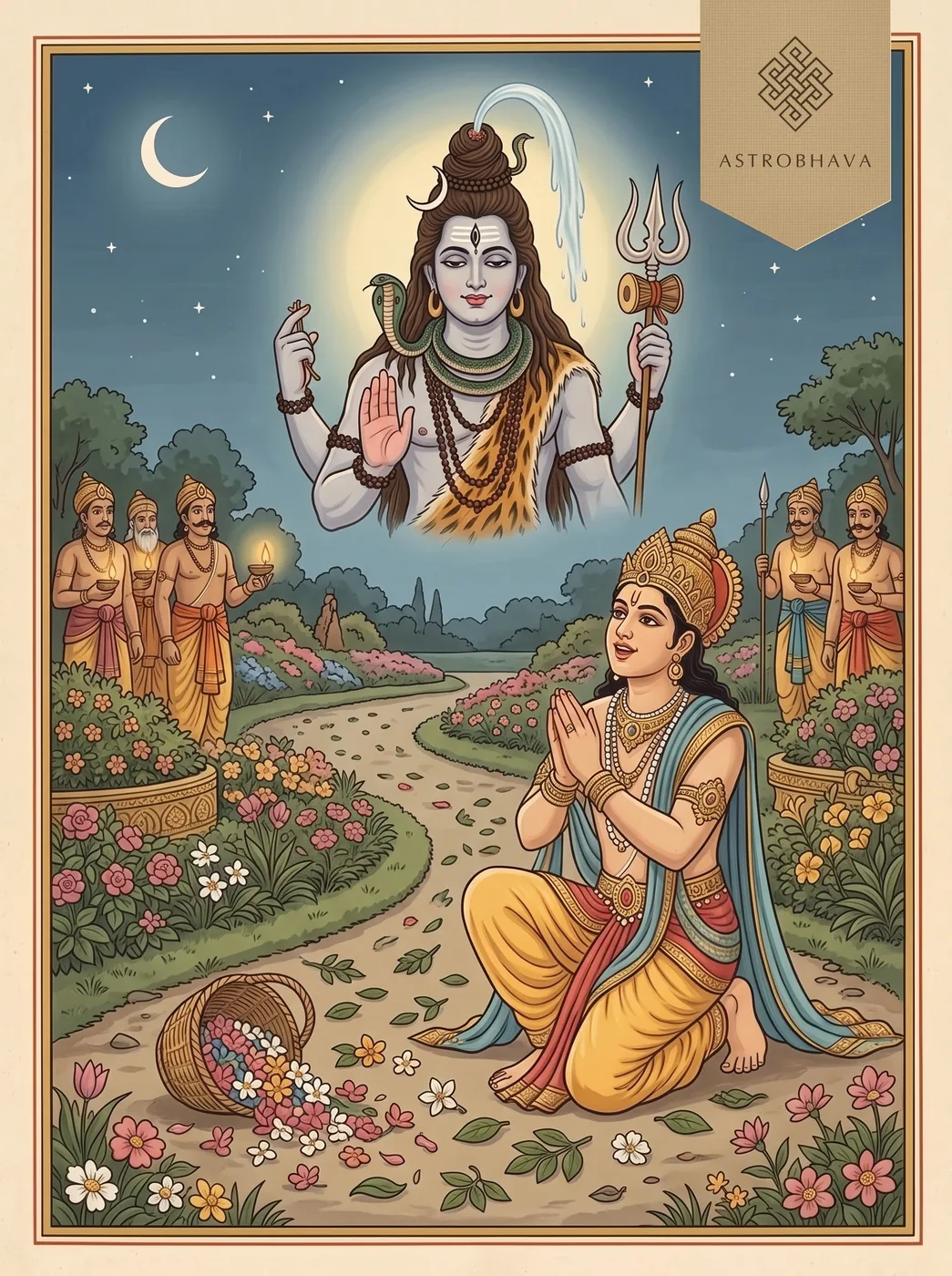
According to tradition, King Chitraratha kept a flower garden whose blooms went each day into his worship of Shiva. Pushpadanta, a Gandharva singer of Indra's court whose name means 'flower-toothed', loved those flowers and began taking them at night, unseen, because Gandharvas could move invisibly through the air. The king's watchmen found the beds stripped but never the thief. So the king had nirmalya, the leaves and flowers already offered to Shiva, Bilva among them, scattered along the garden paths. Treading on what has been offered to the deity is an offence, and when Pushpadanta's foot touched it he lost the power that had hidden him. Caught and stripped of his gift, he composed this hymn, and the tradition holds that Shiva was pleased and restored him. The hymn itself carries the outline: verse 37 says that Kusumadashana, another form of the same name, fell from his glory through the Lord's anger and then made this praise. One telling names the king Vahu rather than Chitraratha. Madhusudana Sarasvati, the 16th-century Advaita teacher, retells the story in the introduction to his commentary. The text was already established by 1063 CE, when it was carved with other hymns on the Amareshwar temple at Omkareshwar on the Narmada.
The mantra, in six scripts
- महिम्नः
- mahimnaḥ — of the greatness
- पारं
- pāraṃ — the far limit
- ते
- te — your
- परमविदुषो
- paramaviduṣo — of one who does not fully know
- यद्यसदृशी
- yadyasadṛśī — if unfitting
- स्तुतिर्ब्रह्मादीनामपि
- stutirbrahmādīnāmapi — praise, even of Brahma and others
- तदवसन्नास्त्वयि
- tadavasannāstvayi — then fall short in you
- गिरः
- giraḥ — words
- अथावाच्यः
- athāvācyaḥ — then blameless
- सर्वः
- sarvaḥ — everyone
- स्वमतिपरिणामावधि
- svamatipariṇāmāvadhi — to the reach of their own mind
- गृणन्
- gṛṇan — praising
- ममाप्येष
- mamāpyeṣa — mine too, this
- स्तोत्रे
- stotre — in the hymn
- हर
- hara — O Hara
- निरपवादः
- nirapavādaḥ — beyond reproach
- परिकरः
- parikaraḥ — effort
Shiva Mahimna Stotram lyrics in full
The 43 verses as commonly chanted: the hymn proper in verses 1 to 31, followed by the ink-and-ocean verse and the closing verses that name Pushpadanta.
All 43 verses, in Sanskrit, Tamil, Telugu, Kannada, Malayalam and English, each with its meaning. Choose a script:
Download the Shiva Mahimna Stotram PDFAll 43 verses with their meanings, in Sanskrit. Free to print and keep.
महिम्नः पारं ते परमविदुषो यद्यसदृशी स्तुतिर्ब्रह्मादीनामपि तदवसन्नास्त्वयि गिरः ।
अथावाच्यः सर्वः स्वमतिपरिणामावधि गृणन् ममाप्येष स्तोत्रे हर निरपवादः परिकरः ॥
மஹிம்நஃ பாரம் தே பரமவிதுஷோ யத்யஸத்ருஶீ ஸ்துதிர்ப்ரஹ்மாதீநாமபி ததவஸந்நாஸ்த்வயி கிரஃ ।
அதாவாச்யஃ ஸர்வஃ ஸ்வமதிபரிணாமாவதி க்ருணந் மமாப்யேஷ ஸ்தோத்ரே ஹர நிரபவாதஃ பரிகரஃ ॥
మహిమ్నః పారం తే పరమవిదుషో యద్యసదృశీ స్తుతిర్బ్రహ్మాదీనామపి తదవసన్నాస్త్వయి గిరః ।
అథావాచ్యః సర్వః స్వమతిపరిణామావధి గృణన్ మమాప్యేష స్తోత్రే హర నిరపవాదః పరికరః ॥
ಮಹಿಮ್ನಃ ಪಾರಂ ತೇ ಪರಮವಿದುಷೋ ಯದ್ಯಸದೃಶೀ ಸ್ತುತಿರ್ಬ್ರಹ್ಮಾದೀನಾಮಪಿ ತದವಸನ್ನಾಸ್ತ್ವಯಿ ಗಿರಃ ।
ಅಥಾವಾಚ್ಯಃ ಸರ್ವಃ ಸ್ವಮತಿಪರಿಣಾಮಾವಧಿ ಗೃಣನ್ ಮಮಾಪ್ಯೇಷ ಸ್ತೋತ್ರೇ ಹರ ನಿರಪವಾದಃ ಪರಿಕರಃ ॥
മഹിമ്നഃ പാരം തേ പരമവിദുഷോ യദ്യസദൃശീ സ്തുതിര്ബ്രഹ്മാദീനാമപി തദവസന്നാസ്ത്വയി ഗിരഃ ।
അഥാവാച്യഃ സര്വഃ സ്വമതിപരിണാമാവധി ഗൃണന് മമാപ്യേഷ സ്തോത്രേ ഹര നിരപവാദഃ പരികരഃ ॥
mahimnaḥ pāraṃ te paramaviduṣo yadyasadṛśī stutirbrahmādīnāmapi tadavasannāstvayi giraḥ |
athāvācyaḥ sarvaḥ svamatipariṇāmāvadhi gṛṇan mamāpyeṣa stotre hara nirapavādaḥ parikaraḥ ||
O Hara, if praise from one who does not know the full extent of your greatness is unfit, then even the words of Brahma and the other gods fall short of you. So no one who praises you as far as his own understanding reaches can be blamed, and my own attempt at this hymn is likewise beyond reproach.
अतीतः पन्थानं तव च महिमा वाङ्मनसयोरतद्व्यावृत्त्या यं चकितमभिधत्ते श्रुतिरपि ।
स कस्य स्तोतव्यः कतिविधगुणः कस्य विषयः पदे त्वर्वाचीने पतति न मनः कस्य न वचः ॥
அதீதஃ பந்தாநம் தவ ச மஹிமா வாங்மநஸயோரதத்வ்யாவ்ருத்த்யா யம் சகிதமபிதத்தே ஶ்ருதிரபி ।
ஸ கஸ்ய ஸ்தோதவ்யஃ கதிவிதகுணஃ கஸ்ய விஷயஃ பதே த்வர்வாசீநே பததி ந மநஃ கஸ்ய ந வசஃ ॥
అతీతః పన్థానం తవ చ మహిమా వాఙ్మనసయోరతద్వ్యావృత్త్యా యం చకితమభిధత్తే శ్రుతిరపి ।
స కస్య స్తోతవ్యః కతివిధగుణః కస్య విషయః పదే త్వర్వాచీనే పతతి న మనః కస్య న వచః ॥
ಅತೀತಃ ಪನ್ಥಾನಂ ತವ ಚ ಮಹಿಮಾ ವಾಙ್ಮನಸಯೋರತದ್ವ್ಯಾವೃತ್ತ್ಯಾ ಯಂ ಚಕಿತಮಭಿಧತ್ತೇ ಶ್ರುತಿರಪಿ ।
ಸ ಕಸ್ಯ ಸ್ತೋತವ್ಯಃ ಕತಿವಿಧಗುಣಃ ಕಸ್ಯ ವಿಷಯಃ ಪದೇ ತ್ವರ್ವಾಚೀನೇ ಪತತಿ ನ ಮನಃ ಕಸ್ಯ ನ ವಚಃ ॥
അതീതഃ പന്ഥാനം തവ ച മഹിമാ വാങ്മനസയോരതദ്വ്യാവൃത്ത്യാ യം ചകിതമഭിധത്തേ ശ്രുതിരപി ।
സ കസ്യ സ്തോതവ്യഃ കതിവിധഗുണഃ കസ്യ വിഷയഃ പദേ ത്വര്വാചീനേ പതതി ന മനഃ കസ്യ ന വചഃ ॥
atītaḥ panthānaṃ tava ca mahimā vāṅmanasayoratadvyāvṛttyā yaṃ cakitamabhidhatte śrutirapi |
sa kasya stotavyaḥ katividhaguṇaḥ kasya viṣayaḥ pade tvarvācīne patati na manaḥ kasya na vacaḥ ||
Your greatness lies beyond the reach of speech and mind; even the Veda speaks of it in awe, only by setting aside what it is not. Who can praise it, how many qualities does it have, whose object can it be? Yet whose mind and whose words do not turn to your nearer, manifest form?
मधुस्फीता वाचः परमममृतं निर्मितवतस्तव ब्रह्मन् किं वागपि सुरगुरोर्विस्मयपदम् ।
मम त्वेतां वाणीं गुणकथनपुण्येन भवतः पुनामीत्यर्थेऽस्मिन् पुरमथन बुद्धिर्व्यवसिता ॥
மதுஸ்பீதா வாசஃ பரமமம்ருதம் நிர்மிதவதஸ்தவ ப்ரஹ்மந் கிம் வாகபி ஸுரகுரோர்விஸ்மயபதம் ।
மம த்வேதாம் வாணீம் குணகதநபுண்யேந பவதஃ புநாமீத்யர்தேஸ்மிந் புரமதந புத்திர்வ்யவஸிதா ॥
మధుస్ఫీతా వాచః పరమమమృతం నిర్మితవతస్తవ బ్రహ్మన్ కిం వాగపి సురగురోర్విస్మయపదమ్ ।
మమ త్వేతాం వాణీం గుణకథనపుణ్యేన భవతః పునామీత్యర్థేఽస్మిన్ పురమథన బుద్ధిర్వ్యవసితా ॥
ಮಧುಸ್ಫೀತಾ ವಾಚಃ ಪರಮಮಮೃತಂ ನಿರ್ಮಿತವತಸ್ತವ ಬ್ರಹ್ಮನ್ ಕಿಂ ವಾಗಪಿ ಸುರಗುರೋರ್ವಿಸ್ಮಯಪದಮ್ ।
ಮಮ ತ್ವೇತಾಂ ವಾಣೀಂ ಗುಣಕಥನಪುಣ್ಯೇನ ಭವತಃ ಪುನಾಮೀತ್ಯರ್ಥೇಽಸ್ಮಿನ್ ಪುರಮಥನ ಬುದ್ಧಿರ್ವ್ಯವಸಿತಾ ॥
മധുസ്ഫീതാ വാചഃ പരമമമൃതം നിര്മിതവതസ്തവ ബ്രഹ്മന് കിം വാഗപി സുരഗുരോര്വിസ്മയപദമ് ।
മമ ത്വേതാം വാണീം ഗുണകഥനപുണ്യേന ഭവതഃ പുനാമീത്യര്ഥേഽസ്മിന് പുരമഥന ബുദ്ധിര്വ്യവസിതാ ॥
madhusphītā vācaḥ paramamamṛtaṃ nirmitavatastava brahman kiṃ vāgapi suragurorvismayapadam |
mama tvetāṃ vāṇīṃ guṇakathanapuṇyena bhavataḥ punāmītyarthe'smin puramathana buddhirvyavasitā ||
O Brahman, you made the Vedas, words rich as honey and supreme as nectar; how could even the speech of Brihaspati, teacher of the gods, astonish you? O destroyer of the cities, my mind has set itself to this praise with one thought: I will purify my own speech by the merit of telling your qualities.
तवैश्वर्यं यत्तज्जगदुदयरक्षाप्रलयकृत् त्रयीवस्तु व्यस्तं तिसृषु गुणभिन्नासु तनुषु ।
अभव्यानामस्मिन् वरद रमणीयामरमणीं विहन्तुं व्याक्रोशीं विदधत इहैके जडधियः ॥
தவைஶ்வர்யம் யத்தஜ்ஜகதுதயரக்ஷாப்ரலயக்ருத் த்ரயீவஸ்து வ்யஸ்தம் திஸ்ருஷு குணபிந்நாஸு தநுஷு ।
அபவ்யாநாமஸ்மிந் வரத ரமணீயாமரமணீம் விஹந்தும் வ்யாக்ரோஶீம் விததத இஹைகே ஜடதியஃ ॥
తవైశ్వర్యం యత్తజ్జగదుదయరక్షాప్రలయకృత్ త్రయీవస్తు వ్యస్తం తిసృషు గుణభిన్నాసు తనుషు ।
అభవ్యానామస్మిన్ వరద రమణీయామరమణీం విహన్తుం వ్యాక్రోశీం విదధత ఇహైకే జడధియః ॥
ತವೈಶ್ವರ್ಯಂ ಯತ್ತಜ್ಜಗದುದಯರಕ್ಷಾಪ್ರಲಯಕೃತ್ ತ್ರಯೀವಸ್ತು ವ್ಯಸ್ತಂ ತಿಸೃಷು ಗುಣಭಿನ್ನಾಸು ತನುಷು ।
ಅಭವ್ಯಾನಾಮಸ್ಮಿನ್ ವರದ ರಮಣೀಯಾಮರಮಣೀಂ ವಿಹನ್ತುಂ ವ್ಯಾಕ್ರೋಶೀಂ ವಿದಧತ ಇಹೈಕೇ ಜಡಧಿಯಃ ॥
തവൈശ്വര്യം യത്തജ്ജഗദുദയരക്ഷാപ്രലയകൃത് ത്രയീവസ്തു വ്യസ്തം തിസൃഷു ഗുണഭിന്നാസു തനുഷു ।
അഭവ്യാനാമസ്മിന് വരദ രമണീയാമരമണീം വിഹന്തും വ്യാക്രോശീം വിദധത ഇഹൈകേ ജഡധിയഃ ॥
tavaiśvaryaṃ yattajjagadudayarakṣāpralayakṛt trayīvastu vyastaṃ tisṛṣu guṇabhinnāsu tanuṣu |
abhavyānāmasmin varada ramaṇīyāmaramaṇīṃ vihantuṃ vyākrośīṃ vidadhata ihaike jaḍadhiyaḥ ||
O giver of boons, your sovereignty creates, sustains and dissolves the world; the three Vedas teach it, and it is divided among three bodies set apart by the three qualities. Yet some dull-witted people here raise loud arguments to destroy it, arguments that please the unworthy but are in truth unpleasing.
किमीहः किंकायः स खलु किमुपायस्त्रिभुवनं किमाधारो धाता सृजति किमुपादान इति च ।
अतर्क्यैश्वर्ये त्वय्यनवसरदुःस्थो हतधियः कुतर्कोऽयं कांश्चिन्मुखरयति मोहाय जगतः ॥
கிமீஹஃ கிம்காயஃ ஸ கலு கிமுபாயஸ்த்ரிபுவநம் கிமாதாரோ தாதா ஸ்ருஜதி கிமுபாதாந இதி ச ।
அதர்க்யைஶ்வர்யே த்வய்யநவஸரதுஃஸ்தோ ஹததியஃ குதர்கோயம் காம்ஶ்சிந்முகரயதி மோஹாய ஜகதஃ ॥
కిమీహః కింకాయః స ఖలు కిముపాయస్త్రిభువనం కిమాధారో ధాతా సృజతి కిముపాదాన ఇతి చ ।
అతర్క్యైశ్వర్యే త్వయ్యనవసరదుఃస్థో హతధియః కుతర్కోఽయం కాంశ్చిన్ముఖరయతి మోహాయ జగతః ॥
ಕಿಮೀಹಃ ಕಿಂಕಾಯಃ ಸ ಖಲು ಕಿಮುಪಾಯಸ್ತ್ರಿಭುವನಂ ಕಿಮಾಧಾರೋ ಧಾತಾ ಸೃಜತಿ ಕಿಮುಪಾದಾನ ಇತಿ ಚ ।
ಅತರ್ಕ್ಯೈಶ್ವರ್ಯೇ ತ್ವಯ್ಯನವಸರದುಃಸ್ಥೋ ಹತಧಿಯಃ ಕುತರ್ಕೋಽಯಂ ಕಾಂಶ್ಚಿನ್ಮುಖರಯತಿ ಮೋಹಾಯ ಜಗತಃ ॥
കിമീഹഃ കിംകായഃ സ ഖലു കിമുപായസ്ത്രിഭുവനം കിമാധാരോ ധാതാ സൃജതി കിമുപാദാന ഇതി ച ।
അതര്ക്യൈശ്വര്യേ ത്വയ്യനവസരദുഃസ്ഥോ ഹതധിയഃ കുതര്കോഽയം കാംശ്ചിന്മുഖരയതി മോഹായ ജഗതഃ ॥
kimīhaḥ kiṃkāyaḥ sa khalu kimupāyastribhuvanaṃ kimādhāro dhātā sṛjati kimupādāna iti ca |
atarkyaiśvarye tvayyanavasaraduḥstho hatadhiyaḥ kutarko'yaṃ kāṃścinmukharayati mohāya jagataḥ ||
With what desire, what body, what means, on what support and from what material does the Creator make the three worlds? This false reasoning about you, whose power is beyond reasoning, has no ground to stand on; it only makes some bewildered people talkative and leads the world into delusion.
अजन्मानो लोकाः किमवयववन्तोऽपि जगतामधिष्ठातारं किं भवविधिरनादृत्य भवति ।
अनीशो वा कुर्याद्भुवनजनने कः परिकरो यतो मन्दास्त्वां प्रत्यमरवर संशेरत इमे ॥
அஜந்மாநோ லோகாஃ கிமவயவவந்தோபி ஜகதாமதிஷ்டாதாரம் கிம் பவவிதிரநாத்ருத்ய பவதி ।
அநீஶோ வா குர்யாத்புவநஜநநே கஃ பரிகரோ யதோ மந்தாஸ்த்வாம் ப்ரத்யமரவர ஸம்ஶேரத இமே ॥
అజన్మానో లోకాః కిమవయవవన్తోఽపి జగతామధిష్ఠాతారం కిం భవవిధిరనాదృత్య భవతి ।
అనీశో వా కుర్యాద్భువనజననే కః పరికరో యతో మన్దాస్త్వాం ప్రత్యమరవర సంశేరత ఇమే ॥
ಅಜನ್ಮಾನೋ ಲೋಕಾಃ ಕಿಮವಯವವನ್ತೋಽಪಿ ಜಗತಾಮಧಿಷ್ಠಾತಾರಂ ಕಿಂ ಭವವಿಧಿರನಾದೃತ್ಯ ಭವತಿ ।
ಅನೀಶೋ ವಾ ಕುರ್ಯಾದ್ಭುವನಜನನೇ ಕಃ ಪರಿಕರೋ ಯತೋ ಮನ್ದಾಸ್ತ್ವಾಂ ಪ್ರತ್ಯಮರವರ ಸಂಶೇರತ ಇಮೇ ॥
അജന്മാനോ ലോകാഃ കിമവയവവന്തോഽപി ജഗതാമധിഷ്ഠാതാരം കിം ഭവവിധിരനാദൃത്യ ഭവതി ।
അനീശോ വാ കുര്യാദ്ഭുവനജനനേ കഃ പരികരോ യതോ മന്ദാസ്ത്വാം പ്രത്യമരവര സംശേരത ഇമേ ॥
ajanmāno lokāḥ kimavayavavanto'pi jagatāmadhiṣṭhātāraṃ kiṃ bhavavidhiranādṛtya bhavati |
anīśo vā kuryādbhuvanajanane kaḥ parikaro yato mandāstvāṃ pratyamaravara saṃśerata ime ||
O best of the immortals, can the worlds be unborn though they have parts? Can the world come into being with no regard to a ruler? If not the Lord, who could create the worlds, and with what means? Only because they are dull do these people raise doubts about you.
त्रयी साङ्ख्यं योगः पशुपतिमतं वैष्णवमिति प्रभिन्ने प्रस्थाने परमिदमदः पथ्यमिति च ।
रुचीनां वैचित्र्यादृजुकुटिल नानापथजुषां नृणामेको गम्यस्त्वमसि पयसामर्णव इव ॥
த்ரயீ ஸாங்க்யம் யோகஃ பஶுபதிமதம் வைஷ்ணவமிதி ப்ரபிந்நே ப்ரஸ்தாநே பரமிதமதஃ பத்யமிதி ச ।
ருசீநாம் வைசித்ர்யாத்ருஜுகுடில நாநாபதஜுஷாம் ந்ருணாமேகோ கம்யஸ்த்வமஸி பயஸாமர்ணவ இவ ॥
త్రయీ సాఙ్ఖ్యం యోగః పశుపతిమతం వైష్ణవమితి ప్రభిన్నే ప్రస్థానే పరమిదమదః పథ్యమితి చ ।
రుచీనాం వైచిత్ర్యాదృజుకుటిల నానాపథజుషాం నృణామేకో గమ్యస్త్వమసి పయసామర్ణవ ఇవ ॥
ತ್ರಯೀ ಸಾಙ್ಖ್ಯಂ ಯೋಗಃ ಪಶುಪತಿಮತಂ ವೈಷ್ಣವಮಿತಿ ಪ್ರಭಿನ್ನೇ ಪ್ರಸ್ಥಾನೇ ಪರಮಿದಮದಃ ಪಥ್ಯಮಿತಿ ಚ ।
ರುಚೀನಾಂ ವೈಚಿತ್ರ್ಯಾದೃಜುಕುಟಿಲ ನಾನಾಪಥಜುಷಾಂ ನೃಣಾಮೇಕೋ ಗಮ್ಯಸ್ತ್ವಮಸಿ ಪಯಸಾಮರ್ಣವ ಇವ ॥
ത്രയീ സാങ്ഖ്യം യോഗഃ പശുപതിമതം വൈഷ്ണവമിതി പ്രഭിന്നേ പ്രസ്ഥാനേ പരമിദമദഃ പഥ്യമിതി ച ।
രുചീനാം വൈചിത്ര്യാദൃജുകുടില നാനാപഥജുഷാം നൃണാമേകോ ഗമ്യസ്ത്വമസി പയസാമര്ണവ ഇവ ॥
trayī sāṅkhyaṃ yogaḥ paśupatimataṃ vaiṣṇavamiti prabhinne prasthāne paramidamadaḥ pathyamiti ca |
rucīnāṃ vaicitryādṛjukuṭila nānāpathajuṣāṃ nṛṇāmeko gamyastvamasi payasāmarṇava iva ||
The three Vedas, Sankhya, Yoga, the Pashupata doctrine and the Vaishnava teaching are separate paths, each saying "this is highest, that is beneficial". Because tastes differ, people follow straight or winding ways, yet you alone are the goal of them all, as the ocean is the goal of all waters.
महोक्षः खट्वाङ्गं परशुरजिनं भस्म फणिनः कपालं चेतीयत्तव वरद तन्त्रोपकरणम् ।
सुरास्तां तामृद्धिं दधति तु भवद्भ्रूप्रणिहितां न हि स्वात्मारामं विषयमृगतृष्णा भ्रमयति ॥
மஹோக்ஷஃ கட்வாங்கம் பரஶுரஜிநம் பஸ்ம பணிநஃ கபாலம் சேதீயத்தவ வரத தந்த்ரோபகரணம் ।
ஸுராஸ்தாம் தாம்ருத்திம் தததி து பவத்ப்ரூப்ரணிஹிதாம் ந ஹி ஸ்வாத்மாராமம் விஷயம்ருகத்ருஷ்ணா ப்ரமயதி ॥
మహోక్షః ఖట్వాఙ్గం పరశురజినం భస్మ ఫణినః కపాలం చేతీయత్తవ వరద తన్త్రోపకరణమ్ ।
సురాస్తాం తామృద్ధిం దధతి తు భవద్భ్రూప్రణిహితాం న హి స్వాత్మారామం విషయమృగతృష్ణా భ్రమయతి ॥
ಮಹೋಕ್ಷಃ ಖಟ್ವಾಙ್ಗಂ ಪರಶುರಜಿನಂ ಭಸ್ಮ ಫಣಿನಃ ಕಪಾಲಂ ಚೇತೀಯತ್ತವ ವರದ ತನ್ತ್ರೋಪಕರಣಮ್ ।
ಸುರಾಸ್ತಾಂ ತಾಮೃದ್ಧಿಂ ದಧತಿ ತು ಭವದ್ಭ್ರೂಪ್ರಣಿಹಿತಾಂ ನ ಹಿ ಸ್ವಾತ್ಮಾರಾಮಂ ವಿಷಯಮೃಗತೃಷ್ಣಾ ಭ್ರಮಯತಿ ॥
മഹോക്ഷഃ ഖട്വാങ്ഗം പരശുരജിനം ഭസ്മ ഫണിനഃ കപാലം ചേതീയത്തവ വരദ തന്ത്രോപകരണമ് ।
സുരാസ്താം താമൃദ്ധിം ദധതി തു ഭവദ്ഭ്രൂപ്രണിഹിതാം ന ഹി സ്വാത്മാരാമം വിഷയമൃഗതൃഷ്ണാ ഭ്രമയതി ॥
mahokṣaḥ khaṭvāṅgaṃ paraśurajinaṃ bhasma phaṇinaḥ kapālaṃ cetīyattava varada tantropakaraṇam |
surāstāṃ tāmṛddhiṃ dadhati tu bhavadbhrūpraṇihitāṃ na hi svātmārāmaṃ viṣayamṛgatṛṣṇā bhramayati ||
O giver of boons, a great bull, a skull-topped staff, an axe, a hide, ashes, serpents and a skull: this is all your equipment. Yet the gods hold their splendour only because your eyebrow has granted it. The mirage of sense objects does not lead astray one who delights in the Self.
ध्रुवं कश्चित्सर्वं सकलमपरस्त्वध्रुवमिदं परो ध्रौव्याध्रौव्ये जगति गदति व्यस्तविषये ।
समस्तेऽप्येतस्मिन्पुरमथन तैर्विस्मित इव स्तुवञ्जिह्रेमि त्वां न खलु ननु धृष्टा मुखरता ॥
த்ருவம் கஶ்சித்ஸர்வம் ஸகலமபரஸ்த்வத்ருவமிதம் பரோ த்ரௌவ்யாத்ரௌவ்யே ஜகதி கததி வ்யஸ்தவிஷயே ।
ஸமஸ்தேப்யேதஸ்மிந்புரமதந தைர்விஸ்மித இவ ஸ்துவஞ்ஜிஹ்ரேமி த்வாம் ந கலு நநு த்ருஷ்டா முகரதா ॥
ధ్రువం కశ్చిత్సర్వం సకలమపరస్త్వధ్రువమిదం పరో ధ్రౌవ్యాధ్రౌవ్యే జగతి గదతి వ్యస్తవిషయే ।
సమస్తేఽప్యేతస్మిన్పురమథన తైర్విస్మిత ఇవ స్తువఞ్జిహ్రేమి త్వాం న ఖలు నను ధృష్టా ముఖరతా ॥
ಧ್ರುವಂ ಕಶ್ಚಿತ್ಸರ್ವಂ ಸಕಲಮಪರಸ್ತ್ವಧ್ರುವಮಿದಂ ಪರೋ ಧ್ರೌವ್ಯಾಧ್ರೌವ್ಯೇ ಜಗತಿ ಗದತಿ ವ್ಯಸ್ತವಿಷಯೇ ।
ಸಮಸ್ತೇಽಪ್ಯೇತಸ್ಮಿನ್ಪುರಮಥನ ತೈರ್ವಿಸ್ಮಿತ ಇವ ಸ್ತುವಞ್ಜಿಹ್ರೇಮಿ ತ್ವಾಂ ನ ಖಲು ನನು ಧೃಷ್ಟಾ ಮುಖರತಾ ॥
ധ്രുവം കശ്ചിത്സര്വം സകലമപരസ്ത്വധ്രുവമിദം പരോ ധ്രൌവ്യാധ്രൌവ്യേ ജഗതി ഗദതി വ്യസ്തവിഷയേ ।
സമസ്തേഽപ്യേതസ്മിന്പുരമഥന തൈര്വിസ്മിത ഇവ സ്തുവഞ്ജിഹ്രേമി ത്വാം ന ഖലു നനു ധൃഷ്ടാ മുഖരതാ ॥
dhruvaṃ kaścitsarvaṃ sakalamaparastvadhruvamidaṃ paro dhrauvyādhrauvye jagati gadati vyastaviṣaye |
samaste'pyetasminpuramathana tairvismita iva stuvañjihremi tvāṃ na khalu nanu dhṛṣṭā mukharatā ||
O destroyer of the cities, one says this whole world is eternal, another that it is passing, another that it is eternal and passing in its different parts. Astonished, as it were, by all these views, I am still not ashamed to praise you; surely talkativeness is bold.
तवैश्वर्यं यत्नाद्यदुपरि विरिञ्चिर्हरिरधः परिच्छेत्तुं यातावनलमनलस्कन्धवपुषः ।
ततो भक्तिश्रद्धाभरगुरुगृणद्भ्यां गिरिश यत् स्वयं तस्थे ताभ्यां तव किमनुवृत्तिर्न फलति ॥
தவைஶ்வர்யம் யத்நாத்யதுபரி விரிஞ்சிர்ஹரிரதஃ பரிச்சேத்தும் யாதாவநலமநலஸ்கந்தவபுஷஃ ।
ததோ பக்திஶ்ரத்தாபரகுருக்ருணத்ப்யாம் கிரிஶ யத் ஸ்வயம் தஸ்தே தாப்யாம் தவ கிமநுவ்ருத்திர்ந பலதி ॥
తవైశ్వర్యం యత్నాద్యదుపరి విరిఞ్చిర్హరిరధః పరిచ్ఛేత్తుం యాతావనలమనలస్కన్ధవపుషః ।
తతో భక్తిశ్రద్ధాభరగురుగృణద్భ్యాం గిరిశ యత్ స్వయం తస్థే తాభ్యాం తవ కిమనువృత్తిర్న ఫలతి ॥
ತವೈಶ್ವರ್ಯಂ ಯತ್ನಾದ್ಯದುಪರಿ ವಿರಿಞ್ಚಿರ್ಹರಿರಧಃ ಪರಿಚ್ಛೇತ್ತುಂ ಯಾತಾವನಲಮನಲಸ್ಕನ್ಧವಪುಷಃ ।
ತತೋ ಭಕ್ತಿಶ್ರದ್ಧಾಭರಗುರುಗೃಣದ್ಭ್ಯಾಂ ಗಿರಿಶ ಯತ್ ಸ್ವಯಂ ತಸ್ಥೇ ತಾಭ್ಯಾಂ ತವ ಕಿಮನುವೃತ್ತಿರ್ನ ಫಲತಿ ॥
തവൈശ്വര്യം യത്നാദ്യദുപരി വിരിഞ്ചിര്ഹരിരധഃ പരിച്ഛേത്തും യാതാവനലമനലസ്കന്ധവപുഷഃ ।
തതോ ഭക്തിശ്രദ്ധാഭരഗുരുഗൃണദ്ഭ്യാം ഗിരിശ യത് സ്വയം തസ്ഥേ താഭ്യാം തവ കിമനുവൃത്തിര്ന ഫലതി ॥
tavaiśvaryaṃ yatnādyadupari viriñcirhariradhaḥ paricchettuṃ yātāvanalamanalaskandhavapuṣaḥ |
tato bhaktiśraddhābharagurugṛṇadbhyāṃ giriśa yat svayaṃ tasthe tābhyāṃ tava kimanuvṛttirna phalati ||
When Brahma went upward and Vishnu downward, striving to measure your majesty as you stood as a pillar of fire, they could not; then, O Girisha, as they praised you, weighed down with devotion and faith, you yourself appeared before them. Does following you ever fail to bear fruit?
अयत्नादापाद्य त्रिभुवनमवैरव्यतिकरं दशास्यो यद्बाहूनभृत रणकण्डूपरवशान् ।
शिरःपद्मश्रेणीरचितचरणाम्भोरुहबलेः स्थिरायास्त्वद्भक्तेस्त्रिपुरहर विस्फूर्जितमिदम् ॥
அயத்நாதாபாத்ய த்ரிபுவநமவைரவ்யதிகரம் தஶாஸ்யோ யத்பாஹூநப்ருத ரணகண்டூபரவஶாந் ।
ஶிரஃபத்மஶ்ரேணீரசிதசரணாம்போருஹபலேஃ ஸ்திராயாஸ்த்வத்பக்தேஸ்த்ரிபுரஹர விஸ்பூர்ஜிதமிதம் ॥
అయత్నాదాపాద్య త్రిభువనమవైరవ్యతికరం దశాస్యో యద్బాహూనభృత రణకణ్డూపరవశాన్ ।
శిరఃపద్మశ్రేణీరచితచరణామ్భోరుహబలేః స్థిరాయాస్త్వద్భక్తేస్త్రిపురహర విస్ఫూర్జితమిదమ్ ॥
ಅಯತ್ನಾದಾಪಾದ್ಯ ತ್ರಿಭುವನಮವೈರವ್ಯತಿಕರಂ ದಶಾಸ್ಯೋ ಯದ್ಬಾಹೂನಭೃತ ರಣಕಣ್ಡೂಪರವಶಾನ್ ।
ಶಿರಃಪದ್ಮಶ್ರೇಣೀರಚಿತಚರಣಾಮ್ಭೋರುಹಬಲೇಃ ಸ್ಥಿರಾಯಾಸ್ತ್ವದ್ಭಕ್ತೇಸ್ತ್ರಿಪುರಹರ ವಿಸ್ಫೂರ್ಜಿತಮಿದಮ್ ॥
അയത്നാദാപാദ്യ ത്രിഭുവനമവൈരവ്യതികരം ദശാസ്യോ യദ്ബാഹൂനഭൃത രണകണ്ഡൂപരവശാന് ।
ശിരഃപദ്മശ്രേണീരചിതചരണാമ്ഭോരുഹബലേഃ സ്ഥിരായാസ്ത്വദ്ഭക്തേസ്ത്രിപുരഹര വിസ്ഫൂര്ജിതമിദമ് ॥
ayatnādāpādya tribhuvanamavairavyatikaraṃ daśāsyo yadbāhūnabhṛta raṇakaṇḍūparavaśān |
śiraḥpadmaśreṇīracitacaraṇāmbhoruhabaleḥ sthirāyāstvadbhaktestripurahara visphūrjitamidam ||
O destroyer of Tripura, that ten-headed Ravana easily made the three worlds free of enemies, and still had arms itching for battle, was the outflowing of his steady devotion, in which he offered his own heads as a row of lotuses at your lotus feet.
अमुष्य त्वत्सेवासमधिगतसारं भुजवनं बलात्कैलासेऽपि त्वदधिवसतौ विक्रमयतः ।
अलभ्या पातालेऽप्यलसचलिताङ्गुष्ठशिरसि प्रतिष्ठा त्वय्यासीद्ध्रुवमुपचितो मुह्यति खलः ॥
அமுஷ்ய த்வத்ஸேவாஸமதிகதஸாரம் புஜவநம் பலாத்கைலாஸேபி த்வததிவஸதௌ விக்ரமயதஃ ।
அலப்யா பாதாலேப்யலஸசலிதாங்குஷ்டஶிரஸி ப்ரதிஷ்டா த்வய்யாஸீத்த்ருவமுபசிதோ முஹ்யதி கலஃ ॥
అముష్య త్వత్సేవాసమధిగతసారం భుజవనం బలాత్కైలాసేఽపి త్వదధివసతౌ విక్రమయతః ।
అలభ్యా పాతాలేఽప్యలసచలితాఙ్గుష్ఠశిరసి ప్రతిష్ఠా త్వయ్యాసీద్ధ్రువముపచితో ముహ్యతి ఖలః ॥
ಅಮುಷ್ಯ ತ್ವತ್ಸೇವಾಸಮಧಿಗತಸಾರಂ ಭುಜವನಂ ಬಲಾತ್ಕೈಲಾಸೇಽಪಿ ತ್ವದಧಿವಸತೌ ವಿಕ್ರಮಯತಃ ।
ಅಲಭ್ಯಾ ಪಾತಾಲೇಽಪ್ಯಲಸಚಲಿತಾಙ್ಗುಷ್ಠಶಿರಸಿ ಪ್ರತಿಷ್ಠಾ ತ್ವಯ್ಯಾಸೀದ್ಧ್ರುವಮುಪಚಿತೋ ಮುಹ್ಯತಿ ಖಲಃ ॥
അമുഷ്യ ത്വത്സേവാസമധിഗതസാരം ഭുജവനം ബലാത്കൈലാസേഽപി ത്വദധിവസതൌ വിക്രമയതഃ ।
അലഭ്യാ പാതാലേഽപ്യലസചലിതാങ്ഗുഷ്ഠശിരസി പ്രതിഷ്ഠാ ത്വയ്യാസീദ്ധ്രുവമുപചിതോ മുഹ്യതി ഖലഃ ॥
amuṣya tvatsevāsamadhigatasāraṃ bhujavanaṃ balātkailāse'pi tvadadhivasatau vikramayataḥ |
alabhyā pātāle'pyalasacalitāṅguṣṭhaśirasi pratiṣṭhā tvayyāsīddhruvamupacito muhyati khalaḥ ||
Yet when he turned that forest of arms, made strong by serving you, against Kailasa itself, your own dwelling, he found no footing even in the netherworld once you idly moved the tip of your toe. Surely the wicked, when they have grown strong, become deluded.
यदृद्धिं सुत्राम्णो वरद परमोच्चैरपि सतीमधश्चक्रे बाणः परिजनविधेयत्रिभुवनः ।
न तच्चित्रं तस्मिन्वरिवसितरि त्वच्चरणयोर्न कस्याप्युन्नत्यै भवति शिरसस्त्वय्यवनतिः ॥
யத்ருத்திம் ஸுத்ராம்ணோ வரத பரமோச்சைரபி ஸதீமதஶ்சக்ரே பாணஃ பரிஜநவிதேயத்ரிபுவநஃ ।
ந தச்சித்ரம் தஸ்மிந்வரிவஸிதரி த்வச்சரணயோர்ந கஸ்யாப்யுந்நத்யை பவதி ஶிரஸஸ்த்வய்யவநதிஃ ॥
యదృద్ధిం సుత్రామ్ణో వరద పరమోచ్చైరపి సతీమధశ్చక్రే బాణః పరిజనవిధేయత్రిభువనః ।
న తచ్చిత్రం తస్మిన్వరివసితరి త్వచ్చరణయోర్న కస్యాప్యున్నత్యై భవతి శిరసస్త్వయ్యవనతిః ॥
ಯದೃದ್ಧಿಂ ಸುತ್ರಾಮ್ಣೋ ವರದ ಪರಮೋಚ್ಚೈರಪಿ ಸತೀಮಧಶ್ಚಕ್ರೇ ಬಾಣಃ ಪರಿಜನವಿಧೇಯತ್ರಿಭುವನಃ ।
ನ ತಚ್ಚಿತ್ರಂ ತಸ್ಮಿನ್ವರಿವಸಿತರಿ ತ್ವಚ್ಚರಣಯೋರ್ನ ಕಸ್ಯಾಪ್ಯುನ್ನತ್ಯೈ ಭವತಿ ಶಿರಸಸ್ತ್ವಯ್ಯವನತಿಃ ॥
യദൃദ്ധിം സുത്രാമ്ണോ വരദ പരമോച്ചൈരപി സതീമധശ്ചക്രേ ബാണഃ പരിജനവിധേയത്രിഭുവനഃ ।
ന തച്ചിത്രം തസ്മിന്വരിവസിതരി ത്വച്ചരണയോര്ന കസ്യാപ്യുന്നത്യൈ ഭവതി ശിരസസ്ത്വയ്യവനതിഃ ॥
yadṛddhiṃ sutrāmṇo varada paramoccairapi satīmadhaścakre bāṇaḥ parijanavidheyatribhuvanaḥ |
na taccitraṃ tasminvarivasitari tvaccaraṇayorna kasyāpyunnatyai bhavati śirasastvayyavanatiḥ ||
O giver of boons, Bana brought low even the lofty wealth of Indra and held the three worlds as his servants; that is no wonder in one who worshipped your feet. Whose rise does not follow from bowing the head to you?
अकाण्डब्रह्माण्डक्षयचकितदेवासुरकृपाविधेयस्याऽऽसीद्यस्त्रिनयन विषं संहृतवतः ।
स कल्माषः कण्ठे तव न कुरुते न श्रियमहो विकारोऽपि श्लाघ्यो भुवनभयभङ्गव्यसनिनः ॥
அகாண்டப்ரஹ்மாண்டக்ஷயசகிததேவாஸுரக்ருபாவிதேயஸ்யாஸீத்யஸ்த்ரிநயந விஷம் ஸம்ஹ்ருதவதஃ ।
ஸ கல்மாஷஃ கண்டே தவ ந குருதே ந ஶ்ரியமஹோ விகாரோபி ஶ்லாக்யோ புவநபயபங்கவ்யஸநிநஃ ॥
అకాణ్డబ్రహ్మాణ్డక్షయచకితదేవాసురకృపావిధేయస్యాఽఽసీద్యస్త్రినయన విషం సంహృతవతః ।
స కల్మాషః కణ్ఠే తవ న కురుతే న శ్రియమహో వికారోఽపి శ్లాఘ్యో భువనభయభఙ్గవ్యసనినః ॥
ಅಕಾಣ್ಡಬ್ರಹ್ಮಾಣ್ಡಕ್ಷಯಚಕಿತದೇವಾಸುರಕೃಪಾವಿಧೇಯಸ್ಯಾಽಽಸೀದ್ಯಸ್ತ್ರಿನಯನ ವಿಷಂ ಸಂಹೃತವತಃ ।
ಸ ಕಲ್ಮಾಷಃ ಕಣ್ಠೇ ತವ ನ ಕುರುತೇ ನ ಶ್ರಿಯಮಹೋ ವಿಕಾರೋಽಪಿ ಶ್ಲಾಘ್ಯೋ ಭುವನಭಯಭಙ್ಗವ್ಯಸನಿನಃ ॥
അകാണ്ഡബ്രഹ്മാണ്ഡക്ഷയചകിതദേവാസുരകൃപാവിധേയസ്യാഽഽസീദ്യസ്ത്രിനയന വിഷം സംഹൃതവതഃ ।
സ കല്മാഷഃ കണ്ഠേ തവ ന കുരുതേ ന ശ്രിയമഹോ വികാരോഽപി ശ്ലാഘ്യോ ഭുവനഭയഭങ്ഗവ്യസനിനഃ ॥
akāṇḍabrahmāṇḍakṣayacakitadevāsurakṛpāvidheyasyā''sīdyastrinayana viṣaṃ saṃhṛtavataḥ |
sa kalmāṣaḥ kaṇṭhe tava na kurute na śriyamaho vikāro'pi ślāghyo bhuvanabhayabhaṅgavyasaninaḥ ||
O three-eyed one, when out of compassion for gods and demons, terrified by the sudden threat of the universe's end, you swallowed the poison, the dark stain it left on your throat only adds to your beauty. Even a blemish is praiseworthy in one devoted to removing the fear of the worlds.
असिद्धार्था नैव क्वचिदपि सदेवासुरनरे निवर्तन्ते नित्यं जगति जयिनो यस्य विशिखाः ।
स पश्यन्नीश त्वामितरसुरसाधारणमभूत् स्मरः स्मर्तव्यात्मा न हि वशिषु पथ्यः परिभवः ॥
அஸித்தார்தா நைவ க்வசிதபி ஸதேவாஸுரநரே நிவர்தந்தே நித்யம் ஜகதி ஜயிநோ யஸ்ய விஶிகாஃ ।
ஸ பஶ்யந்நீஶ த்வாமிதரஸுரஸாதாரணமபூத் ஸ்மரஃ ஸ்மர்தவ்யாத்மா ந ஹி வஶிஷு பத்யஃ பரிபவஃ ॥
అసిద్ధార్థా నైవ క్వచిదపి సదేవాసురనరే నివర్తన్తే నిత్యం జగతి జయినో యస్య విశిఖాః ।
స పశ్యన్నీశ త్వామితరసురసాధారణమభూత్ స్మరః స్మర్తవ్యాత్మా న హి వశిషు పథ్యః పరిభవః ॥
ಅಸಿದ್ಧಾರ್ಥಾ ನೈವ ಕ್ವಚಿದಪಿ ಸದೇವಾಸುರನರೇ ನಿವರ್ತನ್ತೇ ನಿತ್ಯಂ ಜಗತಿ ಜಯಿನೋ ಯಸ್ಯ ವಿಶಿಖಾಃ ।
ಸ ಪಶ್ಯನ್ನೀಶ ತ್ವಾಮಿತರಸುರಸಾಧಾರಣಮಭೂತ್ ಸ್ಮರಃ ಸ್ಮರ್ತವ್ಯಾತ್ಮಾ ನ ಹಿ ವಶಿಷು ಪಥ್ಯಃ ಪರಿಭವಃ ॥
അസിദ്ധാര്ഥാ നൈവ ക്വചിദപി സദേവാസുരനരേ നിവര്തന്തേ നിത്യം ജഗതി ജയിനോ യസ്യ വിശിഖാഃ ।
സ പശ്യന്നീശ ത്വാമിതരസുരസാധാരണമഭൂത് സ്മരഃ സ്മര്തവ്യാത്മാ ന ഹി വശിഷു പഥ്യഃ പരിഭവഃ ॥
asiddhārthā naiva kvacidapi sadevāsuranare nivartante nityaṃ jagati jayino yasya viśikhāḥ |
sa paśyannīśa tvāmitarasurasādhāraṇamabhūt smaraḥ smartavyātmā na hi vaśiṣu pathyaḥ paribhavaḥ ||
Kama, whose arrows never return unsuccessful anywhere among gods, demons and men, and who always conquers the world, looked on you as just another god, and at once became a mere memory. Insulting the self-controlled brings no good.
मही पादाघाताद्व्रजति सहसा संशयपदं पदं विष्णोर्भ्राम्यद्भुजपरिघरुग्णग्रहगणम् ।
मुहुर्द्यौर्दौस्थ्यं यात्यनिभृतजटाताडिततटा जगद्रक्षायै त्वं नटसि ननु वामैव विभुता ॥
மஹீ பாதாகாதாத்வ்ரஜதி ஸஹஸா ஸம்ஶயபதம் பதம் விஷ்ணோர்ப்ராம்யத்புஜபரிகருக்ணக்ரஹகணம் ।
முஹுர்த்யௌர்தௌஸ்த்யம் யாத்யநிப்ருதஜடாதாடிததடா ஜகத்ரக்ஷாயை த்வம் நடஸி நநு வாமைவ விபுதா ॥
మహీ పాదాఘాతాద్వ్రజతి సహసా సంశయపదం పదం విష్ణోర్భ్రామ్యద్భుజపరిఘరుగ్ణగ్రహగణమ్ ।
ముహుర్ద్యౌర్దౌస్థ్యం యాత్యనిభృతజటాతాడితతటా జగద్రక్షాయై త్వం నటసి నను వామైవ విభుతా ॥
ಮಹೀ ಪಾದಾಘಾತಾದ್ವ್ರಜತಿ ಸಹಸಾ ಸಂಶಯಪದಂ ಪದಂ ವಿಷ್ಣೋರ್ಭ್ರಾಮ್ಯದ್ಭುಜಪರಿಘರುಗ್ಣಗ್ರಹಗಣಮ್ ।
ಮುಹುರ್ದ್ಯೌರ್ದೌಸ್ಥ್ಯಂ ಯಾತ್ಯನಿಭೃತಜಟಾತಾಡಿತತಟಾ ಜಗದ್ರಕ್ಷಾಯೈ ತ್ವಂ ನಟಸಿ ನನು ವಾಮೈವ ವಿಭುತಾ ॥
മഹീ പാദാഘാതാദ്വ്രജതി സഹസാ സംശയപദം പദം വിഷ്ണോര്ഭ്രാമ്യദ്ഭുജപരിഘരുഗ്ണഗ്രഹഗണമ് ।
മുഹുര്ദ്യൌര്ദൌസ്ഥ്യം യാത്യനിഭൃതജടാതാഡിതതടാ ജഗദ്രക്ഷായൈ ത്വം നടസി നനു വാമൈവ വിഭുതാ ॥
mahī pādāghātādvrajati sahasā saṃśayapadaṃ padaṃ viṣṇorbhrāmyadbhujaparigharugṇagrahagaṇam |
muhurdyaurdausthyaṃ yātyanibhṛtajaṭātāḍitataṭā jagadrakṣāyai tvaṃ naṭasi nanu vāmaiva vibhutā ||
When you dance to protect the world, the earth is suddenly shaken by the blows of your feet, the sky and its planets are struck by your whirling arms like iron bars, and heaven is troubled as its edges are lashed by your loose matted locks. Your very might, it seems, works in contrary ways.
वियद्व्यापी तारागणगुणितफेनोद्गमरुचिः प्रवाहो वारां यः पृषतलघुदृष्टः शिरसि ते ।
जगद्द्वीपाकारं जलधिवलयं तेन कृतमित्यनेनैवोन्नेयं धृतमहिम दिव्यं तव वपुः ॥
வியத்வ்யாபீ தாராகணகுணிதபேநோத்கமருசிஃ ப்ரவாஹோ வாராம் யஃ ப்ருஷதலகுத்ருஷ்டஃ ஶிரஸி தே ।
ஜகத்த்வீபாகாரம் ஜலதிவலயம் தேந க்ருதமித்யநேநைவோந்நேயம் த்ருதமஹிம திவ்யம் தவ வபுஃ ॥
వియద్వ్యాపీ తారాగణగుణితఫేనోద్గమరుచిః ప్రవాహో వారాం యః పృషతలఘుదృష్టః శిరసి తే ।
జగద్ద్వీపాకారం జలధివలయం తేన కృతమిత్యనేనైవోన్నేయం ధృతమహిమ దివ్యం తవ వపుః ॥
ವಿಯದ್ವ್ಯಾಪೀ ತಾರಾಗಣಗುಣಿತಫೇನೋದ್ಗಮರುಚಿಃ ಪ್ರವಾಹೋ ವಾರಾಂ ಯಃ ಪೃಷತಲಘುದೃಷ್ಟಃ ಶಿರಸಿ ತೇ ।
ಜಗದ್ದ್ವೀಪಾಕಾರಂ ಜಲಧಿವಲಯಂ ತೇನ ಕೃತಮಿತ್ಯನೇನೈವೋನ್ನೇಯಂ ಧೃತಮಹಿಮ ದಿವ್ಯಂ ತವ ವಪುಃ ॥
വിയദ്വ്യാപീ താരാഗണഗുണിതഫേനോദ്ഗമരുചിഃ പ്രവാഹോ വാരാം യഃ പൃഷതലഘുദൃഷ്ടഃ ശിരസി തേ ।
ജഗദ്ദ്വീപാകാരം ജലധിവലയം തേന കൃതമിത്യനേനൈവോന്നേയം ധൃതമഹിമ ദിവ്യം തവ വപുഃ ॥
viyadvyāpī tārāgaṇaguṇitaphenodgamaruciḥ pravāho vārāṃ yaḥ pṛṣatalaghudṛṣṭaḥ śirasi te |
jagaddvīpākāraṃ jaladhivalayaṃ tena kṛtamityanenaivonneyaṃ dhṛtamahima divyaṃ tava vapuḥ ||
The heavenly river spreading across the sky, its foam glittering with the stars, looks like a small drop on your head; that same stream has made the world into islands ringed by the ocean. From this alone one may infer how vast and divine your body is.
रथः क्षोणी यन्ता शतधृतिरगेन्द्रो धनुरथो रथाङ्गे चन्द्रार्कौ रथचरणपाणिः शर इति ।
दिधक्षोस्ते कोऽयं त्रिपुरतृणमाडम्बरविधिर्विधेयैः क्रीडन्त्यो न खलु परतन्त्राः प्रभुधियः ॥
ரதஃ க்ஷோணீ யந்தா ஶதத்ருதிரகேந்த்ரோ தநுரதோ ரதாங்கே சந்த்ரார்கௌ ரதசரணபாணிஃ ஶர இதி ।
திதக்ஷோஸ்தே கோயம் த்ரிபுரத்ருணமாடம்பரவிதிர்விதேயைஃ க்ரீடந்த்யோ ந கலு பரதந்த்ராஃ ப்ரபுதியஃ ॥
రథః క్షోణీ యన్తా శతధృతిరగేన్ద్రో ధనురథో రథాఙ్గే చన్ద్రార్కౌ రథచరణపాణిః శర ఇతి ।
దిధక్షోస్తే కోఽయం త్రిపురతృణమాడమ్బరవిధిర్విధేయైః క్రీడన్త్యో న ఖలు పరతన్త్రాః ప్రభుధియః ॥
ರಥಃ ಕ್ಷೋಣೀ ಯನ್ತಾ ಶತಧೃತಿರಗೇನ್ದ್ರೋ ಧನುರಥೋ ರಥಾಙ್ಗೇ ಚನ್ದ್ರಾರ್ಕೌ ರಥಚರಣಪಾಣಿಃ ಶರ ಇತಿ ।
ದಿಧಕ್ಷೋಸ್ತೇ ಕೋಽಯಂ ತ್ರಿಪುರತೃಣಮಾಡಮ್ಬರವಿಧಿರ್ವಿಧೇಯೈಃ ಕ್ರೀಡನ್ತ್ಯೋ ನ ಖಲು ಪರತನ್ತ್ರಾಃ ಪ್ರಭುಧಿಯಃ ॥
രഥഃ ക്ഷോണീ യന്താ ശതധൃതിരഗേന്ദ്രോ ധനുരഥോ രഥാങ്ഗേ ചന്ദ്രാര്കൌ രഥചരണപാണിഃ ശര ഇതി ।
ദിധക്ഷോസ്തേ കോഽയം ത്രിപുരതൃണമാഡമ്ബരവിധിര്വിധേയൈഃ ക്രീഡന്ത്യോ ന ഖലു പരതന്ത്രാഃ പ്രഭുധിയഃ ॥
rathaḥ kṣoṇī yantā śatadhṛtiragendro dhanuratho rathāṅge candrārkau rathacaraṇapāṇiḥ śara iti |
didhakṣoste ko'yaṃ tripuratṛṇamāḍambaravidhirvidheyaiḥ krīḍantyo na khalu paratantrāḥ prabhudhiyaḥ ||
The earth as chariot, Brahma as charioteer, the king of mountains as bow, the sun and moon as wheels, and Vishnu the discus-bearer as arrow: why this great display, when you wished to burn the three cities as if they were straw? The Lord's mind does not depend on others; it only plays with what it commands.
हरिस्ते साहस्रं कमलबलिमाधाय पदयोर्यदेकोने तस्मिन् निजमुदहरन्नेत्रकमलम् ।
गतो भक्त्युद्रेकः परिणतिमसौ चक्रवपुषा त्रयाणां रक्षायै त्रिपुरहर जागर्ति जगताम् ॥
ஹரிஸ்தே ஸாஹஸ்ரம் கமலபலிமாதாய பதயோர்யதேகோநே தஸ்மிந் நிஜமுதஹரந்நேத்ரகமலம் ।
கதோ பக்த்யுத்ரேகஃ பரிணதிமஸௌ சக்ரவபுஷா த்ரயாணாம் ரக்ஷாயை த்ரிபுரஹர ஜாகர்தி ஜகதாம் ॥
హరిస్తే సాహస్రం కమలబలిమాధాయ పదయోర్యదేకోనే తస్మిన్ నిజముదహరన్నేత్రకమలమ్ ।
గతో భక్త్యుద్రేకః పరిణతిమసౌ చక్రవపుషా త్రయాణాం రక్షాయై త్రిపురహర జాగర్తి జగతామ్ ॥
ಹರಿಸ್ತೇ ಸಾಹಸ್ರಂ ಕಮಲಬಲಿಮಾಧಾಯ ಪದಯೋರ್ಯದೇಕೋನೇ ತಸ್ಮಿನ್ ನಿಜಮುದಹರನ್ನೇತ್ರಕಮಲಮ್ ।
ಗತೋ ಭಕ್ತ್ಯುದ್ರೇಕಃ ಪರಿಣತಿಮಸೌ ಚಕ್ರವಪುಷಾ ತ್ರಯಾಣಾಂ ರಕ್ಷಾಯೈ ತ್ರಿಪುರಹರ ಜಾಗರ್ತಿ ಜಗತಾಮ್ ॥
ഹരിസ്തേ സാഹസ്രം കമലബലിമാധായ പദയോര്യദേകോനേ തസ്മിന് നിജമുദഹരന്നേത്രകമലമ് ।
ഗതോ ഭക്ത്യുദ്രേകഃ പരിണതിമസൌ ചക്രവപുഷാ ത്രയാണാം രക്ഷായൈ ത്രിപുരഹര ജാഗര്തി ജഗതാമ് ॥
hariste sāhasraṃ kamalabalimādhāya padayoryadekone tasmin nijamudaharannetrakamalam |
gato bhaktyudrekaḥ pariṇatimasau cakravapuṣā trayāṇāṃ rakṣāyai tripurahara jāgarti jagatām ||
Hari laid a thousand lotuses at your feet; when one was missing, he plucked out his own lotus eye to complete the offering. That surge of devotion took the form of the discus, which, O destroyer of Tripura, stays awake to protect the three worlds.
क्रतौ सुप्ते जाग्रत्त्वमसि फलयोगे क्रतुमतां क्व कर्म प्रध्वस्तं फलति पुरुषाराधनमृते ।
अतस्त्वां सम्प्रेक्ष्य क्रतुषु फलदानप्रतिभुवं श्रुतौ श्रद्धां बद्ध्वा दृढपरिकरः कर्मसु जनः ॥
க்ரதௌ ஸுப்தே ஜாக்ரத்த்வமஸி பலயோகே க்ரதுமதாம் க்வ கர்ம ப்ரத்வஸ்தம் பலதி புருஷாராதநம்ருதே ।
அதஸ்த்வாம் ஸம்ப்ரேக்ஷ்ய க்ரதுஷு பலதாநப்ரதிபுவம் ஶ்ருதௌ ஶ்ரத்தாம் பத்த்வா த்ருடபரிகரஃ கர்மஸு ஜநஃ ॥
క్రతౌ సుప్తే జాగ్రత్త్వమసి ఫలయోగే క్రతుమతాం క్వ కర్మ ప్రధ్వస్తం ఫలతి పురుషారాధనమృతే ।
అతస్త్వాం సమ్ప్రేక్ష్య క్రతుషు ఫలదానప్రతిభువం శ్రుతౌ శ్రద్ధాం బద్ధ్వా దృఢపరికరః కర్మసు జనః ॥
ಕ್ರತೌ ಸುಪ್ತೇ ಜಾಗ್ರತ್ತ್ವಮಸಿ ಫಲಯೋಗೇ ಕ್ರತುಮತಾಂ ಕ್ವ ಕರ್ಮ ಪ್ರಧ್ವಸ್ತಂ ಫಲತಿ ಪುರುಷಾರಾಧನಮೃತೇ ।
ಅತಸ್ತ್ವಾಂ ಸಮ್ಪ್ರೇಕ್ಷ್ಯ ಕ್ರತುಷು ಫಲದಾನಪ್ರತಿಭುವಂ ಶ್ರುತೌ ಶ್ರದ್ಧಾಂ ಬದ್ಧ್ವಾ ದೃಢಪರಿಕರಃ ಕರ್ಮಸು ಜನಃ ॥
ക്രതൌ സുപ്തേ ജാഗ്രത്ത്വമസി ഫലയോഗേ ക്രതുമതാം ക്വ കര്മ പ്രധ്വസ്തം ഫലതി പുരുഷാരാധനമൃതേ ।
അതസ്ത്വാം സമ്പ്രേക്ഷ്യ ക്രതുഷു ഫലദാനപ്രതിഭുവം ശ്രുതൌ ശ്രദ്ധാം ബദ്ധ്വാ ദൃഢപരികരഃ കര്മസു ജനഃ ॥
kratau supte jāgrattvamasi phalayoge kratumatāṃ kva karma pradhvastaṃ phalati puruṣārādhanamṛte |
atastvāṃ samprekṣya kratuṣu phaladānapratibhuvaṃ śrutau śraddhāṃ baddhvā dṛḍhaparikaraḥ karmasu janaḥ ||
When a sacrifice is over, you stay awake to join its performers to its fruit; how could an act that has passed away bear fruit without worship of the Supreme Person? So, seeing you as the guarantor of the fruit of rites, people put their faith in the Veda and set themselves firmly to ritual action.
क्रियादक्षो दक्षः क्रतुपतिरधीशस्तनुभृतामृषीणामार्त्विज्यं शरणद सदस्याः सुरगणाः ।
क्रतुभ्रंशस्त्वत्तः क्रतुफलविधानव्यसनिनो ध्रुवं कर्तुः श्रद्धाविधुरमभिचाराय हि मखाः ॥
க்ரியாதக்ஷோ தக்ஷஃ க்ரதுபதிரதீஶஸ்தநுப்ருதாம்ருஷீணாமார்த்விஜ்யம் ஶரணத ஸதஸ்யாஃ ஸுரகணாஃ ।
க்ரதுப்ரம்ஶஸ்த்வத்தஃ க்ரதுபலவிதாநவ்யஸநிநோ த்ருவம் கர்துஃ ஶ்ரத்தாவிதுரமபிசாராய ஹி மகாஃ ॥
క్రియాదక్షో దక్షః క్రతుపతిరధీశస్తనుభృతామృషీణామార్త్విజ్యం శరణద సదస్యాః సురగణాః ।
క్రతుభ్రంశస్త్వత్తః క్రతుఫలవిధానవ్యసనినో ధ్రువం కర్తుః శ్రద్ధావిధురమభిచారాయ హి మఖాః ॥
ಕ್ರಿಯಾದಕ್ಷೋ ದಕ್ಷಃ ಕ್ರತುಪತಿರಧೀಶಸ್ತನುಭೃತಾಮೃಷೀಣಾಮಾರ್ತ್ವಿಜ್ಯಂ ಶರಣದ ಸದಸ್ಯಾಃ ಸುರಗಣಾಃ ।
ಕ್ರತುಭ್ರಂಶಸ್ತ್ವತ್ತಃ ಕ್ರತುಫಲವಿಧಾನವ್ಯಸನಿನೋ ಧ್ರುವಂ ಕರ್ತುಃ ಶ್ರದ್ಧಾವಿಧುರಮಭಿಚಾರಾಯ ಹಿ ಮಖಾಃ ॥
ക്രിയാദക്ഷോ ദക്ഷഃ ക്രതുപതിരധീശസ്തനുഭൃതാമൃഷീണാമാര്ത്വിജ്യം ശരണദ സദസ്യാഃ സുരഗണാഃ ।
ക്രതുഭ്രംശസ്ത്വത്തഃ ക്രതുഫലവിധാനവ്യസനിനോ ധ്രുവം കര്തുഃ ശ്രദ്ധാവിധുരമഭിചാരായ ഹി മഖാഃ ॥
kriyādakṣo dakṣaḥ kratupatiradhīśastanubhṛtāmṛṣīṇāmārtvijyaṃ śaraṇada sadasyāḥ suragaṇāḥ |
kratubhraṃśastvattaḥ kratuphalavidhānavyasanino dhruvaṃ kartuḥ śraddhāvidhuramabhicārāya hi makhāḥ ||
O giver of refuge, Daksha, skilled in rites and lord of embodied beings, was the sacrificer, the seers were the priests and the gods were the assembly; yet his sacrifice was ruined by you, for he was fond only of its fruit. Rites performed without faith surely bring harm to the performer.
प्रजानाथं नाथ प्रसभमभिकं स्वां दुहितरं गतं रोहिद्भूतां रिरमयिषुमृष्यस्य वपुषा ।
धनुष्पाणेर्यातं दिवमपि सपत्राकृतममुं त्रसन्तं तेऽद्यापि त्यजति न मृगव्याधरभसः ॥
ப்ரஜாநாதம் நாத ப்ரஸபமபிகம் ஸ்வாம் துஹிதரம் கதம் ரோஹித்பூதாம் ரிரமயிஷும்ருஷ்யஸ்ய வபுஷா ।
தநுஷ்பாணேர்யாதம் திவமபி ஸபத்ராக்ருதமமும் த்ரஸந்தம் தேத்யாபி த்யஜதி ந ம்ருகவ்யாதரபஸஃ ॥
ప్రజానాథం నాథ ప్రసభమభికం స్వాం దుహితరం గతం రోహిద్భూతాం రిరమయిషుమృష్యస్య వపుషా ।
ధనుష్పాణేర్యాతం దివమపి సపత్రాకృతమముం త్రసన్తం తేఽద్యాపి త్యజతి న మృగవ్యాధరభసః ॥
ಪ್ರಜಾನಾಥಂ ನಾಥ ಪ್ರಸಭಮಭಿಕಂ ಸ್ವಾಂ ದುಹಿತರಂ ಗತಂ ರೋಹಿದ್ಭೂತಾಂ ರಿರಮಯಿಷುಮೃಷ್ಯಸ್ಯ ವಪುಷಾ ।
ಧನುಷ್ಪಾಣೇರ್ಯಾತಂ ದಿವಮಪಿ ಸಪತ್ರಾಕೃತಮಮುಂ ತ್ರಸನ್ತಂ ತೇಽದ್ಯಾಪಿ ತ್ಯಜತಿ ನ ಮೃಗವ್ಯಾಧರಭಸಃ ॥
പ്രജാനാഥം നാഥ പ്രസഭമഭികം സ്വാം ദുഹിതരം ഗതം രോഹിദ്ഭൂതാം രിരമയിഷുമൃഷ്യസ്യ വപുഷാ ।
ധനുഷ്പാണേര്യാതം ദിവമപി സപത്രാകൃതമമും ത്രസന്തം തേഽദ്യാപി ത്യജതി ന മൃഗവ്യാധരഭസഃ ॥
prajānāthaṃ nātha prasabhamabhikaṃ svāṃ duhitaraṃ gataṃ rohidbhūtāṃ riramayiṣumṛṣyasya vapuṣā |
dhanuṣpāṇeryātaṃ divamapi sapatrākṛtamamuṃ trasantaṃ te'dyāpi tyajati na mṛgavyādharabhasaḥ ||
O Lord, when Brahma, lord of creatures, in passion pursued his own daughter who had become a doe, himself in the form of a stag, he fled even to the sky, pierced by your arrow; yet the fear of you as the hunter with bow in hand still does not leave him.
स्वलावण्याशंसा धृतधनुषमह्नाय तृणवत् पुरः प्लुष्टं दृष्ट्वा पुरमथन पुष्पायुधमपि ।
यदि स्त्रैणं देवी यमनिरत देहार्धघटनादवैति त्वामद्धा बत वरद मुग्धा युवतयः ॥
ஸ்வலாவண்யாஶம்ஸா த்ருததநுஷமஹ்நாய த்ருணவத் புரஃ ப்லுஷ்டம் த்ருஷ்ட்வா புரமதந புஷ்பாயுதமபி ।
யதி ஸ்த்ரைணம் தேவீ யமநிரத தேஹார்தகடநாதவைதி த்வாமத்தா பத வரத முக்தா யுவதயஃ ॥
స్వలావణ్యాశంసా ధృతధనుషమహ్నాయ తృణవత్ పురః ప్లుష్టం దృష్ట్వా పురమథన పుష్పాయుధమపి ।
యది స్త్రైణం దేవీ యమనిరత దేహార్ధఘటనాదవైతి త్వామద్ధా బత వరద ముగ్ధా యువతయః ॥
ಸ್ವಲಾವಣ್ಯಾಶಂಸಾ ಧೃತಧನುಷಮಹ್ನಾಯ ತೃಣವತ್ ಪುರಃ ಪ್ಲುಷ್ಟಂ ದೃಷ್ಟ್ವಾ ಪುರಮಥನ ಪುಷ್ಪಾಯುಧಮಪಿ ।
ಯದಿ ಸ್ತ್ರೈಣಂ ದೇವೀ ಯಮನಿರತ ದೇಹಾರ್ಧಘಟನಾದವೈತಿ ತ್ವಾಮದ್ಧಾ ಬತ ವರದ ಮುಗ್ಧಾ ಯುವತಯಃ ॥
സ്വലാവണ്യാശംസാ ധൃതധനുഷമഹ്നായ തൃണവത് പുരഃ പ്ലുഷ്ടം ദൃഷ്ട്വാ പുരമഥന പുഷ്പായുധമപി ।
യദി സ്ത്രൈണം ദേവീ യമനിരത ദേഹാര്ധഘടനാദവൈതി ത്വാമദ്ധാ ബത വരദ മുഗ്ധാ യുവതയഃ ॥
svalāvaṇyāśaṃsā dhṛtadhanuṣamahnāya tṛṇavat puraḥ pluṣṭaṃ dṛṣṭvā puramathana puṣpāyudhamapi |
yadi straiṇaṃ devī yamanirata dehārdhaghaṭanādavaiti tvāmaddhā bata varada mugdhā yuvatayaḥ ||
O destroyer of the cities, you burned up Kama like straw before your eyes, though he held his bow trusting in his own beauty. O you who are given to self-control, if the Goddess thinks you are devoted to her because she shares half your body, ah, O giver of boons, young women are naive.
श्मशानेष्वाक्रीडा स्मरहर पिशाचाः सहचराश्चिताभस्मालेपः स्रगपि नृकरोटीपरिकरः ।
अमङ्गल्यं शीलं तव भवतु नामैवमखिलं तथापि स्मर्तॄणां वरद परमं मङ्गलमसि ॥
ஶ்மஶாநேஷ்வாக்ரீடா ஸ்மரஹர பிஶாசாஃ ஸஹசராஶ்சிதாபஸ்மாலேபஃ ஸ்ரகபி ந்ருகரோடீபரிகரஃ ।
அமங்கல்யம் ஶீலம் தவ பவது நாமைவமகிலம் ததாபி ஸ்மர்த்ரூணாம் வரத பரமம் மங்கலமஸி ॥
శ్మశానేష్వాక్రీడా స్మరహర పిశాచాః సహచరాశ్చితాభస్మాలేపః స్రగపి నృకరోటీపరికరః ।
అమఙ్గల్యం శీలం తవ భవతు నామైవమఖిలం తథాపి స్మర్తౄణాం వరద పరమం మఙ్గలమసి ॥
ಶ್ಮಶಾನೇಷ್ವಾಕ್ರೀಡಾ ಸ್ಮರಹರ ಪಿಶಾಚಾಃ ಸಹಚರಾಶ್ಚಿತಾಭಸ್ಮಾಲೇಪಃ ಸ್ರಗಪಿ ನೃಕರೋಟೀಪರಿಕರಃ ।
ಅಮಙ್ಗಲ್ಯಂ ಶೀಲಂ ತವ ಭವತು ನಾಮೈವಮಖಿಲಂ ತಥಾಪಿ ಸ್ಮರ್ತೄಣಾಂ ವರದ ಪರಮಂ ಮಙ್ಗಲಮಸಿ ॥
ശ്മശാനേഷ്വാക്രീഡാ സ്മരഹര പിശാചാഃ സഹചരാശ്ചിതാഭസ്മാലേപഃ സ്രഗപി നൃകരോടീപരികരഃ ।
അമങ്ഗല്യം ശീലം തവ ഭവതു നാമൈവമഖിലം തഥാപി സ്മര്തൄണാം വരദ പരമം മങ്ഗലമസി ॥
śmaśāneṣvākrīḍā smarahara piśācāḥ sahacarāścitābhasmālepaḥ sragapi nṛkaroṭīparikaraḥ |
amaṅgalyaṃ śīlaṃ tava bhavatu nāmaivamakhilaṃ tathāpi smartṝṇāṃ varada paramaṃ maṅgalamasi ||
O destroyer of Kama, you play in cremation grounds, ghouls are your companions, you smear yourself with pyre ash and wear a garland of human skulls. Let all your ways be inauspicious; still, O giver of boons, for those who remember you, you are the highest auspiciousness.
मनः प्रत्यक्चित्ते सविधमवधायात्तमरुतः प्रहृष्यद्रोमाणः प्रमदसलिलोत्सङ्गितदृशः ।
यदालोक्याह्लादं ह्रद इव निमज्यामृतमये दधत्यन्तस्तत्त्वं किमपि यमिनस्तत्किल भवान् ॥
மநஃ ப்ரத்யக்சித்தே ஸவிதமவதாயாத்தமருதஃ ப்ரஹ்ருஷ்யத்ரோமாணஃ ப்ரமதஸலிலோத்ஸங்கிதத்ருஶஃ ।
யதாலோக்யாஹ்லாதம் ஹ்ரத இவ நிமஜ்யாம்ருதமயே ததத்யந்தஸ்தத்த்வம் கிமபி யமிநஸ்தத்கில பவாந் ॥
మనః ప్రత్యక్చిత్తే సవిధమవధాయాత్తమరుతః ప్రహృష్యద్రోమాణః ప్రమదసలిలోత్సఙ్గితదృశః ।
యదాలోక్యాహ్లాదం హ్రద ఇవ నిమజ్యామృతమయే దధత్యన్తస్తత్త్వం కిమపి యమినస్తత్కిల భవాన్ ॥
ಮನಃ ಪ್ರತ್ಯಕ್ಚಿತ್ತೇ ಸವಿಧಮವಧಾಯಾತ್ತಮರುತಃ ಪ್ರಹೃಷ್ಯದ್ರೋಮಾಣಃ ಪ್ರಮದಸಲಿಲೋತ್ಸಙ್ಗಿತದೃಶಃ ।
ಯದಾಲೋಕ್ಯಾಹ್ಲಾದಂ ಹ್ರದ ಇವ ನಿಮಜ್ಯಾಮೃತಮಯೇ ದಧತ್ಯನ್ತಸ್ತತ್ತ್ವಂ ಕಿಮಪಿ ಯಮಿನಸ್ತತ್ಕಿಲ ಭವಾನ್ ॥
മനഃ പ്രത്യക്ചിത്തേ സവിധമവധായാത്തമരുതഃ പ്രഹൃഷ്യദ്രോമാണഃ പ്രമദസലിലോത്സങ്ഗിതദൃശഃ ।
യദാലോക്യാഹ്ലാദം ഹ്രദ ഇവ നിമജ്യാമൃതമയേ ദധത്യന്തസ്തത്ത്വം കിമപി യമിനസ്തത്കില ഭവാന് ॥
manaḥ pratyakcitte savidhamavadhāyāttamarutaḥ prahṛṣyadromāṇaḥ pramadasalilotsaṅgitadṛśaḥ |
yadālokyāhlādaṃ hrada iva nimajyāmṛtamaye dadhatyantastattvaṃ kimapi yaminastatkila bhavān ||
The self-controlled, holding the breath and fixing the mind within the heart, their hair standing on end and their eyes brimming with tears of joy, behold some inner reality and are immersed in bliss as in a lake of nectar; that reality, surely, is you.
त्वमर्कस्त्वं सोमस्त्वमसि पवनस्त्वं हुतवहस्त्वमापस्त्वं व्योम त्वमु धरणिरात्मा त्वमिति च ।
परिच्छिन्नामेवं त्वयि परिणता बिभ्रति गिरं न विद्मस्तत्तत्त्वं वयमिह तु यत्त्वं न भवसि ॥
த்வமர்கஸ்த்வம் ஸோமஸ்த்வமஸி பவநஸ்த்வம் ஹுதவஹஸ்த்வமாபஸ்த்வம் வ்யோம த்வமு தரணிராத்மா த்வமிதி ச ।
பரிச்சிந்நாமேவம் த்வயி பரிணதா பிப்ரதி கிரம் ந வித்மஸ்தத்தத்த்வம் வயமிஹ து யத்த்வம் ந பவஸி ॥
త్వమర్కస్త్వం సోమస్త్వమసి పవనస్త్వం హుతవహస్త్వమాపస్త్వం వ్యోమ త్వము ధరణిరాత్మా త్వమితి చ ।
పరిచ్ఛిన్నామేవం త్వయి పరిణతా బిభ్రతి గిరం న విద్మస్తత్తత్త్వం వయమిహ తు యత్త్వం న భవసి ॥
ತ್ವಮರ್ಕಸ್ತ್ವಂ ಸೋಮಸ್ತ್ವಮಸಿ ಪವನಸ್ತ್ವಂ ಹುತವಹಸ್ತ್ವಮಾಪಸ್ತ್ವಂ ವ್ಯೋಮ ತ್ವಮು ಧರಣಿರಾತ್ಮಾ ತ್ವಮಿತಿ ಚ ।
ಪರಿಚ್ಛಿನ್ನಾಮೇವಂ ತ್ವಯಿ ಪರಿಣತಾ ಬಿಭ್ರತಿ ಗಿರಂ ನ ವಿದ್ಮಸ್ತತ್ತತ್ತ್ವಂ ವಯಮಿಹ ತು ಯತ್ತ್ವಂ ನ ಭವಸಿ ॥
ത്വമര്കസ്ത്വം സോമസ്ത്വമസി പവനസ്ത്വം ഹുതവഹസ്ത്വമാപസ്ത്വം വ്യോമ ത്വമു ധരണിരാത്മാ ത്വമിതി ച ।
പരിച്ഛിന്നാമേവം ത്വയി പരിണതാ ബിഭ്രതി ഗിരം ന വിദ്മസ്തത്തത്ത്വം വയമിഹ തു യത്ത്വം ന ഭവസി ॥
tvamarkastvaṃ somastvamasi pavanastvaṃ hutavahastvamāpastvaṃ vyoma tvamu dharaṇirātmā tvamiti ca |
paricchinnāmevaṃ tvayi pariṇatā bibhrati giraṃ na vidmastattattvaṃ vayamiha tu yattvaṃ na bhavasi ||
You are the sun, you are the moon, you are the wind, you are fire, you are water, you are space, you are the earth and you are the Self: so the wise speak of you in such limited words. But we do not know any reality here that you are not.
त्रयीं तिस्रो वृत्तीस्त्रिभुवनमथो त्रीनपि सुरानकाराद्यैर्वर्णैस्त्रिभिरभिदधत् तीर्णविकृति ।
तुरीयं ते धाम ध्वनिभिरवरुन्धानमणुभिः समस्तं व्यस्तं त्वां शरणद गृणात्योमिति पदम् ॥
த்ரயீம் திஸ்ரோ வ்ருத்தீஸ்த்ரிபுவநமதோ த்ரீநபி ஸுராநகாராத்யைர்வர்ணைஸ்த்ரிபிரபிததத் தீர்ணவிக்ருதி ।
துரீயம் தே தாம த்வநிபிரவருந்தாநமணுபிஃ ஸமஸ்தம் வ்யஸ்தம் த்வாம் ஶரணத க்ருணாத்யோமிதி பதம் ॥
త్రయీం తిస్రో వృత్తీస్త్రిభువనమథో త్రీనపి సురానకారాద్యైర్వర్ణైస్త్రిభిరభిదధత్ తీర్ణవికృతి ।
తురీయం తే ధామ ధ్వనిభిరవరున్ధానమణుభిః సమస్తం వ్యస్తం త్వాం శరణద గృణాత్యోమితి పదమ్ ॥
ತ್ರಯೀಂ ತಿಸ್ರೋ ವೃತ್ತೀಸ್ತ್ರಿಭುವನಮಥೋ ತ್ರೀನಪಿ ಸುರಾನಕಾರಾದ್ಯೈರ್ವರ್ಣೈಸ್ತ್ರಿಭಿರಭಿದಧತ್ ತೀರ್ಣವಿಕೃತಿ ।
ತುರೀಯಂ ತೇ ಧಾಮ ಧ್ವನಿಭಿರವರುನ್ಧಾನಮಣುಭಿಃ ಸಮಸ್ತಂ ವ್ಯಸ್ತಂ ತ್ವಾಂ ಶರಣದ ಗೃಣಾತ್ಯೋಮಿತಿ ಪದಮ್ ॥
ത്രയീം തിസ്രോ വൃത്തീസ്ത്രിഭുവനമഥോ ത്രീനപി സുരാനകാരാദ്യൈര്വര്ണൈസ്ത്രിഭിരഭിദധത് തീര്ണവികൃതി ।
തുരീയം തേ ധാമ ധ്വനിഭിരവരുന്ധാനമണുഭിഃ സമസ്തം വ്യസ്തം ത്വാം ശരണദ ഗൃണാത്യോമിതി പദമ് ॥
trayīṃ tisro vṛttīstribhuvanamatho trīnapi surānakārādyairvarṇaistribhirabhidadhat tīrṇavikṛti |
turīyaṃ te dhāma dhvanibhiravarundhānamaṇubhiḥ samastaṃ vyastaṃ tvāṃ śaraṇada gṛṇātyomiti padam ||
O giver of refuge, the word Om, by its three letters beginning with A, names the three Vedas, the three states, the three worlds and the three gods, and you who are beyond all change; by its subtle sound it points to your fourth state. So it praises you both as whole and as divided.
भवः शर्वो रुद्रः पशुपतिरथोग्रः सहमहांस्तथा भीमेशानाविति यदभिधानाष्टकमिदम् ।
अमुष्मिन्प्रत्येकं प्रविचरति देव श्रुतिरपि प्रियायास्मै धाम्ने प्रणिहितनमस्योऽस्मि भवते ॥
பவஃ ஶர்வோ ருத்ரஃ பஶுபதிரதோக்ரஃ ஸஹமஹாம்ஸ்ததா பீமேஶாநாவிதி யதபிதாநாஷ்டகமிதம் ।
அமுஷ்மிந்ப்ரத்யேகம் ப்ரவிசரதி தேவ ஶ்ருதிரபி ப்ரியாயாஸ்மை தாம்நே ப்ரணிஹிதநமஸ்யோஸ்மி பவதே ॥
భవః శర్వో రుద్రః పశుపతిరథోగ్రః సహమహాంస్తథా భీమేశానావితి యదభిధానాష్టకమిదమ్ ।
అముష్మిన్ప్రత్యేకం ప్రవిచరతి దేవ శ్రుతిరపి ప్రియాయాస్మై ధామ్నే ప్రణిహితనమస్యోఽస్మి భవతే ॥
ಭವಃ ಶರ್ವೋ ರುದ್ರಃ ಪಶುಪತಿರಥೋಗ್ರಃ ಸಹಮಹಾಂಸ್ತಥಾ ಭೀಮೇಶಾನಾವಿತಿ ಯದಭಿಧಾನಾಷ್ಟಕಮಿದಮ್ ।
ಅಮುಷ್ಮಿನ್ಪ್ರತ್ಯೇಕಂ ಪ್ರವಿಚರತಿ ದೇವ ಶ್ರುತಿರಪಿ ಪ್ರಿಯಾಯಾಸ್ಮೈ ಧಾಮ್ನೇ ಪ್ರಣಿಹಿತನಮಸ್ಯೋಽಸ್ಮಿ ಭವತೇ ॥
ഭവഃ ശര്വോ രുദ്രഃ പശുപതിരഥോഗ്രഃ സഹമഹാംസ്തഥാ ഭീമേശാനാവിതി യദഭിധാനാഷ്ടകമിദമ് ।
അമുഷ്മിന്പ്രത്യേകം പ്രവിചരതി ദേവ ശ്രുതിരപി പ്രിയായാസ്മൈ ധാമ്നേ പ്രണിഹിതനമസ്യോഽസ്മി ഭവതേ ॥
bhavaḥ śarvo rudraḥ paśupatirathograḥ sahamahāṃstathā bhīmeśānāviti yadabhidhānāṣṭakamidam |
amuṣminpratyekaṃ pravicarati deva śrutirapi priyāyāsmai dhāmne praṇihitanamasyo'smi bhavate ||
O God, Bhava, Sharva, Rudra, Pashupati, Ugra, Mahan, Bhima and Ishana: even the Veda moves through each of these eight names. To you, the beloved abode, I offer my salutations.
नमो नेदिष्ठाय प्रियदव दविष्ठाय च नमो नमः क्षोदिष्ठाय स्मरहर महिष्ठाय च नमः ।
नमो वर्षिष्ठाय त्रिनयन यविष्ठाय च नमो नमः सर्वस्मै ते तदिदमिति सर्वाय च नमः ॥
நமோ நேதிஷ்டாய ப்ரியதவ தவிஷ்டாய ச நமோ நமஃ க்ஷோதிஷ்டாய ஸ்மரஹர மஹிஷ்டாய ச நமஃ ।
நமோ வர்ஷிஷ்டாய த்ரிநயந யவிஷ்டாய ச நமோ நமஃ ஸர்வஸ்மை தே ததிதமிதி ஸர்வாய ச நமஃ ॥
నమో నేదిష్ఠాయ ప్రియదవ దవిష్ఠాయ చ నమో నమః క్షోదిష్ఠాయ స్మరహర మహిష్ఠాయ చ నమః ।
నమో వర్షిష్ఠాయ త్రినయన యవిష్ఠాయ చ నమో నమః సర్వస్మై తే తదిదమితి సర్వాయ చ నమః ॥
ನಮೋ ನೇದಿಷ್ಠಾಯ ಪ್ರಿಯದವ ದವಿಷ್ಠಾಯ ಚ ನಮೋ ನಮಃ ಕ್ಷೋದಿಷ್ಠಾಯ ಸ್ಮರಹರ ಮಹಿಷ್ಠಾಯ ಚ ನಮಃ ।
ನಮೋ ವರ್ಷಿಷ್ಠಾಯ ತ್ರಿನಯನ ಯವಿಷ್ಠಾಯ ಚ ನಮೋ ನಮಃ ಸರ್ವಸ್ಮೈ ತೇ ತದಿದಮಿತಿ ಸರ್ವಾಯ ಚ ನಮಃ ॥
നമോ നേദിഷ്ഠായ പ്രിയദവ ദവിഷ്ഠായ ച നമോ നമഃ ക്ഷോദിഷ്ഠായ സ്മരഹര മഹിഷ്ഠായ ച നമഃ ।
നമോ വര്ഷിഷ്ഠായ ത്രിനയന യവിഷ്ഠായ ച നമോ നമഃ സര്വസ്മൈ തേ തദിദമിതി സര്വായ ച നമഃ ॥
namo nediṣṭhāya priyadava daviṣṭhāya ca namo namaḥ kṣodiṣṭhāya smarahara mahiṣṭhāya ca namaḥ |
namo varṣiṣṭhāya trinayana yaviṣṭhāya ca namo namaḥ sarvasmai te tadidamiti sarvāya ca namaḥ ||
Salutations to you who are nearest and farthest, O lover of solitude; to you who are smallest and greatest, O destroyer of Kama; to you who are oldest and youngest, O three-eyed one; salutations to you who are all, to the All that is spoken of as this and that.
बहुलरजसे विश्वोत्पत्तौ भवाय नमो नमः प्रबलतमसे तत्संहारे हराय नमो नमः ।
जनसुखकृते सत्त्वोद्रिक्तौ मृडाय नमो नमः प्रमहसि पदे निस्त्रैगुण्ये शिवाय नमो नमः ॥
பஹுலரஜஸே விஶ்வோத்பத்தௌ பவாய நமோ நமஃ ப்ரபலதமஸே தத்ஸம்ஹாரே ஹராய நமோ நமஃ ।
ஜநஸுகக்ருதே ஸத்த்வோத்ரிக்தௌ ம்ருடாய நமோ நமஃ ப்ரமஹஸி பதே நிஸ்த்ரைகுண்யே ஶிவாய நமோ நமஃ ॥
బహులరజసే విశ్వోత్పత్తౌ భవాయ నమో నమః ప్రబలతమసే తత్సంహారే హరాయ నమో నమః ।
జనసుఖకృతే సత్త్వోద్రిక్తౌ మృడాయ నమో నమః ప్రమహసి పదే నిస్త్రైగుణ్యే శివాయ నమో నమః ॥
ಬಹುಲರಜಸೇ ವಿಶ್ವೋತ್ಪತ್ತೌ ಭವಾಯ ನಮೋ ನಮಃ ಪ್ರಬಲತಮಸೇ ತತ್ಸಂಹಾರೇ ಹರಾಯ ನಮೋ ನಮಃ ।
ಜನಸುಖಕೃತೇ ಸತ್ತ್ವೋದ್ರಿಕ್ತೌ ಮೃಡಾಯ ನಮೋ ನಮಃ ಪ್ರಮಹಸಿ ಪದೇ ನಿಸ್ತ್ರೈಗುಣ್ಯೇ ಶಿವಾಯ ನಮೋ ನಮಃ ॥
ബഹുലരജസേ വിശ്വോത്പത്തൌ ഭവായ നമോ നമഃ പ്രബലതമസേ തത്സംഹാരേ ഹരായ നമോ നമഃ ।
ജനസുഖകൃതേ സത്ത്വോദ്രിക്തൌ മൃഡായ നമോ നമഃ പ്രമഹസി പദേ നിസ്ത്രൈഗുണ്യേ ശിവായ നമോ നമഃ ॥
bahularajase viśvotpattau bhavāya namo namaḥ prabalatamase tatsaṃhāre harāya namo namaḥ |
janasukhakṛte sattvodriktau mṛḍāya namo namaḥ pramahasi pade nistraiguṇye śivāya namo namaḥ ||
Salutations to Bhava, abounding in rajas, for the creation of the universe; to Hara, abounding in tamas, for its dissolution; to Mrida, rich in sattva, for the happiness of beings; salutations to Shiva, the radiant state beyond the three qualities.
कृशपरिणति चेतः क्लेशवश्यं क्व चेदं क्व च तव गुणसीमोल्लङ्घिनी शश्वदृद्धिः ।
इति चकितममन्दीकृत्य मां भक्तिराधाद्वरद चरणयोस्ते वाक्यपुष्पोपहारम् ॥
க்ருஶபரிணதி சேதஃ க்லேஶவஶ்யம் க்வ சேதம் க்வ ச தவ குணஸீமோல்லங்கிநீ ஶஶ்வத்ருத்திஃ ।
இதி சகிதமமந்தீக்ருத்ய மாம் பக்திராதாத்வரத சரணயோஸ்தே வாக்யபுஷ்போபஹாரம் ॥
కృశపరిణతి చేతః క్లేశవశ్యం క్వ చేదం క్వ చ తవ గుణసీమోల్లఙ్ఘినీ శశ్వదృద్ధిః ।
ఇతి చకితమమన్దీకృత్య మాం భక్తిరాధాద్వరద చరణయోస్తే వాక్యపుష్పోపహారమ్ ॥
ಕೃಶಪರಿಣತಿ ಚೇತಃ ಕ್ಲೇಶವಶ್ಯಂ ಕ್ವ ಚೇದಂ ಕ್ವ ಚ ತವ ಗುಣಸೀಮೋಲ್ಲಙ್ಘಿನೀ ಶಶ್ವದೃದ್ಧಿಃ ।
ಇತಿ ಚಕಿತಮಮನ್ದೀಕೃತ್ಯ ಮಾಂ ಭಕ್ತಿರಾಧಾದ್ವರದ ಚರಣಯೋಸ್ತೇ ವಾಕ್ಯಪುಷ್ಪೋಪಹಾರಮ್ ॥
കൃശപരിണതി ചേതഃ ക്ലേശവശ്യം ക്വ ചേദം ക്വ ച തവ ഗുണസീമോല്ലങ്ഘിനീ ശശ്വദൃദ്ധിഃ ।
ഇതി ചകിതമമന്ദീകൃത്യ മാം ഭക്തിരാധാദ്വരദ ചരണയോസ്തേ വാക്യപുഷ്പോപഹാരമ് ॥
kṛśapariṇati cetaḥ kleśavaśyaṃ kva cedaṃ kva ca tava guṇasīmollaṅghinī śaśvadṛddhiḥ |
iti cakitamamandīkṛtya māṃ bhaktirādhādvarada caraṇayoste vākyapuṣpopahāram ||
O giver of boons, how small is my mind, weak and ruled by afflictions, and how boundless your ever-growing glory, which passes all limits! Though I trembled at this, devotion lifted me up and made me offer this flower of words at your feet.
असितगिरिसमं स्यात्कज्जलं सिन्धुपात्रे सुरतरुवरशाखा लेखनी पत्रमुर्वी ।
लिखति यदि गृहीत्वा शारदा सर्वकालं तदपि तव गुणानामीश पारं न याति ॥
அஸிதகிரிஸமம் ஸ்யாத்கஜ்ஜலம் ஸிந்துபாத்ரே ஸுரதருவரஶாகா லேகநீ பத்ரமுர்வீ ।
லிகதி யதி க்ருஹீத்வா ஶாரதா ஸர்வகாலம் ததபி தவ குணாநாமீஶ பாரம் ந யாதி ॥
అసితగిరిసమం స్యాత్కజ్జలం సిన్ధుపాత్రే సురతరువరశాఖా లేఖనీ పత్రముర్వీ ।
లిఖతి యది గృహీత్వా శారదా సర్వకాలం తదపి తవ గుణానామీశ పారం న యాతి ॥
ಅಸಿತಗಿರಿಸಮಂ ಸ್ಯಾತ್ಕಜ್ಜಲಂ ಸಿನ್ಧುಪಾತ್ರೇ ಸುರತರುವರಶಾಖಾ ಲೇಖನೀ ಪತ್ರಮುರ್ವೀ ।
ಲಿಖತಿ ಯದಿ ಗೃಹೀತ್ವಾ ಶಾರದಾ ಸರ್ವಕಾಲಂ ತದಪಿ ತವ ಗುಣಾನಾಮೀಶ ಪಾರಂ ನ ಯಾತಿ ॥
അസിതഗിരിസമം സ്യാത്കജ്ജലം സിന്ധുപാത്രേ സുരതരുവരശാഖാ ലേഖനീ പത്രമുര്വീ ।
ലിഖതി യദി ഗൃഹീത്വാ ശാരദാ സര്വകാലം തദപി തവ ഗുണാനാമീശ പാരം ന യാതി ॥
asitagirisamaṃ syātkajjalaṃ sindhupātre surataruvaraśākhā lekhanī patramurvī |
likhati yadi gṛhītvā śāradā sarvakālaṃ tadapi tava guṇānāmīśa pāraṃ na yāti ||
If a mountain of black ink were set in the ocean as its pot, a branch of the wish-fulfilling tree were the pen and the earth the page, and if Sarada wrote for all time, still, O Lord, she would not reach the end of your qualities.
असुरसुरमुनीन्द्रैरर्चितस्येन्दुमौलेर्ग्रथितगुणमहिम्नो निर्गुणस्येश्वरस्य ।
सकलगणवरिष्ठः पुष्पदन्ताभिधानः रुचिरमलघुवृत्तैः स्तोत्रमेतच्चकार ॥
அஸுரஸுரமுநீந்த்ரைரர்சிதஸ்யேந்துமௌலேர்க்ரதிதகுணமஹிம்நோ நிர்குணஸ்யேஶ்வரஸ்ய ।
ஸகலகணவரிஷ்டஃ புஷ்பதந்தாபிதாநஃ ருசிரமலகுவ்ருத்தைஃ ஸ்தோத்ரமேதச்சகார ॥
అసురసురమునీన్ద్రైరర్చితస్యేన్దుమౌలేర్గ్రథితగుణమహిమ్నో నిర్గుణస్యేశ్వరస్య ।
సకలగణవరిష్ఠః పుష్పదన్తాభిధానః రుచిరమలఘువృత్తైః స్తోత్రమేతచ్చకార ॥
ಅಸುರಸುರಮುನೀನ್ದ್ರೈರರ್ಚಿತಸ್ಯೇನ್ದುಮೌಲೇರ್ಗ್ರಥಿತಗುಣಮಹಿಮ್ನೋ ನಿರ್ಗುಣಸ್ಯೇಶ್ವರಸ್ಯ ।
ಸಕಲಗಣವರಿಷ್ಠಃ ಪುಷ್ಪದನ್ತಾಭಿಧಾನಃ ರುಚಿರಮಲಘುವೃತ್ತೈಃ ಸ್ತೋತ್ರಮೇತಚ್ಚಕಾರ ॥
അസുരസുരമുനീന്ദ്രൈരര്ചിതസ്യേന്ദുമൌലേര്ഗ്രഥിതഗുണമഹിമ്നോ നിര്ഗുണസ്യേശ്വരസ്യ ।
സകലഗണവരിഷ്ഠഃ പുഷ്പദന്താഭിധാനഃ രുചിരമലഘുവൃത്തൈഃ സ്തോത്രമേതച്ചകാര ॥
asurasuramunīndrairarcitasyendumaulergrathitaguṇamahimno nirguṇasyeśvarasya |
sakalagaṇavariṣṭhaḥ puṣpadantābhidhānaḥ ruciramalaghuvṛttaiḥ stotrametaccakāra ||
Pushpadanta, foremost of all the Gandharva hosts, composed this hymn in beautiful long metres to the moon-crowned Lord, worshipped by demons, gods and great sages, whose greatness is woven of qualities yet who is beyond all qualities.
अहरहरनवद्यं धूर्जटेः स्तोत्रमेतत् पठति परमभक्त्या शुद्धचित्तः पुमान्यः ।
स भवति शिवलोके रुद्रतुल्यस्तथाऽत्र प्रचुरतरधनायुः पुत्रवान्कीर्तिमांश्च ॥
அஹரஹரநவத்யம் தூர்ஜடேஃ ஸ்தோத்ரமேதத் படதி பரமபக்த்யா ஶுத்தசித்தஃ புமாந்யஃ ।
ஸ பவதி ஶிவலோகே ருத்ரதுல்யஸ்ததாத்ர ப்ரசுரதரதநாயுஃ புத்ரவாந்கீர்திமாம்ஶ்ச ॥
అహరహరనవద్యం ధూర్జటేః స్తోత్రమేతత్ పఠతి పరమభక్త్యా శుద్ధచిత్తః పుమాన్యః ।
స భవతి శివలోకే రుద్రతుల్యస్తథాఽత్ర ప్రచురతరధనాయుః పుత్రవాన్కీర్తిమాంశ్చ ॥
ಅಹರಹರನವದ್ಯಂ ಧೂರ್ಜಟೇಃ ಸ್ತೋತ್ರಮೇತತ್ ಪಠತಿ ಪರಮಭಕ್ತ್ಯಾ ಶುದ್ಧಚಿತ್ತಃ ಪುಮಾನ್ಯಃ ।
ಸ ಭವತಿ ಶಿವಲೋಕೇ ರುದ್ರತುಲ್ಯಸ್ತಥಾಽತ್ರ ಪ್ರಚುರತರಧನಾಯುಃ ಪುತ್ರವಾನ್ಕೀರ್ತಿಮಾಂಶ್ಚ ॥
അഹരഹരനവദ്യം ധൂര്ജടേഃ സ്തോത്രമേതത് പഠതി പരമഭക്ത്യാ ശുദ്ധചിത്തഃ പുമാന്യഃ ।
സ ഭവതി ശിവലോകേ രുദ്രതുല്യസ്തഥാഽത്ര പ്രചുരതരധനായുഃ പുത്രവാന്കീര്തിമാംശ്ച ॥
aharaharanavadyaṃ dhūrjaṭeḥ stotrametat paṭhati paramabhaktyā śuddhacittaḥ pumānyaḥ |
sa bhavati śivaloke rudratulyastathā'tra pracurataradhanāyuḥ putravānkīrtimāṃśca ||
The verse says that whoever, pure in mind, reads this flawless hymn to Dhurjati every day with deep devotion becomes equal to Rudra in Shiva's world, and here gains great wealth, long life, children and fame.
महेशान्नापरो देवो महिम्नो नापरा स्तुतिः ।
अघोरान्नापरो मन्त्रो नास्ति तत्त्वं गुरोः परम् ॥
மஹேஶாந்நாபரோ தேவோ மஹிம்நோ நாபரா ஸ்துதிஃ ।
அகோராந்நாபரோ மந்த்ரோ நாஸ்தி தத்த்வம் குரோஃ பரம் ॥
మహేశాన్నాపరో దేవో మహిమ్నో నాపరా స్తుతిః ।
అఘోరాన్నాపరో మన్త్రో నాస్తి తత్త్వం గురోః పరమ్ ॥
ಮಹೇಶಾನ್ನಾಪರೋ ದೇವೋ ಮಹಿಮ್ನೋ ನಾಪರಾ ಸ್ತುತಿಃ ।
ಅಘೋರಾನ್ನಾಪರೋ ಮನ್ತ್ರೋ ನಾಸ್ತಿ ತತ್ತ್ವಂ ಗುರೋಃ ಪರಮ್ ॥
മഹേശാന്നാപരോ ദേവോ മഹിമ്നോ നാപരാ സ്തുതിഃ ।
അഘോരാന്നാപരോ മന്ത്രോ നാസ്തി തത്ത്വം ഗുരോഃ പരമ് ॥
maheśānnāparo devo mahimno nāparā stutiḥ |
aghorānnāparo mantro nāsti tattvaṃ guroḥ param ||
There is no god higher than Mahesha, no hymn higher than the Mahimna, no mantra higher than Aghora, and no truth higher than the guru.
दीक्षा दानं तपस्तीर्थं ज्ञानं यागादिकाः क्रियाः ।
महिम्नस्तवपाठस्य कलां नार्हन्ति षोडशीम् ॥
தீக்ஷா தாநம் தபஸ்தீர்தம் ஜ்ஞாநம் யாகாதிகாஃ க்ரியாஃ ।
மஹிம்நஸ்தவபாடஸ்ய கலாம் நார்ஹந்தி ஷோடஶீம் ॥
దీక్షా దానం తపస్తీర్థం జ్ఞానం యాగాదికాః క్రియాః ।
మహిమ్నస్తవపాఠస్య కలాం నార్హన్తి షోడశీమ్ ॥
ದೀಕ್ಷಾ ದಾನಂ ತಪಸ್ತೀರ್ಥಂ ಜ್ಞಾನಂ ಯಾಗಾದಿಕಾಃ ಕ್ರಿಯಾಃ ।
ಮಹಿಮ್ನಸ್ತವಪಾಠಸ್ಯ ಕಲಾಂ ನಾರ್ಹನ್ತಿ ಷೋಡಶೀಮ್ ॥
ദീക്ഷാ ദാനം തപസ്തീര്ഥം ജ്ഞാനം യാഗാദികാഃ ക്രിയാഃ ।
മഹിമ്നസ്തവപാഠസ്യ കലാം നാര്ഹന്തി ഷോഡശീമ് ॥
dīkṣā dānaṃ tapastīrthaṃ jñānaṃ yāgādikāḥ kriyāḥ |
mahimnastavapāṭhasya kalāṃ nārhanti ṣoḍaśīm ||
The verse says that initiation, charity, austerity, pilgrimage, knowledge and sacrificial rites are not worth even a sixteenth part of the recitation of the Mahimna hymn.
कुसुमदशननामा सर्वगन्धर्वराजः शशिधरवरमौलेर्देवदेवस्य दासः ।
स खलु निजमहिम्नो भ्रष्ट एवास्य रोषात् स्तवनमिदमकार्षीद्दिव्यदिव्यं महिम्नः ॥
குஸுமதஶநநாமா ஸர்வகந்தர்வராஜஃ ஶஶிதரவரமௌலேர்தேவதேவஸ்ய தாஸஃ ।
ஸ கலு நிஜமஹிம்நோ ப்ரஷ்ட ஏவாஸ்ய ரோஷாத் ஸ்தவநமிதமகார்ஷீத்திவ்யதிவ்யம் மஹிம்நஃ ॥
కుసుమదశననామా సర్వగన్ధర్వరాజః శశిధరవరమౌలేర్దేవదేవస్య దాసః ।
స ఖలు నిజమహిమ్నో భ్రష్ట ఏవాస్య రోషాత్ స్తవనమిదమకార్షీద్దివ్యదివ్యం మహిమ్నః ॥
ಕುಸುಮದಶನನಾಮಾ ಸರ್ವಗನ್ಧರ್ವರಾಜಃ ಶಶಿಧರವರಮೌಲೇರ್ದೇವದೇವಸ್ಯ ದಾಸಃ ।
ಸ ಖಲು ನಿಜಮಹಿಮ್ನೋ ಭ್ರಷ್ಟ ಏವಾಸ್ಯ ರೋಷಾತ್ ಸ್ತವನಮಿದಮಕಾರ್ಷೀದ್ದಿವ್ಯದಿವ್ಯಂ ಮಹಿಮ್ನಃ ॥
കുസുമദശനനാമാ സര്വഗന്ധര്വരാജഃ ശശിധരവരമൌലേര്ദേവദേവസ്യ ദാസഃ ।
സ ഖലു നിജമഹിമ്നോ ഭ്രഷ്ട ഏവാസ്യ രോഷാത് സ്തവനമിദമകാര്ഷീദ്ദിവ്യദിവ്യം മഹിമ്നഃ ॥
kusumadaśananāmā sarvagandharvarājaḥ śaśidharavaramaulerdevadevasya dāsaḥ |
sa khalu nijamahimno bhraṣṭa evāsya roṣāt stavanamidamakārṣīddivyadivyaṃ mahimnaḥ ||
Kusumadashana, king of all the Gandharvas and servant of the moon-crowned God of gods, fell from his own glory through the Lord's anger; then he composed this most divine hymn of greatness.
सुरवरमुनिपूज्यं स्वर्गमोक्षैकहेतुं पठति यदि मनुष्यः प्राञ्जलिर्नान्यचेताः ।
व्रजति शिवसमीपं किन्नरैः स्तूयमानः स्तवनमिदममोघं पुष्पदन्तप्रणीतम् ॥
ஸுரவரமுநிபூஜ்யம் ஸ்வர்கமோக்ஷைகஹேதும் படதி யதி மநுஷ்யஃ ப்ராஞ்ஜலிர்நாந்யசேதாஃ ।
வ்ரஜதி ஶிவஸமீபம் கிந்நரைஃ ஸ்தூயமாநஃ ஸ்தவநமிதமமோகம் புஷ்பதந்தப்ரணீதம் ॥
సురవరమునిపూజ్యం స్వర్గమోక్షైకహేతుం పఠతి యది మనుష్యః ప్రాఞ్జలిర్నాన్యచేతాః ।
వ్రజతి శివసమీపం కిన్నరైః స్తూయమానః స్తవనమిదమమోఘం పుష్పదన్తప్రణీతమ్ ॥
ಸುರವರಮುನಿಪೂಜ್ಯಂ ಸ್ವರ್ಗಮೋಕ್ಷೈಕಹೇತುಂ ಪಠತಿ ಯದಿ ಮನುಷ್ಯಃ ಪ್ರಾಞ್ಜಲಿರ್ನಾನ್ಯಚೇತಾಃ ।
ವ್ರಜತಿ ಶಿವಸಮೀಪಂ ಕಿನ್ನರೈಃ ಸ್ತೂಯಮಾನಃ ಸ್ತವನಮಿದಮಮೋಘಂ ಪುಷ್ಪದನ್ತಪ್ರಣೀತಮ್ ॥
സുരവരമുനിപൂജ്യം സ്വര്ഗമോക്ഷൈകഹേതും പഠതി യദി മനുഷ്യഃ പ്രാഞ്ജലിര്നാന്യചേതാഃ ।
വ്രജതി ശിവസമീപം കിന്നരൈഃ സ്തൂയമാനഃ സ്തവനമിദമമോഘം പുഷ്പദന്തപ്രണീതമ് ॥
suravaramunipūjyaṃ svargamokṣaikahetuṃ paṭhati yadi manuṣyaḥ prāñjalirnānyacetāḥ |
vrajati śivasamīpaṃ kinnaraiḥ stūyamānaḥ stavanamidamamoghaṃ puṣpadantapraṇītam ||
The verse says that a person who, with folded hands and an undistracted mind, recites this unfailing hymn composed by Pushpadanta, honoured by gods and great sages and the one cause of heaven and liberation, goes near Shiva, praised by the Kinnaras.
आसमाप्तमिदं स्तोत्रं पुण्यं गन्धर्वभाषितम् ।
अनौपम्यं मनोहारि शिवमीश्वरवर्णनम् ॥
ஆஸமாப்தமிதம் ஸ்தோத்ரம் புண்யம் கந்தர்வபாஷிதம் ।
அநௌபம்யம் மநோஹாரி ஶிவமீஶ்வரவர்ணநம் ॥
ఆసమాప్తమిదం స్తోత్రం పుణ్యం గన్ధర్వభాషితమ్ ।
అనౌపమ్యం మనోహారి శివమీశ్వరవర్ణనమ్ ॥
ಆಸಮಾಪ್ತಮಿದಂ ಸ್ತೋತ್ರಂ ಪುಣ್ಯಂ ಗನ್ಧರ್ವಭಾಷಿತಮ್ ।
ಅನೌಪಮ್ಯಂ ಮನೋಹಾರಿ ಶಿವಮೀಶ್ವರವರ್ಣನಮ್ ॥
ആസമാപ്തമിദം സ്തോത്രം പുണ്യം ഗന്ധര്വഭാഷിതമ് ।
അനൌപമ്യം മനോഹാരി ശിവമീശ്വരവര്ണനമ് ॥
āsamāptamidaṃ stotraṃ puṇyaṃ gandharvabhāṣitam |
anaupamyaṃ manohāri śivamīśvaravarṇanam ||
Here ends this sacred hymn spoken by the Gandharva, peerless and enchanting, describing Shiva the Lord.
इत्येषा वाङ्मयी पूजा श्रीमच्छङ्करपादयोः ।
अर्पिता तेन देवेशः प्रीयतां मे सदाशिवः ॥
இத்யேஷா வாங்மயீ பூஜா ஶ்ரீமச்சங்கரபாதயோஃ ।
அர்பிதா தேந தேவேஶஃ ப்ரீயதாம் மே ஸதாஶிவஃ ॥
ఇత్యేషా వాఙ్మయీ పూజా శ్రీమచ్ఛఙ్కరపాదయోః ।
అర్పితా తేన దేవేశః ప్రీయతాం మే సదాశివః ॥
ಇತ್ಯೇಷಾ ವಾಙ್ಮಯೀ ಪೂಜಾ ಶ್ರೀಮಚ್ಛಙ್ಕರಪಾದಯೋಃ ।
ಅರ್ಪಿತಾ ತೇನ ದೇವೇಶಃ ಪ್ರೀಯತಾಂ ಮೇ ಸದಾಶಿವಃ ॥
ഇത്യേഷാ വാങ്മയീ പൂജാ ശ്രീമച്ഛങ്കരപാദയോഃ ।
അര്പിതാ തേന ദേവേശഃ പ്രീയതാം മേ സദാശിവഃ ॥
ityeṣā vāṅmayī pūjā śrīmacchaṅkarapādayoḥ |
arpitā tena deveśaḥ prīyatāṃ me sadāśivaḥ ||
This worship made of words is offered at the feet of the glorious Shankara; by it may the Lord of gods, Sadashiva, be pleased with me.
तव तत्त्वं न जानामि कीदृशोऽसि महेश्वर ।
यादृशोऽसि महादेव तादृशाय नमो नमः ॥
தவ தத்த்வம் ந ஜாநாமி கீத்ருஶோஸி மஹேஶ்வர ।
யாத்ருஶோஸி மஹாதேவ தாத்ருஶாய நமோ நமஃ ॥
తవ తత్త్వం న జానామి కీదృశోఽసి మహేశ్వర ।
యాదృశోఽసి మహాదేవ తాదృశాయ నమో నమః ॥
ತವ ತತ್ತ್ವಂ ನ ಜಾನಾಮಿ ಕೀದೃಶೋಽಸಿ ಮಹೇಶ್ವರ ।
ಯಾದೃಶೋಽಸಿ ಮಹಾದೇವ ತಾದೃಶಾಯ ನಮೋ ನಮಃ ॥
തവ തത്ത്വം ന ജാനാമി കീദൃശോഽസി മഹേശ്വര ।
യാദൃശോഽസി മഹാദേവ താദൃശായ നമോ നമഃ ॥
tava tattvaṃ na jānāmi kīdṛśo'si maheśvara |
yādṛśo'si mahādeva tādṛśāya namo namaḥ ||
O great Lord, I do not know your true nature, what you are like; whatever you are, O Mahadeva, to you as you are, salutations again and again.
एककालं द्विकालं वा त्रिकालं यः पठेन्नरः ।
सर्वपापविनिर्मुक्तः शिवलोके महीयते ॥
ஏககாலம் த்விகாலம் வா த்ரிகாலம் யஃ படேந்நரஃ ।
ஸர்வபாபவிநிர்முக்தஃ ஶிவலோகே மஹீயதே ॥
ఏకకాలం ద్వికాలం వా త్రికాలం యః పఠేన్నరః ।
సర్వపాపవినిర్ముక్తః శివలోకే మహీయతే ॥
ಏಕಕಾಲಂ ದ್ವಿಕಾಲಂ ವಾ ತ್ರಿಕಾಲಂ ಯಃ ಪಠೇನ್ನರಃ ।
ಸರ್ವಪಾಪವಿನಿರ್ಮುಕ್ತಃ ಶಿವಲೋಕೇ ಮಹೀಯತೇ ॥
ഏകകാലം ദ്വികാലം വാ ത്രികാലം യഃ പഠേന്നരഃ ।
സര്വപാപവിനിര്മുക്തഃ ശിവലോകേ മഹീയതേ ॥
ekakālaṃ dvikālaṃ vā trikālaṃ yaḥ paṭhennaraḥ |
sarvapāpavinirmuktaḥ śivaloke mahīyate ||
The verse says that one who recites this once, twice or three times a day is freed from all sins and is honoured in Shiva's world.
श्री पुष्पदन्तमुखपङ्कजनिर्गतेन स्तोत्रेण किल्बिषहरेण हरप्रियेण ।
कण्ठस्थितेन पठितेन समाहितेन सुप्रीणितो भवति भूतपतिर्महेशः ॥
ஶ்ரீ புஷ்பதந்தமுகபங்கஜநிர்கதேந ஸ்தோத்ரேண கில்பிஷஹரேண ஹரப்ரியேண ।
கண்டஸ்திதேந படிதேந ஸமாஹிதேந ஸுப்ரீணிதோ பவதி பூதபதிர்மஹேஶஃ ॥
శ్రీ పుష్పదన్తముఖపఙ్కజనిర్గతేన స్తోత్రేణ కిల్బిషహరేణ హరప్రియేణ ।
కణ్ఠస్థితేన పఠితేన సమాహితేన సుప్రీణితో భవతి భూతపతిర్మహేశః ॥
ಶ್ರೀ ಪುಷ್ಪದನ್ತಮುಖಪಙ್ಕಜನಿರ್ಗತೇನ ಸ್ತೋತ್ರೇಣ ಕಿಲ್ಬಿಷಹರೇಣ ಹರಪ್ರಿಯೇಣ ।
ಕಣ್ಠಸ್ಥಿತೇನ ಪಠಿತೇನ ಸಮಾಹಿತೇನ ಸುಪ್ರೀಣಿತೋ ಭವತಿ ಭೂತಪತಿರ್ಮಹೇಶಃ ॥
ശ്രീ പുഷ്പദന്തമുഖപങ്കജനിര്ഗതേന സ്തോത്രേണ കില്ബിഷഹരേണ ഹരപ്രിയേണ ।
കണ്ഠസ്ഥിതേന പഠിതേന സമാഹിതേന സുപ്രീണിതോ ഭവതി ഭൂതപതിര്മഹേശഃ ॥
śrī puṣpadantamukhapaṅkajanirgatena stotreṇa kilbiṣahareṇa harapriyeṇa |
kaṇṭhasthitena paṭhitena samāhitena suprīṇito bhavati bhūtapatirmaheśaḥ ||
The verse says that Mahesha, lord of beings, is well pleased by this hymn, which came from the lotus mouth of Pushpadanta, which removes sin and is dear to Hara, when it is learned by heart and recited with a collected mind.
The syllable people get wrong
The title word mahimnaḥ is often said as 'mahima' or 'mahi-mana'; it has three syllables, ma-HIM-naḥ, with the m and n meeting directly and no vowel between them. The closing visarga is a light breath that echoes the vowel before it, 'mahimnaha', never a full extra 'na'.
When the Shiva Mahimna Stotram is chanted
Weekday. Monday
Festival. Maha Shivaratri
Questions
Have your chart read before you decide
Chanting is yours to do, and free. But which deity your situation calls for — and whether a mantra alone is the right response — depends on your chart. Sometimes it is; sometimes it is not.
- Over 30 years in the Guru–Sishya Parampara, from the age of five
- He reads every chart himself — 60 minutes, one to one, never delegated
- Charts are read only between sunrise and sunset, following tradition
