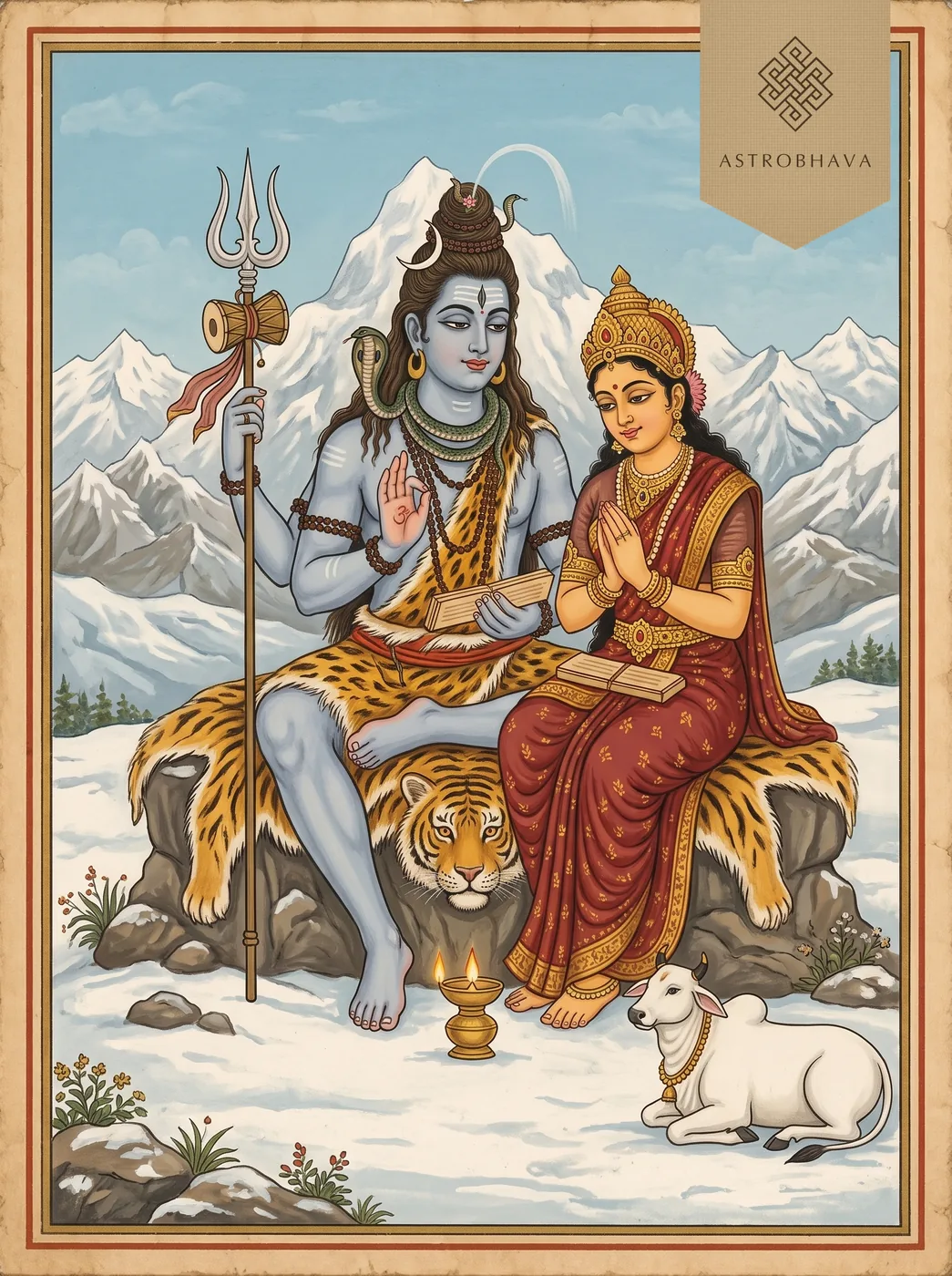
Siddha Kunjika Stotram
शृणु देवि प्रवक्ष्यामि कुञ्जिकास्तोत्रमुत्तमम् । येन मन्त्रप्रभावेण चण्डीजापः शुभो भवेत् ॥In Devanagari, Tamil, Telugu, Kannada, Malayalam and English — with the meaning of every word, and the one syllable most people pronounce wrongly.
What the Siddha Kunjika Stotram is
The Siddha Kunjika Stotram is addressed to the Goddess as Chamunda, the form that slays the demons Chanda and Munda in the Devi Mahatmya. It is not one of the thirteen chapters of that Purana text. Its colophon places it in the Gauri Tantra section of the Rudrayamala, as a conversation in which Shiva teaches Parvati, and one edition records a second colophon that names the Damara Tantra instead. The Gita Press edition of the Durga Saptashati prints it among the texts that accompany the main recitation. The sequence is compact. Four verses of instruction come first, then a prose mantra built on the nine-syllable Chamunda formula and a chain of commands to blaze. Eight verses of salutation follow, several pairing an epithet with a run of seed syllables, such as dham dhim dhum for the consort of Dhurjati. Two closing verses name its purpose, the awakening of the mantra, and ask that it be kept from those without devotion.
Shiva hands Parvati the key
According to the colophon, the setting is a private teaching: Shiva speaks and Parvati listens, and the text never steps outside that frame. Shiva opens by naming what the Kunjika makes unnecessary. A Durga Saptashati recitation is normally surrounded by subsidiary texts, with the Kavacha, Argala and Kilaka before it and the three Rahasyas after it, and their number and order vary from one lineage to another. Verse 2 lists these and adds the Sukta, the dhyana verse, nyasa and formal worship, saying none of them is needed with this hymn. Verse 3 goes further: the verse says that reciting the Kunjika alone brings the fruit of the Durga text. The title carries the same idea, since kunjika means a key, and the closing lines call the hymn the cause of the mantra's awakening. The tone is guarded throughout. Shiva tells Parvati to protect the text with effort, as one protects what is most private, and not to give it to anyone lacking devotion. The final verse turns the claim around: the verse says that a Saptashati recited without the Kunjika brings no success, like weeping in a forest where no one hears. Copies of the hymn differ in wording and numbering, so editions disagree on small points, such as whether a line of salutation to Kunjika follows verse 12; the Gita Press text leaves it out.
The mantra, in six scripts
- शृणु
- śṛṇu — listen
- देवि
- devi — O Goddess
- प्रवक्ष्यामि
- pravakṣyāmi — I shall tell
- कुञ्जिकास्तोत्रमुत्तमम्
- kuñjikāstotramuttamam — the excellent Kunjika hymn
- येन
- yena — by which
- मन्त्रप्रभावेण
- mantraprabhāveṇa — by the mantra's power
- चण्डीजापः
- caṇḍījāpaḥ — recitation of the Chandi
- शुभो
- śubho — auspicious
- भवेत्
- bhavet — becomes
Siddha Kunjika Stotram lyrics in full
All 15 verses, in Sanskrit, Tamil, Telugu, Kannada, Malayalam and English, each with its meaning. Choose a script:
Download the Siddha Kunjika Stotram PDFAll 15 verses with their meanings, in Sanskrit. Free to print and keep.
शृणु देवि प्रवक्ष्यामि कुञ्जिकास्तोत्रमुत्तमम् ।
येन मन्त्रप्रभावेण चण्डीजापः शुभो भवेत् ॥
ஶ்ருணு தேவி ப்ரவக்ஷ்யாமி குஞ்ஜிகாஸ்தோத்ரமுத்தமம் ।
யேந மந்த்ரப்ரபாவேண சண்டீஜாபஃ ஶுபோ பவேத் ॥
శృణు దేవి ప్రవక్ష్యామి కుఞ్జికాస్తోత్రముత్తమమ్ ।
యేన మన్త్రప్రభావేణ చణ్డీజాపః శుభో భవేత్ ॥
ಶೃಣು ದೇವಿ ಪ್ರವಕ್ಷ್ಯಾಮಿ ಕುಞ್ಜಿಕಾಸ್ತೋತ್ರಮುತ್ತಮಮ್ ।
ಯೇನ ಮನ್ತ್ರಪ್ರಭಾವೇಣ ಚಣ್ಡೀಜಾಪಃ ಶುಭೋ ಭವೇತ್ ॥
ശൃണു ദേവി പ്രവക്ഷ്യാമി കുഞ്ജികാസ്തോത്രമുത്തമമ് ।
യേന മന്ത്രപ്രഭാവേണ ചണ്ഡീജാപഃ ശുഭോ ഭവേത് ॥
śṛṇu devi pravakṣyāmi kuñjikāstotramuttamam |
yena mantraprabhāveṇa caṇḍījāpaḥ śubho bhavet ||
Shiva says: Listen, O Devi, I will tell you the excellent Kunjika Stotram, by the power of whose mantra the recitation of the Chandi becomes auspicious.
न कवचं नार्गलास्तोत्रं कीलकं न रहस्यकम् ।
न सूक्तं नापि ध्यानं च न न्यासो न च वार्चनम् ॥
ந கவசம் நார்கலாஸ்தோத்ரம் கீலகம் ந ரஹஸ்யகம் ।
ந ஸூக்தம் நாபி த்யாநம் ச ந ந்யாஸோ ந ச வார்சநம் ॥
న కవచం నార్గలాస్తోత్రం కీలకం న రహస్యకమ్ ।
న సూక్తం నాపి ధ్యానం చ న న్యాసో న చ వార్చనమ్ ॥
ನ ಕವಚಂ ನಾರ್ಗಲಾಸ್ತೋತ್ರಂ ಕೀಲಕಂ ನ ರಹಸ್ಯಕಮ್ ।
ನ ಸೂಕ್ತಂ ನಾಪಿ ಧ್ಯಾನಂ ಚ ನ ನ್ಯಾಸೋ ನ ಚ ವಾರ್ಚನಮ್ ॥
ന കവചം നാര്ഗലാസ്തോത്രം കീലകം ന രഹസ്യകമ് ।
ന സൂക്തം നാപി ധ്യാനം ച ന ന്യാസോ ന ച വാര്ചനമ് ॥
na kavacaṃ nārgalāstotraṃ kīlakaṃ na rahasyakam |
na sūktaṃ nāpi dhyānaṃ ca na nyāso na ca vārcanam ||
With it there is no need for the Kavacha, the Argala Stotra, the Kilaka or the Rahasyas, nor for the Sukta, the meditation verse, the nyasa or the formal worship.
कुञ्जिकापाठमात्रेण दुर्गापाठफलं लभेत् ।
अति गुह्यतरं देवि देवानामपि दुर्लभम् ॥
குஞ்ஜிகாபாடமாத்ரேண துர்காபாடபலம் லபேத் ।
அதி குஹ்யதரம் தேவி தேவாநாமபி துர்லபம் ॥
కుఞ్జికాపాఠమాత్రేణ దుర్గాపాఠఫలం లభేత్ ।
అతి గుహ్యతరం దేవి దేవానామపి దుర్లభమ్ ॥
ಕುಞ್ಜಿಕಾಪಾಠಮಾತ್ರೇಣ ದುರ್ಗಾಪಾಠಫಲಂ ಲಭೇತ್ ।
ಅತಿ ಗುಹ್ಯತರಂ ದೇವಿ ದೇವಾನಾಮಪಿ ದುರ್ಲಭಮ್ ॥
കുഞ്ജികാപാഠമാത്രേണ ദുര്ഗാപാഠഫലം ലഭേത് ।
അതി ഗുഹ്യതരം ദേവി ദേവാനാമപി ദുര്ലഭമ് ॥
kuñjikāpāṭhamātreṇa durgāpāṭhaphalaṃ labhet |
ati guhyataraṃ devi devānāmapi durlabham ||
The verse says that by reciting the Kunjika alone one gains the fruit of reciting the Durga text. O Devi, it is most secret and hard to obtain even for the gods.
गोपनीयं प्रयत्नेन स्वयोनिरिव पार्वति ।
मारणं मोहनं वश्यं स्तम्भनोच्चाटनादिकम् ।
पाठमात्रेण संसिद्ध्येत् कुञ्जिकास्तोत्रमुत्तमम् ॥
கோபநீயம் ப்ரயத்நேந ஸ்வயோநிரிவ பார்வதி ।
மாரணம் மோஹநம் வஶ்யம் ஸ்தம்பநோச்சாடநாதிகம் ।
பாடமாத்ரேண ஸம்ஸித்த்யேத் குஞ்ஜிகாஸ்தோத்ரமுத்தமம் ॥
గోపనీయం ప్రయత్నేన స్వయోనిరివ పార్వతి ।
మారణం మోహనం వశ్యం స్తమ్భనోచ్చాటనాదికమ్ ।
పాఠమాత్రేణ సంసిద్ధ్యేత్ కుఞ్జికాస్తోత్రముత్తమమ్ ॥
ಗೋಪನೀಯಂ ಪ್ರಯತ್ನೇನ ಸ್ವಯೋನಿರಿವ ಪಾರ್ವತಿ ।
ಮಾರಣಂ ಮೋಹನಂ ವಶ್ಯಂ ಸ್ತಮ್ಭನೋಚ್ಚಾಟನಾದಿಕಮ್ ।
ಪಾಠಮಾತ್ರೇಣ ಸಂಸಿದ್ಧ್ಯೇತ್ ಕುಞ್ಜಿಕಾಸ್ತೋತ್ರಮುತ್ತಮಮ್ ॥
ഗോപനീയം പ്രയത്നേന സ്വയോനിരിവ പാര്വതി ।
മാരണം മോഹനം വശ്യം സ്തമ്ഭനോച്ചാടനാദികമ് ।
പാഠമാത്രേണ സംസിദ്ധ്യേത് കുഞ്ജികാസ്തോത്രമുത്തമമ് ॥
gopanīyaṃ prayatnena svayoniriva pārvati |
māraṇaṃ mohanaṃ vaśyaṃ stambhanoccāṭanādikam |
pāṭhamātreṇa saṃsiddhyet kuñjikāstotramuttamam ||
O Parvati, it should be guarded with care, as one guards what is most private. The verse says that by recitation alone this excellent Kunjika Stotram accomplishes the rites of destroying, bewitching, subduing, immobilising, driving away and the like.
ॐ ऐं ह्रीं क्लीं चामुण्डायै विच्चे ।
ॐ ग्लौं हुं क्लीं जूं सः ज्वालय ज्वालय ज्वल ज्वल प्रज्वल प्रज्वल ऐं ह्रीं क्लीं चामुण्डायै विच्चे ज्वल हं सं लं क्षं फट् स्वाहा ॥
ௐ ஐம் ஹ்ரீம் க்லீம் சாமுண்டாயை விச்சே ।
ௐ க்லௌம் ஹும் க்லீம் ஜூம் ஸஃ ஜ்வாலய ஜ்வாலய ஜ்வல ஜ்வல ப்ரஜ்வல ப்ரஜ்வல ஐம் ஹ்ரீம் க்லீம் சாமுண்டாயை விச்சே ஜ்வல ஹம் ஸம் லம் க்ஷம் பட் ஸ்வாஹா ॥
ఓం ఐం హ్రీం క్లీం చాముణ్డాయై విచ్చే ।
ఓం గ్లౌం హుం క్లీం జూం సః జ్వాలయ జ్వాలయ జ్వల జ్వల ప్రజ్వల ప్రజ్వల ఐం హ్రీం క్లీం చాముణ్డాయై విచ్చే జ్వల హం సం లం క్షం ఫట్ స్వాహా ॥
ಓಂ ಐಂ ಹ್ರೀಂ ಕ್ಲೀಂ ಚಾಮುಣ್ಡಾಯೈ ವಿಚ್ಚೇ ।
ಓಂ ಗ್ಲೌಂ ಹುಂ ಕ್ಲೀಂ ಜೂಂ ಸಃ ಜ್ವಾಲಯ ಜ್ವಾಲಯ ಜ್ವಲ ಜ್ವಲ ಪ್ರಜ್ವಲ ಪ್ರಜ್ವಲ ಐಂ ಹ್ರೀಂ ಕ್ಲೀಂ ಚಾಮುಣ್ಡಾಯೈ ವಿಚ್ಚೇ ಜ್ವಲ ಹಂ ಸಂ ಲಂ ಕ್ಷಂ ಫಟ್ ಸ್ವಾಹಾ ॥
ഓം ഐം ഹ്രീം ക്ലീം ചാമുണ്ഡായൈ വിച്ചേ ।
ഓം ഗ്ലൌം ഹും ക്ലീം ജൂം സഃ ജ്വാലയ ജ്വാലയ ജ്വല ജ്വല പ്രജ്വല പ്രജ്വല ഐം ഹ്രീം ക്ലീം ചാമുണ്ഡായൈ വിച്ചേ ജ്വല ഹം സം ലം ക്ഷം ഫട് സ്വാഹാ ॥
oṃ aiṃ hrīṃ klīṃ cāmuṇḍāyai vicce |
oṃ glauṃ huṃ klīṃ jūṃ saḥ jvālaya jvālaya jvala jvala prajvala prajvala aiṃ hrīṃ klīṃ cāmuṇḍāyai vicce jvala haṃ saṃ laṃ kṣaṃ phaṭ svāhā ||
The mantra: Om, with the seed syllables Aim, Hrim, Klim, to Chamunda, Vicche. With further seed syllables it calls on her to blaze, blaze, flame, flame, flare up, flare up, repeats the Chamunda mantra, and ends with the syllables Ham Sam Lam Ksham, Phat and Svaha.
नमस्ते रुद्ररूपिण्यै नमस्ते मधुमर्दिनि ।
नमः कैटभहारिण्यै नमस्ते महिषार्दिनि ॥
நமஸ்தே ருத்ரரூபிண்யை நமஸ்தே மதுமர்திநி ।
நமஃ கைடபஹாரிண்யை நமஸ்தே மஹிஷார்திநி ॥
నమస్తే రుద్రరూపిణ్యై నమస్తే మధుమర్దిని ।
నమః కైటభహారిణ్యై నమస్తే మహిషార్దిని ॥
ನಮಸ್ತೇ ರುದ್ರರೂಪಿಣ್ಯೈ ನಮಸ್ತೇ ಮಧುಮರ್ದಿನಿ ।
ನಮಃ ಕೈಟಭಹಾರಿಣ್ಯೈ ನಮಸ್ತೇ ಮಹಿಷಾರ್ದಿನಿ ॥
നമസ്തേ രുദ്രരൂപിണ്യൈ നമസ്തേ മധുമര്ദിനി ।
നമഃ കൈടഭഹാരിണ്യൈ നമസ്തേ മഹിഷാര്ദിനി ॥
namaste rudrarūpiṇyai namaste madhumardini |
namaḥ kaiṭabhahāriṇyai namaste mahiṣārdini ||
Salutations to you who take the form of Rudra; salutations to you, crusher of Madhu. Salutations to the slayer of Kaitabha; salutations to you, tormentor of Mahisha.
नमस्ते शुम्भहन्त्र्यै च निशुम्भासुरघातिनि ।
जाग्रतं हि महादेवि जपं सिद्धं कुरुष्व मे ॥
நமஸ்தே ஶும்பஹந்த்ர்யை ச நிஶும்பாஸுரகாதிநி ।
ஜாக்ரதம் ஹி மஹாதேவி ஜபம் ஸித்தம் குருஷ்வ மே ॥
నమస్తే శుమ్భహన్త్ర్యై చ నిశుమ్భాసురఘాతిని ।
జాగ్రతం హి మహాదేవి జపం సిద్ధం కురుష్వ మే ॥
ನಮಸ್ತೇ ಶುಮ್ಭಹನ್ತ್ರ್ಯೈ ಚ ನಿಶುಮ್ಭಾಸುರಘಾತಿನಿ ।
ಜಾಗ್ರತಂ ಹಿ ಮಹಾದೇವಿ ಜಪಂ ಸಿದ್ಧಂ ಕುರುಷ್ವ ಮೇ ॥
നമസ്തേ ശുമ്ഭഹന്ത്ര്യൈ ച നിശുമ്ഭാസുരഘാതിനി ।
ജാഗ്രതം ഹി മഹാദേവി ജപം സിദ്ധം കുരുഷ്വ മേ ॥
namaste śumbhahantryai ca niśumbhāsuraghātini |
jāgrataṃ hi mahādevi japaṃ siddhaṃ kuruṣva me ||
Salutations to you, killer of Shumbha and slayer of the demon Nishumbha. O great Goddess, awaken my recitation and make it fruitful.
ऐंकारी सृष्टिरूपायै ह्रींकारी प्रतिपालिका ।
क्लींकारी कामरूपिण्यै बीजरूपे नमोऽस्तु ते ॥
ஐம்காரீ ஸ்ருஷ்டிரூபாயை ஹ்ரீம்காரீ ப்ரதிபாலிகா ।
க்லீம்காரீ காமரூபிண்யை பீஜரூபே நமோஸ்து தே ॥
ఐంకారీ సృష్టిరూపాయై హ్రీంకారీ ప్రతిపాలికా ।
క్లీంకారీ కామరూపిణ్యై బీజరూపే నమోఽస్తు తే ॥
ಐಂಕಾರೀ ಸೃಷ್ಟಿರೂಪಾಯೈ ಹ್ರೀಂಕಾರೀ ಪ್ರತಿಪಾಲಿಕಾ ।
ಕ್ಲೀಂಕಾರೀ ಕಾಮರೂಪಿಣ್ಯೈ ಬೀಜರೂಪೇ ನಮೋಽಸ್ತು ತೇ ॥
ഐംകാരീ സൃഷ്ടിരൂപായൈ ഹ്രീംകാരീ പ്രതിപാലികാ ।
ക്ലീംകാരീ കാമരൂപിണ്യൈ ബീജരൂപേ നമോഽസ്തു തേ ॥
aiṃkārī sṛṣṭirūpāyai hrīṃkārī pratipālikā |
klīṃkārī kāmarūpiṇyai bījarūpe namo'stu te ||
As the syllable Aim you are creation; as the syllable Hrim you are the protector; as the syllable Klim you are the form of desire. O you whose form is the seed syllable, salutations to you.
चामुण्डा चण्डघाती च यैकारी वरदायिनी ।
विच्चे चाभयदा नित्यं नमस्ते मन्त्ररूपिणि ॥
சாமுண்டா சண்டகாதீ ச யைகாரீ வரதாயிநீ ।
விச்சே சாபயதா நித்யம் நமஸ்தே மந்த்ரரூபிணி ॥
చాముణ్డా చణ్డఘాతీ చ యైకారీ వరదాయినీ ।
విచ్చే చాభయదా నిత్యం నమస్తే మన్త్రరూపిణి ॥
ಚಾಮುಣ್ಡಾ ಚಣ್ಡಘಾತೀ ಚ ಯೈಕಾರೀ ವರದಾಯಿನೀ ।
ವಿಚ್ಚೇ ಚಾಭಯದಾ ನಿತ್ಯಂ ನಮಸ್ತೇ ಮನ್ತ್ರರೂಪಿಣಿ ॥
ചാമുണ്ഡാ ചണ്ഡഘാതീ ച യൈകാരീ വരദായിനീ ।
വിച്ചേ ചാഭയദാ നിത്യം നമസ്തേ മന്ത്രരൂപിണി ॥
cāmuṇḍā caṇḍaghātī ca yaikārī varadāyinī |
vicce cābhayadā nityaṃ namaste mantrarūpiṇi ||
You are Chamunda, the slayer of Chanda; as the syllable Yai you grant boons. As Vicche you always grant fearlessness. Salutations to you whose form is the mantra.
धां धीं धूं धूर्जटेः पत्नी वां वीं वूं वागधीश्वरी ।
क्रां क्रीं क्रूं कालिका देवि शां शीं शूं मे शुभं कुरु ॥
தாம் தீம் தூம் தூர்ஜடேஃ பத்நீ வாம் வீம் வூம் வாகதீஶ்வரீ ।
க்ராம் க்ரீம் க்ரூம் காலிகா தேவி ஶாம் ஶீம் ஶூம் மே ஶுபம் குரு ॥
ధాం ధీం ధూం ధూర్జటేః పత్నీ వాం వీం వూం వాగధీశ్వరీ ।
క్రాం క్రీం క్రూం కాలికా దేవి శాం శీం శూం మే శుభం కురు ॥
ಧಾಂ ಧೀಂ ಧೂಂ ಧೂರ್ಜಟೇಃ ಪತ್ನೀ ವಾಂ ವೀಂ ವೂಂ ವಾಗಧೀಶ್ವರೀ ।
ಕ್ರಾಂ ಕ್ರೀಂ ಕ್ರೂಂ ಕಾಲಿಕಾ ದೇವಿ ಶಾಂ ಶೀಂ ಶೂಂ ಮೇ ಶುಭಂ ಕುರು ॥
ധാം ധീം ധൂം ധൂര്ജടേഃ പത്നീ വാം വീം വൂം വാഗധീശ്വരീ ।
ക്രാം ക്രീം ക്രൂം കാലികാ ദേവി ശാം ശീം ശൂം മേ ശുഭം കുരു ॥
dhāṃ dhīṃ dhūṃ dhūrjaṭeḥ patnī vāṃ vīṃ vūṃ vāgadhīśvarī |
krāṃ krīṃ krūṃ kālikā devi śāṃ śīṃ śūṃ me śubhaṃ kuru ||
Dham Dhim Dhum, you are the wife of Shiva the matted-haired; Vam Vim Vum, you are the sovereign of speech. Kram Krim Krum, O Goddess Kalika; Sham Shim Shum, bring me good fortune.
हुं हुं हुंकाररूपिण्यै जं जं जं जम्भनादिनी ।
भ्रां भ्रीं भ्रूं भैरवी भद्रे भवान्यै ते नमो नमः ॥
ஹும் ஹும் ஹும்காரரூபிண்யை ஜம் ஜம் ஜம் ஜம்பநாதிநீ ।
ப்ராம் ப்ரீம் ப்ரூம் பைரவீ பத்ரே பவாந்யை தே நமோ நமஃ ॥
హుం హుం హుంకారరూపిణ్యై జం జం జం జమ్భనాదినీ ।
భ్రాం భ్రీం భ్రూం భైరవీ భద్రే భవాన్యై తే నమో నమః ॥
ಹುಂ ಹುಂ ಹುಂಕಾರರೂಪಿಣ್ಯೈ ಜಂ ಜಂ ಜಂ ಜಮ್ಭನಾದಿನೀ ।
ಭ್ರಾಂ ಭ್ರೀಂ ಭ್ರೂಂ ಭೈರವೀ ಭದ್ರೇ ಭವಾನ್ಯೈ ತೇ ನಮೋ ನಮಃ ॥
ഹും ഹും ഹുംകാരരൂപിണ്യൈ ജം ജം ജം ജമ്ഭനാദിനീ ।
ഭ്രാം ഭ്രീം ഭ്രൂം ഭൈരവീ ഭദ്രേ ഭവാന്യൈ തേ നമോ നമഃ ॥
huṃ huṃ huṃkārarūpiṇyai jaṃ jaṃ jaṃ jambhanādinī |
bhrāṃ bhrīṃ bhrūṃ bhairavī bhadre bhavānyai te namo namaḥ ||
Hum Hum, to you whose form is the sound Hum; Jam Jam Jam, you who roar like thunder. Bhram Bhrim Bhrum, O Bhairavi, O auspicious one, to you, Bhavani, salutations again and again.
अं कं चं टं तं पं यं शं वीं दुं ऐं वीं हं क्षं ।
धिजाग्रं धिजाग्रं त्रोटय त्रोटय दीप्तं कुरु कुरु स्वाहा ॥
அம் கம் சம் டம் தம் பம் யம் ஶம் வீம் தும் ஐம் வீம் ஹம் க்ஷம் ।
திஜாக்ரம் திஜாக்ரம் த்ரோடய த்ரோடய தீப்தம் குரு குரு ஸ்வாஹா ॥
అం కం చం టం తం పం యం శం వీం దుం ఐం వీం హం క్షం ।
ధిజాగ్రం ధిజాగ్రం త్రోటయ త్రోటయ దీప్తం కురు కురు స్వాహా ॥
ಅಂ ಕಂ ಚಂ ಟಂ ತಂ ಪಂ ಯಂ ಶಂ ವೀಂ ದುಂ ಐಂ ವೀಂ ಹಂ ಕ್ಷಂ ।
ಧಿಜಾಗ್ರಂ ಧಿಜಾಗ್ರಂ ತ್ರೋಟಯ ತ್ರೋಟಯ ದೀಪ್ತಂ ಕುರು ಕುರು ಸ್ವಾಹಾ ॥
അം കം ചം ടം തം പം യം ശം വീം ദും ഐം വീം ഹം ക്ഷം ।
ധിജാഗ്രം ധിജാഗ്രം ത്രോടയ ത്രോടയ ദീപ്തം കുരു കുരു സ്വാഹാ ॥
aṃ kaṃ caṃ ṭaṃ taṃ paṃ yaṃ śaṃ vīṃ duṃ aiṃ vīṃ haṃ kṣaṃ |
dhijāgraṃ dhijāgraṃ troṭaya troṭaya dīptaṃ kuru kuru svāhā ||
A string of seed syllables (Am Kam Cham Tam Tam Pam Yam Sham Vim Dum Aim Vim Ham Ksham). Awaken, awaken; break through, break through; make it shine, make it shine, Svaha.
पां पीं पूं पार्वती पूर्णा खां खीं खूं खेचरी तथा ।
सां सीं सूं सप्तशती देव्या मन्त्रसिद्धिं कुरुष्व मे ॥
பாம் பீம் பூம் பார்வதீ பூர்ணா காம் கீம் கூம் கேசரீ ததா ।
ஸாம் ஸீம் ஸூம் ஸப்தஶதீ தேவ்யா மந்த்ரஸித்திம் குருஷ்வ மே ॥
పాం పీం పూం పార్వతీ పూర్ణా ఖాం ఖీం ఖూం ఖేచరీ తథా ।
సాం సీం సూం సప్తశతీ దేవ్యా మన్త్రసిద్ధిం కురుష్వ మే ॥
ಪಾಂ ಪೀಂ ಪೂಂ ಪಾರ್ವತೀ ಪೂರ್ಣಾ ಖಾಂ ಖೀಂ ಖೂಂ ಖೇಚರೀ ತಥಾ ।
ಸಾಂ ಸೀಂ ಸೂಂ ಸಪ್ತಶತೀ ದೇವ್ಯಾ ಮನ್ತ್ರಸಿದ್ಧಿಂ ಕುರುಷ್ವ ಮೇ ॥
പാം പീം പൂം പാര്വതീ പൂര്ണാ ഖാം ഖീം ഖൂം ഖേചരീ തഥാ ।
സാം സീം സൂം സപ്തശതീ ദേവ്യാ മന്ത്രസിദ്ധിം കുരുഷ്വ മേ ॥
pāṃ pīṃ pūṃ pārvatī pūrṇā khāṃ khīṃ khūṃ khecarī tathā |
sāṃ sīṃ sūṃ saptaśatī devyā mantrasiddhiṃ kuruṣva me ||
Pam Pim Pum, you are Parvati, the complete one; Kham Khim Khum, you are she who moves through the sky. Sam Sim Sum, grant me success in the mantras of the Devi's Saptashati.
इदं तु कुञ्जिकास्तोत्रं मन्त्रजागर्तिहेतवे ।
अभक्ते नैव दातव्यं गोपितं रक्ष पार्वति ॥
இதம் து குஞ்ஜிகாஸ்தோத்ரம் மந்த்ரஜாகர்திஹேதவே ।
அபக்தே நைவ தாதவ்யம் கோபிதம் ரக்ஷ பார்வதி ॥
ఇదం తు కుఞ్జికాస్తోత్రం మన్త్రజాగర్తిహేతవే ।
అభక్తే నైవ దాతవ్యం గోపితం రక్ష పార్వతి ॥
ಇದಂ ತು ಕುಞ್ಜಿಕಾಸ್ತೋತ್ರಂ ಮನ್ತ್ರಜಾಗರ್ತಿಹೇತವೇ ।
ಅಭಕ್ತೇ ನೈವ ದಾತವ್ಯಂ ಗೋಪಿತಂ ರಕ್ಷ ಪಾರ್ವತಿ ॥
ഇദം തു കുഞ്ജികാസ്തോത്രം മന്ത്രജാഗര്തിഹേതവേ ।
അഭക്തേ നൈവ ദാതവ്യം ഗോപിതം രക്ഷ പാര്വതി ॥
idaṃ tu kuñjikāstotraṃ mantrajāgartihetave |
abhakte naiva dātavyaṃ gopitaṃ rakṣa pārvati ||
This Kunjika Stotram is for awakening the mantra. It must not be given to one without devotion; O Parvati, keep it guarded and hidden.
यस्तु कुञ्जिकया देवि हीनां सप्तशतीं पठेत् ।
न तस्य जायते सिद्धिररण्ये रोदनं यथा ॥
யஸ்து குஞ்ஜிகயா தேவி ஹீநாம் ஸப்தஶதீம் படேத் ।
ந தஸ்ய ஜாயதே ஸித்திரரண்யே ரோதநம் யதா ॥
యస్తు కుఞ్జికయా దేవి హీనాం సప్తశతీం పఠేత్ ।
న తస్య జాయతే సిద్ధిరరణ్యే రోదనం యథా ॥
ಯಸ್ತು ಕುಞ್ಜಿಕಯಾ ದೇವಿ ಹೀನಾಂ ಸಪ್ತಶತೀಂ ಪಠೇತ್ ।
ನ ತಸ್ಯ ಜಾಯತೇ ಸಿದ್ಧಿರರಣ್ಯೇ ರೋದನಂ ಯಥಾ ॥
യസ്തു കുഞ്ജികയാ ദേവി ഹീനാം സപ്തശതീം പഠേത് ।
ന തസ്യ ജായതേ സിദ്ധിരരണ്യേ രോദനം യഥാ ॥
yastu kuñjikayā devi hīnāṃ saptaśatīṃ paṭhet |
na tasya jāyate siddhiraraṇye rodanaṃ yathā ||
O Devi, the verse says that whoever recites the Saptashati without the Kunjika gains no success from it, like weeping in a forest.
The syllable people get wrong
The mantra passage uses two related words, jvālaya ('make it blaze') and jvala ('blaze'); the jv is one consonant cluster, so say JVAA-la-ya and JVA-la rather than ju-VAA-la-ya, and keep the long ā only in jvālaya.
When the Siddha Kunjika Stotram is chanted
Weekday. Friday
Festival. Navaratri, as an opening to the Durga Saptashati
Questions
Have your chart read before you decide
Chanting is yours to do, and free. But which deity your situation calls for — and whether a mantra alone is the right response — depends on your chart. Sometimes it is; sometimes it is not.
- Over 30 years in the Guru–Sishya Parampara, from the age of five
- He reads every chart himself — 60 minutes, one to one, never delegated
- Charts are read only between sunrise and sunset, following tradition