Vishnu Suktam
विष्णोर्नु कं वीर्याणि प्र वोचं यः पार्थिवानि विममे रजांसि । यो अस्कभायदुत्तरं सधस्थं विचक्रमाणस्त्रेधोरुगायः ॥Also known as Vishnor Nu Kam
In Devanagari, Tamil, Telugu, Kannada, Malayalam and English — with the meaning of every word, and the one syllable most people pronounce wrongly.
 The Vamana Homam, performed for youBook →
What the Vishnu Suktam is
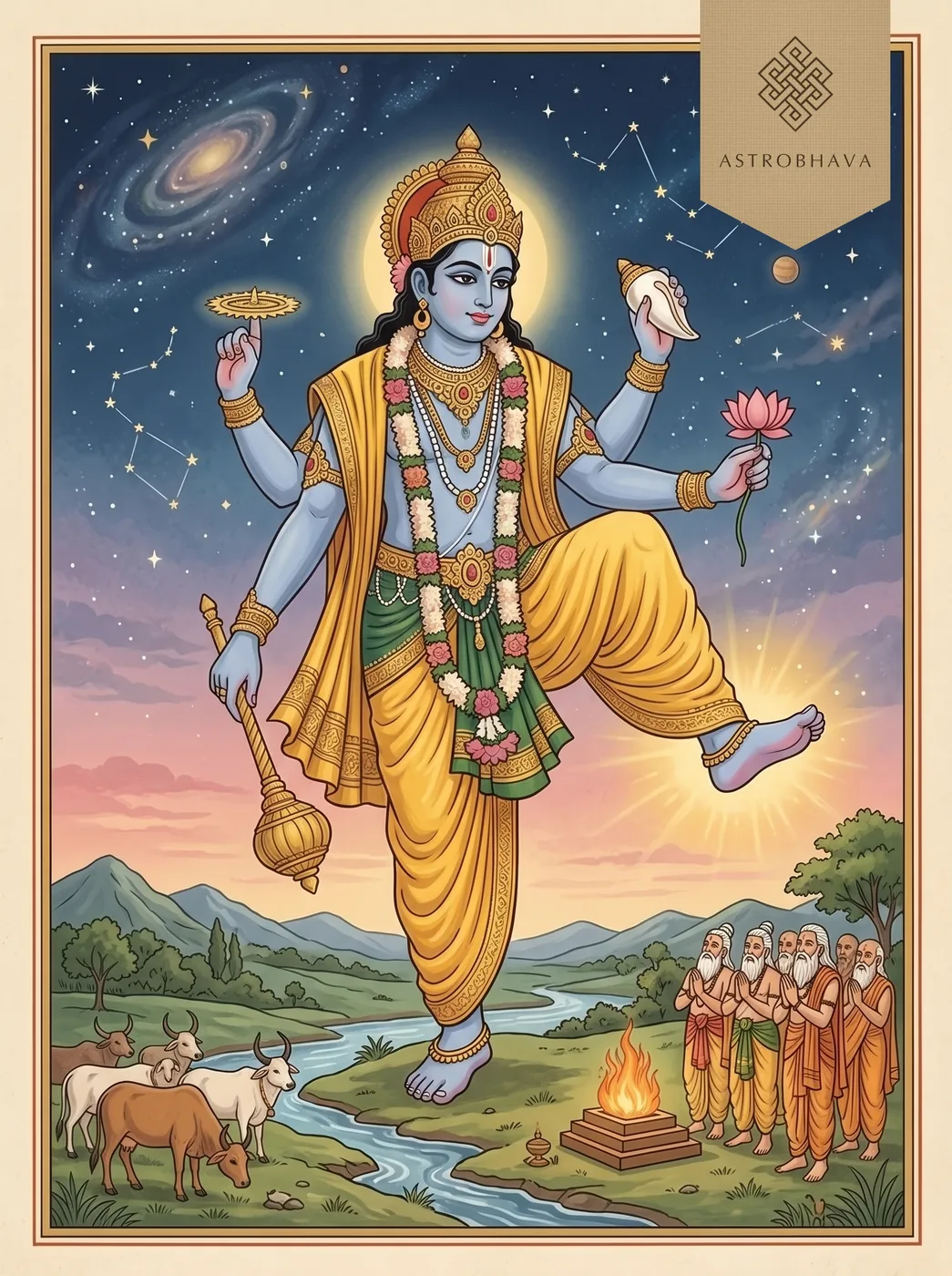
The Vishnu Suktam of the Rigveda is hymn 154 of the first mandala, six verses in trishtubh metre that the tradition assigns to the seer Dirghatamas Aucathya. It opens with the poet's promise to proclaim Vishnu's deeds, then names the one deed it cares about: three strides that measured out the earthly regions and propped up the higher dwelling. Verse 2 compares Vishnu to a fearsome beast that roams the mountains, verse 3 sends the hymn itself to him, verse 4 praises footsteps full of honey, and the last two verses long for his highest footstep, where a spring of honey flows and many-horned cattle move. Some collections print further Vishnu hymns (1.155, 1.156 and others) under the same title; this page gives 1.154 alone. It is printed without accent marks, and chanting with the svaras is learned from a teacher.
Strides measured, then explained by the commentators
The hymn tells no tale of its own; it names a deed and returns to it six times. Later Vedic prose supplied the setting. The Shatapatha Brahmana relates that gods and asuras once contended for the world, and the asuras, sure of their advantage, offered the gods only as much ground as Vishnu could lie upon. Vishnu was a dwarf, yet the gods enclosed him on three sides, set Agni to the east, and by that device won the whole earth. In the same text the three strides are bound to the sacrifice itself: by the first step the earth was gained. Scholars read this as the seed from which the Puranic Vamana narrative grew. Yaska's Nirukta records that the early teachers already disagreed about the strides. Shakapuni took them as earth, the middle air and heaven; Aurnavabha took them as the sun on the mountain of its rising, at the meridian and on the mountain of its setting. Sayana, writing centuries later, reads the higher dwelling of verse 1 as the atmosphere that holds up the worlds, and offers a second reading in which it is the realm where devotees live. The Ashvalayana Shrauta Sutra places the hymn in the third pressing of the Soma rite, with verse 5 serving as the offering verse at the rite of welcoming the Soma.
The mantra, in six scripts
- विष्णोर्नु
- viṣṇornu — of Vishnu, now
- कं
- kaṃ — indeed
- वीर्याणि
- vīryāṇi — mighty deeds
- प्र
- pra — forth
- वोचं
- vocaṃ — I shall proclaim
- यः
- yaḥ — who
- पार्थिवानि
- pārthivāni — earthly
- विममे
- vimame — measured out
- रजांसि
- rajāṃsi — regions
- यो
- yo — who
- अस्कभायदुत्तरं
- askabhāyaduttaraṃ — propped up the higher
- सधस्थं
- sadhasthaṃ — dwelling place
- विचक्रमाणस्त्रेधोरुगायः
- vicakramāṇastredhorugāyaḥ — striding three times, the wide-going one
Vishnu Suktam lyrics in full
The six verses of Rigveda 1.154, printed without accent marks.
All 6 verses, in Sanskrit, Tamil, Telugu, Kannada, Malayalam and English, each with its meaning. Choose a script:
Download the Vishnu Suktam PDFAll 6 verses with their meanings, in Sanskrit. Free to print and keep.
विष्णोर्नु कं वीर्याणि प्र वोचं यः पार्थिवानि विममे रजांसि ।
यो अस्कभायदुत्तरं सधस्थं विचक्रमाणस्त्रेधोरुगायः ॥
விஷ்ணோர்நு கம் வீர்யாணி ப்ர வோசம் யஃ பார்திவாநி விமமே ரஜாம்ஸி ।
யோ அஸ்கபாயதுத்தரம் ஸதஸ்தம் விசக்ரமாணஸ்த்ரேதோருகாயஃ ॥
విష్ణోర్ను కం వీర్యాణి ప్ర వోచం యః పార్థివాని విమమే రజాంసి ।
యో అస్కభాయదుత్తరం సధస్థం విచక్రమాణస్త్రేధోరుగాయః ॥
ವಿಷ್ಣೋರ್ನು ಕಂ ವೀರ್ಯಾಣಿ ಪ್ರ ವೋಚಂ ಯಃ ಪಾರ್ಥಿವಾನಿ ವಿಮಮೇ ರಜಾಂಸಿ ।
ಯೋ ಅಸ್ಕಭಾಯದುತ್ತರಂ ಸಧಸ್ಥಂ ವಿಚಕ್ರಮಾಣಸ್ತ್ರೇಧೋರುಗಾಯಃ ॥
വിഷ്ണോര്നു കം വീര്യാണി പ്ര വോചം യഃ പാര്ഥിവാനി വിമമേ രജാംസി ।
യോ അസ്കഭായദുത്തരം സധസ്ഥം വിചക്രമാണസ്ത്രേധോരുഗായഃ ॥
viṣṇornu kaṃ vīryāṇi pra vocaṃ yaḥ pārthivāni vimame rajāṃsi |
yo askabhāyaduttaraṃ sadhasthaṃ vicakramāṇastredhorugāyaḥ ||
Now I will proclaim the mighty deeds of Vishnu, who measured out the earthly regions. He propped up the higher dwelling place, the wide-striding one, as he stepped forth three times.
प्र तद्विष्णुः स्तवते वीर्येण मृगो न भीमः कुचरो गिरिष्ठाः ।
यस्योरुषु त्रिषु विक्रमणेष्वधिक्षियन्ति भुवनानि विश्वा ॥
ப்ர தத்விஷ்ணுஃ ஸ்தவதே வீர்யேண ம்ருகோ ந பீமஃ குசரோ கிரிஷ்டாஃ ।
யஸ்யோருஷு த்ரிஷு விக்ரமணேஷ்வதிக்ஷியந்தி புவநாநி விஶ்வா ॥
ప్ర తద్విష్ణుః స్తవతే వీర్యేణ మృగో న భీమః కుచరో గిరిష్ఠాః ।
యస్యోరుషు త్రిషు విక్రమణేష్వధిక్షియన్తి భువనాని విశ్వా ॥
ಪ್ರ ತದ್ವಿಷ್ಣುಃ ಸ್ತವತೇ ವೀರ್ಯೇಣ ಮೃಗೋ ನ ಭೀಮಃ ಕುಚರೋ ಗಿರಿಷ್ಠಾಃ ।
ಯಸ್ಯೋರುಷು ತ್ರಿಷು ವಿಕ್ರಮಣೇಷ್ವಧಿಕ್ಷಿಯನ್ತಿ ಭುವನಾನಿ ವಿಶ್ವಾ ॥
പ്ര തദ്വിഷ്ണുഃ സ്തവതേ വീര്യേണ മൃഗോ ന ഭീമഃ കുചരോ ഗിരിഷ്ഠാഃ ।
യസ്യോരുഷു ത്രിഷു വിക്രമണേഷ്വധിക്ഷിയന്തി ഭുവനാനി വിശ്വാ ॥
pra tadviṣṇuḥ stavate vīryeṇa mṛgo na bhīmaḥ kucaro giriṣṭhāḥ |
yasyoruṣu triṣu vikramaṇeṣvadhikṣiyanti bhuvanāni viśvā ||
Vishnu is praised for this mighty deed, like a fearsome wild beast that roams at will and dwells in the mountains. Within his three wide strides all the worlds abide.
प्र विष्णवे शूषमेतु मन्म गिरिक्षित उरुगायाय वृष्णे ।
य इदं दीर्घं प्रयतं सधस्थमेको विममे त्रिभिरित्पदेभिः ॥
ப்ர விஷ்ணவே ஶூஷமேது மந்ம கிரிக்ஷித உருகாயாய வ்ருஷ்ணே ।
ய இதம் தீர்கம் ப்ரயதம் ஸதஸ்தமேகோ விமமே த்ரிபிரித்பதேபிஃ ॥
ప్ర విష్ణవే శూషమేతు మన్మ గిరిక్షిత ఉరుగాయాయ వృష్ణే ।
య ఇదం దీర్ఘం ప్రయతం సధస్థమేకో విమమే త్రిభిరిత్పదేభిః ॥
ಪ್ರ ವಿಷ್ಣವೇ ಶೂಷಮೇತು ಮನ್ಮ ಗಿರಿಕ್ಷಿತ ಉರುಗಾಯಾಯ ವೃಷ್ಣೇ ।
ಯ ಇದಂ ದೀರ್ಘಂ ಪ್ರಯತಂ ಸಧಸ್ಥಮೇಕೋ ವಿಮಮೇ ತ್ರಿಭಿರಿತ್ಪದೇಭಿಃ ॥
പ്ര വിഷ്ണവേ ശൂഷമേതു മന്മ ഗിരിക്ഷിത ഉരുഗായായ വൃഷ്ണേ ।
യ ഇദം ദീര്ഘം പ്രയതം സധസ്ഥമേകോ വിമമേ ത്രിഭിരിത്പദേഭിഃ ॥
pra viṣṇave śūṣametu manma girikṣita urugāyāya vṛṣṇe |
ya idaṃ dīrghaṃ prayataṃ sadhasthameko vimame tribhiritpadebhiḥ ||
Let this strong hymn of praise go forth to Vishnu, the mountain-dweller, the wide-striding bull. Alone, with just three steps, he measured out this long, far-stretching common dwelling.
यस्य त्री पूर्णा मधुना पदान्यक्षीयमाणा स्वधया मदन्ति ।
य उ त्रिधातु पृथिवीमुत द्यामेको दाधार भुवनानि विश्वा ॥
யஸ்ய த்ரீ பூர்ணா மதுநா பதாந்யக்ஷீயமாணா ஸ்வதயா மதந்தி ।
ய உ த்ரிதாது ப்ருதிவீமுத த்யாமேகோ தாதார புவநாநி விஶ்வா ॥
యస్య త్రీ పూర్ణా మధునా పదాన్యక్షీయమాణా స్వధయా మదన్తి ।
య ఉ త్రిధాతు పృథివీముత ద్యామేకో దాధార భువనాని విశ్వా ॥
ಯಸ್ಯ ತ್ರೀ ಪೂರ್ಣಾ ಮಧುನಾ ಪದಾನ್ಯಕ್ಷೀಯಮಾಣಾ ಸ್ವಧಯಾ ಮದನ್ತಿ ।
ಯ ಉ ತ್ರಿಧಾತು ಪೃಥಿವೀಮುತ ದ್ಯಾಮೇಕೋ ದಾಧಾರ ಭುವನಾನಿ ವಿಶ್ವಾ ॥
യസ്യ ത്രീ പൂര്ണാ മധുനാ പദാന്യക്ഷീയമാണാ സ്വധയാ മദന്തി ।
യ ഉ ത്രിധാതു പൃഥിവീമുത ദ്യാമേകോ ദാധാര ഭുവനാനി വിശ്വാ ॥
yasya trī pūrṇā madhunā padānyakṣīyamāṇā svadhayā madanti |
ya u tridhātu pṛthivīmuta dyāmeko dādhāra bhuvanāni viśvā ||
His three footsteps, full of honey and never failing, rejoice in their own power. Alone he upholds the threefold earth and heaven, and all the worlds.
तदस्य प्रियमभि पाथो अश्यां नरो यत्र देवयवो मदन्ति ।
उरुक्रमस्य स हि बन्धुरित्था विष्णोः पदे परमे मध्व उत्सः ॥
ததஸ்ய ப்ரியமபி பாதோ அஶ்யாம் நரோ யத்ர தேவயவோ மதந்தி ।
உருக்ரமஸ்ய ஸ ஹி பந்துரித்தா விஷ்ணோஃ பதே பரமே மத்வ உத்ஸஃ ॥
తదస్య ప్రియమభి పాథో అశ్యాం నరో యత్ర దేవయవో మదన్తి ।
ఉరుక్రమస్య స హి బన్ధురిత్థా విష్ణోః పదే పరమే మధ్వ ఉత్సః ॥
ತದಸ್ಯ ಪ್ರಿಯಮಭಿ ಪಾಥೋ ಅಶ್ಯಾಂ ನರೋ ಯತ್ರ ದೇವಯವೋ ಮದನ್ತಿ ।
ಉರುಕ್ರಮಸ್ಯ ಸ ಹಿ ಬನ್ಧುರಿತ್ಥಾ ವಿಷ್ಣೋಃ ಪದೇ ಪರಮೇ ಮಧ್ವ ಉತ್ಸಃ ॥
തദസ്യ പ്രിയമഭി പാഥോ അശ്യാം നരോ യത്ര ദേവയവോ മദന്തി ।
ഉരുക്രമസ്യ സ ഹി ബന്ധുരിത്ഥാ വിഷ്ണോഃ പദേ പരമേ മധ്വ ഉത്സഃ ॥
tadasya priyamabhi pātho aśyāṃ naro yatra devayavo madanti |
urukramasya sa hi bandhuritthā viṣṇoḥ pade parame madhva utsaḥ ||
May I reach his beloved abode, where people devoted to the gods rejoice. For there, truly, is the kinship of the wide-striding one: in the highest footstep of Vishnu is a spring of honey.
ता वां वास्तून्युश्मसि गमध्यै यत्र गावो भूरिशृङ्गा अयासः ।
अत्राह तदुरुगायस्य वृष्णः परमं पदमव भाति भूरि ॥
தா வாம் வாஸ்தூந்யுஶ்மஸி கமத்யை யத்ர காவோ பூரிஶ்ருங்கா அயாஸஃ ।
அத்ராஹ ததுருகாயஸ்ய வ்ருஷ்ணஃ பரமம் பதமவ பாதி பூரி ॥
తా వాం వాస్తూన్యుశ్మసి గమధ్యై యత్ర గావో భూరిశృఙ్గా అయాసః ।
అత్రాహ తదురుగాయస్య వృష్ణః పరమం పదమవ భాతి భూరి ॥
ತಾ ವಾಂ ವಾಸ್ತೂನ್ಯುಶ್ಮಸಿ ಗಮಧ್ಯೈ ಯತ್ರ ಗಾವೋ ಭೂರಿಶೃಙ್ಗಾ ಅಯಾಸಃ ।
ಅತ್ರಾಹ ತದುರುಗಾಯಸ್ಯ ವೃಷ್ಣಃ ಪರಮಂ ಪದಮವ ಭಾತಿ ಭೂರಿ ॥
താ വാം വാസ്തൂന്യുശ്മസി ഗമധ്യൈ യത്ര ഗാവോ ഭൂരിശൃങ്ഗാ അയാസഃ ।
അത്രാഹ തദുരുഗായസ്യ വൃഷ്ണഃ പരമം പദമവ ഭാതി ഭൂരി ॥
tā vāṃ vāstūnyuśmasi gamadhyai yatra gāvo bhūriśṛṅgā ayāsaḥ |
atrāha tadurugāyasya vṛṣṇaḥ paramaṃ padamava bhāti bhūri ||
We long to go to those dwellings of you both, where the many-horned, swift-moving cattle are. There the highest footstep of the wide-striding bull shines down in great splendour.
The syllable people get wrong
The last word of verse 1, tredhorugāyaḥ, is two words fused by sandhi, tredhā (threefold) and urugāyaḥ (wide-striding); the final ā of tredhā and the u of uru merge into a single long o, so it is said tray-DHO-ru-GAA-yah, with no break after tredh and a long aa in gā.
When the Vishnu Suktam is chanted
Weekday. Thursday
Questions
Have your chart read before you decide
Chanting is yours to do, and free. But which deity your situation calls for — and whether a mantra alone is the right response — depends on your chart. Sometimes it is; sometimes it is not.
- Over 30 years in the Guru–Sishya Parampara, from the age of five
- He reads every chart himself — 60 minutes, one to one, never delegated
- Charts are read only between sunrise and sunset, following tradition
