Balaram Mantra
ॐ बलभद्राय नमः ।Also known as Balarama Mantra
In Devanagari, Tamil, Telugu, Kannada, Malayalam and English — with the meaning of every word, and the one syllable most people pronounce wrongly.
 The Dasavathara Homam, performed for youBook →
What the Balaram Mantra is
The Balarama Mantra, often searched as the Balaram mantra, gathers here sixteen items addressed to Balarama, the elder brother of Krishna, also called Baladeva, Balabhadra and Sankarshana. It opens with the short name mantra Om Balabhadraya Namah, which is the first name of the thousand-name list of Balarama. A dhyana verse from the Garga Samhita follows; it pictures him with a shining crown, cheeks touched by curls, a robe the colour of a dark cloud, and his plough and pestle. Next come five verses from the tenth book of the Bhagavata Purana, chapter 68, in which the Kauravas ask his pardon. The longest part is the Balabhadra Stavaraja, the 'king of hymns', from chapter 11 of the Balabhadra Khanda of the Garga Samhita: eight verses of names and deeds and a closing phala verse. The Garga Samhita ascribes the Stavaraja to Vedavyasa and frames it as a hymn the sage Pradvipaka teaches to Duryodhana at his request.
The City Dragged Toward the Ganga
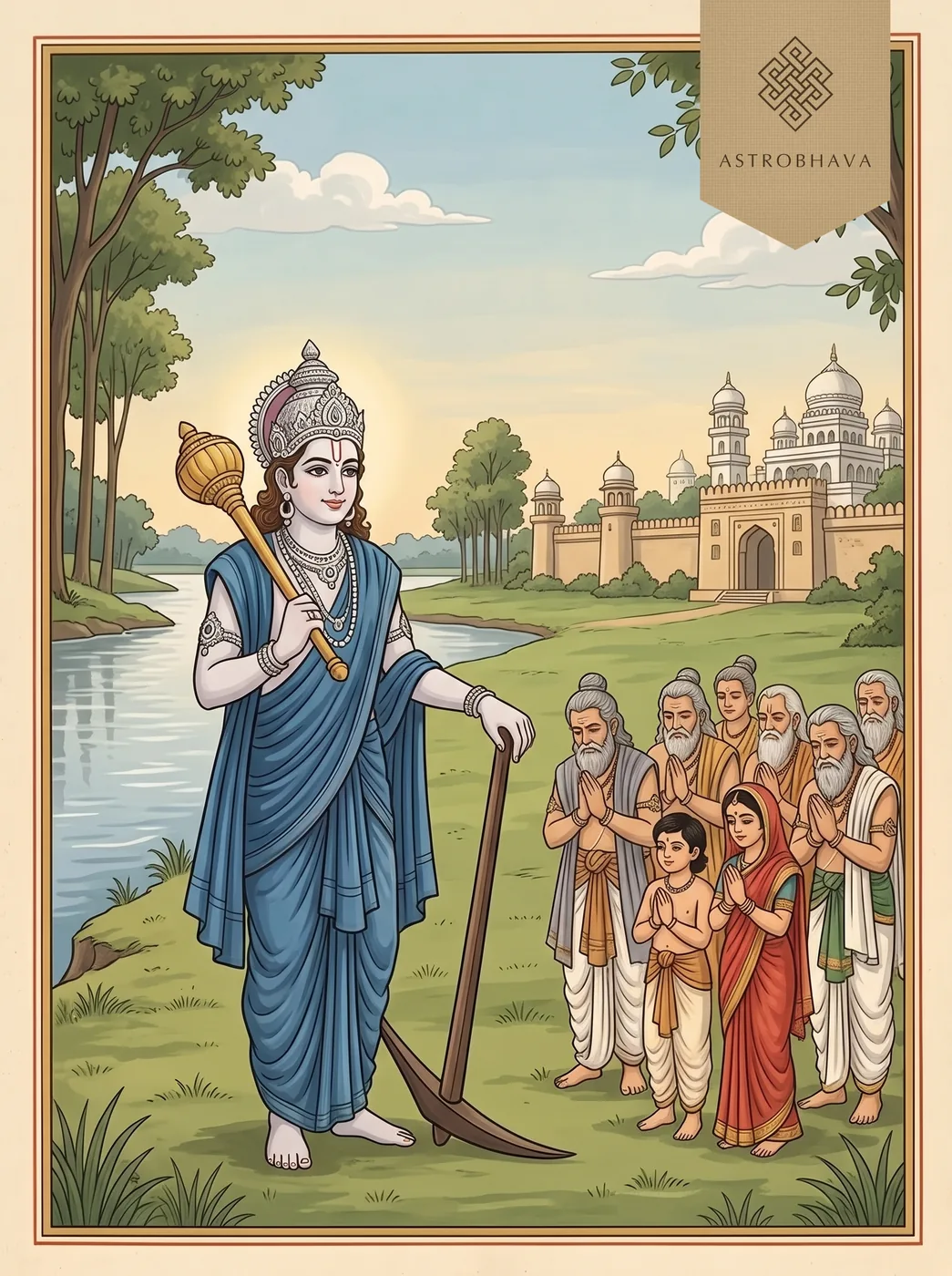
The Bhagavata Purana sets the five Kaurava verses inside its account of Samba's marriage. Samba, a son of Krishna, carried off Lakshmana, the daughter of Duryodhana, at her svayamvara. Six Kuru warriors led by Karna surrounded him, broke his bow, bound him and brought the pair back to Hastinapura. Balarama set out to settle the quarrel without war and sent Uddhava ahead to learn the mind of King Dhritarashtra. The Kurus answered with scorn: the Yadavas, they said, held their royal honours only by Kuru favour. Stung, Balarama dug the tip of his plough under the city and began to haul Hastinapura toward the Ganga. As the ground tilted, the Kurus came out with their families, set Samba and Lakshmana in front, and offered the prayer printed here. They admit they never knew his power, call him the one cause of the world's keeping, rise and end, the bearer of the earth on a thousand heads, and say his anger is meant to teach, not to harm. Balarama was calmed and told them not to fear. Duryodhana sent the couple home with a dowry of elephants, horses, chariots and attendants. The chapter ends by saying the city still stands raised on its southern side along the river, and the Stavaraja remembers the deed when it calls him the one who dragged Hastinapura.
The mantra, in six scripts
- ॐ
- oṃ — Om, the sacred syllable
- बलभद्राय
- balabhadrāya — to Balabhadra, the strong and blessed one
- नमः
- namaḥ — salutation
Balaram Mantra lyrics in full
The name mantra and dhyana, five verses of the Bhagavata Purana, and the eight-verse Balabhadra Stavaraja with its phala verse.
All 16 verses, in Sanskrit, Tamil, Telugu, Kannada, Malayalam and English, each with its meaning. Choose a script:
Download the Balaram Mantra PDFAll 16 verses with their meanings, in Sanskrit. Free to print and keep.
ॐ बलभद्राय नमः ।
ௐ பலபத்ராய நமஃ ।
ఓం బలభద్రాయ నమః ।
ಓಂ ಬಲಭದ್ರಾಯ ನಮಃ ।
ഓം ബലഭദ്രായ നമഃ ।
oṃ balabhadrāya namaḥ |
Om, salutation to Balabhadra, the strong and blessed one (Balarama).
स्फुरदमलकिरीटं किङ्किणीकङ्कणार्हं चलदलककपोलं कुण्डलश्रीमुखाब्जम् ।
तुहिनगिरिमनोज्ञं नीलमेघाम्बराढ्यं हलमुसलविशालं कामपालं समीडे ॥
ஸ்புரதமலகிரீடம் கிங்கிணீகங்கணார்ஹம் சலதலககபோலம் குண்டலஶ்ரீமுகாப்ஜம் ।
துஹிநகிரிமநோஜ்ஞம் நீலமேகாம்பராட்யம் ஹலமுஸலவிஶாலம் காமபாலம் ஸமீடே ॥
స్ఫురదమలకిరీటం కిఙ్కిణీకఙ్కణార్హం చలదలకకపోలం కుణ్డలశ్రీముఖాబ్జమ్ ।
తుహినగిరిమనోజ్ఞం నీలమేఘామ్బరాఢ్యం హలముసలవిశాలం కామపాలం సమీడే ॥
ಸ್ಫುರದಮಲಕಿರೀಟಂ ಕಿಙ್ಕಿಣೀಕಙ್ಕಣಾರ್ಹಂ ಚಲದಲಕಕಪೋಲಂ ಕುಣ್ಡಲಶ್ರೀಮುಖಾಬ್ಜಮ್ ।
ತುಹಿನಗಿರಿಮನೋಜ್ಞಂ ನೀಲಮೇಘಾಮ್ಬರಾಢ್ಯಂ ಹಲಮುಸಲವಿಶಾಲಂ ಕಾಮಪಾಲಂ ಸಮೀಡೇ ॥
സ്ഫുരദമലകിരീടം കിങ്കിണീകങ്കണാര്ഹം ചലദലകകപോലം കുണ്ഡലശ്രീമുഖാബ്ജമ് ।
തുഹിനഗിരിമനോജ്ഞം നീലമേഘാമ്ബരാഢ്യം ഹലമുസലവിശാലം കാമപാലം സമീഡേ ॥
sphuradamalakirīṭaṃ kiṅkiṇīkaṅkaṇārhaṃ caladalakakapolaṃ kuṇḍalaśrīmukhābjam |
tuhinagirimanojñaṃ nīlameghāmbarāḍhyaṃ halamusalaviśālaṃ kāmapālaṃ samīḍe ||
I praise Kamapala, the fulfiller of wishes, whose spotless crown shines, who is fit to wear small bells and bracelets, whose cheeks are touched by moving curls and whose lotus face glows with earrings. He is lovely as a snow mountain, rich in a robe the colour of a dark cloud, and mighty with plough and pestle.
राम रामाखिलाधार प्रभावं न विदाम ते ।
मूढानां नः कुबुद्धीनां क्षन्तुमर्हस्यतिक्रमम् ॥
ராம ராமாகிலாதார ப்ரபாவம் ந விதாம தே ।
மூடாநாம் நஃ குபுத்தீநாம் க்ஷந்துமர்ஹஸ்யதிக்ரமம் ॥
రామ రామాఖిలాధార ప్రభావం న విదామ తే ।
మూఢానాం నః కుబుద్ధీనాం క్షన్తుమర్హస్యతిక్రమమ్ ॥
ರಾಮ ರಾಮಾಖಿಲಾಧಾರ ಪ್ರಭಾವಂ ನ ವಿದಾಮ ತೇ ।
ಮೂಢಾನಾಂ ನಃ ಕುಬುದ್ಧೀನಾಂ ಕ್ಷನ್ತುಮರ್ಹಸ್ಯತಿಕ್ರಮಮ್ ॥
രാമ രാമാഖിലാധാര പ്രഭാവം ന വിദാമ തേ ।
മൂഢാനാം നഃ കുബുദ്ധീനാം ക്ഷന്തുമര്ഹസ്യതിക്രമമ് ॥
rāma rāmākhilādhāra prabhāvaṃ na vidāma te |
mūḍhānāṃ naḥ kubuddhīnāṃ kṣantumarhasyatikramam ||
O Rama, Rama, support of all, we did not know your power. We are foolish and of poor understanding; please forgive our offence.
स्थित्युत्पत्त्यप्ययानां त्वमेको हेतुर्निराश्रयः ।
लोकान् क्रीडनकानीश क्रीडतस्ते वदन्ति हि ॥
ஸ்தித்யுத்பத்த்யப்யயாநாம் த்வமேகோ ஹேதுர்நிராஶ்ரயஃ ।
லோகாந் க்ரீடநகாநீஶ க்ரீடதஸ்தே வதந்தி ஹி ॥
స్థిత్యుత్పత్త్యప్యయానాం త్వమేకో హేతుర్నిరాశ్రయః ।
లోకాన్ క్రీడనకానీశ క్రీడతస్తే వదన్తి హి ॥
ಸ್ಥಿತ್ಯುತ್ಪತ್ತ್ಯಪ್ಯಯಾನಾಂ ತ್ವಮೇಕೋ ಹೇತುರ್ನಿರಾಶ್ರಯಃ ।
ಲೋಕಾನ್ ಕ್ರೀಡನಕಾನೀಶ ಕ್ರೀಡತಸ್ತೇ ವದನ್ತಿ ಹಿ ॥
സ്ഥിത്യുത്പത്ത്യപ്യയാനാം ത്വമേകോ ഹേതുര്നിരാശ്രയഃ ।
ലോകാന് ക്രീഡനകാനീശ ക്രീഡതസ്തേ വദന്തി ഹി ॥
sthityutpattyapyayānāṃ tvameko heturnirāśrayaḥ |
lokān krīḍanakānīśa krīḍataste vadanti hi ||
You alone, needing no support, are the cause of the keeping, the rise and the dissolution of all things. O Lord, it is said that the worlds are toys for you at play.
त्वमेव मूर्ध्नीदमनन्त लीलया भूमण्डलं बिभर्षि सहस्रमूर्धन् ।
अन्ते च यः स्वात्मनिरुद्धविश्वः शेषेऽद्वितीयः परिशिष्यमाणः ॥
த்வமேவ மூர்த்நீதமநந்த லீலயா பூமண்டலம் பிபர்ஷி ஸஹஸ்ரமூர்தந் ।
அந்தே ச யஃ ஸ்வாத்மநிருத்தவிஶ்வஃ ஶேஷேத்விதீயஃ பரிஶிஷ்யமாணஃ ॥
త్వమేవ మూర్ధ్నీదమనన్త లీలయా భూమణ్డలం బిభర్షి సహస్రమూర్ధన్ ।
అన్తే చ యః స్వాత్మనిరుద్ధవిశ్వః శేషేఽద్వితీయః పరిశిష్యమాణః ॥
ತ್ವಮೇವ ಮೂರ್ಧ್ನೀದಮನನ್ತ ಲೀಲಯಾ ಭೂಮಣ್ಡಲಂ ಬಿಭರ್ಷಿ ಸಹಸ್ರಮೂರ್ಧನ್ ।
ಅನ್ತೇ ಚ ಯಃ ಸ್ವಾತ್ಮನಿರುದ್ಧವಿಶ್ವಃ ಶೇಷೇಽದ್ವಿತೀಯಃ ಪರಿಶಿಷ್ಯಮಾಣಃ ॥
ത്വമേവ മൂര്ധ്നീദമനന്ത ലീലയാ ഭൂമണ്ഡലം ബിഭര്ഷി സഹസ്രമൂര്ധന് ।
അന്തേ ച യഃ സ്വാത്മനിരുദ്ധവിശ്വഃ ശേഷേഽദ്വിതീയഃ പരിശിഷ്യമാണഃ ॥
tvameva mūrdhnīdamananta līlayā bhūmaṇḍalaṃ bibharṣi sahasramūrdhan |
ante ca yaḥ svātmaniruddhaviśvaḥ śeṣe'dvitīyaḥ pariśiṣyamāṇaḥ ||
O Ananta of a thousand heads, you alone carry this earth on your head as if in play. At the end, drawing the whole universe into yourself, you lie down as the one without a second, the one who remains.
कोपस्तेऽखिलशिक्षार्थं न द्वेषान्न च मत्सरात् ।
बिभ्रतो भगवन् सत्त्वं स्थितिपालनतत्परः ॥
கோபஸ்தேகிலஶிக்ஷார்தம் ந த்வேஷாந்ந ச மத்ஸராத் ।
பிப்ரதோ பகவந் ஸத்த்வம் ஸ்திதிபாலநதத்பரஃ ॥
కోపస్తేఽఖిలశిక్షార్థం న ద్వేషాన్న చ మత్సరాత్ ।
బిభ్రతో భగవన్ సత్త్వం స్థితిపాలనతత్పరః ॥
ಕೋಪಸ್ತೇಽಖಿಲಶಿಕ್ಷಾರ್ಥಂ ನ ದ್ವೇಷಾನ್ನ ಚ ಮತ್ಸರಾತ್ ।
ಬಿಭ್ರತೋ ಭಗವನ್ ಸತ್ತ್ವಂ ಸ್ಥಿತಿಪಾಲನತತ್ಪರಃ ॥
കോപസ്തേഽഖിലശിക്ഷാര്ഥം ന ദ്വേഷാന്ന ച മത്സരാത് ।
ബിഭ്രതോ ഭഗവന് സത്ത്വം സ്ഥിതിപാലനതത്പരഃ ॥
kopaste'khilaśikṣārthaṃ na dveṣānna ca matsarāt |
bibhrato bhagavan sattvaṃ sthitipālanatatparaḥ ||
O Lord, your anger is meant to teach everyone, not born of hatred or envy, for you hold to pure goodness and are intent on keeping and protecting the world.
नमस्ते सर्वभूतात्मन् सर्वशक्तिधराव्यय ।
विश्वकर्मन् नमस्तेऽस्तु त्वां वयं शरणं गताः ॥
நமஸ்தே ஸர்வபூதாத்மந் ஸர்வஶக்திதராவ்யய ।
விஶ்வகர்மந் நமஸ்தேஸ்து த்வாம் வயம் ஶரணம் கதாஃ ॥
నమస్తే సర్వభూతాత్మన్ సర్వశక్తిధరావ్యయ ।
విశ్వకర్మన్ నమస్తేఽస్తు త్వాం వయం శరణం గతాః ॥
ನಮಸ್ತೇ ಸರ್ವಭೂತಾತ್ಮನ್ ಸರ್ವಶಕ್ತಿಧರಾವ್ಯಯ ।
ವಿಶ್ವಕರ್ಮನ್ ನಮಸ್ತೇಽಸ್ತು ತ್ವಾಂ ವಯಂ ಶರಣಂ ಗತಾಃ ॥
നമസ്തേ സര്വഭൂതാത്മന് സര്വശക്തിധരാവ്യയ ।
വിശ്വകര്മന് നമസ്തേഽസ്തു ത്വാം വയം ശരണം ഗതാഃ ॥
namaste sarvabhūtātman sarvaśaktidharāvyaya |
viśvakarman namaste'stu tvāṃ vayaṃ śaraṇaṃ gatāḥ ||
Salutations to you, Self of all beings, bearer of every power, the unchanging one. Maker of the universe, salutations to you; we have come to you for refuge.
देवादिदेव भगवन्कामपाल नमोऽस्तु ते ।
नमोऽनन्ताय शेषाय साक्षाद्रामाय ते नमः ॥
தேவாதிதேவ பகவந்காமபால நமோஸ்து தே ।
நமோநந்தாய ஶேஷாய ஸாக்ஷாத்ராமாய தே நமஃ ॥
దేవాదిదేవ భగవన్కామపాల నమోఽస్తు తే ।
నమోఽనన్తాయ శేషాయ సాక్షాద్రామాయ తే నమః ॥
ದೇವಾದಿದೇವ ಭಗವನ್ಕಾಮಪಾಲ ನಮೋಽಸ್ತು ತೇ ।
ನಮೋಽನನ್ತಾಯ ಶೇಷಾಯ ಸಾಕ್ಷಾದ್ರಾಮಾಯ ತೇ ನಮಃ ॥
ദേവാദിദേവ ഭഗവന്കാമപാല നമോഽസ്തു തേ ।
നമോഽനന്തായ ശേഷായ സാക്ഷാദ്രാമായ തേ നമഃ ॥
devādideva bhagavankāmapāla namo'stu te |
namo'nantāya śeṣāya sākṣādrāmāya te namaḥ ||
O God of gods, O Lord Kamapala, salutations to you. Salutations to you, Ananta and Shesha, who are Rama himself.
धराधराय पूर्णाय स्वधाम्ने सीरपाणये ।
सहस्रशिरसे नित्यं नमः सङ्कर्षणाय ते ॥
தராதராய பூர்ணாய ஸ்வதாம்நே ஸீரபாணயே ।
ஸஹஸ்ரஶிரஸே நித்யம் நமஃ ஸங்கர்ஷணாய தே ॥
ధరాధరాయ పూర్ణాయ స్వధామ్నే సీరపాణయే ।
సహస్రశిరసే నిత్యం నమః సఙ్కర్షణాయ తే ॥
ಧರಾಧರಾಯ ಪೂರ್ಣಾಯ ಸ್ವಧಾಮ್ನೇ ಸೀರಪಾಣಯೇ ।
ಸಹಸ್ರಶಿರಸೇ ನಿತ್ಯಂ ನಮಃ ಸಙ್ಕರ್ಷಣಾಯ ತೇ ॥
ധരാധരായ പൂര്ണായ സ്വധാമ്നേ സീരപാണയേ ।
സഹസ്രശിരസേ നിത്യം നമഃ സങ്കര്ഷണായ തേ ॥
dharādharāya pūrṇāya svadhāmne sīrapāṇaye |
sahasraśirase nityaṃ namaḥ saṅkarṣaṇāya te ||
Salutations always to you, Sankarshana, who holds up the earth, who is complete, whose own light is his abode, who carries the plough in his hand and who has a thousand heads.
रेवतीरमण त्वं वै बलदेवाच्युताग्रज ।
हलायुध प्रलम्बघ्न पाहि मां पुरुषोत्तम ॥
ரேவதீரமண த்வம் வை பலதேவாச்யுதாக்ரஜ ।
ஹலாயுத ப்ரலம்பக்ந பாஹி மாம் புருஷோத்தம ॥
రేవతీరమణ త్వం వై బలదేవాచ్యుతాగ్రజ ।
హలాయుధ ప్రలమ్బఘ్న పాహి మాం పురుషోత్తమ ॥
ರೇವತೀರಮಣ ತ್ವಂ ವೈ ಬಲದೇವಾಚ್ಯುತಾಗ್ರಜ ।
ಹಲಾಯುಧ ಪ್ರಲಮ್ಬಘ್ನ ಪಾಹಿ ಮಾಂ ಪುರುಷೋತ್ತಮ ॥
രേവതീരമണ ത്വം വൈ ബലദേവാച്യുതാഗ്രജ ।
ഹലായുധ പ്രലമ്ബഘ്ന പാഹി മാം പുരുഷോത്തമ ॥
revatīramaṇa tvaṃ vai baladevācyutāgraja |
halāyudha pralambaghna pāhi māṃ puruṣottama ||
You are the beloved of Revati, O Baladeva, elder brother of Achyuta. O plough-armed one, slayer of Pralamba, highest of beings, protect me.
बलाय बलभद्राय तालाङ्काय नमो नमः ।
नीलाम्बराय गौराय रौहिणेयाय ते नमः ॥
பலாய பலபத்ராய தாலாங்காய நமோ நமஃ ।
நீலாம்பராய கௌராய ரௌஹிணேயாய தே நமஃ ॥
బలాయ బలభద్రాయ తాలాఙ్కాయ నమో నమః ।
నీలామ్బరాయ గౌరాయ రౌహిణేయాయ తే నమః ॥
ಬಲಾಯ ಬಲಭದ್ರಾಯ ತಾಲಾಙ್ಕಾಯ ನಮೋ ನಮಃ ।
ನೀಲಾಮ್ಬರಾಯ ಗೌರಾಯ ರೌಹಿಣೇಯಾಯ ತೇ ನಮಃ ॥
ബലായ ബലഭദ്രായ താലാങ്കായ നമോ നമഃ ।
നീലാമ്ബരായ ഗൌരായ രൌഹിണേയായ തേ നമഃ ॥
balāya balabhadrāya tālāṅkāya namo namaḥ |
nīlāmbarāya gaurāya rauhiṇeyāya te namaḥ ||
Salutations again and again to Bala, to Balabhadra, whose emblem is the palm tree. Salutations to you, fair one dressed in blue, son of Rohini.
धेनुकारिर्मुष्टिकारिः कूटारिर्बल्वलान्तकः ।
रुक्म्यरिः कूपकर्णारिः कुम्भाण्डारिस्त्वमेव हि ॥
தேநுகாரிர்முஷ்டிகாரிஃ கூடாரிர்பல்வலாந்தகஃ ।
ருக்ம்யரிஃ கூபகர்ணாரிஃ கும்பாண்டாரிஸ்த்வமேவ ஹி ॥
ధేనుకారిర్ముష్టికారిః కూటారిర్బల్వలాన్తకః ।
రుక్మ్యరిః కూపకర్ణారిః కుమ్భాణ్డారిస్త్వమేవ హి ॥
ಧೇನುಕಾರಿರ್ಮುಷ್ಟಿಕಾರಿಃ ಕೂಟಾರಿರ್ಬಲ್ವಲಾನ್ತಕಃ ।
ರುಕ್ಮ್ಯರಿಃ ಕೂಪಕರ್ಣಾರಿಃ ಕುಮ್ಭಾಣ್ಡಾರಿಸ್ತ್ವಮೇವ ಹಿ ॥
ധേനുകാരിര്മുഷ്ടികാരിഃ കൂടാരിര്ബല്വലാന്തകഃ ।
രുക്മ്യരിഃ കൂപകര്ണാരിഃ കുമ്ഭാണ്ഡാരിസ്ത്വമേവ ഹി ॥
dhenukārirmuṣṭikāriḥ kūṭārirbalvalāntakaḥ |
rukmyariḥ kūpakarṇāriḥ kumbhāṇḍāristvameva hi ||
You alone are the foe of Dhenuka, of Mushtika and of Kuta, the ender of Balvala, the foe of Rukmi, of Kupakarna and of Kumbhanda.
कालिन्दीभेदनोऽसि त्वं हस्तिनापुरकर्षकः ।
द्विविदारिर्यादवेन्द्रो व्रजमण्डलमण्डनः ॥
காலிந்தீபேதநோஸி த்வம் ஹஸ்திநாபுரகர்ஷகஃ ।
த்விவிதாரிர்யாதவேந்த்ரோ வ்ரஜமண்டலமண்டநஃ ॥
కాలిన్దీభేదనోఽసి త్వం హస్తినాపురకర్షకః ।
ద్వివిదారిర్యాదవేన్ద్రో వ్రజమణ్డలమణ్డనః ॥
ಕಾಲಿನ್ದೀಭೇದನೋಽಸಿ ತ್ವಂ ಹಸ್ತಿನಾಪುರಕರ್ಷಕಃ ।
ದ್ವಿವಿದಾರಿರ್ಯಾದವೇನ್ದ್ರೋ ವ್ರಜಮಣ್ಡಲಮಣ್ಡನಃ ॥
കാലിന്ദീഭേദനോഽസി ത്വം ഹസ്തിനാപുരകര്ഷകഃ ।
ദ്വിവിദാരിര്യാദവേന്ദ്രോ വ്രജമണ്ഡലമണ്ഡനഃ ॥
kālindībhedano'si tvaṃ hastināpurakarṣakaḥ |
dvividāriryādavendro vrajamaṇḍalamaṇḍanaḥ ||
You are the one who split the course of the Kalindi river and dragged the city of Hastinapura; the foe of Dvivida, the lord of the Yadavas and the ornament of the land of Vraja.
कंसभ्रातृप्रहन्तासि तीर्थयात्राकरः प्रभुः ।
दुर्योधनगुरुः साक्षात्पाहि पाहि प्रभो त्वतः ॥
கம்ஸப்ராத்ருப்ரஹந்தாஸி தீர்தயாத்ராகரஃ ப்ரபுஃ ।
துர்யோதநகுருஃ ஸாக்ஷாத்பாஹி பாஹி ப்ரபோ த்வதஃ ॥
కంసభ్రాతృప్రహన్తాసి తీర్థయాత్రాకరః ప్రభుః ।
దుర్యోధనగురుః సాక్షాత్పాహి పాహి ప్రభో త్వతః ॥
ಕಂಸಭ್ರಾತೃಪ್ರಹನ್ತಾಸಿ ತೀರ್ಥಯಾತ್ರಾಕರಃ ಪ್ರಭುಃ ।
ದುರ್ಯೋಧನಗುರುಃ ಸಾಕ್ಷಾತ್ಪಾಹಿ ಪಾಹಿ ಪ್ರಭೋ ತ್ವತಃ ॥
കംസഭ്രാതൃപ്രഹന്താസി തീര്ഥയാത്രാകരഃ പ്രഭുഃ ।
ദുര്യോധനഗുരുഃ സാക്ഷാത്പാഹി പാഹി പ്രഭോ ത്വതഃ ॥
kaṃsabhrātṛprahantāsi tīrthayātrākaraḥ prabhuḥ |
duryodhanaguruḥ sākṣātpāhi pāhi prabho tvataḥ ||
You struck down the brothers of Kamsa; you are the master who went on pilgrimage to the holy places, and the very teacher of Duryodhana. O Lord, protect me, protect me.
जय जयाच्युतदेव परात्पर स्वयमनन्तदिगन्तगतश्रुत ।
सुरमुनीन्द्रफणीन्द्रवराय ते मुसलिने बलिने हलिने नमः ॥
ஜய ஜயாச்யுததேவ பராத்பர ஸ்வயமநந்ததிகந்தகதஶ்ருத ।
ஸுரமுநீந்த்ரபணீந்த்ரவராய தே முஸலிநே பலிநே ஹலிநே நமஃ ॥
జయ జయాచ్యుతదేవ పరాత్పర స్వయమనన్తదిగన్తగతశ్రుత ।
సురమునీన్ద్రఫణీన్ద్రవరాయ తే ముసలినే బలినే హలినే నమః ॥
ಜಯ ಜಯಾಚ್ಯುತದೇವ ಪರಾತ್ಪರ ಸ್ವಯಮನನ್ತದಿಗನ್ತಗತಶ್ರುತ ।
ಸುರಮುನೀನ್ದ್ರಫಣೀನ್ದ್ರವರಾಯ ತೇ ಮುಸಲಿನೇ ಬಲಿನೇ ಹಲಿನೇ ನಮಃ ॥
ജയ ജയാച്യുതദേവ പരാത്പര സ്വയമനന്തദിഗന്തഗതശ്രുത ।
സുരമുനീന്ദ്രഫണീന്ദ്രവരായ തേ മുസലിനേ ബലിനേ ഹലിനേ നമഃ ॥
jaya jayācyutadeva parātpara svayamanantadigantagataśruta |
suramunīndraphaṇīndravarāya te musaline baline haline namaḥ ||
Victory, victory to you, divine Achyuta, higher than the highest, the endless one whose fame has reached the ends of every direction. Salutations to you, best among gods, great sages and serpent kings, the mighty bearer of pestle and plough.
यः पठेत्सततं स्तवनं नरः स तु हरेः परमं पदमाव्रजेत् ।
जगति सर्वबलं त्वरिमर्दनं भवति तस्य धनं स्वजनं धनम् ॥
யஃ படேத்ஸததம் ஸ்தவநம் நரஃ ஸ து ஹரேஃ பரமம் பதமாவ்ரஜேத் ।
ஜகதி ஸர்வபலம் த்வரிமர்தநம் பவதி தஸ்ய தநம் ஸ்வஜநம் தநம் ॥
యః పఠేత్సతతం స్తవనం నరః స తు హరేః పరమం పదమావ్రజేత్ ।
జగతి సర్వబలం త్వరిమర్దనం భవతి తస్య ధనం స్వజనం ధనమ్ ॥
ಯಃ ಪಠೇತ್ಸತತಂ ಸ್ತವನಂ ನರಃ ಸ ತು ಹರೇಃ ಪರಮಂ ಪದಮಾವ್ರಜೇತ್ ।
ಜಗತಿ ಸರ್ವಬಲಂ ತ್ವರಿಮರ್ದನಂ ಭವತಿ ತಸ್ಯ ಧನಂ ಸ್ವಜನಂ ಧನಮ್ ॥
യഃ പഠേത്സതതം സ്തവനം നരഃ സ തു ഹരേഃ പരമം പദമാവ്രജേത് ।
ജഗതി സര്വബലം ത്വരിമര്ദനം ഭവതി തസ്യ ധനം സ്വജനം ധനമ് ॥
yaḥ paṭhetsatataṃ stavanaṃ naraḥ sa tu hareḥ paramaṃ padamāvrajet |
jagati sarvabalaṃ tvarimardanaṃ bhavati tasya dhanaṃ svajanaṃ dhanam ||
The verse says that one who always recites this hymn reaches the highest abode of Hari, and in this world gains every kind of strength that crushes enemies, along with wealth and his own people.
The syllable people get wrong
In saṅkarṣaṇāya (Stuti 2) the ṅ is a nasal that blends into the k, and the ṣ is the retroflex sh with the tongue curled back, so it is said 'sun-kar-sha-NAA-ya', never 'san-kar-sa-na'.
When the Balaram Mantra is chanted
Weekday. Thursday
Festival. Balarama Jayanti (Shravana Purnima; Hal Shashthi in North India)
Questions
Have your chart read before you decide
Chanting is yours to do, and free. But which deity your situation calls for — and whether a mantra alone is the right response — depends on your chart. Sometimes it is; sometimes it is not.
- Over 30 years in the Guru–Sishya Parampara, from the age of five
- He reads every chart himself — 60 minutes, one to one, never delegated
- Charts are read only between sunrise and sunset, following tradition
