Dashavatara Stotram
प्रलयपयोधिजले धृतवानसि वेदम् । विहितवहित्रचरित्रमखेदम् । केशव धृतमीनशरीर जय जगदीश हरे ॥Also known as Pralaya Payodhi Jale
In Devanagari, Tamil, Telugu, Kannada, Malayalam and English — with the meaning of every word, and the one syllable most people pronounce wrongly.
 The Dasavathara Homam, performed for youBook →
What the Dashavatara Stotram is
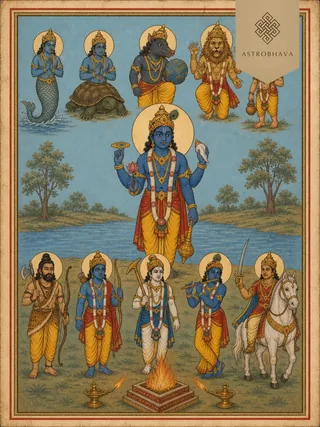
The Dashavatara Stotram is the opening song of Jayadeva's Gita Govinda, the twelfth-century Sanskrit poem of Radha and Krishna, and it is often known by its first words, Pralaya Payodhi Jale. Tradition, resting on a verse thought to be a later addition, counts Jayadeva among five poets at King Lakshmana Sena's court in Bengal. His poem runs to twelve cantos built from twenty-four songs. This first song gives one couplet to each of Vishnu's ten descents, from the fish who held up the Veda in the flood to Kalki with a sword fearsome as a comet. Every couplet closes on the same refrain, 'Keshava dhrita ... jaya jagadisha hare'. The eleventh verse carries the poet's own signature. The text then gives the canto's next shloka, one long verse that runs through all ten deeds again and bows to Krishna as the one who took the ten forms. In Jayadeva's order Balarama stands eighth and the Buddha ninth.
Ten descents before the love story begins
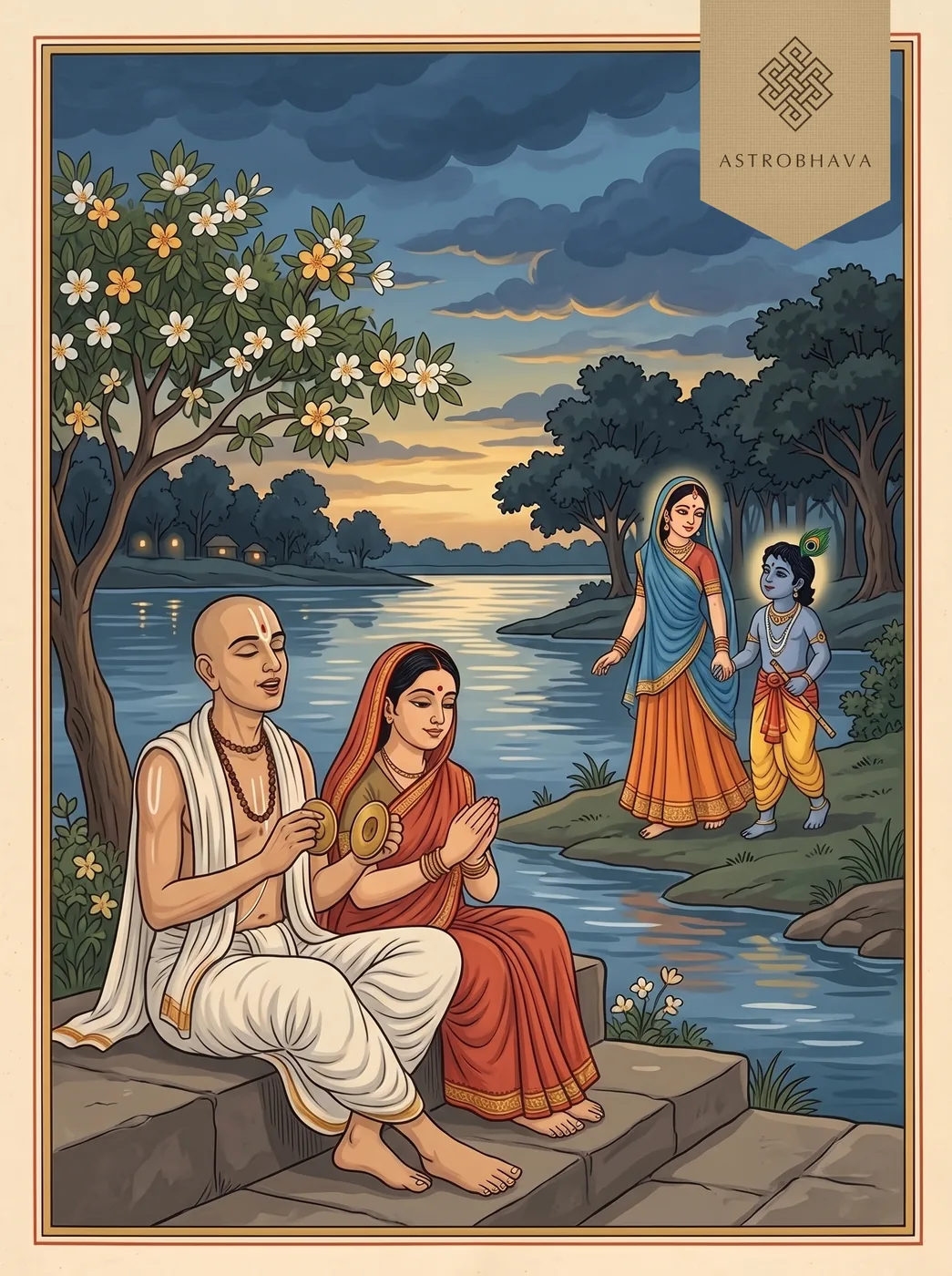
The Gita Govinda opens on a dark evening by the Yamuna. In its first verse clouds thicken the sky, the tamala trees shade the woods black, and Nanda tells Radha that the boy is afraid of the night, so she should take him home; the two set off, and the poem hails their hidden play along the riverbank. Before the tale goes any further, Jayadeva steps in with his own voice. He calls himself the chief singer at the feet of Padmavati, names the poets of his circle, and asks to be heard only by those whose minds delight in remembering Hari. Then, instead of continuing with Radha and Krishna, he sings the ten avatars. Placed here, the song frames the whole love poem: the cowherd at the Yamuna is the same Lord who carried the earth on a tusk and outwitted Bali with a stride. A second hymn of praise follows, and only after it does spring in Vrindavan begin. According to tradition, Jayadeva married Padmavati, a dancer at Puri, and sang his poem in the Jagannatha temple, where the Gita Govinda is still sung at the night service called Badasinghara. Scholars point out that the early commentators do not tell the Padmavati story, and three villages named Kenduli each claim the poet's birthplace.
The mantra, in six scripts
- प्रलयपयोधिजले
- pralayapayodhijale — in the waters of the ocean of dissolution
- धृतवानसि
- dhṛtavānasi — you have held up
- वेदम्
- vedam — the Veda
- विहितवहित्रचरित्रमखेदम्
- vihitavahitracaritramakhedam — taking the role of a boat, without effort
- केशव
- keśava — O Keshava
- धृतमीनशरीर
- dhṛtamīnaśarīra — who took the body of a fish
- जय
- jaya — victory
- जगदीश
- jagadīśa — O Lord of the world
- हरे
- hare — O Hari
Dashavatara Stotram lyrics in full
The ten avatar verses and the poet's signature verse, followed by the canto's closing shloka to Krishna. The printed closing line is given at the end.
All 13 verses, in Sanskrit, Tamil, Telugu, Kannada, Malayalam and English, each with its meaning. Choose a script:
Download the Dashavatara Stotram PDFAll 13 verses with their meanings, in Sanskrit. Free to print and keep.
प्रलयपयोधिजले धृतवानसि वेदम् ।
विहितवहित्रचरित्रमखेदम् ।
केशव धृतमीनशरीर जय जगदीश हरे ॥
ப்ரலயபயோதிஜலே த்ருதவாநஸி வேதம் ।
விஹிதவஹித்ரசரித்ரமகேதம் ।
கேஶவ த்ருதமீநஶரீர ஜய ஜகதீஶ ஹரே ॥
ప్రలయపయోధిజలే ధృతవానసి వేదమ్ ।
విహితవహిత్రచరిత్రమఖేదమ్ ।
కేశవ ధృతమీనశరీర జయ జగదీశ హరే ॥
ಪ್ರಲಯಪಯೋಧಿಜಲೇ ಧೃತವಾನಸಿ ವೇದಮ್ ।
ವಿಹಿತವಹಿತ್ರಚರಿತ್ರಮಖೇದಮ್ ।
ಕೇಶವ ಧೃತಮೀನಶರೀರ ಜಯ ಜಗದೀಶ ಹರೇ ॥
പ്രലയപയോധിജലേ ധൃതവാനസി വേദമ് ।
വിഹിതവഹിത്രചരിത്രമഖേദമ് ।
കേശവ ധൃതമീനശരീര ജയ ജഗദീശ ഹരേ ॥
pralayapayodhijale dhṛtavānasi vedam |
vihitavahitracaritramakhedam |
keśava dhṛtamīnaśarīra jaya jagadīśa hare ||
When the waters of the great dissolution rose, you held up the Veda, taking with ease the part of a boat. O Keshava, who took the body of a fish, victory to you, Hari, Lord of the world.
क्षितिरतिविपुलतरे तव तिष्ठति पृष्ठे ।
धरणिधरणकिणचक्रगरिष्ठे ।
केशव धृतकच्छपरूप जय जगदीश हरे ॥
க்ஷிதிரதிவிபுலதரே தவ திஷ்டதி ப்ருஷ்டே ।
தரணிதரணகிணசக்ரகரிஷ்டே ।
கேஶவ த்ருதகச்சபரூப ஜய ஜகதீஶ ஹரே ॥
క్షితిరతివిపులతరే తవ తిష్ఠతి పృష్ఠే ।
ధరణిధరణకిణచక్రగరిష్ఠే ।
కేశవ ధృతకచ్ఛపరూప జయ జగదీశ హరే ॥
ಕ್ಷಿತಿರತಿವಿಪುಲತರೇ ತವ ತಿಷ್ಠತಿ ಪೃಷ್ಠೇ ।
ಧರಣಿಧರಣಕಿಣಚಕ್ರಗರಿಷ್ಠೇ ।
ಕೇಶವ ಧೃತಕಚ್ಛಪರೂಪ ಜಯ ಜಗದೀಶ ಹರೇ ॥
ക്ഷിതിരതിവിപുലതരേ തവ തിഷ്ഠതി പൃഷ്ഠേ ।
ധരണിധരണകിണചക്രഗരിഷ്ഠേ ।
കേശവ ധൃതകച്ഛപരൂപ ജയ ജഗദീശ ഹരേ ॥
kṣitirativipulatare tava tiṣṭhati pṛṣṭhe |
dharaṇidharaṇakiṇacakragariṣṭhe |
keśava dhṛtakacchaparūpa jaya jagadīśa hare ||
The vast earth rests upon your back, made mighty by the round scar left from bearing the world. O Keshava, who took the form of a tortoise, victory to you, Hari, Lord of the world.
वसति दशनशिखरे धरणी तव लग्ना ।
शशिनि कलङ्ककलेव निमग्ना ।
केशव धृतसूकररूप जय जगदीश हरे ॥
வஸதி தஶநஶிகரே தரணீ தவ லக்நா ।
ஶஶிநி கலங்ககலேவ நிமக்நா ।
கேஶவ த்ருதஸூகரரூப ஜய ஜகதீஶ ஹரே ॥
వసతి దశనశిఖరే ధరణీ తవ లగ్నా ।
శశిని కలఙ్కకలేవ నిమగ్నా ।
కేశవ ధృతసూకరరూప జయ జగదీశ హరే ॥
ವಸತಿ ದಶನಶಿಖರೇ ಧರಣೀ ತವ ಲಗ್ನಾ ।
ಶಶಿನಿ ಕಲಙ್ಕಕಲೇವ ನಿಮಗ್ನಾ ।
ಕೇಶವ ಧೃತಸೂಕರರೂಪ ಜಯ ಜಗದೀಶ ಹರೇ ॥
വസതി ദശനശിഖരേ ധരണീ തവ ലഗ്നാ ।
ശശിനി കലങ്കകലേവ നിമഗ്നാ ।
കേശവ ധൃതസൂകരരൂപ ജയ ജഗദീശ ഹരേ ॥
vasati daśanaśikhare dharaṇī tava lagnā |
śaśini kalaṅkakaleva nimagnā |
keśava dhṛtasūkararūpa jaya jagadīśa hare ||
The earth sits fixed on the tip of your tusk, like the dark mark sunk into the moon. O Keshava, who took the form of a boar, victory to you, Hari, Lord of the world.
तव करकमलवरे नखमद्भुतशृङ्गम् ।
दलितहिरण्यकशिपुतनुभृङ्गम् ।
केशव धृतनरहरिरूप जय जगदीश हरे ॥
தவ கரகமலவரே நகமத்புதஶ்ருங்கம் ।
தலிதஹிரண்யகஶிபுதநுப்ருங்கம் ।
கேஶவ த்ருதநரஹரிரூப ஜய ஜகதீஶ ஹரே ॥
తవ కరకమలవరే నఖమద్భుతశృఙ్గమ్ ।
దలితహిరణ్యకశిపుతనుభృఙ్గమ్ ।
కేశవ ధృతనరహరిరూప జయ జగదీశ హరే ॥
ತವ ಕರಕಮಲವರೇ ನಖಮದ್ಭುತಶೃಙ್ಗಮ್ ।
ದಲಿತಹಿರಣ್ಯಕಶಿಪುತನುಭೃಙ್ಗಮ್ ।
ಕೇಶವ ಧೃತನರಹರಿರೂಪ ಜಯ ಜಗದೀಶ ಹರೇ ॥
തവ കരകമലവരേ നഖമദ്ഭുതശൃങ്ഗമ് ।
ദലിതഹിരണ്യകശിപുതനുഭൃങ്ഗമ് ।
കേശവ ധൃതനരഹരിരൂപ ജയ ജഗദീശ ഹരേ ॥
tava karakamalavare nakhamadbhutaśṛṅgam |
dalitahiraṇyakaśiputanubhṛṅgam |
keśava dhṛtanaraharirūpa jaya jagadīśa hare ||
On your lotus-like hand is a wondrous pointed nail that tore apart the body of Hiranyakashipu as if it were a bee. O Keshava, who took the form of the man-lion, victory to you, Hari, Lord of the world.
छलयसि विक्रमणे बलिमद्भुतवामन ।
पदनखनीरजनितजनपावन ।
केशव धृतवामनरूप जय जगदीश हरे ॥
சலயஸி விக்ரமணே பலிமத்புதவாமந ।
பதநகநீரஜநிதஜநபாவந ।
கேஶவ த்ருதவாமநரூப ஜய ஜகதீஶ ஹரே ॥
ఛలయసి విక్రమణే బలిమద్భుతవామన ।
పదనఖనీరజనితజనపావన ।
కేశవ ధృతవామనరూప జయ జగదీశ హరే ॥
ಛಲಯಸಿ ವಿಕ್ರಮಣೇ ಬಲಿಮದ್ಭುತವಾಮನ ।
ಪದನಖನೀರಜನಿತಜನಪಾವನ ।
ಕೇಶವ ಧೃತವಾಮನರೂಪ ಜಯ ಜಗದೀಶ ಹರೇ ॥
ഛലയസി വിക്രമണേ ബലിമദ്ഭുതവാമന ।
പദനഖനീരജനിതജനപാവന ।
കേശവ ധൃതവാമനരൂപ ജയ ജഗദീശ ഹരേ ॥
chalayasi vikramaṇe balimadbhutavāmana |
padanakhanīrajanitajanapāvana |
keśava dhṛtavāmanarūpa jaya jagadīśa hare ||
O wondrous dwarf, with your stride you outwit Bali, you who purify all people through the water born from the nails of your feet. O Keshava, who took the form of the dwarf, victory to you, Hari, Lord of the world.
क्षत्रियरुधिरमये जगदपगतपापम् ।
स्नपयसि पयसि शमितभवतापम् ।
केशव धृतभृगुपतिरूप जय जगदीश हरे ॥
க்ஷத்ரியருதிரமயே ஜகதபகதபாபம் ।
ஸ்நபயஸி பயஸி ஶமிதபவதாபம் ।
கேஶவ த்ருதப்ருகுபதிரூப ஜய ஜகதீஶ ஹரே ॥
క్షత్రియరుధిరమయే జగదపగతపాపమ్ ।
స్నపయసి పయసి శమితభవతాపమ్ ।
కేశవ ధృతభృగుపతిరూప జయ జగదీశ హరే ॥
ಕ್ಷತ್ರಿಯರುಧಿರಮಯೇ ಜಗದಪಗತಪಾಪಮ್ ।
ಸ್ನಪಯಸಿ ಪಯಸಿ ಶಮಿತಭವತಾಪಮ್ ।
ಕೇಶವ ಧೃತಭೃಗುಪತಿರೂಪ ಜಯ ಜಗದೀಶ ಹರೇ ॥
ക്ഷത്രിയരുധിരമയേ ജഗദപഗതപാപമ് ।
സ്നപയസി പയസി ശമിതഭവതാപമ് ।
കേശവ ധൃതഭൃഗുപതിരൂപ ജയ ജഗദീശ ഹരേ ॥
kṣatriyarudhiramaye jagadapagatapāpam |
snapayasi payasi śamitabhavatāpam |
keśava dhṛtabhṛgupatirūpa jaya jagadīśa hare ||
In a flood of the blood of warriors you bathe the world, washing away its sin and calming the pain of worldly life. O Keshava, who took the form of the lord of the Bhrigus (Parashurama), victory to you, Hari, Lord of the world.
वितरसि दिक्षु रणे दिक्पतिकमनीयम् ।
दशमुखमौलिबलिं रमणीयम् ।
केशव धृतरामशरीर जय जगदीश हरे ॥
விதரஸி திக்ஷு ரணே திக்பதிகமநீயம் ।
தஶமுகமௌலிபலிம் ரமணீயம் ।
கேஶவ த்ருதராமஶரீர ஜய ஜகதீஶ ஹரே ॥
వితరసి దిక్షు రణే దిక్పతికమనీయమ్ ।
దశముఖమౌలిబలిం రమణీయమ్ ।
కేశవ ధృతరామశరీర జయ జగదీశ హరే ॥
ವಿತರಸಿ ದಿಕ್ಷು ರಣೇ ದಿಕ್ಪತಿಕಮನೀಯಮ್ ।
ದಶಮುಖಮೌಲಿಬಲಿಂ ರಮಣೀಯಮ್ ।
ಕೇಶವ ಧೃತರಾಮಶರೀರ ಜಯ ಜಗದೀಶ ಹರೇ ॥
വിതരസി ദിക്ഷു രണേ ദിക്പതികമനീയമ് ।
ദശമുഖമൌലിബലിം രമണീയമ് ।
കേശവ ധൃതരാമശരീര ജയ ജഗദീശ ഹരേ ॥
vitarasi dikṣu raṇe dikpatikamanīyam |
daśamukhamaulibaliṃ ramaṇīyam |
keśava dhṛtarāmaśarīra jaya jagadīśa hare ||
In battle you scatter to the directions a lovely offering, pleasing to their guardian gods: the crowned heads of ten-faced Ravana. O Keshava, who took the body of Rama, victory to you, Hari, Lord of the world.
वहसि वपुषि विशदे वसनं जलदाभम् ।
हलहतिभीतिमिलितयमुनाभम् ।
केशव धृतहलधररूप जय जगदीश हरे ॥
வஹஸி வபுஷி விஶதே வஸநம் ஜலதாபம் ।
ஹலஹதிபீதிமிலிதயமுநாபம் ।
கேஶவ த்ருதஹலதரரூப ஜய ஜகதீஶ ஹரே ॥
వహసి వపుషి విశదే వసనం జలదాభమ్ ।
హలహతిభీతిమిలితయమునాభమ్ ।
కేశవ ధృతహలధరరూప జయ జగదీశ హరే ॥
ವಹಸಿ ವಪುಷಿ ವಿಶದೇ ವಸನಂ ಜಲದಾಭಮ್ ।
ಹಲಹತಿಭೀತಿಮಿಲಿತಯಮುನಾಭಮ್ ।
ಕೇಶವ ಧೃತಹಲಧರರೂಪ ಜಯ ಜಗದೀಶ ಹರೇ ॥
വഹസി വപുഷി വിശദേ വസനം ജലദാഭമ് ।
ഹലഹതിഭീതിമിലിതയമുനാഭമ് ।
കേശവ ധൃതഹലധരരൂപ ജയ ജഗദീശ ഹരേ ॥
vahasi vapuṣi viśade vasanaṃ jaladābham |
halahatibhītimilitayamunābham |
keśava dhṛtahaladhararūpa jaya jagadīśa hare ||
On your bright body you wear a garment the colour of a rain cloud, dark like the Yamuna, which joined you in fear of the blow of your plough. O Keshava, who took the form of the plough-bearer (Balarama), victory to you, Hari, Lord of the world.
निन्दसि यज्ञविधेरहह श्रुतिजातम् ।
सदयहृदयदर्शितपशुघातम् ।
केशव धृतबुद्धशरीर जय जगदीश हरे ॥
நிந்தஸி யஜ்ஞவிதேரஹஹ ஶ்ருதிஜாதம் ।
ஸதயஹ்ருதயதர்ஶிதபஶுகாதம் ।
கேஶவ த்ருதபுத்தஶரீர ஜய ஜகதீஶ ஹரே ॥
నిన్దసి యజ్ఞవిధేరహహ శ్రుతిజాతమ్ ।
సదయహృదయదర్శితపశుఘాతమ్ ।
కేశవ ధృతబుద్ధశరీర జయ జగదీశ హరే ॥
ನಿನ್ದಸಿ ಯಜ್ಞವಿಧೇರಹಹ ಶ್ರುತಿಜಾತಮ್ ।
ಸದಯಹೃದಯದರ್ಶಿತಪಶುಘಾತಮ್ ।
ಕೇಶವ ಧೃತಬುದ್ಧಶರೀರ ಜಯ ಜಗದೀಶ ಹರೇ ॥
നിന്ദസി യജ്ഞവിധേരഹഹ ശ്രുതിജാതമ് ।
സദയഹൃദയദര്ശിതപശുഘാതമ് ।
കേശവ ധൃതബുദ്ധശരീര ജയ ജഗദീശ ഹരേ ॥
nindasi yajñavidherahaha śrutijātam |
sadayahṛdayadarśitapaśughātam |
keśava dhṛtabuddhaśarīra jaya jagadīśa hare ||
Alas, you find fault with the body of scripture that prescribes sacrifice, with a compassionate heart showing the slaughter of animals. O Keshava, who took the body of the Buddha, victory to you, Hari, Lord of the world.
म्लेच्छनिवहनिधने कलयसि करवालम् ।
धूमकेतुमिव किमपि करालम् ।
केशव धृतकल्किशरीर जय जगदीश हरे ॥
ம்லேச்சநிவஹநிதநே கலயஸி கரவாலம் ।
தூமகேதுமிவ கிமபி கராலம் ।
கேஶவ த்ருதகல்கிஶரீர ஜய ஜகதீஶ ஹரே ॥
మ్లేచ్ఛనివహనిధనే కలయసి కరవాలమ్ ।
ధూమకేతుమివ కిమపి కరాలమ్ ।
కేశవ ధృతకల్కిశరీర జయ జగదీశ హరే ॥
ಮ್ಲೇಚ್ಛನಿವಹನಿಧನೇ ಕಲಯಸಿ ಕರವಾಲಮ್ ।
ಧೂಮಕೇತುಮಿವ ಕಿಮಪಿ ಕರಾಲಮ್ ।
ಕೇಶವ ಧೃತಕಲ್ಕಿಶರೀರ ಜಯ ಜಗದೀಶ ಹರೇ ॥
മ്ലേച്ഛനിവഹനിധനേ കലയസി കരവാലമ് ।
ധൂമകേതുമിവ കിമപി കരാലമ് ।
കേശവ ധൃതകല്കിശരീര ജയ ജഗദീശ ഹരേ ॥
mlecchanivahanidhane kalayasi karavālam |
dhūmaketumiva kimapi karālam |
keśava dhṛtakalkiśarīra jaya jagadīśa hare ||
To destroy the hordes of barbarians you wield a sword, fearsome as a comet. O Keshava, who took the body of Kalki, victory to you, Hari, Lord of the world.
श्रीजयदेवकवेरिदमुदितमुदारम् ।
शृणु सुखदं शुभदं भवसारम् ।
केशव धृतदशविधरूप जय जगदीश हरे ॥
ஶ்ரீஜயதேவகவேரிதமுதிதமுதாரம் ।
ஶ்ருணு ஸுகதம் ஶுபதம் பவஸாரம் ।
கேஶவ த்ருததஶவிதரூப ஜய ஜகதீஶ ஹரே ॥
శ్రీజయదేవకవేరిదముదితముదారమ్ ।
శృణు సుఖదం శుభదం భవసారమ్ ।
కేశవ ధృతదశవిధరూప జయ జగదీశ హరే ॥
ಶ್ರೀಜಯದೇವಕವೇರಿದಮುದಿತಮುದಾರಮ್ ।
ಶೃಣು ಸುಖದಂ ಶುಭದಂ ಭವಸಾರಮ್ ।
ಕೇಶವ ಧೃತದಶವಿಧರೂಪ ಜಯ ಜಗದೀಶ ಹರೇ ॥
ശ്രീജയദേവകവേരിദമുദിതമുദാരമ് ।
ശൃണു സുഖദം ശുഭദം ഭവസാരമ് ।
കേശവ ധൃതദശവിധരൂപ ജയ ജഗദീശ ഹരേ ॥
śrījayadevakaveridamuditamudāram |
śṛṇu sukhadaṃ śubhadaṃ bhavasāram |
keśava dhṛtadaśavidharūpa jaya jagadīśa hare ||
Hear this noble song spoken by the poet Shri Jayadeva; the verse says it gives happiness and good fortune and is the essence of existence. O Keshava, who took these ten forms, victory to you, Hari, Lord of the world.
वेदानुद्धरते जगन्निवहते भूगोलमुद्बिभ्रते दैत्यं दारयते बलिं छलयते क्षत्रक्षयं कुर्वते ।
पौलस्त्यं जयते हलं कलयते कारुण्यमातन्वते म्लेच्छान्मूर्च्छयते दशाकृतिकृते कृष्णाय तुभ्यं नमः ॥
வேதாநுத்தரதே ஜகந்நிவஹதே பூகோலமுத்பிப்ரதே தைத்யம் தாரயதே பலிம் சலயதே க்ஷத்ரக்ஷயம் குர்வதே ।
பௌலஸ்த்யம் ஜயதே ஹலம் கலயதே காருண்யமாதந்வதே ம்லேச்சாந்மூர்ச்சயதே தஶாக்ருதிக்ருதே க்ருஷ்ணாய துப்யம் நமஃ ॥
వేదానుద్ధరతే జగన్నివహతే భూగోలముద్బిభ్రతే దైత్యం దారయతే బలిం ఛలయతే క్షత్రక్షయం కుర్వతే ।
పౌలస్త్యం జయతే హలం కలయతే కారుణ్యమాతన్వతే మ్లేచ్ఛాన్మూర్చ్ఛయతే దశాకృతికృతే కృష్ణాయ తుభ్యం నమః ॥
ವೇದಾನುದ್ಧರತೇ ಜಗನ್ನಿವಹತೇ ಭೂಗೋಲಮುದ್ಬಿಭ್ರತೇ ದೈತ್ಯಂ ದಾರಯತೇ ಬಲಿಂ ಛಲಯತೇ ಕ್ಷತ್ರಕ್ಷಯಂ ಕುರ್ವತೇ ।
ಪೌಲಸ್ತ್ಯಂ ಜಯತೇ ಹಲಂ ಕಲಯತೇ ಕಾರುಣ್ಯಮಾತನ್ವತೇ ಮ್ಲೇಚ್ಛಾನ್ಮೂರ್ಚ್ಛಯತೇ ದಶಾಕೃತಿಕೃತೇ ಕೃಷ್ಣಾಯ ತುಭ್ಯಂ ನಮಃ ॥
വേദാനുദ്ധരതേ ജഗന്നിവഹതേ ഭൂഗോലമുദ്ബിഭ്രതേ ദൈത്യം ദാരയതേ ബലിം ഛലയതേ ക്ഷത്രക്ഷയം കുര്വതേ ।
പൌലസ്ത്യം ജയതേ ഹലം കലയതേ കാരുണ്യമാതന്വതേ മ്ലേച്ഛാന്മൂര്ച്ഛയതേ ദശാകൃതികൃതേ കൃഷ്ണായ തുഭ്യം നമഃ ॥
vedānuddharate jagannivahate bhūgolamudbibhrate daityaṃ dārayate baliṃ chalayate kṣatrakṣayaṃ kurvate |
paulastyaṃ jayate halaṃ kalayate kāruṇyamātanvate mlecchānmūrcchayate daśākṛtikṛte kṛṣṇāya tubhyaṃ namaḥ ||
Salutations to you, Krishna, who took ten forms: who lifts up the Vedas, bears the world, holds up the globe of the earth, tears apart the demon, deceives Bali, destroys the warrior class, conquers Ravana, wields the plough, spreads compassion, and makes the barbarians faint.
इति जयदेवकविकृतः दशावतारस्तवः सम्पूर्णः ।
இதி ஜயதேவகவிக்ருதஃ தஶாவதாரஸ்தவஃ ஸம்பூர்ணஃ ।
ఇతి జయదేవకవికృతః దశావతారస్తవః సమ్పూర్ణః ।
ಇತಿ ಜಯದೇವಕವಿಕೃತಃ ದಶಾವತಾರಸ್ತವಃ ಸಮ್ಪೂರ್ಣಃ ।
ഇതി ജയദേവകവികൃതഃ ദശാവതാരസ്തവഃ സമ്പൂര്ണഃ ।
iti jayadevakavikṛtaḥ daśāvatārastavaḥ sampūrṇaḥ |
Thus ends the hymn on the ten avatars composed by the poet Jayadeva.
The syllable people get wrong
In the refrain, jagadīśa has four syllables, ja-ga-dī-śa, with a long ī and a soft palatal ś; it is often clipped to the everyday name 'Jagdish', which drops the second a and breaks the line's rhythm.
When the Dashavatara Stotram is chanted
Weekday. Thursday
Questions
Have your chart read before you decide
Chanting is yours to do, and free. But which deity your situation calls for — and whether a mantra alone is the right response — depends on your chart. Sometimes it is; sometimes it is not.
- Over 30 years in the Guru–Sishya Parampara, from the age of five
- He reads every chart himself — 60 minutes, one to one, never delegated
- Charts are read only between sunrise and sunset, following tradition
