Khadgamala Stotram
ह्रीङ्काराननगर्भितानलशिखां सौः क्लीं कलां बिभ्रतीं सौवर्णाम्बरधारिणीं वरसुधाधौतां त्रिनेत्रोज्ज्वलाम् । वन्दे पुस्तकपाशमङ्कुशधरां स्रग्भूषितामुज्ज्वलां त्वां गौरीं त्रिपुरां परात्परकलां श्रीचक्रसञ्चारिणीम् ॥Also known as Devi Khadgamala Stotram
In Devanagari, Tamil, Telugu, Kannada, Malayalam and English — with the meaning of every word, and the one syllable most people pronounce wrongly.
 The Tripura Sundari Homam, performed for youBook →
What the Khadgamala Stotram is
The Devi Khadgamala Stotram, known to most reciters simply as the Khadgamala, is a garland of names addressed to Lalita Tripurasundari, the Goddess enthroned at the centre of the Sri Chakra. Its colophon places it in the Vamakeshvara Tantra, as a dialogue between Uma and Maheshvara; no author is named. After an opening prayer and two meditation verses, the body of the text is prose: an unbroken chain of vocatives, each one calling her by the name of a particular deity. It begins with the six limb-goddesses of nyasa and the sixteen Nitya goddesses of the lunar days, then names three lines of teachers, divine, perfected and human. From there it crosses the nine enclosures of the Sri Chakra from the outer square inward, naming each ring's goddesses and closing every ring with the ruler of that chakra and its yogini, until it reaches the bindu and nine titles of Tripura. Ten and a half verses of phala shruti end the text.
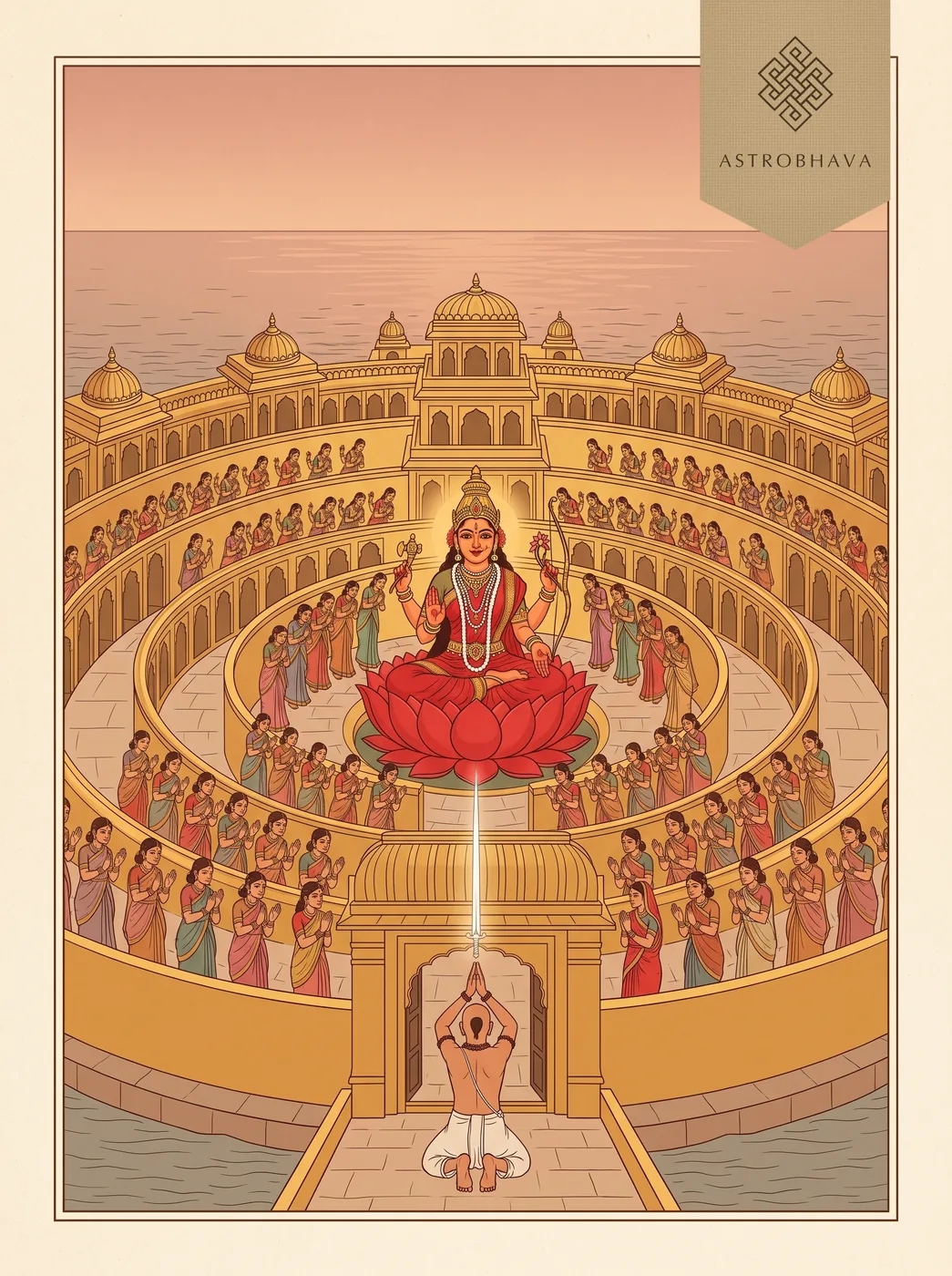
The sword promised in the meditation verse
According to its colophon, the Khadgamala belongs to the Vamakeshvara Tantra, a Sri Vidya text framed as a conversation in which Maheshvara answers questions put by Uma. No fuller account of how the litany was composed has come down with it, but the text explains its own title. The first meditation verse says that the reciter gains a sword of such a kind that, holding it in the hand, they become sovereign and enjoyer of the eighteen great continents. Khadga siddhi, mastery of the sword, was a classical attainment of tantric lore, and the verse presents the whole garland of names as the way to it. Teachers of Sri Vidya have long read the blade inwardly: a sword of wisdom that cuts through desire, hatred and delusion and separates the knower from body and mind. The closing verses show how the tradition valued the text. They describe it as a garland-mantra that gathers the goddesses of all nine enclosures, together with Lalita, into one count, so that a single recitation, the verse says, carries the fruit of their entire worship. They also call it a secret more guarded than the most secret, and add that the Shakti garland is fivefold, with a Shiva garland of the same kind. Some teachers accordingly count fifteen Khadgamalas, five for Shakti, five for Shiva and five for the two together.
The mantra, in six scripts
- ह्रीङ्काराननगर्भितानलशिखां
- hrīṅkārānanagarbhitānalaśikhāṃ — bearing the flame of fire within the syllable Hrim
- सौः
- sauḥ — the syllable Sauh
- क्लीं
- klīṃ — the syllable Klim
- कलां
- kalāṃ — the digit, the subtle power
- बिभ्रतीं
- bibhratīṃ — holding
- सौवर्णाम्बरधारिणीं
- sauvarṇāmbaradhāriṇīṃ — wearing golden garments
- वरसुधाधौतां
- varasudhādhautāṃ — bathed in the finest nectar
- त्रिनेत्रोज्ज्वलाम्
- trinetrojjvalām — shining with three eyes
- वन्दे
- vande — I bow to
- पुस्तकपाशमङ्कुशधरां
- pustakapāśamaṅkuśadharāṃ — holding book, noose and goad
- स्रग्भूषितामुज्ज्वलां
- sragbhūṣitāmujjvalāṃ — radiant, adorned with a garland
- त्वां
- tvāṃ — you
- गौरीं
- gaurīṃ — Gauri, the bright one
- त्रिपुरां
- tripurāṃ — Tripura
- परात्परकलां
- parātparakalāṃ — power beyond the highest
- श्रीचक्रसञ्चारिणीम्
- śrīcakrasañcāriṇīm — who moves through the Sri Chakra
Khadgamala Stotram lyrics in full
The opening prayer, two meditation verses, the garland of names in seventeen sections and ten and a half verses of phala shruti.
All 32 verses, in Sanskrit, Tamil, Telugu, Kannada, Malayalam and English, each with its meaning. Choose a script:
Download the Khadgamala Stotram PDFAll 32 verses with their meanings, in Sanskrit. Free to print and keep.
ह्रीङ्काराननगर्भितानलशिखां सौः क्लीं कलां बिभ्रतीं सौवर्णाम्बरधारिणीं वरसुधाधौतां त्रिनेत्रोज्ज्वलाम् ।
वन्दे पुस्तकपाशमङ्कुशधरां स्रग्भूषितामुज्ज्वलां त्वां गौरीं त्रिपुरां परात्परकलां श्रीचक्रसञ्चारिणीम् ॥
ஹ்ரீங்காராநநகர்பிதாநலஶிகாம் ஸௌஃ க்லீம் கலாம் பிப்ரதீம் ஸௌவர்ணாம்பரதாரிணீம் வரஸுதாதௌதாம் த்ரிநேத்ரோஜ்ஜ்வலாம் ।
வந்தே புஸ்தகபாஶமங்குஶதராம் ஸ்ரக்பூஷிதாமுஜ்ஜ்வலாம் த்வாம் கௌரீம் த்ரிபுராம் பராத்பரகலாம் ஶ்ரீசக்ரஸஞ்சாரிணீம் ॥
హ్రీఙ్కారాననగర్భితానలశిఖాం సౌః క్లీం కలాం బిభ్రతీం సౌవర్ణామ్బరధారిణీం వరసుధాధౌతాం త్రినేత్రోజ్జ్వలామ్ ।
వన్దే పుస్తకపాశమఙ్కుశధరాం స్రగ్భూషితాముజ్జ్వలాం త్వాం గౌరీం త్రిపురాం పరాత్పరకలాం శ్రీచక్రసఞ్చారిణీమ్ ॥
ಹ್ರೀಙ್ಕಾರಾನನಗರ್ಭಿತಾನಲಶಿಖಾಂ ಸೌಃ ಕ್ಲೀಂ ಕಲಾಂ ಬಿಭ್ರತೀಂ ಸೌವರ್ಣಾಮ್ಬರಧಾರಿಣೀಂ ವರಸುಧಾಧೌತಾಂ ತ್ರಿನೇತ್ರೋಜ್ಜ್ವಲಾಮ್ ।
ವನ್ದೇ ಪುಸ್ತಕಪಾಶಮಙ್ಕುಶಧರಾಂ ಸ್ರಗ್ಭೂಷಿತಾಮುಜ್ಜ್ವಲಾಂ ತ್ವಾಂ ಗೌರೀಂ ತ್ರಿಪುರಾಂ ಪರಾತ್ಪರಕಲಾಂ ಶ್ರೀಚಕ್ರಸಞ್ಚಾರಿಣೀಮ್ ॥
ഹ്രീങ്കാരാനനഗര്ഭിതാനലശിഖാം സൌഃ ക്ലീം കലാം ബിഭ്രതീം സൌവര്ണാമ്ബരധാരിണീം വരസുധാധൌതാം ത്രിനേത്രോജ്ജ്വലാമ് ।
വന്ദേ പുസ്തകപാശമങ്കുശധരാം സ്രഗ്ഭൂഷിതാമുജ്ജ്വലാം ത്വാം ഗൌരീം ത്രിപുരാം പരാത്പരകലാം ശ്രീചക്രസഞ്ചാരിണീമ് ॥
hrīṅkārānanagarbhitānalaśikhāṃ sauḥ klīṃ kalāṃ bibhratīṃ sauvarṇāmbaradhāriṇīṃ varasudhādhautāṃ trinetrojjvalām |
vande pustakapāśamaṅkuśadharāṃ sragbhūṣitāmujjvalāṃ tvāṃ gaurīṃ tripurāṃ parātparakalāṃ śrīcakrasañcāriṇīm ||
I bow to you, Gauri, Tripura, who bears the flame of fire held within the syllable Hrim, and the syllables Sauh and Klim; who wears golden garments, is bathed in the finest nectar and shines with three eyes. Radiant and adorned with a garland, you hold a book, a noose and a goad; you are the highest power beyond the highest, moving through the Sri Chakra.
तादृशं खड्गमाप्नोति येन हस्तस्थितेनवै ।
अष्टादशमहाद्वीपसम्राड्भोक्ताभविष्यति ॥
தாத்ருஶம் கட்கமாப்நோதி யேந ஹஸ்தஸ்திதேநவை ।
அஷ்டாதஶமஹாத்வீபஸம்ராட்போக்தாபவிஷ்யதி ॥
తాదృశం ఖడ్గమాప్నోతి యేన హస్తస్థితేనవై ।
అష్టాదశమహాద్వీపసమ్రాడ్భోక్తాభవిష్యతి ॥
ತಾದೃಶಂ ಖಡ್ಗಮಾಪ್ನೋತಿ ಯೇನ ಹಸ್ತಸ್ಥಿತೇನವೈ ।
ಅಷ್ಟಾದಶಮಹಾದ್ವೀಪಸಮ್ರಾಡ್ಭೋಕ್ತಾಭವಿಷ್ಯತಿ ॥
താദൃശം ഖഡ്ഗമാപ്നോതി യേന ഹസ്തസ്ഥിതേനവൈ ।
അഷ്ടാദശമഹാദ്വീപസമ്രാഡ്ഭോക്താഭവിഷ്യതി ॥
tādṛśaṃ khaḍgamāpnoti yena hastasthitenavai |
aṣṭādaśamahādvīpasamrāḍbhoktābhaviṣyati ||
The verse says one gains such a sword that, with it held in the hand, one becomes the sovereign ruler and enjoyer of the eighteen great continents.
आरक्ताभां त्रिनेत्रामरुणिमवसनां रत्नताटङ्करम्यां हस्ताम्भोजैस्सपाशाङ्कुशमदनधनुस्सायकैर्विस्फुरन्तीम् ।
आपीनोत्तुङ्गवक्षोरुहकलशलुठत्तारहारोज्ज्वलाङ्गीं ध्यायेदम्भोरुहस्थामरुणिमवसनामीश्वरीमीश्वराणाम् ॥
ஆரக்தாபாம் த்ரிநேத்ராமருணிமவஸநாம் ரத்நதாடங்கரம்யாம் ஹஸ்தாம்போஜைஸ்ஸபாஶாங்குஶமதநதநுஸ்ஸாயகைர்விஸ்புரந்தீம் ।
ஆபீநோத்துங்கவக்ஷோருஹகலஶலுடத்தாரஹாரோஜ்ஜ்வலாங்கீம் த்யாயேதம்போருஹஸ்தாமருணிமவஸநாமீஶ்வரீமீஶ்வராணாம் ॥
ఆరక్తాభాం త్రినేత్రామరుణిమవసనాం రత్నతాటఙ్కరమ్యాం హస్తామ్భోజైస్సపాశాఙ్కుశమదనధనుస్సాయకైర్విస్ఫురన్తీమ్ ।
ఆపీనోత్తుఙ్గవక్షోరుహకలశలుఠత్తారహారోజ్జ్వలాఙ్గీం ధ్యాయేదమ్భోరుహస్థామరుణిమవసనామీశ్వరీమీశ్వరాణామ్ ॥
ಆರಕ್ತಾಭಾಂ ತ್ರಿನೇತ್ರಾಮರುಣಿಮವಸನಾಂ ರತ್ನತಾಟಙ್ಕರಮ್ಯಾಂ ಹಸ್ತಾಮ್ಭೋಜೈಸ್ಸಪಾಶಾಙ್ಕುಶಮದನಧನುಸ್ಸಾಯಕೈರ್ವಿಸ್ಫುರನ್ತೀಮ್ ।
ಆಪೀನೋತ್ತುಙ್ಗವಕ್ಷೋರುಹಕಲಶಲುಠತ್ತಾರಹಾರೋಜ್ಜ್ವಲಾಙ್ಗೀಂ ಧ್ಯಾಯೇದಮ್ಭೋರುಹಸ್ಥಾಮರುಣಿಮವಸನಾಮೀಶ್ವರೀಮೀಶ್ವರಾಣಾಮ್ ॥
ആരക്താഭാം ത്രിനേത്രാമരുണിമവസനാം രത്നതാടങ്കരമ്യാം ഹസ്താമ്ഭോജൈസ്സപാശാങ്കുശമദനധനുസ്സായകൈര്വിസ്ഫുരന്തീമ് ।
ആപീനോത്തുങ്ഗവക്ഷോരുഹകലശലുഠത്താരഹാരോജ്ജ്വലാങ്ഗീം ധ്യായേദമ്ഭോരുഹസ്ഥാമരുണിമവസനാമീശ്വരീമീശ്വരാണാമ് ॥
āraktābhāṃ trinetrāmaruṇimavasanāṃ ratnatāṭaṅkaramyāṃ hastāmbhojaissapāśāṅkuśamadanadhanussāyakairvisphurantīm |
āpīnottuṅgavakṣoruhakalaśaluṭhattārahārojjvalāṅgīṃ dhyāyedambhoruhasthāmaruṇimavasanāmīśvarīmīśvarāṇām ||
One should meditate on the Goddess of all lords: reddish in glow, three-eyed, dressed in red, lovely with jewelled earrings, shining with the noose, goad, sugarcane bow of Kama and arrows in her lotus hands. Her body gleams with a pearl necklace resting on her full breasts, and she is seated on a lotus.
ॐ ऐं ह्रीं श्रीं ऐं क्लीं सौः ॐ नमस्त्रिपुरसुन्दरि ॥
ௐ ஐம் ஹ்ரீம் ஶ்ரீம் ஐம் க்லீம் ஸௌஃ ௐ நமஸ்த்ரிபுரஸுந்தரி ॥
ఓం ఐం హ్రీం శ్రీం ఐం క్లీం సౌః ఓం నమస్త్రిపురసున్దరి ॥
ಓಂ ಐಂ ಹ್ರೀಂ ಶ್ರೀಂ ಐಂ ಕ್ಲೀಂ ಸೌಃ ಓಂ ನಮಸ್ತ್ರಿಪುರಸುನ್ದರಿ ॥
ഓം ഐം ഹ്രീം ശ്രീം ഐം ക്ലീം സൌഃ ഓം നമസ്ത്രിപുരസുന്ദരി ॥
oṃ aiṃ hrīṃ śrīṃ aiṃ klīṃ sauḥ oṃ namastripurasundari ||
Om Aim Hrim Shrim Aim Klim Sauh Om: salutations to you, Tripurasundari, beauty of the three worlds.
हृदयदेवि, शिरोदेवि, शिखादेवि, कवचदेवि, नेत्रदेवि, अस्त्रदेवि ॥
ஹ்ருதயதேவி, ஶிரோதேவி, ஶிகாதேவி, கவசதேவி, நேத்ரதேவி, அஸ்த்ரதேவி ॥
హృదయదేవి, శిరోదేవి, శిఖాదేవి, కవచదేవి, నేత్రదేవి, అస్త్రదేవి ॥
ಹೃದಯದೇವಿ, ಶಿರೋದೇವಿ, ಶಿಖಾದೇವಿ, ಕವಚದೇವಿ, ನೇತ್ರದೇವಿ, ಅಸ್ತ್ರದೇವಿ ॥
ഹൃദയദേവി, ശിരോദേവി, ശിഖാദേവി, കവചദേവി, നേത്രദേവി, അസ്ത്രദേവി ॥
hṛdayadevi, śirodevi, śikhādevi, kavacadevi, netradevi, astradevi ||
O Goddess of the heart, of the head, of the crown-lock, of the armour, of the eyes and of the weapon - the six limb-deities of nyasa.
कामेश्वरि, भगमालिनि, नित्यक्लिन्ने, भेरुण्डे, वह्निवासिनि, महावज्रेश्वरि, शिवदूति, त्वरिते, कुलसुन्दरि, नित्ये, नीलपताके, विजये, सर्वमङ्गले, ज्वालामालिनि, चित्रे, महानित्ये ॥
காமேஶ்வரி, பகமாலிநி, நித்யக்லிந்நே, பேருண்டே, வஹ்நிவாஸிநி, மஹாவஜ்ரேஶ்வரி, ஶிவதூதி, த்வரிதே, குலஸுந்தரி, நித்யே, நீலபதாகே, விஜயே, ஸர்வமங்கலே, ஜ்வாலாமாலிநி, சித்ரே, மஹாநித்யே ॥
కామేశ్వరి, భగమాలిని, నిత్యక్లిన్నే, భేరుణ్డే, వహ్నివాసిని, మహావజ్రేశ్వరి, శివదూతి, త్వరితే, కులసున్దరి, నిత్యే, నీలపతాకే, విజయే, సర్వమఙ్గలే, జ్వాలామాలిని, చిత్రే, మహానిత్యే ॥
ಕಾಮೇಶ್ವರಿ, ಭಗಮಾಲಿನಿ, ನಿತ್ಯಕ್ಲಿನ್ನೇ, ಭೇರುಣ್ಡೇ, ವಹ್ನಿವಾಸಿನಿ, ಮಹಾವಜ್ರೇಶ್ವರಿ, ಶಿವದೂತಿ, ತ್ವರಿತೇ, ಕುಲಸುನ್ದರಿ, ನಿತ್ಯೇ, ನೀಲಪತಾಕೇ, ವಿಜಯೇ, ಸರ್ವಮಙ್ಗಲೇ, ಜ್ವಾಲಾಮಾಲಿನಿ, ಚಿತ್ರೇ, ಮಹಾನಿತ್ಯೇ ॥
കാമേശ്വരി, ഭഗമാലിനി, നിത്യക്ലിന്നേ, ഭേരുണ്ഡേ, വഹ്നിവാസിനി, മഹാവജ്രേശ്വരി, ശിവദൂതി, ത്വരിതേ, കുലസുന്ദരി, നിത്യേ, നീലപതാകേ, വിജയേ, സര്വമങ്ഗലേ, ജ്വാലാമാലിനി, ചിത്രേ, മഹാനിത്യേ ॥
kāmeśvari, bhagamālini, nityaklinne, bheruṇḍe, vahnivāsini, mahāvajreśvari, śivadūti, tvarite, kulasundari, nitye, nīlapatāke, vijaye, sarvamaṅgale, jvālāmālini, citre, mahānitye ||
The sixteen Nitya goddesses of the lunar days are invoked by name: Kameshvari, Bhagamalini, Nityaklinna, Bherunda, Vahnivasini, Mahavajreshvari, Shivaduti, Tvarita, Kulasundari, Nitya, Nilapataka, Vijaya, Sarvamangala, Jvalamalini, Chitra and Mahanitya.
परमेश्वरपरमेश्वरि, मित्रेशमयि, षष्ठीशमयि, उड्डीशमयि, चर्यानाथमयि, लोपामुद्रामयि, अगस्त्यमयि ॥
பரமேஶ்வரபரமேஶ்வரி, மித்ரேஶமயி, ஷஷ்டீஶமயி, உட்டீஶமயி, சர்யாநாதமயி, லோபாமுத்ராமயி, அகஸ்த்யமயி ॥
పరమేశ్వరపరమేశ్వరి, మిత్రేశమయి, షష్ఠీశమయి, ఉడ్డీశమయి, చర్యానాథమయి, లోపాముద్రామయి, అగస్త్యమయి ॥
ಪರಮೇಶ್ವರಪರಮೇಶ್ವರಿ, ಮಿತ್ರೇಶಮಯಿ, ಷಷ್ಠೀಶಮಯಿ, ಉಡ್ಡೀಶಮಯಿ, ಚರ್ಯಾನಾಥಮಯಿ, ಲೋಪಾಮುದ್ರಾಮಯಿ, ಅಗಸ್ತ್ಯಮಯಿ ॥
പരമേശ്വരപരമേശ്വരി, മിത്രേശമയി, ഷഷ്ഠീശമയി, ഉഡ്ഡീശമയി, ചര്യാനാഥമയി, ലോപാമുദ്രാമയി, അഗസ്ത്യമയി ॥
parameśvaraparameśvari, mitreśamayi, ṣaṣṭhīśamayi, uḍḍīśamayi, caryānāthamayi, lopāmudrāmayi, agastyamayi ||
The Goddess is addressed as one with the seven teachers of the divine lineage: the supreme Lord and Lady, Mitresha, Shashthisha, Uddisha, Charyanatha, Lopamudra and Agastya.
कालतापशमयि, धर्माचार्यमयि, मुक्तकेशीश्वरमयि, दीपकलानाथमयि ॥
காலதாபஶமயி, தர்மாசார்யமயி, முக்தகேஶீஶ்வரமயி, தீபகலாநாதமயி ॥
కాలతాపశమయి, ధర్మాచార్యమయి, ముక్తకేశీశ్వరమయి, దీపకలానాథమయి ॥
ಕಾಲತಾಪಶಮಯಿ, ಧರ್ಮಾಚಾರ್ಯಮಯಿ, ಮುಕ್ತಕೇಶೀಶ್ವರಮಯಿ, ದೀಪಕಲಾನಾಥಮಯಿ ॥
കാലതാപശമയി, ധര്മാചാര്യമയി, മുക്തകേശീശ്വരമയി, ദീപകലാനാഥമയി ॥
kālatāpaśamayi, dharmācāryamayi, muktakeśīśvaramayi, dīpakalānāthamayi ||
She is addressed as one with the four teachers of the lineage of the perfected ones: Kalatapasha, Dharmacharya, Muktakeshishvara and Dipakalanatha.
विष्णुदेवमयि, प्रभाकरदेवमयि, तेजोदेवमयि, मनोजदेवमयि, कल्याणदेवमयि, वासुदेवमयि, रत्नदेवमयि, श्रीरामानन्दमयि ॥
விஷ்ணுதேவமயி, ப்ரபாகரதேவமயி, தேஜோதேவமயி, மநோஜதேவமயி, கல்யாணதேவமயி, வாஸுதேவமயி, ரத்நதேவமயி, ஶ்ரீராமாநந்தமயி ॥
విష్ణుదేవమయి, ప్రభాకరదేవమయి, తేజోదేవమయి, మనోజదేవమయి, కల్యాణదేవమయి, వాసుదేవమయి, రత్నదేవమయి, శ్రీరామానన్దమయి ॥
ವಿಷ್ಣುದೇವಮಯಿ, ಪ್ರಭಾಕರದೇವಮಯಿ, ತೇಜೋದೇವಮಯಿ, ಮನೋಜದೇವಮಯಿ, ಕಲ್ಯಾಣದೇವಮಯಿ, ವಾಸುದೇವಮಯಿ, ರತ್ನದೇವಮಯಿ, ಶ್ರೀರಾಮಾನನ್ದಮಯಿ ॥
വിഷ്ണുദേവമയി, പ്രഭാകരദേവമയി, തേജോദേവമയി, മനോജദേവമയി, കല്യാണദേവമയി, വാസുദേവമയി, രത്നദേവമയി, ശ്രീരാമാനന്ദമയി ॥
viṣṇudevamayi, prabhākaradevamayi, tejodevamayi, manojadevamayi, kalyāṇadevamayi, vāsudevamayi, ratnadevamayi, śrīrāmānandamayi ||
She is addressed as one with the eight teachers of the human lineage: Vishnudeva, Prabhakaradeva, Tejodeva, Manojadeva, Kalyanadeva, Vasudeva, Ratnadeva and Sri Ramananda.
अणिमासिद्धे, लघिमासिद्धे, महिमासिद्धे, ईशित्वसिद्धे, वशित्वसिद्धे, प्राकाम्यसिद्धे, भुक्तिसिद्धे, इच्छासिद्धे, प्राप्तिसिद्धे, सर्वकामसिद्धे, ब्राह्मि, माहेश्वरि, कौमारि, वैष्णवि, वाराहि, माहेन्द्रि, चामुण्डे, महालक्ष्मि, सर्वसङ्क्षोभिणि, सर्वविद्राविणि, सर्वाकर्षिणि, सर्ववशङ्करि, सर्वोन्मादिनि, सर्वमहाङ्कुशे, सर्वखेचरि, सर्वबीजे, सर्वयोने, सर्वत्रिखण्डे, त्रैलोक्यमोहनचक्रस्वामिनि, प्रकटयोगिनि ॥
அணிமாஸித்தே, லகிமாஸித்தே, மஹிமாஸித்தே, ஈஶித்வஸித்தே, வஶித்வஸித்தே, ப்ராகாம்யஸித்தே, புக்திஸித்தே, இச்சாஸித்தே, ப்ராப்திஸித்தே, ஸர்வகாமஸித்தே, ப்ராஹ்மி, மாஹேஶ்வரி, கௌமாரி, வைஷ்ணவி, வாராஹி, மாஹேந்த்ரி, சாமுண்டே, மஹாலக்ஷ்மி, ஸர்வஸங்க்ஷோபிணி, ஸர்வவித்ராவிணி, ஸர்வாகர்ஷிணி, ஸர்வவஶங்கரி, ஸர்வோந்மாதிநி, ஸர்வமஹாங்குஶே, ஸர்வகேசரி, ஸர்வபீஜே, ஸர்வயோநே, ஸர்வத்ரிகண்டே, த்ரைலோக்யமோஹநசக்ரஸ்வாமிநி, ப்ரகடயோகிநி ॥
అణిమాసిద్ధే, లఘిమాసిద్ధే, మహిమాసిద్ధే, ఈశిత్వసిద్ధే, వశిత్వసిద్ధే, ప్రాకామ్యసిద్ధే, భుక్తిసిద్ధే, ఇచ్ఛాసిద్ధే, ప్రాప్తిసిద్ధే, సర్వకామసిద్ధే, బ్రాహ్మి, మాహేశ్వరి, కౌమారి, వైష్ణవి, వారాహి, మాహేన్ద్రి, చాముణ్డే, మహాలక్ష్మి, సర్వసఙ్క్షోభిణి, సర్వవిద్రావిణి, సర్వాకర్షిణి, సర్వవశఙ్కరి, సర్వోన్మాదిని, సర్వమహాఙ్కుశే, సర్వఖేచరి, సర్వబీజే, సర్వయోనే, సర్వత్రిఖణ్డే, త్రైలోక్యమోహనచక్రస్వామిని, ప్రకటయోగిని ॥
ಅಣಿಮಾಸಿದ್ಧೇ, ಲಘಿಮಾಸಿದ್ಧೇ, ಮಹಿಮಾಸಿದ್ಧೇ, ಈಶಿತ್ವಸಿದ್ಧೇ, ವಶಿತ್ವಸಿದ್ಧೇ, ಪ್ರಾಕಾಮ್ಯಸಿದ್ಧೇ, ಭುಕ್ತಿಸಿದ್ಧೇ, ಇಚ್ಛಾಸಿದ್ಧೇ, ಪ್ರಾಪ್ತಿಸಿದ್ಧೇ, ಸರ್ವಕಾಮಸಿದ್ಧೇ, ಬ್ರಾಹ್ಮಿ, ಮಾಹೇಶ್ವರಿ, ಕೌಮಾರಿ, ವೈಷ್ಣವಿ, ವಾರಾಹಿ, ಮಾಹೇನ್ದ್ರಿ, ಚಾಮುಣ್ಡೇ, ಮಹಾಲಕ್ಷ್ಮಿ, ಸರ್ವಸಙ್ಕ್ಷೋಭಿಣಿ, ಸರ್ವವಿದ್ರಾವಿಣಿ, ಸರ್ವಾಕರ್ಷಿಣಿ, ಸರ್ವವಶಙ್ಕರಿ, ಸರ್ವೋನ್ಮಾದಿನಿ, ಸರ್ವಮಹಾಙ್ಕುಶೇ, ಸರ್ವಖೇಚರಿ, ಸರ್ವಬೀಜೇ, ಸರ್ವಯೋನೇ, ಸರ್ವತ್ರಿಖಣ್ಡೇ, ತ್ರೈಲೋಕ್ಯಮೋಹನಚಕ್ರಸ್ವಾಮಿನಿ, ಪ್ರಕಟಯೋಗಿನಿ ॥
അണിമാസിദ്ധേ, ലഘിമാസിദ്ധേ, മഹിമാസിദ്ധേ, ഈശിത്വസിദ്ധേ, വശിത്വസിദ്ധേ, പ്രാകാമ്യസിദ്ധേ, ഭുക്തിസിദ്ധേ, ഇച്ഛാസിദ്ധേ, പ്രാപ്തിസിദ്ധേ, സര്വകാമസിദ്ധേ, ബ്രാഹ്മി, മാഹേശ്വരി, കൌമാരി, വൈഷ്ണവി, വാരാഹി, മാഹേന്ദ്രി, ചാമുണ്ഡേ, മഹാലക്ഷ്മി, സര്വസങ്ക്ഷോഭിണി, സര്വവിദ്രാവിണി, സര്വാകര്ഷിണി, സര്വവശങ്കരി, സര്വോന്മാദിനി, സര്വമഹാങ്കുശേ, സര്വഖേചരി, സര്വബീജേ, സര്വയോനേ, സര്വത്രിഖണ്ഡേ, ത്രൈലോക്യമോഹനചക്രസ്വാമിനി, പ്രകടയോഗിനി ॥
aṇimāsiddhe, laghimāsiddhe, mahimāsiddhe, īśitvasiddhe, vaśitvasiddhe, prākāmyasiddhe, bhuktisiddhe, icchāsiddhe, prāptisiddhe, sarvakāmasiddhe, brāhmi, māheśvari, kaumāri, vaiṣṇavi, vārāhi, māhendri, cāmuṇḍe, mahālakṣmi, sarvasaṅkṣobhiṇi, sarvavidrāviṇi, sarvākarṣiṇi, sarvavaśaṅkari, sarvonmādini, sarvamahāṅkuśe, sarvakhecari, sarvabīje, sarvayone, sarvatrikhaṇḍe, trailokyamohanacakrasvāmini, prakaṭayogini ||
First enclosure of the Sri Chakra: the goddesses of the ten powers (minuteness, lightness, greatness, lordship, control, irresistible will, enjoyment, desire, attainment, all wishes), the eight Mothers from Brahmi to Mahalakshmi, and the ten mudra goddesses who agitate, melt, attract, subdue, intoxicate, goad, fly in space, are the seed, the source and the threefold; then the ruler of the chakra that enchants the three worlds, the Manifest Yogini.
कामाकर्षिणि, बुद्ध्याकर्षिणि, अहंकाराकर्षिणि, शब्दाकर्षिणि, स्पर्शाकर्षिणि, रूपाकर्षिणि, रसाकर्षिणि, गन्धाकर्षिणि, चित्ताकर्षिणि, धैर्याकर्षिणि, स्मृत्याकर्षिणि, नामाकर्षिणि, बीजाकर्षिणि, आत्माकर्षिणि, अमृताकर्षिणि, शरीराकर्षिणि, सर्वाशापरिपूरकचक्रस्वामिनि, गुप्तयोगिनि ॥
காமாகர்ஷிணி, புத்த்யாகர்ஷிணி, அஹம்காராகர்ஷிணி, ஶப்தாகர்ஷிணி, ஸ்பர்ஶாகர்ஷிணி, ரூபாகர்ஷிணி, ரஸாகர்ஷிணி, கந்தாகர்ஷிணி, சித்தாகர்ஷிணி, தைர்யாகர்ஷிணி, ஸ்ம்ருத்யாகர்ஷிணி, நாமாகர்ஷிணி, பீஜாகர்ஷிணி, ஆத்மாகர்ஷிணி, அம்ருதாகர்ஷிணி, ஶரீராகர்ஷிணி, ஸர்வாஶாபரிபூரகசக்ரஸ்வாமிநி, குப்தயோகிநி ॥
కామాకర్షిణి, బుద్ధ్యాకర్షిణి, అహంకారాకర్షిణి, శబ్దాకర్షిణి, స్పర్శాకర్షిణి, రూపాకర్షిణి, రసాకర్షిణి, గన్ధాకర్షిణి, చిత్తాకర్షిణి, ధైర్యాకర్షిణి, స్మృత్యాకర్షిణి, నామాకర్షిణి, బీజాకర్షిణి, ఆత్మాకర్షిణి, అమృతాకర్షిణి, శరీరాకర్షిణి, సర్వాశాపరిపూరకచక్రస్వామిని, గుప్తయోగిని ॥
ಕಾಮಾಕರ್ಷಿಣಿ, ಬುದ್ಧ್ಯಾಕರ್ಷಿಣಿ, ಅಹಂಕಾರಾಕರ್ಷಿಣಿ, ಶಬ್ದಾಕರ್ಷಿಣಿ, ಸ್ಪರ್ಶಾಕರ್ಷಿಣಿ, ರೂಪಾಕರ್ಷಿಣಿ, ರಸಾಕರ್ಷಿಣಿ, ಗನ್ಧಾಕರ್ಷಿಣಿ, ಚಿತ್ತಾಕರ್ಷಿಣಿ, ಧೈರ್ಯಾಕರ್ಷಿಣಿ, ಸ್ಮೃತ್ಯಾಕರ್ಷಿಣಿ, ನಾಮಾಕರ್ಷಿಣಿ, ಬೀಜಾಕರ್ಷಿಣಿ, ಆತ್ಮಾಕರ್ಷಿಣಿ, ಅಮೃತಾಕರ್ಷಿಣಿ, ಶರೀರಾಕರ್ಷಿಣಿ, ಸರ್ವಾಶಾಪರಿಪೂರಕಚಕ್ರಸ್ವಾಮಿನಿ, ಗುಪ್ತಯೋಗಿನಿ ॥
കാമാകര്ഷിണി, ബുദ്ധ്യാകര്ഷിണി, അഹംകാരാകര്ഷിണി, ശബ്ദാകര്ഷിണി, സ്പര്ശാകര്ഷിണി, രൂപാകര്ഷിണി, രസാകര്ഷിണി, ഗന്ധാകര്ഷിണി, ചിത്താകര്ഷിണി, ധൈര്യാകര്ഷിണി, സ്മൃത്യാകര്ഷിണി, നാമാകര്ഷിണി, ബീജാകര്ഷിണി, ആത്മാകര്ഷിണി, അമൃതാകര്ഷിണി, ശരീരാകര്ഷിണി, സര്വാശാപരിപൂരകചക്രസ്വാമിനി, ഗുപ്തയോഗിനി ॥
kāmākarṣiṇi, buddhyākarṣiṇi, ahaṃkārākarṣiṇi, śabdākarṣiṇi, sparśākarṣiṇi, rūpākarṣiṇi, rasākarṣiṇi, gandhākarṣiṇi, cittākarṣiṇi, dhairyākarṣiṇi, smṛtyākarṣiṇi, nāmākarṣiṇi, bījākarṣiṇi, ātmākarṣiṇi, amṛtākarṣiṇi, śarīrākarṣiṇi, sarvāśāparipūrakacakrasvāmini, guptayogini ||
Second enclosure: the sixteen goddesses who draw in desire, intellect, ego, sound, touch, form, taste, smell, mind, courage, memory, name, seed, self, nectar and body; the ruler of the chakra that fulfils all hopes, the Hidden Yogini.
अनङ्गकुसुमे, अनङ्गमेखले, अनङ्गमदने, अनङ्गमदनातुरे, अनङ्गरेखे, अनङ्गवेगिनि, अनङ्गाङ्कुशे, अनङ्गमालिनि, सर्वसङ्क्षोभणचक्रस्वामिनि, गुप्ततरयोगिनि ॥
அநங்ககுஸுமே, அநங்கமேகலே, அநங்கமதநே, அநங்கமதநாதுரே, அநங்கரேகே, அநங்கவேகிநி, அநங்காங்குஶே, அநங்கமாலிநி, ஸர்வஸங்க்ஷோபணசக்ரஸ்வாமிநி, குப்ததரயோகிநி ॥
అనఙ్గకుసుమే, అనఙ్గమేఖలే, అనఙ్గమదనే, అనఙ్గమదనాతురే, అనఙ్గరేఖే, అనఙ్గవేగిని, అనఙ్గాఙ్కుశే, అనఙ్గమాలిని, సర్వసఙ్క్షోభణచక్రస్వామిని, గుప్తతరయోగిని ॥
ಅನಙ್ಗಕುಸುಮೇ, ಅನಙ್ಗಮೇಖಲೇ, ಅನಙ್ಗಮದನೇ, ಅನಙ್ಗಮದನಾತುರೇ, ಅನಙ್ಗರೇಖೇ, ಅನಙ್ಗವೇಗಿನಿ, ಅನಙ್ಗಾಙ್ಕುಶೇ, ಅನಙ್ಗಮಾಲಿನಿ, ಸರ್ವಸಙ್ಕ್ಷೋಭಣಚಕ್ರಸ್ವಾಮಿನಿ, ಗುಪ್ತತರಯೋಗಿನಿ ॥
അനങ്ഗകുസുമേ, അനങ്ഗമേഖലേ, അനങ്ഗമദനേ, അനങ്ഗമദനാതുരേ, അനങ്ഗരേഖേ, അനങ്ഗവേഗിനി, അനങ്ഗാങ്കുശേ, അനങ്ഗമാലിനി, സര്വസങ്ക്ഷോഭണചക്രസ്വാമിനി, ഗുപ്തതരയോഗിനി ॥
anaṅgakusume, anaṅgamekhale, anaṅgamadane, anaṅgamadanāture, anaṅgarekhe, anaṅgavegini, anaṅgāṅkuśe, anaṅgamālini, sarvasaṅkṣobhaṇacakrasvāmini, guptatarayogini ||
Third enclosure: the eight Ananga goddesses - flower, girdle, intoxication, longing, line, swiftness, goad and garland of the bodiless one; the ruler of the chakra that stirs all, the More Hidden Yogini.
सर्वसङ्क्षोभिणि, सर्वविद्राविणि, सर्वाकर्षिणि, सर्वह्लादिनि, सर्वसम्मोहिनि, सर्वस्तम्भिनि, सर्वजृम्भिणि, सर्ववशङ्करि, सर्वरञ्जनि, सर्वोन्मादिनि, सर्वार्थसाधिके, सर्वसम्पत्तिपूरिणि, सर्वमन्त्रमयि, सर्वद्वन्द्वक्षयङ्करि, सर्वसौभाग्यदायकचक्रस्वामिनि, सम्प्रदाययोगिनि ॥
ஸர்வஸங்க்ஷோபிணி, ஸர்வவித்ராவிணி, ஸர்வாகர்ஷிணி, ஸர்வஹ்லாதிநி, ஸர்வஸம்மோஹிநி, ஸர்வஸ்தம்பிநி, ஸர்வஜ்ரும்பிணி, ஸர்வவஶங்கரி, ஸர்வரஞ்ஜநி, ஸர்வோந்மாதிநி, ஸர்வார்தஸாதிகே, ஸர்வஸம்பத்திபூரிணி, ஸர்வமந்த்ரமயி, ஸர்வத்வந்த்வக்ஷயங்கரி, ஸர்வஸௌபாக்யதாயகசக்ரஸ்வாமிநி, ஸம்ப்ரதாயயோகிநி ॥
సర్వసఙ్క్షోభిణి, సర్వవిద్రావిణి, సర్వాకర్షిణి, సర్వహ్లాదిని, సర్వసమ్మోహిని, సర్వస్తమ్భిని, సర్వజృమ్భిణి, సర్వవశఙ్కరి, సర్వరఞ్జని, సర్వోన్మాదిని, సర్వార్థసాధికే, సర్వసమ్పత్తిపూరిణి, సర్వమన్త్రమయి, సర్వద్వన్ద్వక్షయఙ్కరి, సర్వసౌభాగ్యదాయకచక్రస్వామిని, సమ్ప్రదాయయోగిని ॥
ಸರ್ವಸಙ್ಕ್ಷೋಭಿಣಿ, ಸರ್ವವಿದ್ರಾವಿಣಿ, ಸರ್ವಾಕರ್ಷಿಣಿ, ಸರ್ವಹ್ಲಾದಿನಿ, ಸರ್ವಸಮ್ಮೋಹಿನಿ, ಸರ್ವಸ್ತಮ್ಭಿನಿ, ಸರ್ವಜೃಮ್ಭಿಣಿ, ಸರ್ವವಶಙ್ಕರಿ, ಸರ್ವರಞ್ಜನಿ, ಸರ್ವೋನ್ಮಾದಿನಿ, ಸರ್ವಾರ್ಥಸಾಧಿಕೇ, ಸರ್ವಸಮ್ಪತ್ತಿಪೂರಿಣಿ, ಸರ್ವಮನ್ತ್ರಮಯಿ, ಸರ್ವದ್ವನ್ದ್ವಕ್ಷಯಙ್ಕರಿ, ಸರ್ವಸೌಭಾಗ್ಯದಾಯಕಚಕ್ರಸ್ವಾಮಿನಿ, ಸಮ್ಪ್ರದಾಯಯೋಗಿನಿ ॥
സര്വസങ്ക്ഷോഭിണി, സര്വവിദ്രാവിണി, സര്വാകര്ഷിണി, സര്വഹ്ലാദിനി, സര്വസമ്മോഹിനി, സര്വസ്തമ്ഭിനി, സര്വജൃമ്ഭിണി, സര്വവശങ്കരി, സര്വരഞ്ജനി, സര്വോന്മാദിനി, സര്വാര്ഥസാധികേ, സര്വസമ്പത്തിപൂരിണി, സര്വമന്ത്രമയി, സര്വദ്വന്ദ്വക്ഷയങ്കരി, സര്വസൌഭാഗ്യദായകചക്രസ്വാമിനി, സമ്പ്രദായയോഗിനി ॥
sarvasaṅkṣobhiṇi, sarvavidrāviṇi, sarvākarṣiṇi, sarvahlādini, sarvasammohini, sarvastambhini, sarvajṛmbhiṇi, sarvavaśaṅkari, sarvarañjani, sarvonmādini, sarvārthasādhike, sarvasampattipūriṇi, sarvamantramayi, sarvadvandvakṣayaṅkari, sarvasaubhāgyadāyakacakrasvāmini, sampradāyayogini ||
Fourth enclosure: the fourteen goddesses who stir, melt, attract, gladden, enchant, stop, expand, subdue, delight and intoxicate all, who accomplish every aim, fill every wealth, are made of all mantras and end all pairs of opposites; the ruler of the chakra that gives all good fortune, the Yogini of the tradition.
सर्वसिद्धिप्रदे, सर्वसम्पत्प्रदे, सर्वप्रियङ्करि, सर्वमङ्गलकारिणि, सर्वकामप्रदे, सर्वदुःखविमोचनि, सर्वमृत्युप्रशमनि, सर्वविघ्ननिवारिणि, सर्वाङ्गसुन्दरि, सर्वसौभाग्यदायिनि, सर्वार्थसाधकचक्रस्वामिनि, कुलोत्तीर्णयोगिनि ॥
ஸர்வஸித்திப்ரதே, ஸர்வஸம்பத்ப்ரதே, ஸர்வப்ரியங்கரி, ஸர்வமங்கலகாரிணி, ஸர்வகாமப்ரதே, ஸர்வதுஃகவிமோசநி, ஸர்வம்ருத்யுப்ரஶமநி, ஸர்வவிக்நநிவாரிணி, ஸர்வாங்கஸுந்தரி, ஸர்வஸௌபாக்யதாயிநி, ஸர்வார்தஸாதகசக்ரஸ்வாமிநி, குலோத்தீர்ணயோகிநி ॥
సర్వసిద్ధిప్రదే, సర్వసమ్పత్ప్రదే, సర్వప్రియఙ్కరి, సర్వమఙ్గలకారిణి, సర్వకామప్రదే, సర్వదుఃఖవిమోచని, సర్వమృత్యుప్రశమని, సర్వవిఘ్ననివారిణి, సర్వాఙ్గసున్దరి, సర్వసౌభాగ్యదాయిని, సర్వార్థసాధకచక్రస్వామిని, కులోత్తీర్ణయోగిని ॥
ಸರ್ವಸಿದ್ಧಿಪ್ರದೇ, ಸರ್ವಸಮ್ಪತ್ಪ್ರದೇ, ಸರ್ವಪ್ರಿಯಙ್ಕರಿ, ಸರ್ವಮಙ್ಗಲಕಾರಿಣಿ, ಸರ್ವಕಾಮಪ್ರದೇ, ಸರ್ವದುಃಖವಿಮೋಚನಿ, ಸರ್ವಮೃತ್ಯುಪ್ರಶಮನಿ, ಸರ್ವವಿಘ್ನನಿವಾರಿಣಿ, ಸರ್ವಾಙ್ಗಸುನ್ದರಿ, ಸರ್ವಸೌಭಾಗ್ಯದಾಯಿನಿ, ಸರ್ವಾರ್ಥಸಾಧಕಚಕ್ರಸ್ವಾಮಿನಿ, ಕುಲೋತ್ತೀರ್ಣಯೋಗಿನಿ ॥
സര്വസിദ്ധിപ്രദേ, സര്വസമ്പത്പ്രദേ, സര്വപ്രിയങ്കരി, സര്വമങ്ഗലകാരിണി, സര്വകാമപ്രദേ, സര്വദുഃഖവിമോചനി, സര്വമൃത്യുപ്രശമനി, സര്വവിഘ്നനിവാരിണി, സര്വാങ്ഗസുന്ദരി, സര്വസൌഭാഗ്യദായിനി, സര്വാര്ഥസാധകചക്രസ്വാമിനി, കുലോത്തീര്ണയോഗിനി ॥
sarvasiddhiprade, sarvasampatprade, sarvapriyaṅkari, sarvamaṅgalakāriṇi, sarvakāmaprade, sarvaduḥkhavimocani, sarvamṛtyupraśamani, sarvavighnanivāriṇi, sarvāṅgasundari, sarvasaubhāgyadāyini, sarvārthasādhakacakrasvāmini, kulottīrṇayogini ||
Fifth enclosure: the ten goddesses who grant every accomplishment and wealth, do every kindness, bring all auspiciousness, give every wish, free from all sorrow, calm every death, remove all obstacles, are lovely in every limb and give all good fortune; the ruler of the chakra that accomplishes every aim, the Yogini beyond the clan.
सर्वज्ञे, सर्वशक्ते, सर्वैश्वर्यप्रदायिनि, सर्वज्ञानमयि, सर्वव्याधिविनाशिनि, सर्वाधारस्वरूपे, सर्वपापहरे, सर्वानन्दमयि, सर्वरक्षास्वरूपिणि, सर्वेप्सितफलप्रदे, सर्वरक्षाकरचक्रस्वामिनि, निगर्भयोगिनि ॥
ஸர்வஜ்ஞே, ஸர்வஶக்தே, ஸர்வைஶ்வர்யப்ரதாயிநி, ஸர்வஜ்ஞாநமயி, ஸர்வவ்யாதிவிநாஶிநி, ஸர்வாதாரஸ்வரூபே, ஸர்வபாபஹரே, ஸர்வாநந்தமயி, ஸர்வரக்ஷாஸ்வரூபிணி, ஸர்வேப்ஸிதபலப்ரதே, ஸர்வரக்ஷாகரசக்ரஸ்வாமிநி, நிகர்பயோகிநி ॥
సర్వజ్ఞే, సర్వశక్తే, సర్వైశ్వర్యప్రదాయిని, సర్వజ్ఞానమయి, సర్వవ్యాధివినాశిని, సర్వాధారస్వరూపే, సర్వపాపహరే, సర్వానన్దమయి, సర్వరక్షాస్వరూపిణి, సర్వేప్సితఫలప్రదే, సర్వరక్షాకరచక్రస్వామిని, నిగర్భయోగిని ॥
ಸರ್ವಜ್ಞೇ, ಸರ್ವಶಕ್ತೇ, ಸರ್ವೈಶ್ವರ್ಯಪ್ರದಾಯಿನಿ, ಸರ್ವಜ್ಞಾನಮಯಿ, ಸರ್ವವ್ಯಾಧಿವಿನಾಶಿನಿ, ಸರ್ವಾಧಾರಸ್ವರೂಪೇ, ಸರ್ವಪಾಪಹರೇ, ಸರ್ವಾನನ್ದಮಯಿ, ಸರ್ವರಕ್ಷಾಸ್ವರೂಪಿಣಿ, ಸರ್ವೇಪ್ಸಿತಫಲಪ್ರದೇ, ಸರ್ವರಕ್ಷಾಕರಚಕ್ರಸ್ವಾಮಿನಿ, ನಿಗರ್ಭಯೋಗಿನಿ ॥
സര്വജ്ഞേ, സര്വശക്തേ, സര്വൈശ്വര്യപ്രദായിനി, സര്വജ്ഞാനമയി, സര്വവ്യാധിവിനാശിനി, സര്വാധാരസ്വരൂപേ, സര്വപാപഹരേ, സര്വാനന്ദമയി, സര്വരക്ഷാസ്വരൂപിണി, സര്വേപ്സിതഫലപ്രദേ, സര്വരക്ഷാകരചക്രസ്വാമിനി, നിഗര്ഭയോഗിനി ॥
sarvajñe, sarvaśakte, sarvaiśvaryapradāyini, sarvajñānamayi, sarvavyādhivināśini, sarvādhārasvarūpe, sarvapāpahare, sarvānandamayi, sarvarakṣāsvarūpiṇi, sarvepsitaphalaprade, sarvarakṣākaracakrasvāmini, nigarbhayogini ||
Sixth enclosure: the ten goddesses who know all, are all-powerful, give all sovereignty, are made of all knowledge, destroy every illness, are the support of all, take away all sin, are all bliss, are protection itself and give every desired fruit; the ruler of the chakra that protects all, the Inmost Yogini.
वशिनि, कामेश्वरि, मोदिनि, विमले, अरुणे, जयिनि, सर्वेश्वरि, कौलिनि, सर्वरोगहरचक्रस्वामिनि, रहस्ययोगिनि ॥
வஶிநி, காமேஶ்வரி, மோதிநி, விமலே, அருணே, ஜயிநி, ஸர்வேஶ்வரி, கௌலிநி, ஸர்வரோகஹரசக்ரஸ்வாமிநி, ரஹஸ்யயோகிநி ॥
వశిని, కామేశ్వరి, మోదిని, విమలే, అరుణే, జయిని, సర్వేశ్వరి, కౌలిని, సర్వరోగహరచక్రస్వామిని, రహస్యయోగిని ॥
ವಶಿನಿ, ಕಾಮೇಶ್ವರಿ, ಮೋದಿನಿ, ವಿಮಲೇ, ಅರುಣೇ, ಜಯಿನಿ, ಸರ್ವೇಶ್ವರಿ, ಕೌಲಿನಿ, ಸರ್ವರೋಗಹರಚಕ್ರಸ್ವಾಮಿನಿ, ರಹಸ್ಯಯೋಗಿನಿ ॥
വശിനി, കാമേശ്വരി, മോദിനി, വിമലേ, അരുണേ, ജയിനി, സര്വേശ്വരി, കൌലിനി, സര്വരോഗഹരചക്രസ്വാമിനി, രഹസ്യയോഗിനി ॥
vaśini, kāmeśvari, modini, vimale, aruṇe, jayini, sarveśvari, kaulini, sarvarogaharacakrasvāmini, rahasyayogini ||
Seventh enclosure: the eight goddesses of speech - Vashini, Kameshvari, Modini, Vimala, Aruna, Jayini, Sarveshvari and Kaulini; the ruler of the chakra that removes all disease, the Secret Yogini.
बाणिनि, चापिनि, पाशिनि, अङ्कुशिनि, महाकामेश्वरि, महावज्रेश्वरि, महाभगमालिनि, सर्वसिद्धिप्रदचक्रस्वामिनि, अतिरहस्ययोगिनि ॥
பாணிநி, சாபிநி, பாஶிநி, அங்குஶிநி, மஹாகாமேஶ்வரி, மஹாவஜ்ரேஶ்வரி, மஹாபகமாலிநி, ஸர்வஸித்திப்ரதசக்ரஸ்வாமிநி, அதிரஹஸ்யயோகிநி ॥
బాణిని, చాపిని, పాశిని, అఙ్కుశిని, మహాకామేశ్వరి, మహావజ్రేశ్వరి, మహాభగమాలిని, సర్వసిద్ధిప్రదచక్రస్వామిని, అతిరహస్యయోగిని ॥
ಬಾಣಿನಿ, ಚಾಪಿನಿ, ಪಾಶಿನಿ, ಅಙ್ಕುಶಿನಿ, ಮಹಾಕಾಮೇಶ್ವರಿ, ಮಹಾವಜ್ರೇಶ್ವರಿ, ಮಹಾಭಗಮಾಲಿನಿ, ಸರ್ವಸಿದ್ಧಿಪ್ರದಚಕ್ರಸ್ವಾಮಿನಿ, ಅತಿರಹಸ್ಯಯೋಗಿನಿ ॥
ബാണിനി, ചാപിനി, പാശിനി, അങ്കുശിനി, മഹാകാമേശ്വരി, മഹാവജ്രേശ്വരി, മഹാഭഗമാലിനി, സര്വസിദ്ധിപ്രദചക്രസ്വാമിനി, അതിരഹസ്യയോഗിനി ॥
bāṇini, cāpini, pāśini, aṅkuśini, mahākāmeśvari, mahāvajreśvari, mahābhagamālini, sarvasiddhipradacakrasvāmini, atirahasyayogini ||
Eighth enclosure: the goddesses of the arrows, the bow, the noose and the goad, with Mahakameshvari, Mahavajreshvari and Mahabhagamalini; the ruler of the chakra that grants every accomplishment, the Most Secret Yogini.
श्री श्रीमहाभट्टारिके, सर्वानन्दमयचक्रस्वामिनि, परापरातिरहस्ययोगिनि ॥
ஶ்ரீ ஶ்ரீமஹாபட்டாரிகே, ஸர்வாநந்தமயசக்ரஸ்வாமிநி, பராபராதிரஹஸ்யயோகிநி ॥
శ్రీ శ్రీమహాభట్టారికే, సర్వానన్దమయచక్రస్వామిని, పరాపరాతిరహస్యయోగిని ॥
ಶ್ರೀ ಶ್ರೀಮಹಾಭಟ್ಟಾರಿಕೇ, ಸರ್ವಾನನ್ದಮಯಚಕ್ರಸ್ವಾಮಿನಿ, ಪರಾಪರಾತಿರಹಸ್ಯಯೋಗಿನಿ ॥
ശ്രീ ശ്രീമഹാഭട്ടാരികേ, സര്വാനന്ദമയചക്രസ്വാമിനി, പരാപരാതിരഹസ്യയോഗിനി ॥
śrī śrīmahābhaṭṭārike, sarvānandamayacakrasvāmini, parāparātirahasyayogini ||
Ninth enclosure: O most revered great Sovereign Lady, ruler of the chakra made of all bliss, Yogini most secret, beyond the higher and the lower.
त्रिपुरे, त्रिपुरेशि, त्रिपुरसुन्दरि, त्रिपुरवासिनि, त्रिपुराश्रीः, त्रिपुरमालिनि, त्रिपुरासिद्धे, त्रिपुराम्ब, महात्रिपुरसुन्दरि ॥
த்ரிபுரே, த்ரிபுரேஶி, த்ரிபுரஸுந்தரி, த்ரிபுரவாஸிநி, த்ரிபுராஶ்ரீஃ, த்ரிபுரமாலிநி, த்ரிபுராஸித்தே, த்ரிபுராம்ப, மஹாத்ரிபுரஸுந்தரி ॥
త్రిపురే, త్రిపురేశి, త్రిపురసున్దరి, త్రిపురవాసిని, త్రిపురాశ్రీః, త్రిపురమాలిని, త్రిపురాసిద్ధే, త్రిపురామ్బ, మహాత్రిపురసున్దరి ॥
ತ್ರಿಪುರೇ, ತ್ರಿಪುರೇಶಿ, ತ್ರಿಪುರಸುನ್ದರಿ, ತ್ರಿಪುರವಾಸಿನಿ, ತ್ರಿಪುರಾಶ್ರೀಃ, ತ್ರಿಪುರಮಾಲಿನಿ, ತ್ರಿಪುರಾಸಿದ್ಧೇ, ತ್ರಿಪುರಾಮ್ಬ, ಮಹಾತ್ರಿಪುರಸುನ್ದರಿ ॥
ത്രിപുരേ, ത്രിപുരേശി, ത്രിപുരസുന്ദരി, ത്രിപുരവാസിനി, ത്രിപുരാശ്രീഃ, ത്രിപുരമാലിനി, ത്രിപുരാസിദ്ധേ, ത്രിപുരാമ്ബ, മഹാത്രിപുരസുന്ദരി ॥
tripure, tripureśi, tripurasundari, tripuravāsini, tripurāśrīḥ, tripuramālini, tripurāsiddhe, tripurāmba, mahātripurasundari ||
The nine rulers of the chakras: Tripura, Tripureshi, Tripurasundari, Tripuravasini, Tripurashri, Tripuramalini, Tripurasiddha, Tripuramba and Mahatripurasundari.
महामहेश्वरि, महामहाराज्ञि, महामहाशक्ते, महामहागुप्ते, महामहाज्ञप्ते, महामहानन्दे, महामहास्कन्धे, महामहाशये, महामहा श्रीचक्रनगरसाम्राज्ञि, नमस्ते नमस्ते नमस्ते नमः ॥
மஹாமஹேஶ்வரி, மஹாமஹாராஜ்ஞி, மஹாமஹாஶக்தே, மஹாமஹாகுப்தே, மஹாமஹாஜ்ஞப்தே, மஹாமஹாநந்தே, மஹாமஹாஸ்கந்தே, மஹாமஹாஶயே, மஹாமஹா ஶ்ரீசக்ரநகரஸாம்ராஜ்ஞி, நமஸ்தே நமஸ்தே நமஸ்தே நமஃ ॥
మహామహేశ్వరి, మహామహారాజ్ఞి, మహామహాశక్తే, మహామహాగుప్తే, మహామహాజ్ఞప్తే, మహామహానన్దే, మహామహాస్కన్ధే, మహామహాశయే, మహామహా శ్రీచక్రనగరసామ్రాజ్ఞి, నమస్తే నమస్తే నమస్తే నమః ॥
ಮಹಾಮಹೇಶ್ವರಿ, ಮಹಾಮಹಾರಾಜ್ಞಿ, ಮಹಾಮಹಾಶಕ್ತೇ, ಮಹಾಮಹಾಗುಪ್ತೇ, ಮಹಾಮಹಾಜ್ಞಪ್ತೇ, ಮಹಾಮಹಾನನ್ದೇ, ಮಹಾಮಹಾಸ್ಕನ್ಧೇ, ಮಹಾಮಹಾಶಯೇ, ಮಹಾಮಹಾ ಶ್ರೀಚಕ್ರನಗರಸಾಮ್ರಾಜ್ಞಿ, ನಮಸ್ತೇ ನಮಸ್ತೇ ನಮಸ್ತೇ ನಮಃ ॥
മഹാമഹേശ്വരി, മഹാമഹാരാജ്ഞി, മഹാമഹാശക്തേ, മഹാമഹാഗുപ്തേ, മഹാമഹാജ്ഞപ്തേ, മഹാമഹാനന്ദേ, മഹാമഹാസ്കന്ധേ, മഹാമഹാശയേ, മഹാമഹാ ശ്രീചക്രനഗരസാമ്രാജ്ഞി, നമസ്തേ നമസ്തേ നമസ്തേ നമഃ ॥
mahāmaheśvari, mahāmahārājñi, mahāmahāśakte, mahāmahāgupte, mahāmahājñapte, mahāmahānande, mahāmahāskandhe, mahāmahāśaye, mahāmahā śrīcakranagarasāmrājñi, namaste namaste namaste namaḥ ||
O greatest Great Goddess, greatest queen, greatest power, most hidden, greatest knowing, greatest bliss, greatest support, greatest abode, greatest empress of the city of the Sri Chakra - salutations to you, salutations, salutations, salutations.
एषा विद्या महासिद्धिदायिनी स्मृतिमात्रतः ।
अग्निवातमहाक्षोभे राजाराष्ट्रस्य विप्लवे ॥
ஏஷா வித்யா மஹாஸித்திதாயிநீ ஸ்ம்ருதிமாத்ரதஃ ।
அக்நிவாதமஹாக்ஷோபே ராஜாராஷ்ட்ரஸ்ய விப்லவே ॥
ఏషా విద్యా మహాసిద్ధిదాయినీ స్మృతిమాత్రతః ।
అగ్నివాతమహాక్షోభే రాజారాష్ట్రస్య విప్లవే ॥
ಏಷಾ ವಿದ್ಯಾ ಮಹಾಸಿದ್ಧಿದಾಯಿನೀ ಸ್ಮೃತಿಮಾತ್ರತಃ ।
ಅಗ್ನಿವಾತಮಹಾಕ್ಷೋಭೇ ರಾಜಾರಾಷ್ಟ್ರಸ್ಯ ವಿಪ್ಲವೇ ॥
ഏഷാ വിദ്യാ മഹാസിദ്ധിദായിനീ സ്മൃതിമാത്രതഃ ।
അഗ്നിവാതമഹാക്ഷോഭേ രാജാരാഷ്ട്രസ്യ വിപ്ലവേ ॥
eṣā vidyā mahāsiddhidāyinī smṛtimātrataḥ |
agnivātamahākṣobhe rājārāṣṭrasya viplave ||
The verse says this knowledge grants great accomplishment merely by being remembered - in great turmoil from fire or wind, and in upheaval of king or kingdom.
लुण्ठने तस्करभये सङ्ग्रामे सलिलप्लवे ।
समुद्रयानविक्षोभे भूतप्रेतादिके भये ॥
லுண்டநே தஸ்கரபயே ஸங்க்ராமே ஸலிலப்லவே ।
ஸமுத்ரயாநவிக்ஷோபே பூதப்ரேதாதிகே பயே ॥
లుణ్ఠనే తస్కరభయే సఙ్గ్రామే సలిలప్లవే ।
సముద్రయానవిక్షోభే భూతప్రేతాదికే భయే ॥
ಲುಣ್ಠನೇ ತಸ್ಕರಭಯೇ ಸಙ್ಗ್ರಾಮೇ ಸಲಿಲಪ್ಲವೇ ।
ಸಮುದ್ರಯಾನವಿಕ್ಷೋಭೇ ಭೂತಪ್ರೇತಾದಿಕೇ ಭಯೇ ॥
ലുണ്ഠനേ തസ്കരഭയേ സങ്ഗ്രാമേ സലിലപ്ലവേ ।
സമുദ്രയാനവിക്ഷോഭേ ഭൂതപ്രേതാദികേ ഭയേ ॥
luṇṭhane taskarabhaye saṅgrāme salilaplave |
samudrayānavikṣobhe bhūtapretādike bhaye ||
Also in robbery, fear of thieves, battle and flood, in storms at sea, and in fear of spirits and ghosts.
अपस्मारज्वरव्याधिमृत्युक्षामादिजे भये ।
शाकिनी पूतनायक्षरक्षःकूष्माण्डजे भये ॥
அபஸ்மாரஜ்வரவ்யாதிம்ருத்யுக்ஷாமாதிஜே பயே ।
ஶாகிநீ பூதநாயக்ஷரக்ஷஃகூஷ்மாண்டஜே பயே ॥
అపస్మారజ్వరవ్యాధిమృత్యుక్షామాదిజే భయే ।
శాకినీ పూతనాయక్షరక్షఃకూష్మాణ్డజే భయే ॥
ಅಪಸ್ಮಾರಜ್ವರವ್ಯಾಧಿಮೃತ್ಯುಕ್ಷಾಮಾದಿಜೇ ಭಯೇ ।
ಶಾಕಿನೀ ಪೂತನಾಯಕ್ಷರಕ್ಷಃಕೂಷ್ಮಾಣ್ಡಜೇ ಭಯೇ ॥
അപസ്മാരജ്വരവ്യാധിമൃത്യുക്ഷാമാദിജേ ഭയേ ।
ശാകിനീ പൂതനായക്ഷരക്ഷഃകൂഷ്മാണ്ഡജേ ഭയേ ॥
apasmārajvaravyādhimṛtyukṣāmādije bhaye |
śākinī pūtanāyakṣarakṣaḥkūṣmāṇḍaje bhaye ||
Also in fear arising from seizures, fever, illness, death, famine and the like, and in fear arising from Shakinis, Putanas, Yakshas, Rakshasas and Kushmandas.
मित्रभेदे ग्रहभये व्यसनेष्वाभिचारिके ।
अन्येष्वपि च दोषेषु मालामन्त्रं स्मरेन्नरः ॥
மித்ரபேதே க்ரஹபயே வ்யஸநேஷ்வாபிசாரிகே ।
அந்யேஷ்வபி ச தோஷேஷு மாலாமந்த்ரம் ஸ்மரேந்நரஃ ॥
మిత్రభేదే గ్రహభయే వ్యసనేష్వాభిచారికే ।
అన్యేష్వపి చ దోషేషు మాలామన్త్రం స్మరేన్నరః ॥
ಮಿತ್ರಭೇದೇ ಗ್ರಹಭಯೇ ವ್ಯಸನೇಷ್ವಾಭಿಚಾರಿಕೇ ।
ಅನ್ಯೇಷ್ವಪಿ ಚ ದೋಷೇಷು ಮಾಲಾಮನ್ತ್ರಂ ಸ್ಮರೇನ್ನರಃ ॥
മിത്രഭേദേ ഗ്രഹഭയേ വ്യസനേഷ്വാഭിചാരികേ ।
അന്യേഷ്വപി ച ദോഷേഷു മാലാമന്ത്രം സ്മരേന്നരഃ ॥
mitrabhede grahabhaye vyasaneṣvābhicārike |
anyeṣvapi ca doṣeṣu mālāmantraṃ smarennaraḥ ||
In a rift between friends, fear from the planets, misfortunes, hostile rites and other troubles too, a person should remember this garland-mantra.
सर्वोपद्रवनिर्मुक्तस्साक्षाच्छिवमयोभवेत् ।
आपत्काले नित्यपूजां विस्तारात्कर्तुमारभेत् ॥
ஸர்வோபத்ரவநிர்முக்தஸ்ஸாக்ஷாச்சிவமயோபவேத் ।
ஆபத்காலே நித்யபூஜாம் விஸ்தாராத்கர்துமாரபேத் ॥
సర్వోపద్రవనిర్ముక్తస్సాక్షాచ్ఛివమయోభవేత్ ।
ఆపత్కాలే నిత్యపూజాం విస్తారాత్కర్తుమారభేత్ ॥
ಸರ್ವೋಪದ್ರವನಿರ್ಮುಕ್ತಸ್ಸಾಕ್ಷಾಚ್ಛಿವಮಯೋಭವೇತ್ ।
ಆಪತ್ಕಾಲೇ ನಿತ್ಯಪೂಜಾಂ ವಿಸ್ತಾರಾತ್ಕರ್ತುಮಾರಭೇತ್ ॥
സര്വോപദ്രവനിര്മുക്തസ്സാക്ഷാച്ഛിവമയോഭവേത് ।
ആപത്കാലേ നിത്യപൂജാം വിസ്താരാത്കര്തുമാരഭേത് ॥
sarvopadravanirmuktassākṣācchivamayobhavet |
āpatkāle nityapūjāṃ vistārātkartumārabhet ||
The verse says such a person is freed from every calamity and becomes one with Shiva himself. In times of trouble one should begin the daily worship in its full form.
एकवारं जपध्यानम् सर्वपूजाफलं लभेत् ।
नवावरणदेवीनां ललिताया महौजसः ॥
ஏகவாரம் ஜபத்யாநம் ஸர்வபூஜாபலம் லபேத் ।
நவாவரணதேவீநாம் லலிதாயா மஹௌஜஸஃ ॥
ఏకవారం జపధ్యానమ్ సర్వపూజాఫలం లభేత్ ।
నవావరణదేవీనాం లలితాయా మహౌజసః ॥
ಏಕವಾರಂ ಜಪಧ್ಯಾನಮ್ ಸರ್ವಪೂಜಾಫಲಂ ಲಭೇತ್ ।
ನವಾವರಣದೇವೀನಾಂ ಲಲಿತಾಯಾ ಮಹೌಜಸಃ ॥
ഏകവാരം ജപധ്യാനമ് സര്വപൂജാഫലം ലഭേത് ।
നവാവരണദേവീനാം ലലിതായാ മഹൌജസഃ ॥
ekavāraṃ japadhyānam sarvapūjāphalaṃ labhet |
navāvaraṇadevīnāṃ lalitāyā mahaujasaḥ ||
The verse says one recitation and meditation brings the fruit of all worship of the goddesses of the nine enclosures and of mighty Lalita.
एकत्रगणनारूपो वेदवेदाङ्गगोचरः ।
सर्वागमरहस्यार्थः स्मरणात्पापनाशिनी ॥
ஏகத்ரகணநாரூபோ வேதவேதாங்ககோசரஃ ।
ஸர்வாகமரஹஸ்யார்தஃ ஸ்மரணாத்பாபநாஶிநீ ॥
ఏకత్రగణనారూపో వేదవేదాఙ్గగోచరః ।
సర్వాగమరహస్యార్థః స్మరణాత్పాపనాశినీ ॥
ಏಕತ್ರಗಣನಾರೂಪೋ ವೇದವೇದಾಙ್ಗಗೋಚರಃ ।
ಸರ್ವಾಗಮರಹಸ್ಯಾರ್ಥಃ ಸ್ಮರಣಾತ್ಪಾಪನಾಶಿನೀ ॥
ഏകത്രഗണനാരൂപോ വേദവേദാങ്ഗഗോചരഃ ।
സര്വാഗമരഹസ്യാര്ഥഃ സ്മരണാത്പാപനാശിനീ ॥
ekatragaṇanārūpo vedavedāṅgagocaraḥ |
sarvāgamarahasyārthaḥ smaraṇātpāpanāśinī ||
It gathers them all into one count, is known through the Vedas and their limbs, holds the secret meaning of all the Agamas, and, the verse says, destroys sin by being remembered.
ललिताया महेशान्या माला विद्यामहीयसी ।
नरवश्यं नरेन्द्राणां वश्यं नारीवशङ्करम् ॥
லலிதாயா மஹேஶாந்யா மாலா வித்யாமஹீயஸீ ।
நரவஶ்யம் நரேந்த்ராணாம் வஶ்யம் நாரீவஶங்கரம் ॥
లలితాయా మహేశాన్యా మాలా విద్యామహీయసీ ।
నరవశ్యం నరేన్ద్రాణాం వశ్యం నారీవశఙ్కరమ్ ॥
ಲಲಿತಾಯಾ ಮಹೇಶಾನ್ಯಾ ಮಾಲಾ ವಿದ್ಯಾಮಹೀಯಸೀ ।
ನರವಶ್ಯಂ ನರೇನ್ದ್ರಾಣಾಂ ವಶ್ಯಂ ನಾರೀವಶಙ್ಕರಮ್ ॥
ലലിതായാ മഹേശാന്യാ മാലാ വിദ്യാമഹീയസീ ।
നരവശ്യം നരേന്ദ്രാണാം വശ്യം നാരീവശങ്കരമ് ॥
lalitāyā maheśānyā mālā vidyāmahīyasī |
naravaśyaṃ narendrāṇāṃ vaśyaṃ nārīvaśaṅkaram ||
This garland of Lalita, the great Goddess, is a most exalted knowledge; the verse says it brings people, kings and others under one's influence.
अणिमादिगुणैश्वर्यं रञ्जनं पापभञ्जनम् ।
तत्तदावरणस्थायि देवताबृन्दमन्त्रकम् ॥
அணிமாதிகுணைஶ்வர்யம் ரஞ்ஜநம் பாபபஞ்ஜநம் ।
தத்ததாவரணஸ்தாயி தேவதாப்ருந்தமந்த்ரகம் ॥
అణిమాదిగుణైశ్వర్యం రఞ్జనం పాపభఞ్జనమ్ ।
తత్తదావరణస్థాయి దేవతాబృన్దమన్త్రకమ్ ॥
ಅಣಿಮಾದಿಗುಣೈಶ್ವರ್ಯಂ ರಞ್ಜನಂ ಪಾಪಭಞ್ಜನಮ್ ।
ತತ್ತದಾವರಣಸ್ಥಾಯಿ ದೇವತಾಬೃನ್ದಮನ್ತ್ರಕಮ್ ॥
അണിമാദിഗുണൈശ്വര്യം രഞ്ജനം പാപഭഞ്ജനമ് ।
തത്തദാവരണസ്ഥായി ദേവതാബൃന്ദമന്ത്രകമ് ॥
aṇimādiguṇaiśvaryaṃ rañjanaṃ pāpabhañjanam |
tattadāvaraṇasthāyi devatābṛndamantrakam ||
The verse says it gives the powers beginning with minuteness, brings delight and breaks sin; it holds the mantras of the whole host of deities dwelling in each enclosure.
मालामन्त्रं परं गुह्यं परं धाम प्रकीर्तितम् ।
शक्तिमाला पञ्चधा स्याच्छिवमाला च तादृशी ॥
மாலாமந்த்ரம் பரம் குஹ்யம் பரம் தாம ப்ரகீர்திதம் ।
ஶக்திமாலா பஞ்சதா ஸ்யாச்சிவமாலா ச தாத்ருஶீ ॥
మాలామన్త్రం పరం గుహ్యం పరం ధామ ప్రకీర్తితమ్ ।
శక్తిమాలా పఞ్చధా స్యాచ్ఛివమాలా చ తాదృశీ ॥
ಮಾಲಾಮನ್ತ್ರಂ ಪರಂ ಗುಹ್ಯಂ ಪರಂ ಧಾಮ ಪ್ರಕೀರ್ತಿತಮ್ ।
ಶಕ್ತಿಮಾಲಾ ಪಞ್ಚಧಾ ಸ್ಯಾಚ್ಛಿವಮಾಲಾ ಚ ತಾದೃಶೀ ॥
മാലാമന്ത്രം പരം ഗുഹ്യം പരം ധാമ പ്രകീര്തിതമ് ।
ശക്തിമാലാ പഞ്ചധാ സ്യാച്ഛിവമാലാ ച താദൃശീ ॥
mālāmantraṃ paraṃ guhyaṃ paraṃ dhāma prakīrtitam |
śaktimālā pañcadhā syācchivamālā ca tādṛśī ||
This garland-mantra is called the supreme secret and the supreme abode. The garland of Shakti is fivefold, and the garland of Shiva is the same.
तस्माद्गोप्यतराद्गोप्यं रहस्यं भुक्तिमुक्तिदम् ॥
தஸ்மாத்கோப்யதராத்கோப்யம் ரஹஸ்யம் புக்திமுக்திதம் ॥
తస్మాద్గోప్యతరాద్గోప్యం రహస్యం భుక్తిముక్తిదమ్ ॥
ತಸ್ಮಾದ್ಗೋಪ್ಯತರಾದ್ಗೋಪ್ಯಂ ರಹಸ್ಯಂ ಭುಕ್ತಿಮುಕ್ತಿದಮ್ ॥
തസ്മാദ്ഗോപ്യതരാദ്ഗോപ്യം രഹസ്യം ഭുക്തിമുക്തിദമ് ॥
tasmādgopyatarādgopyaṃ rahasyaṃ bhuktimuktidam ||
Therefore it is to be guarded as more secret than the most secret; it is a mystery that grants both enjoyment and liberation.
इति श्रीवामकेश्वरतन्त्रे उमामहेश्वरसंवादे देवीखड्गमालास्तोत्ररत्नं समाप्तम् ॥
இதி ஶ்ரீவாமகேஶ்வரதந்த்ரே உமாமஹேஶ்வரஸம்வாதே தேவீகட்கமாலாஸ்தோத்ரரத்நம் ஸமாப்தம் ॥
ఇతి శ్రీవామకేశ్వరతన్త్రే ఉమామహేశ్వరసంవాదే దేవీఖడ్గమాలాస్తోత్రరత్నం సమాప్తమ్ ॥
ಇತಿ ಶ್ರೀವಾಮಕೇಶ್ವರತನ್ತ್ರೇ ಉಮಾಮಹೇಶ್ವರಸಂವಾದೇ ದೇವೀಖಡ್ಗಮಾಲಾಸ್ತೋತ್ರರತ್ನಂ ಸಮಾಪ್ತಮ್ ॥
ഇതി ശ്രീവാമകേശ്വരതന്ത്രേ ഉമാമഹേശ്വരസംവാദേ ദേവീഖഡ്ഗമാലാസ്തോത്രരത്നം സമാപ്തമ് ॥
iti śrīvāmakeśvaratantre umāmaheśvarasaṃvāde devīkhaḍgamālāstotraratnaṃ samāptam ||
Thus ends the Devi Khadgamala Stotram, a jewel among hymns, from the dialogue of Uma and Maheshvara in the Shri Vamakeshvara Tantra.
The syllable people get wrong
The title word khaḍga (as in khaḍgamāpnoti, 'obtains a sword', in the first meditation verse) is often said 'kadga' or 'kad-gaa'. The kh is aspirated, with a breath after the k, the ḍ is a retroflex d, struck with the tongue turned up behind the teeth ridge, and both a's are short: KHAḌ-ga.
When the Khadgamala Stotram is chanted
Weekday. Friday
Festival. Navaratri
Questions
Have your chart read before you decide
Chanting is yours to do, and free. But which deity your situation calls for — and whether a mantra alone is the right response — depends on your chart. Sometimes it is; sometimes it is not.
- Over 30 years in the Guru–Sishya Parampara, from the age of five
- He reads every chart himself — 60 minutes, one to one, never delegated
- Charts are read only between sunrise and sunset, following tradition
