Thursday Mantra
गुरुर्बृहस्पतिर्जीवः सुराचार्यो विदांवरः । वागीशो धिषणो दीर्घश्मश्रुः पीताम्बरो युवा ॥Also known as Brihaspati Stotram
In Devanagari, Tamil, Telugu, Kannada, Malayalam and English — with the meaning of every word, and the one syllable most people pronounce wrongly.
 The Navagraha Homam, performed for youBook →
What the Thursday Mantra is
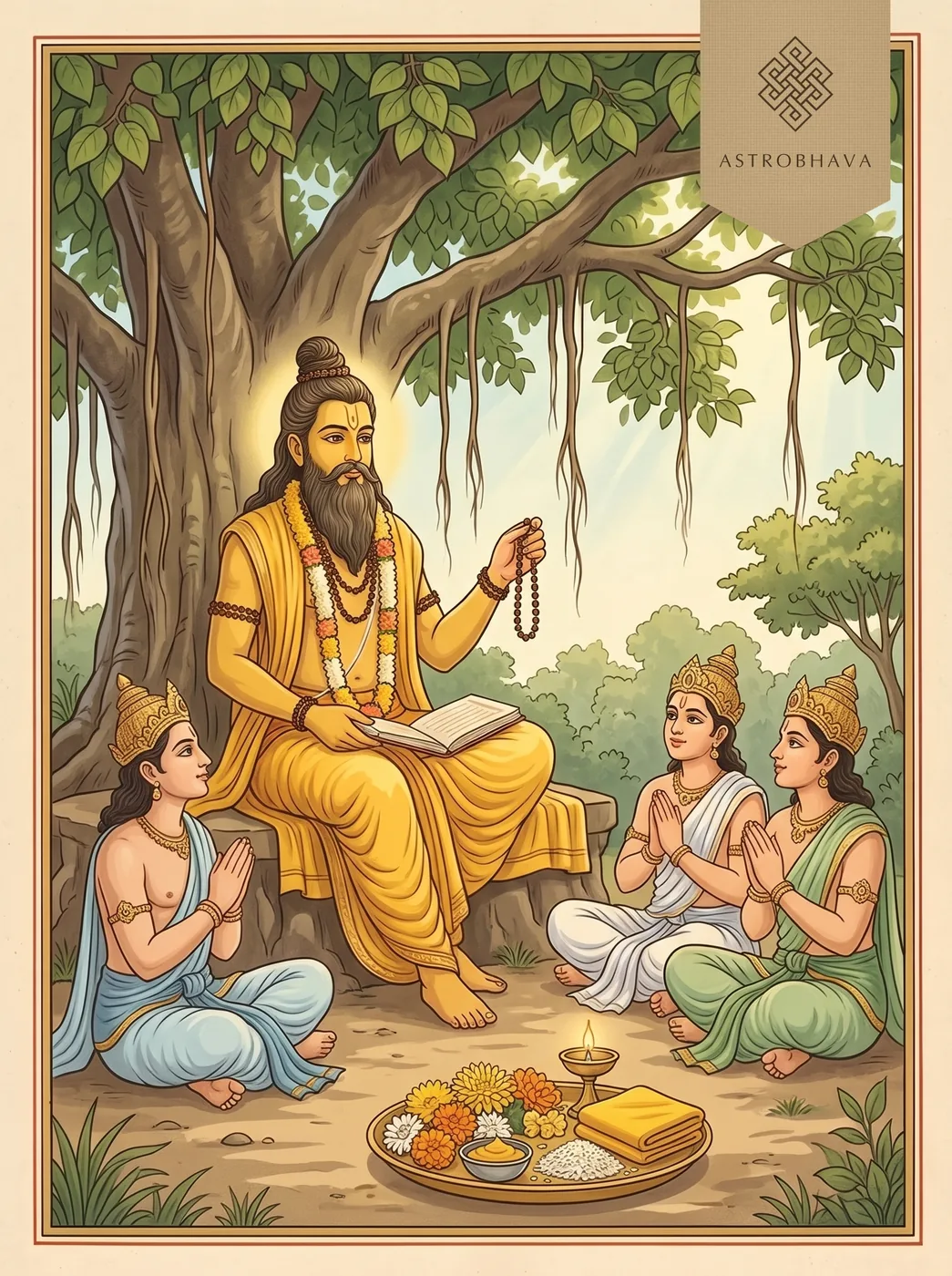
The Thursday mantra most often printed is the Brihaspati Stotram, six Sanskrit verses to Brihaspati, the graha who rules Thursday and gives the day its names, Brihaspativara and Guruvara. Its first three verses are a chain of twenty-five names: Guru, Jiva, teacher of the devas, master of speech, long-bearded, clad in yellow, ever young, chief of the planets, husband of Tara, son of Angiras, known through the Vedas. Verse 4 turns to the reward of reading those names with devotion; the verse says the reader becomes healthy, strong, prosperous and blessed with children. Verse 5 is what ties the hymn to the day. It speaks of worship on gurudina, Guru's day, with yellow sandal paste, unbroken rice and yellow cloth. Verse 6 adds flowers, lamps and food offerings and the feeding of brahmins, after which, the verse says, the trouble caused by Guru is calmed. The closing line assigns the hymn to the Skanda Purana; no printing gives a chapter for it.
The stories folded into the names
Several names in the first three verses carry older stories. Angirasa recalls his father, the sage Angiras, and the Rigveda already praises Brihaspati, also called Brahmanaspati, as the priest of the gods. Suracarya, teacher of the devas, sets him opposite Shukra, who teaches the asuras, and the Mahabharata tells how that rivalry reached his own son. The devas sent Kacha, son of Brihaspati, to study under Shukra and learn the Mritasanjivani, the knowledge that brings the dead back to life. Suspecting him, the asuras killed Kacha three times, the last time mixing his ashes into Shukra's wine. Shukra taught him the knowledge while he lay inside his teacher; Kacha came out, and at once revived Shukra with it. Tarapati, husband of Tara, points to a quarrel the Puranas tell in more than one way. According to these accounts, Tara went with Chandra, the Moon, and the dispute grew into a war of devas and asuras until Brahma made Chandra give her back; the child she bore was Budha. The weekday follows the graha. Thursday takes his name, and yellow, his colour, runs through the hymn from the yellow garment of Verse 1 to the yellow offerings of Verse 5 made on his day.
The mantra, in six scripts
- गुरुर्बृहस्पतिर्जीवः
- gururbṛhaspatirjīvaḥ — Guru, Brihaspati, Jiva (the three names joined)
- सुराचार्यो
- surācāryo — teacher of the gods
- विदांवरः
- vidāṃvaraḥ — best among the learned
- वागीशो
- vāgīśo — master of speech
- धिषणो
- dhiṣaṇo — the wise one
- दीर्घश्मश्रुः
- dīrghaśmaśruḥ — long-bearded
- पीताम्बरो
- pītāmbaro — clad in yellow
- युवा
- yuvā — ever young
Thursday Mantra lyrics in full
Six verses: twenty-five names in the first three, then the reward and the worship of Thursday. The printed closing line is given at the end.
All 7 verses, in Sanskrit, Tamil, Telugu, Kannada, Malayalam and English, each with its meaning. Choose a script:
Download the Thursday Mantra PDFAll 7 verses with their meanings, in Sanskrit. Free to print and keep.
गुरुर्बृहस्पतिर्जीवः सुराचार्यो विदांवरः ।
वागीशो धिषणो दीर्घश्मश्रुः पीताम्बरो युवा ॥
குருர்ப்ருஹஸ்பதிர்ஜீவஃ ஸுராசார்யோ விதாம்வரஃ ।
வாகீஶோ திஷணோ தீர்கஶ்மஶ்ருஃ பீதாம்பரோ யுவா ॥
గురుర్బృహస్పతిర్జీవః సురాచార్యో విదాంవరః ।
వాగీశో ధిషణో దీర్ఘశ్మశ్రుః పీతామ్బరో యువా ॥
ಗುರುರ್ಬೃಹಸ್ಪತಿರ್ಜೀವಃ ಸುರಾಚಾರ್ಯೋ ವಿದಾಂವರಃ ।
ವಾಗೀಶೋ ಧಿಷಣೋ ದೀರ್ಘಶ್ಮಶ್ರುಃ ಪೀತಾಮ್ಬರೋ ಯುವಾ ॥
ഗുരുര്ബൃഹസ്പതിര്ജീവഃ സുരാചാര്യോ വിദാംവരഃ ।
വാഗീശോ ധിഷണോ ദീര്ഘശ്മശ്രുഃ പീതാമ്ബരോ യുവാ ॥
gururbṛhaspatirjīvaḥ surācāryo vidāṃvaraḥ |
vāgīśo dhiṣaṇo dīrghaśmaśruḥ pītāmbaro yuvā ||
Guru, Brihaspati, Jiva, teacher of the gods and best among the learned; master of speech, the wise one, long-bearded, clad in yellow, ever young.
सुधादृष्टिर्ग्रहाधीशो ग्रहपीडापहारकः ।
दयाकरः सौम्यमूर्तिः सुरार्च्यः कुड्मलद्युतिः ॥
ஸுதாத்ருஷ்டிர்க்ரஹாதீஶோ க்ரஹபீடாபஹாரகஃ ।
தயாகரஃ ஸௌம்யமூர்திஃ ஸுரார்ச்யஃ குட்மலத்யுதிஃ ॥
సుధాదృష్టిర్గ్రహాధీశో గ్రహపీడాపహారకః ।
దయాకరః సౌమ్యమూర్తిః సురార్చ్యః కుడ్మలద్యుతిః ॥
ಸುಧಾದೃಷ್ಟಿರ್ಗ್ರಹಾಧೀಶೋ ಗ್ರಹಪೀಡಾಪಹಾರಕಃ ।
ದಯಾಕರಃ ಸೌಮ್ಯಮೂರ್ತಿಃ ಸುರಾರ್ಚ್ಯಃ ಕುಡ್ಮಲದ್ಯುತಿಃ ॥
സുധാദൃഷ്ടിര്ഗ്രഹാധീശോ ഗ്രഹപീഡാപഹാരകഃ ।
ദയാകരഃ സൌമ്യമൂര്തിഃ സുരാര്ച്യഃ കുഡ്മലദ്യുതിഃ ॥
sudhādṛṣṭirgrahādhīśo grahapīḍāpahārakaḥ |
dayākaraḥ saumyamūrtiḥ surārcyaḥ kuḍmaladyutiḥ ||
He whose glance is nectar, chief of the planets, who takes away the troubles the planets bring; a mine of compassion, gentle in form, worshipped by the gods, shining like a flower bud.
लोकपूज्यो लोकगुरुर्नीतिज्ञो नीतिकारकः ।
तारापतिश्चाङ्गिरसो वेदवेद्यः पितामहः ॥
லோகபூஜ்யோ லோககுருர்நீதிஜ்ஞோ நீதிகாரகஃ ।
தாராபதிஶ்சாங்கிரஸோ வேதவேத்யஃ பிதாமஹஃ ॥
లోకపూజ్యో లోకగురుర్నీతిజ్ఞో నీతికారకః ।
తారాపతిశ్చాఙ్గిరసో వేదవేద్యః పితామహః ॥
ಲೋಕಪೂಜ್ಯೋ ಲೋಕಗುರುರ್ನೀತಿಜ್ಞೋ ನೀತಿಕಾರಕಃ ।
ತಾರಾಪತಿಶ್ಚಾಙ್ಗಿರಸೋ ವೇದವೇದ್ಯಃ ಪಿತಾಮಹಃ ॥
ലോകപൂജ്യോ ലോകഗുരുര്നീതിജ്ഞോ നീതികാരകഃ ।
താരാപതിശ്ചാങ്ഗിരസോ വേദവേദ്യഃ പിതാമഹഃ ॥
lokapūjyo lokagururnītijño nītikārakaḥ |
tārāpatiścāṅgiraso vedavedyaḥ pitāmahaḥ ||
Honoured by the worlds and teacher of the worlds, knower and maker of right conduct; husband of Tara, son of Angiras, known through the Vedas, the grandsire.
भक्त्या बृहस्पतिं स्मृत्वा नामान्येतानि यः पठेत् ।
अरोगी बलवान् श्रीमान् पुत्रवान् स भवेन्नरः ॥
பக்த்யா ப்ருஹஸ்பதிம் ஸ்ம்ருத்வா நாமாந்யேதாநி யஃ படேத் ।
அரோகீ பலவாந் ஶ்ரீமாந் புத்ரவாந் ஸ பவேந்நரஃ ॥
భక్త్యా బృహస్పతిం స్మృత్వా నామాన్యేతాని యః పఠేత్ ।
అరోగీ బలవాన్ శ్రీమాన్ పుత్రవాన్ స భవేన్నరః ॥
ಭಕ್ತ್ಯಾ ಬೃಹಸ್ಪತಿಂ ಸ್ಮೃತ್ವಾ ನಾಮಾನ್ಯೇತಾನಿ ಯಃ ಪಠೇತ್ ।
ಅರೋಗೀ ಬಲವಾನ್ ಶ್ರೀಮಾನ್ ಪುತ್ರವಾನ್ ಸ ಭವೇನ್ನರಃ ॥
ഭക്ത്യാ ബൃഹസ്പതിം സ്മൃത്വാ നാമാന്യേതാനി യഃ പഠേത് ।
അരോഗീ ബലവാന് ശ്രീമാന് പുത്രവാന് സ ഭവേന്നരഃ ॥
bhaktyā bṛhaspatiṃ smṛtvā nāmānyetāni yaḥ paṭhet |
arogī balavān śrīmān putravān sa bhavennaraḥ ||
The verse says that whoever remembers Brihaspati with devotion and recites these names becomes free of illness, strong, prosperous and blessed with children.
जीवेद्वर्षशतं मर्त्यो पापं नश्यति नश्यति ।
यः पूजयेद्गुरुदिने पीतगन्धाक्षताम्बरैः ॥
ஜீவேத்வர்ஷஶதம் மர்த்யோ பாபம் நஶ்யதி நஶ்யதி ।
யஃ பூஜயேத்குருதிநே பீதகந்தாக்ஷதாம்பரைஃ ॥
జీవేద్వర్షశతం మర్త్యో పాపం నశ్యతి నశ్యతి ।
యః పూజయేద్గురుదినే పీతగన్ధాక్షతామ్బరైః ॥
ಜೀವೇದ್ವರ್ಷಶತಂ ಮರ್ತ್ಯೋ ಪಾಪಂ ನಶ್ಯತಿ ನಶ್ಯತಿ ।
ಯಃ ಪೂಜಯೇದ್ಗುರುದಿನೇ ಪೀತಗನ್ಧಾಕ್ಷತಾಮ್ಬರೈಃ ॥
ജീവേദ്വര്ഷശതം മര്ത്യോ പാപം നശ്യതി നശ്യതി ।
യഃ പൂജയേദ്ഗുരുദിനേ പീതഗന്ധാക്ഷതാമ്ബരൈഃ ॥
jīvedvarṣaśataṃ martyo pāpaṃ naśyati naśyati |
yaḥ pūjayedgurudine pītagandhākṣatāmbaraiḥ ||
The verse says such a person lives a hundred years and that sin is wholly destroyed. It speaks of one who worships on Guru's day, Thursday, with yellow sandal paste, unbroken rice and yellow cloth.
पुष्पदीपोपहारैश्च पूजयित्वा बृहस्पतिम् ।
ब्राह्मणान्भोजयित्वा च पीडाशान्तिर्भवेद्गुरोः ॥
புஷ்பதீபோபஹாரைஶ்ச பூஜயித்வா ப்ருஹஸ்பதிம் ।
ப்ராஹ்மணாந்போஜயித்வா ச பீடாஶாந்திர்பவேத்குரோஃ ॥
పుష్పదీపోపహారైశ్చ పూజయిత్వా బృహస్పతిమ్ ।
బ్రాహ్మణాన్భోజయిత్వా చ పీడాశాన్తిర్భవేద్గురోః ॥
ಪುಷ್ಪದೀಪೋಪಹಾರೈಶ್ಚ ಪೂಜಯಿತ್ವಾ ಬೃಹಸ್ಪತಿಮ್ ।
ಬ್ರಾಹ್ಮಣಾನ್ಭೋಜಯಿತ್ವಾ ಚ ಪೀಡಾಶಾನ್ತಿರ್ಭವೇದ್ಗುರೋಃ ॥
പുഷ്പദീപോപഹാരൈശ്ച പൂജയിത്വാ ബൃഹസ്പതിമ് ।
ബ്രാഹ്മണാന്ഭോജയിത്വാ ച പീഡാശാന്തിര്ഭവേദ്ഗുരോഃ ॥
puṣpadīpopahāraiśca pūjayitvā bṛhaspatim |
brāhmaṇānbhojayitvā ca pīḍāśāntirbhavedguroḥ ||
Having worshipped Brihaspati with flowers, lamps and offerings, and having fed brahmins, the verse says the trouble caused by Guru (Jupiter) is calmed.
इति श्रीस्कन्दपुराणे बृहस्पतिस्तोत्रं सम्पूर्णम् ॥
இதி ஶ்ரீஸ்கந்தபுராணே ப்ருஹஸ்பதிஸ்தோத்ரம் ஸம்பூர்ணம் ॥
ఇతి శ్రీస్కన్దపురాణే బృహస్పతిస్తోత్రం సమ్పూర్ణమ్ ॥
ಇತಿ ಶ್ರೀಸ್ಕನ್ದಪುರಾಣೇ ಬೃಹಸ್ಪತಿಸ್ತೋತ್ರಂ ಸಮ್ಪೂರ್ಣಮ್ ॥
ഇതി ശ്രീസ്കന്ദപുരാണേ ബൃഹസ്പതിസ്തോത്രം സമ്പൂര്ണമ് ॥
iti śrīskandapurāṇe bṛhaspatistotraṃ sampūrṇam ||
Thus ends the hymn to Brihaspati from the Skanda Purana.
The syllable people get wrong
In kuḍmaladyutiḥ (Verse 2), the ḍ is retroflex and sits right against the m: curl the tongue back for kuḍ, then say ma-la-dyu-tiḥ, with the y gliding straight off the d. It is often blurred into 'kumala' or 'kundala', which drops the bud (kuḍmala) the name compares him to.
When the Thursday Mantra is chanted
Festival. Thursday (Guruvara), the weekly day of Brihaspati
Questions
Have your chart read before you decide
Chanting is yours to do, and free. But which deity your situation calls for — and whether a mantra alone is the right response — depends on your chart. Sometimes it is; sometimes it is not.
- Over 30 years in the Guru–Sishya Parampara, from the age of five
- He reads every chart himself — 60 minutes, one to one, never delegated
- Charts are read only between sunrise and sunset, following tradition