Meditation Mantra
धनुर्गृहीत्वौपनिषदं महास्त्रं शरं ह्युपासानिशितं सन्धयीत । आयम्य तद्भावगतेन चेतसा लक्ष्यं तदेवाक्षरं सोम्य विद्धि ॥In Devanagari, Tamil, Telugu, Kannada, Malayalam and English — with the meaning of every word, and the one syllable most people pronounce wrongly.
 The Shanthi Homam, performed for youBook →
What the Meditation Mantra is
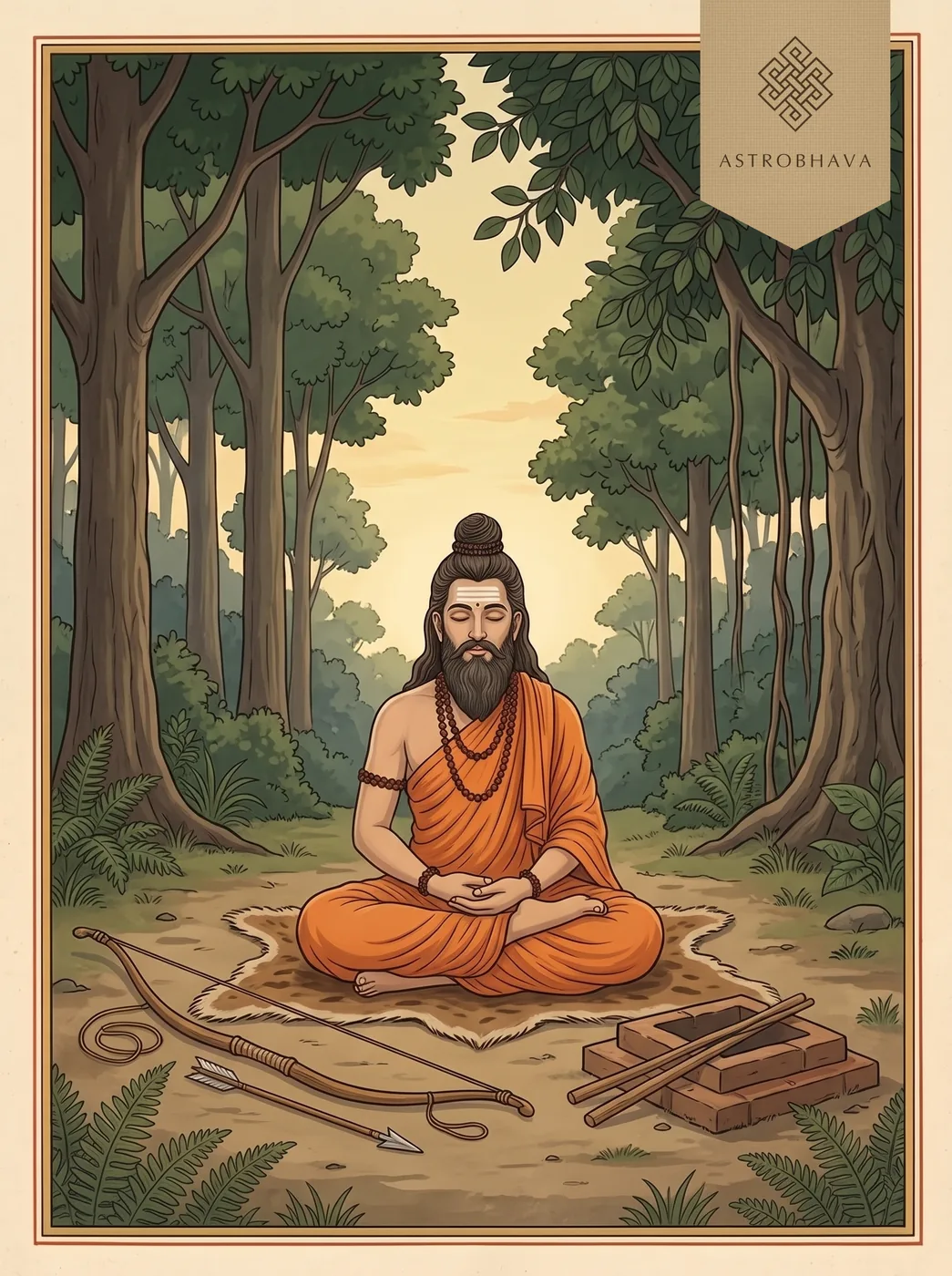
A meditation mantra, in the oldest sense, is a verse that itself speaks of dhyana, the mind held steadily on one object, and each of the eight Sanskrit verses here comes from an Upanishad and names meditation in its own words. Verses 1 to 4 are from the Mundaka Upanishad of the Atharvaveda: in 2.2.3 and 2.2.4, Om, the sacred syllable the texts call the pranava, is the bow, the self is the arrow and Brahman, the one reality, is the target; 2.2.6 says to meditate on the Self as Om, and 3.1.8 says the one who meditates sees That which has no parts. Verse 5 is Shvetashvatara Upanishad 1.14 (Krishna Yajurveda), where body and Om are rubbed together like two fire-sticks. Verses 6 to 8 are Kaivalya Upanishad 5 to 7, one sentence moving from a seeker seated in a quiet place to the lotus of the heart and to Shiva with Uma. These verses are prayers, and tradition does not treat them as a guarantee.
Three Upanishads, three questions put to teachers
Each of these Upanishads begins with someone asking. In the Mundaka, Shaunaka, called a great householder, comes to the sage Angiras and asks what it is by knowing which all this becomes known. The text traces the teaching back through Bharadvaja Satyavaha, Angir and Atharvan to Brahma, then has Angiras divide knowledge in two: a lower kind, which includes the four Vedas and their six auxiliary sciences, and a higher kind by which the Imperishable is reached. The bow image follows 2.2.2, which closes with the command to strike that target, and 2.2.5 calls the Self the bridge to immortality. The Shvetashvatara opens on a gathering of teachers who weigh time, nature, chance and the elements as the cause of the world; its third verse says they followed the discipline of meditation and saw the power of the divine, hidden in its own qualities. Its last chapter names the sage Shvetashvatara as the one who taught this to those beyond the stages of life. In the Kaivalya, the sage Ashvalayana asks Brahma, the grandfather of the worlds, for the highest knowledge and is told to know it through faith, devotion and the yoga of meditation. Its verse 11 takes up the Shvetashvatara's fire-stick image again, with knowledge in place of meditation.
The mantra, in six scripts
- धनुर्गृहीत्वौपनिषदं
- dhanurgṛhītvaupaniṣadaṃ — having taken up the bow of the Upanishads
- महास्त्रं
- mahāstraṃ — the great weapon
- शरं
- śaraṃ — an arrow
- ह्युपासानिशितं
- hyupāsāniśitaṃ — sharpened by meditation
- सन्धयीत
- sandhayīta — one should fix (on it)
- आयम्य
- āyamya — having drawn (it)
- तद्भावगतेन
- tadbhāvagatena — absorbed in That
- चेतसा
- cetasā — with the mind
- लक्ष्यं
- lakṣyaṃ — the target
- तदेवाक्षरं
- tadevākṣaraṃ — that very Imperishable
- सोम्य
- somya — dear one
- विद्धि
- viddhi — strike, know
Meditation Mantra lyrics in full
Eight single verses taken from three Upanishads, each headed with its chapter and verse, printed without Vedic accent marks.
All 8 verses, in Sanskrit, Tamil, Telugu, Kannada, Malayalam and English, each with its meaning. Choose a script:
Download the Meditation Mantra PDFAll 8 verses with their meanings, in Sanskrit. Free to print and keep.
धनुर्गृहीत्वौपनिषदं महास्त्रं शरं ह्युपासानिशितं सन्धयीत ।
आयम्य तद्भावगतेन चेतसा लक्ष्यं तदेवाक्षरं सोम्य विद्धि ॥
தநுர்க்ருஹீத்வௌபநிஷதம் மஹாஸ்த்ரம் ஶரம் ஹ்யுபாஸாநிஶிதம் ஸந்தயீத ।
ஆயம்ய தத்பாவகதேந சேதஸா லக்ஷ்யம் ததேவாக்ஷரம் ஸோம்ய வித்தி ॥
ధనుర్గృహీత్వౌపనిషదం మహాస్త్రం శరం హ్యుపాసానిశితం సన్ధయీత ।
ఆయమ్య తద్భావగతేన చేతసా లక్ష్యం తదేవాక్షరం సోమ్య విద్ధి ॥
ಧನುರ್ಗೃಹೀತ್ವೌಪನಿಷದಂ ಮಹಾಸ್ತ್ರಂ ಶರಂ ಹ್ಯುಪಾಸಾನಿಶಿತಂ ಸನ್ಧಯೀತ ।
ಆಯಮ್ಯ ತದ್ಭಾವಗತೇನ ಚೇತಸಾ ಲಕ್ಷ್ಯಂ ತದೇವಾಕ್ಷರಂ ಸೋಮ್ಯ ವಿದ್ಧಿ ॥
ധനുര്ഗൃഹീത്വൌപനിഷദം മഹാസ്ത്രം ശരം ഹ്യുപാസാനിശിതം സന്ധയീത ।
ആയമ്യ തദ്ഭാവഗതേന ചേതസാ ലക്ഷ്യം തദേവാക്ഷരം സോമ്യ വിദ്ധി ॥
dhanurgṛhītvaupaniṣadaṃ mahāstraṃ śaraṃ hyupāsāniśitaṃ sandhayīta |
āyamya tadbhāvagatena cetasā lakṣyaṃ tadevākṣaraṃ somya viddhi ||
Taking up the great weapon, the bow of the Upanishads, one should fix on it an arrow sharpened by meditation. Drawing it with a mind absorbed in That, dear one, strike that target, the Imperishable.
प्रणवो धनुः शरो ह्यात्मा ब्रह्म तल्लक्ष्यमुच्यते ।
अप्रमत्तेन वेद्धव्यं शरवत्तन्मयो भवेत् ॥
ப்ரணவோ தநுஃ ஶரோ ஹ்யாத்மா ப்ரஹ்ம தல்லக்ஷ்யமுச்யதே ।
அப்ரமத்தேந வேத்தவ்யம் ஶரவத்தந்மயோ பவேத் ॥
ప్రణవో ధనుః శరో హ్యాత్మా బ్రహ్మ తల్లక్ష్యముచ్యతే ।
అప్రమత్తేన వేద్ధవ్యం శరవత్తన్మయో భవేత్ ॥
ಪ್ರಣವೋ ಧನುಃ ಶರೋ ಹ್ಯಾತ್ಮಾ ಬ್ರಹ್ಮ ತಲ್ಲಕ್ಷ್ಯಮುಚ್ಯತೇ ।
ಅಪ್ರಮತ್ತೇನ ವೇದ್ಧವ್ಯಂ ಶರವತ್ತನ್ಮಯೋ ಭವೇತ್ ॥
പ്രണവോ ധനുഃ ശരോ ഹ്യാത്മാ ബ്രഹ്മ തല്ലക്ഷ്യമുച്യതേ ।
അപ്രമത്തേന വേദ്ധവ്യം ശരവത്തന്മയോ ഭവേത് ॥
praṇavo dhanuḥ śaro hyātmā brahma tallakṣyamucyate |
apramattena veddhavyaṃ śaravattanmayo bhavet ||
Om is the bow, the self is the arrow, and Brahman is called the target. It is to be struck by one who is not distracted; like the arrow lodged in its mark, one should become one with it.
अरा इव रथनाभौ संहता यत्र नाड्यः स एषोऽन्तश्चरते बहुधा जायमानः ।
ओमित्येवं ध्यायथ आत्मानं स्वस्ति वः पाराय तमसः परस्तात् ॥
அரா இவ ரதநாபௌ ஸம்ஹதா யத்ர நாட்யஃ ஸ ஏஷோந்தஶ்சரதே பஹுதா ஜாயமாநஃ ।
ஓமித்யேவம் த்யாயத ஆத்மாநம் ஸ்வஸ்தி வஃ பாராய தமஸஃ பரஸ்தாத் ॥
అరా ఇవ రథనాభౌ సంహతా యత్ర నాడ్యః స ఏషోఽన్తశ్చరతే బహుధా జాయమానః ।
ఓమిత్యేవం ధ్యాయథ ఆత్మానం స్వస్తి వః పారాయ తమసః పరస్తాత్ ॥
ಅರಾ ಇವ ರಥನಾಭೌ ಸಂಹತಾ ಯತ್ರ ನಾಡ್ಯಃ ಸ ಏಷೋಽನ್ತಶ್ಚರತೇ ಬಹುಧಾ ಜಾಯಮಾನಃ ।
ಓಮಿತ್ಯೇವಂ ಧ್ಯಾಯಥ ಆತ್ಮಾನಂ ಸ್ವಸ್ತಿ ವಃ ಪಾರಾಯ ತಮಸಃ ಪರಸ್ತಾತ್ ॥
അരാ ഇവ രഥനാഭൌ സംഹതാ യത്ര നാഡ്യഃ സ ഏഷോഽന്തശ്ചരതേ ബഹുധാ ജായമാനഃ ।
ഓമിത്യേവം ധ്യായഥ ആത്മാനം സ്വസ്തി വഃ പാരായ തമസഃ പരസ്താത് ॥
arā iva rathanābhau saṃhatā yatra nāḍyaḥ sa eṣo'ntaścarate bahudhā jāyamānaḥ |
omityevaṃ dhyāyatha ātmānaṃ svasti vaḥ pārāya tamasaḥ parastāt ||
Where the channels of the body meet like spokes in the hub of a wheel, there he moves within, born in many forms. Meditate on the Self as Om. May you fare well in crossing to the far shore beyond darkness.
न चक्षुषा गृह्यते नापि वाचा नान्यैर्देवैस्तपसा कर्मणा वा ।
ज्ञानप्रसादेन विशुद्धसत्त्वस्ततस्तु तं पश्यते निष्कलं ध्यायमानः ॥
ந சக்ஷுஷா க்ருஹ்யதே நாபி வாசா நாந்யைர்தேவைஸ்தபஸா கர்மணா வா ।
ஜ்ஞாநப்ரஸாதேந விஶுத்தஸத்த்வஸ்ததஸ்து தம் பஶ்யதே நிஷ்கலம் த்யாயமாநஃ ॥
న చక్షుషా గృహ్యతే నాపి వాచా నాన్యైర్దేవైస్తపసా కర్మణా వా ।
జ్ఞానప్రసాదేన విశుద్ధసత్త్వస్తతస్తు తం పశ్యతే నిష్కలం ధ్యాయమానః ॥
ನ ಚಕ್ಷುಷಾ ಗೃಹ್ಯತೇ ನಾಪಿ ವಾಚಾ ನಾನ್ಯೈರ್ದೇವೈಸ್ತಪಸಾ ಕರ್ಮಣಾ ವಾ ।
ಜ್ಞಾನಪ್ರಸಾದೇನ ವಿಶುದ್ಧಸತ್ತ್ವಸ್ತತಸ್ತು ತಂ ಪಶ್ಯತೇ ನಿಷ್ಕಲಂ ಧ್ಯಾಯಮಾನಃ ॥
ന ചക്ഷുഷാ ഗൃഹ്യതേ നാപി വാചാ നാന്യൈര്ദേവൈസ്തപസാ കര്മണാ വാ ।
ജ്ഞാനപ്രസാദേന വിശുദ്ധസത്ത്വസ്തതസ്തു തം പശ്യതേ നിഷ്കലം ധ്യായമാനഃ ॥
na cakṣuṣā gṛhyate nāpi vācā nānyairdevaistapasā karmaṇā vā |
jñānaprasādena viśuddhasattvastatastu taṃ paśyate niṣkalaṃ dhyāyamānaḥ ||
It is not grasped by the eye, nor by speech, nor by the other senses, nor by austerity or ritual work. When the mind is made pure by the clearness of knowledge, then, meditating, one sees That, which has no parts.
स्वदेहमरणिं कृत्वा प्रणवं चोत्तरारणिम् ।
ध्याननिर्मथनाभ्यासाद्देवं पश्येन्निगूढवत् ॥
ஸ்வதேஹமரணிம் க்ருத்வா ப்ரணவம் சோத்தராரணிம் ।
த்யாநநிர்மதநாப்யாஸாத்தேவம் பஶ்யேந்நிகூடவத் ॥
స్వదేహమరణిం కృత్వా ప్రణవం చోత్తరారణిమ్ ।
ధ్యాననిర్మథనాభ్యాసాద్దేవం పశ్యేన్నిగూఢవత్ ॥
ಸ್ವದೇಹಮರಣಿಂ ಕೃತ್ವಾ ಪ್ರಣವಂ ಚೋತ್ತರಾರಣಿಮ್ ।
ಧ್ಯಾನನಿರ್ಮಥನಾಭ್ಯಾಸಾದ್ದೇವಂ ಪಶ್ಯೇನ್ನಿಗೂಢವತ್ ॥
സ്വദേഹമരണിം കൃത്വാ പ്രണവം ചോത്തരാരണിമ് ।
ധ്യാനനിര്മഥനാഭ്യാസാദ്ദേവം പശ്യേന്നിഗൂഢവത് ॥
svadehamaraṇiṃ kṛtvā praṇavaṃ cottarāraṇim |
dhyānanirmathanābhyāsāddevaṃ paśyennigūḍhavat ||
Making one's own body the lower fire-stick and Om the upper fire-stick, by the steady practice of churning them in meditation one should see the divine, hidden within like fire in wood.
विविक्तदेशे च सुखासनस्थः शुचिः समग्रीवशिरःशरीरः ।
अत्याश्रमस्थः सकलेन्द्रियाणि निरुध्य भक्त्या स्वगुरुं प्रणम्य ।
हृत्पुण्डरीकं विरजं विशुद्धं विचिन्त्य मध्ये विशदं विशोकम् ॥
விவிக்ததேஶே ச ஸுகாஸநஸ்தஃ ஶுசிஃ ஸமக்ரீவஶிரஃஶரீரஃ ।
அத்யாஶ்ரமஸ்தஃ ஸகலேந்த்ரியாணி நிருத்ய பக்த்யா ஸ்வகுரும் ப்ரணம்ய ।
ஹ்ருத்புண்டரீகம் விரஜம் விஶுத்தம் விசிந்த்ய மத்யே விஶதம் விஶோகம் ॥
వివిక్తదేశే చ సుఖాసనస్థః శుచిః సమగ్రీవశిరఃశరీరః ।
అత్యాశ్రమస్థః సకలేన్ద్రియాణి నిరుధ్య భక్త్యా స్వగురుం ప్రణమ్య ।
హృత్పుణ్డరీకం విరజం విశుద్ధం విచిన్త్య మధ్యే విశదం విశోకమ్ ॥
ವಿವಿಕ್ತದೇಶೇ ಚ ಸುಖಾಸನಸ್ಥಃ ಶುಚಿಃ ಸಮಗ್ರೀವಶಿರಃಶರೀರಃ ।
ಅತ್ಯಾಶ್ರಮಸ್ಥಃ ಸಕಲೇನ್ದ್ರಿಯಾಣಿ ನಿರುಧ್ಯ ಭಕ್ತ್ಯಾ ಸ್ವಗುರುಂ ಪ್ರಣಮ್ಯ ।
ಹೃತ್ಪುಣ್ಡರೀಕಂ ವಿರಜಂ ವಿಶುದ್ಧಂ ವಿಚಿನ್ತ್ಯ ಮಧ್ಯೇ ವಿಶದಂ ವಿಶೋಕಮ್ ॥
വിവിക്തദേശേ ച സുഖാസനസ്ഥഃ ശുചിഃ സമഗ്രീവശിരഃശരീരഃ ।
അത്യാശ്രമസ്ഥഃ സകലേന്ദ്രിയാണി നിരുധ്യ ഭക്ത്യാ സ്വഗുരും പ്രണമ്യ ।
ഹൃത്പുണ്ഡരീകം വിരജം വിശുദ്ധം വിചിന്ത്യ മധ്യേ വിശദം വിശോകമ് ॥
viviktadeśe ca sukhāsanasthaḥ śuciḥ samagrīvaśiraḥśarīraḥ |
atyāśramasthaḥ sakalendriyāṇi nirudhya bhaktyā svaguruṃ praṇamya |
hṛtpuṇḍarīkaṃ virajaṃ viśuddhaṃ vicintya madhye viśadaṃ viśokam ||
In a secluded place, seated at ease, clean, with neck, head and body held in line, standing beyond the stages of life, restraining all the senses and bowing with devotion to one's own teacher, one contemplates within the lotus of the heart, which is spotless, pure, clear and free of sorrow.
अचिन्त्यमव्यक्तमनन्तरूपं शिवं प्रशान्तममृतं ब्रह्मयोनिम् ।
तमादिमध्यान्तविहीनमेकं विभुं चिदानन्दमरूपमद्भुतम् ॥
அசிந்த்யமவ்யக்தமநந்தரூபம் ஶிவம் ப்ரஶாந்தமம்ருதம் ப்ரஹ்மயோநிம் ।
தமாதிமத்யாந்தவிஹீநமேகம் விபும் சிதாநந்தமரூபமத்புதம் ॥
అచిన్త్యమవ్యక్తమనన్తరూపం శివం ప్రశాన్తమమృతం బ్రహ్మయోనిమ్ ।
తమాదిమధ్యాన్తవిహీనమేకం విభుం చిదానన్దమరూపమద్భుతమ్ ॥
ಅಚಿನ್ತ್ಯಮವ್ಯಕ್ತಮನನ್ತರೂಪಂ ಶಿವಂ ಪ್ರಶಾನ್ತಮಮೃತಂ ಬ್ರಹ್ಮಯೋನಿಮ್ ।
ತಮಾದಿಮಧ್ಯಾನ್ತವಿಹೀನಮೇಕಂ ವಿಭುಂ ಚಿದಾನನ್ದಮರೂಪಮದ್ಭುತಮ್ ॥
അചിന്ത്യമവ്യക്തമനന്തരൂപം ശിവം പ്രശാന്തമമൃതം ബ്രഹ്മയോനിമ് ।
തമാദിമധ്യാന്തവിഹീനമേകം വിഭും ചിദാനന്ദമരൂപമദ്ഭുതമ് ॥
acintyamavyaktamanantarūpaṃ śivaṃ praśāntamamṛtaṃ brahmayonim |
tamādimadhyāntavihīnamekaṃ vibhuṃ cidānandamarūpamadbhutam ||
Beyond thought, unmanifest, of endless form, auspicious, utterly calm, immortal, the source of Brahma; that One without beginning, middle or end, all-pervading, consciousness and bliss, formless and wonderful.
उमासहायं परमेश्वरं प्रभुं त्रिलोचनं नीलकण्ठं प्रशान्तम् ।
ध्यात्वा मुनिर्गच्छति भूतयोनिं समस्तसाक्षिं तमसः परस्तात् ॥
உமாஸஹாயம் பரமேஶ்வரம் ப்ரபும் த்ரிலோசநம் நீலகண்டம் ப்ரஶாந்தம் ।
த்யாத்வா முநிர்கச்சதி பூதயோநிம் ஸமஸ்தஸாக்ஷிம் தமஸஃ பரஸ்தாத் ॥
ఉమాసహాయం పరమేశ్వరం ప్రభుం త్రిలోచనం నీలకణ్ఠం ప్రశాన్తమ్ ।
ధ్యాత్వా మునిర్గచ్ఛతి భూతయోనిం సమస్తసాక్షిం తమసః పరస్తాత్ ॥
ಉಮಾಸಹಾಯಂ ಪರಮೇಶ್ವರಂ ಪ್ರಭುಂ ತ್ರಿಲೋಚನಂ ನೀಲಕಣ್ಠಂ ಪ್ರಶಾನ್ತಮ್ ।
ಧ್ಯಾತ್ವಾ ಮುನಿರ್ಗಚ್ಛತಿ ಭೂತಯೋನಿಂ ಸಮಸ್ತಸಾಕ್ಷಿಂ ತಮಸಃ ಪರಸ್ತಾತ್ ॥
ഉമാസഹായം പരമേശ്വരം പ്രഭും ത്രിലോചനം നീലകണ്ഠം പ്രശാന്തമ് ।
ധ്യാത്വാ മുനിര്ഗച്ഛതി ഭൂതയോനിം സമസ്തസാക്ഷിം തമസഃ പരസ്താത് ॥
umāsahāyaṃ parameśvaraṃ prabhuṃ trilocanaṃ nīlakaṇṭhaṃ praśāntam |
dhyātvā munirgacchati bhūtayoniṃ samastasākṣiṃ tamasaḥ parastāt ||
Meditating on the Supreme, companion of Uma, the mighty one, three-eyed, blue-throated and serene, the sage reaches the source of all beings, the witness of all, beyond darkness.
The syllable people get wrong
In dhyāyatha (Verse 3, 'meditate') the dh is a breathy d joined straight to y, so the word is said dhyaa-ya-tha in three syllables with a long first aa; it is often flattened to 'dyayatha' or broken into 'dhi-yayatha', which loses the aspiration that the whole family of words, dhyāna and dhyātvā included, carries.
Other texts for meditation
- So Hum MantraThe Hamsa Upanishad's 'hamsa hamsa' meditation and the breath it calls the Ajapa Gayatri.
- Gayatri Devi MantraThe Gayatri dhyanam 'muktavidruma', the verse recited to picture the goddess before Gayatri japa.
- Dakshinamurthy StotramVerse 10 names hearing, reflecting on its meaning, meditation (dhyana) and recitation of the hymn.
- Om MantraMandukya verse 12: Om is the Self, and one who knows this enters the Self by the Self.
Questions
Have your chart read before you decide
Chanting is yours to do, and free. But which deity your situation calls for — and whether a mantra alone is the right response — depends on your chart. Sometimes it is; sometimes it is not.
- Over 30 years in the Guru–Sishya Parampara, from the age of five
- He reads every chart himself — 60 minutes, one to one, never delegated
- Charts are read only between sunrise and sunset, following tradition