Mantra for Study
कृपां कुरु जगन्मातर्मामेवं हततेजसम् । गुरुशापात्स्मृतिभ्रष्टं विद्याहीनं च दुःखितम् ॥In Devanagari, Tamil, Telugu, Kannada, Malayalam and English — with the meaning of every word, and the one syllable most people pronounce wrongly.
 The Vidya Ganapathi Homam, performed for youBook →
What the Mantra for Study is
A mantra for study, in the sense the old texts give it, is a prayer that names learning as its own aim, and this page prints two such texts. The first is the Vani Stavanam, the praise of Vani (speech, a name of Saraswati) by Yajnavalkya in the Brahmavaivarta Purana, Prakriti Khanda, chapter 5. It is given whole, with its two benefit verses (phala shruti). Verses 1 to 4 ask for knowledge, memory, poetry and the power to teach, and that what fate erased sprout again. Verses 5 to 12 salute her as the ground of letters, sounds, counting and explanation. Verses 13 to 27 recall teachers who fell silent until they turned to her; verses 18 to 21 recall Vyasa and Valmiki. The second text is two verses of the 33-verse Hayagriva Stotram by Vedanta Desika (14th century): the opening verse to Hayagriva, the horse-headed form of Vishnu, and the last, which names the hymn's purpose. These verses are prayers, and tradition does not treat them as a guarantee.
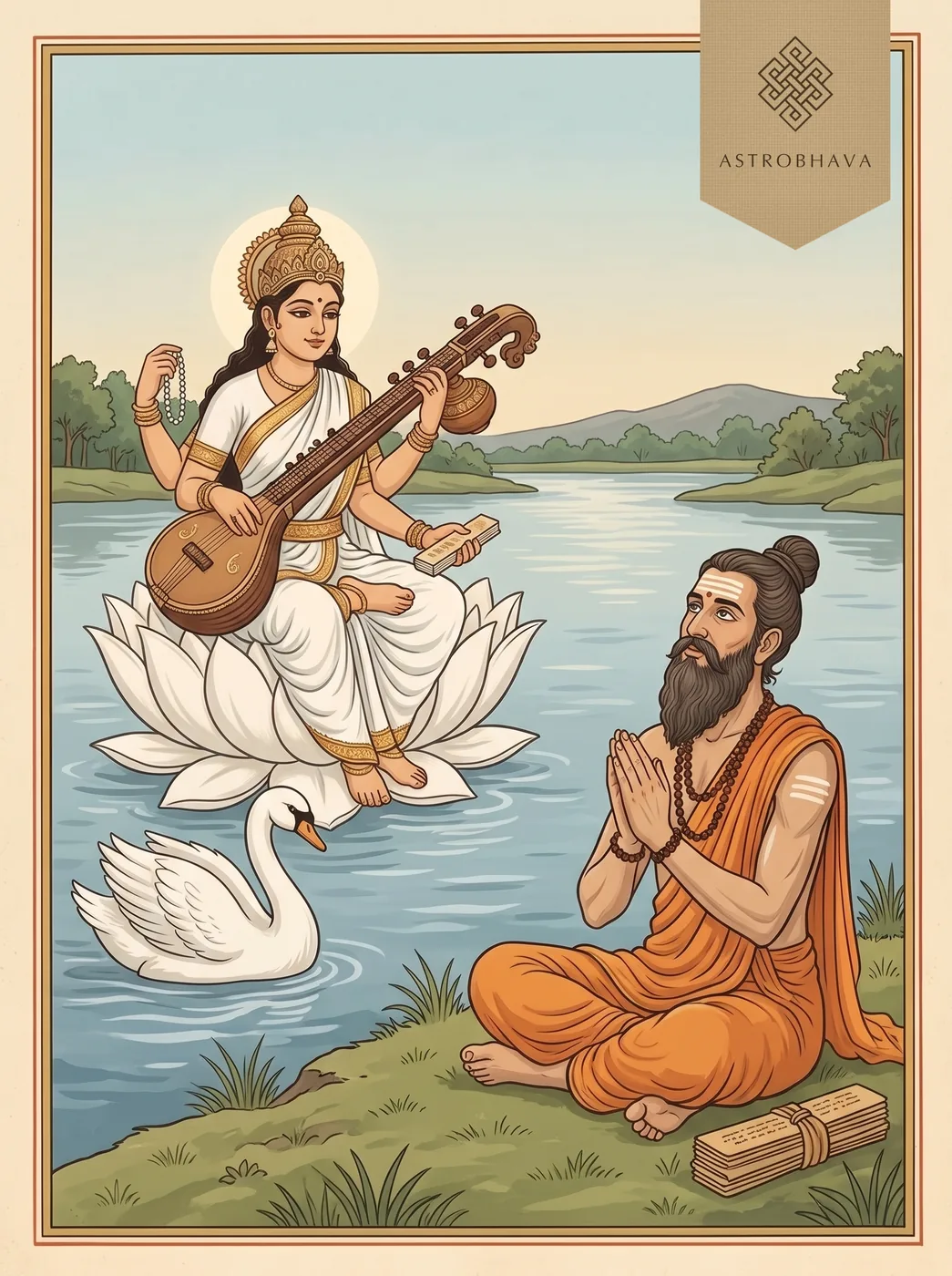
Yajnavalkya at Konarka, asking for memory
The chapter opens with Narayana telling the sage Narada of a hymn with which Yajnavalkya once praised Vagdevi, the deity of speech. By his teacher's curse, the chapter says, Yajnavalkya had lost his learning; it gives the curse half a line and does not stop to tell its cause. In distress he went to the sacred seat of the Sun and, through austerity, came to see Surya at Konarka, where he praised the Sun and wept again and again. Surya taught him the Vedas and their auxiliary sciences, told him to praise Vagdevi with devotion 'smriti-hetave', for the sake of memory, and vanished. The sage bathed and, his neck bowed, began the hymn printed here. Its middle verses argue from precedent. Brahma, questioned by Sanatkumara, could give no settled answer until he praised her at Krishna's word; Ananta, questioned by the Earth, did the same at Kashyapa's bidding; Valmiki fell silent before Vyasa's question on the Puranas; and Vyasa, the hymn says, served her for a hundred years at Pushkara before he divided the Veda. When Yajnavalkya finished he lay prostrate, fasting and weeping. Unseen, she answered him, 'Be the foremost of fine poets,' and went to Vaikuntha.
The mantra, in six scripts
- कृपां
- kṛpāṃ — mercy
- कुरु
- kuru — show
- जगन्मातर्मामेवं
- jaganmātarmāmevaṃ — O mother of the world, to me, thus
- हततेजसम्
- hatatejasam — whose brilliance is gone
- गुरुशापात्स्मृतिभ्रष्टं
- guruśāpātsmṛtibhraṣṭaṃ — fallen from memory by the teacher's curse
- विद्याहीनं
- vidyāhīnaṃ — without learning
- च
- ca — and
- दुःखितम्
- duḥkhitam — in sorrow
Mantra for Study lyrics in full
Yajnavalkya's hymn is given whole, and the printed closing line of its chapter follows it. From the Hayagriva Stotram only the first and last of its 33 verses are given.
All 34 verses, in Sanskrit, Tamil, Telugu, Kannada, Malayalam and English, each with its meaning. Choose a script:
Download the Mantra for Study PDFAll 34 verses with their meanings, in Sanskrit. Free to print and keep.
कृपां कुरु जगन्मातर्मामेवं हततेजसम् ।
गुरुशापात्स्मृतिभ्रष्टं विद्याहीनं च दुःखितम् ॥
க்ருபாம் குரு ஜகந்மாதர்மாமேவம் ஹததேஜஸம் ।
குருஶாபாத்ஸ்ம்ருதிப்ரஷ்டம் வித்யாஹீநம் ச துஃகிதம் ॥
కృపాం కురు జగన్మాతర్మామేవం హతతేజసమ్ ।
గురుశాపాత్స్మృతిభ్రష్టం విద్యాహీనం చ దుఃఖితమ్ ॥
ಕೃಪಾಂ ಕುರು ಜಗನ್ಮಾತರ್ಮಾಮೇವಂ ಹತತೇಜಸಮ್ ।
ಗುರುಶಾಪಾತ್ಸ್ಮೃತಿಭ್ರಷ್ಟಂ ವಿದ್ಯಾಹೀನಂ ಚ ದುಃಖಿತಮ್ ॥
കൃപാം കുരു ജഗന്മാതര്മാമേവം ഹതതേജസമ് ।
ഗുരുശാപാത്സ്മൃതിഭ്രഷ്ടം വിദ്യാഹീനം ച ദുഃഖിതമ് ॥
kṛpāṃ kuru jaganmātarmāmevaṃ hatatejasam |
guruśāpātsmṛtibhraṣṭaṃ vidyāhīnaṃ ca duḥkhitam ||
Mother of the world, have mercy on me: my brilliance is gone, and by my teacher's curse I have lost my memory, I am without learning and in sorrow.
ज्ञानं देहि स्मृतिं देहि विद्यां विद्याधिदेवते ।
प्रतिष्ठां कवितां देहि शक्तिं शिष्यप्रबोधिकाम् ॥
ஜ்ஞாநம் தேஹி ஸ்ம்ருதிம் தேஹி வித்யாம் வித்யாதிதேவதே ।
ப்ரதிஷ்டாம் கவிதாம் தேஹி ஶக்திம் ஶிஷ்யப்ரபோதிகாம் ॥
జ్ఞానం దేహి స్మృతిం దేహి విద్యాం విద్యాధిదేవతే ।
ప్రతిష్ఠాం కవితాం దేహి శక్తిం శిష్యప్రబోధికామ్ ॥
ಜ್ಞಾನಂ ದೇಹಿ ಸ್ಮೃತಿಂ ದೇಹಿ ವಿದ್ಯಾಂ ವಿದ್ಯಾಧಿದೇವತೇ ।
ಪ್ರತಿಷ್ಠಾಂ ಕವಿತಾಂ ದೇಹಿ ಶಕ್ತಿಂ ಶಿಷ್ಯಪ್ರಬೋಧಿಕಾಮ್ ॥
ജ്ഞാനം ദേഹി സ്മൃതിം ദേഹി വിദ്യാം വിദ്യാധിദേവതേ ।
പ്രതിഷ്ഠാം കവിതാം ദേഹി ശക്തിം ശിഷ്യപ്രബോധികാമ് ॥
jñānaṃ dehi smṛtiṃ dehi vidyāṃ vidyādhidevate |
pratiṣṭhāṃ kavitāṃ dehi śaktiṃ śiṣyaprabodhikām ||
O presiding deity of learning, give me knowledge, give me memory, give me learning. Give me standing, the gift of poetry, and the power to teach a student well.
ग्रन्थनिर्मितिशक्तिं च सच्छिष्यं सुप्रतिष्ठितम् ।
प्रतिभां सत्सभायां च विचारक्षमतां शुभाम् ॥
க்ரந்தநிர்மிதிஶக்திம் ச ஸச்சிஷ்யம் ஸுப்ரதிஷ்டிதம் ।
ப்ரதிபாம் ஸத்ஸபாயாம் ச விசாரக்ஷமதாம் ஶுபாம் ॥
గ్రన్థనిర్మితిశక్తిం చ సచ్ఛిష్యం సుప్రతిష్ఠితమ్ ।
ప్రతిభాం సత్సభాయాం చ విచారక్షమతాం శుభామ్ ॥
ಗ್ರನ್ಥನಿರ್ಮಿತಿಶಕ್ತಿಂ ಚ ಸಚ್ಛಿಷ್ಯಂ ಸುಪ್ರತಿಷ್ಠಿತಮ್ ।
ಪ್ರತಿಭಾಂ ಸತ್ಸಭಾಯಾಂ ಚ ವಿಚಾರಕ್ಷಮತಾಂ ಶುಭಾಮ್ ॥
ഗ്രന്ഥനിര്മിതിശക്തിം ച സച്ഛിഷ്യം സുപ്രതിഷ്ഠിതമ് ।
പ്രതിഭാം സത്സഭായാം ച വിചാരക്ഷമതാം ശുഭാമ് ॥
granthanirmitiśaktiṃ ca sacchiṣyaṃ supratiṣṭhitam |
pratibhāṃ satsabhāyāṃ ca vicārakṣamatāṃ śubhām ||
Give me the power to compose books, a worthy and well-settled student, brilliance in an assembly of the learned, and a fine capacity for reasoned discussion.
लुप्तां सर्वां दैववशान्नवं कुरु पुनः पुनः ।
यथाऽङ्कुरं जनयति भगवान्योगमायया ॥
லுப்தாம் ஸர்வாம் தைவவஶாந்நவம் குரு புநஃ புநஃ ।
யதாங்குரம் ஜநயதி பகவாந்யோகமாயயா ॥
లుప్తాం సర్వాం దైవవశాన్నవం కురు పునః పునః ।
యథాఽఙ్కురం జనయతి భగవాన్యోగమాయయా ॥
ಲುಪ್ತಾಂ ಸರ್ವಾಂ ದೈವವಶಾನ್ನವಂ ಕುರು ಪುನಃ ಪುನಃ ।
ಯಥಾಽಙ್ಕುರಂ ಜನಯತಿ ಭಗವಾನ್ಯೋಗಮಾಯಯಾ ॥
ലുപ്താം സര്വാം ദൈവവശാന്നവം കുരു പുനഃ പുനഃ ।
യഥാഽങ്കുരം ജനയതി ഭഗവാന്യോഗമായയാ ॥
luptāṃ sarvāṃ daivavaśānnavaṃ kuru punaḥ punaḥ |
yathā'ṅkuraṃ janayati bhagavānyogamāyayā ||
All that fate has erased, make new again and again, just as the divine one, by his own power, makes a sprout spring up anew.
ब्रह्मस्वरूपा परमा ज्योतीरूपा सनातनी ।
सर्वविद्याधिदेवी या तस्यै वाण्यै नमो नमः ॥
ப்ரஹ்மஸ்வரூபா பரமா ஜ்யோதீரூபா ஸநாதநீ ।
ஸர்வவித்யாதிதேவீ யா தஸ்யை வாண்யை நமோ நமஃ ॥
బ్రహ్మస్వరూపా పరమా జ్యోతీరూపా సనాతనీ ।
సర్వవిద్యాధిదేవీ యా తస్యై వాణ్యై నమో నమః ॥
ಬ್ರಹ್ಮಸ್ವರೂಪಾ ಪರಮಾ ಜ್ಯೋತೀರೂಪಾ ಸನಾತನೀ ।
ಸರ್ವವಿದ್ಯಾಧಿದೇವೀ ಯಾ ತಸ್ಯೈ ವಾಣ್ಯೈ ನಮೋ ನಮಃ ॥
ബ്രഹ്മസ്വരൂപാ പരമാ ജ്യോതീരൂപാ സനാതനീ ।
സര്വവിദ്യാധിദേവീ യാ തസ്യൈ വാണ്യൈ നമോ നമഃ ॥
brahmasvarūpā paramā jyotīrūpā sanātanī |
sarvavidyādhidevī yā tasyai vāṇyai namo namaḥ ||
She who is Brahman itself, supreme, made of light and eternal, the presiding deity of every branch of learning: to her, Vani, salutation again and again.
यया विना जगत्सर्वं शश्वज्जीवन्मृतं सदा ।
ज्ञानाधिदेवी या तस्यै सरस्वत्यै नमो नमः ॥
யயா விநா ஜகத்ஸர்வம் ஶஶ்வஜ்ஜீவந்ம்ருதம் ஸதா ।
ஜ்ஞாநாதிதேவீ யா தஸ்யை ஸரஸ்வத்யை நமோ நமஃ ॥
యయా వినా జగత్సర్వం శశ్వజ్జీవన్మృతం సదా ।
జ్ఞానాధిదేవీ యా తస్యై సరస్వత్యై నమో నమః ॥
ಯಯಾ ವಿನಾ ಜಗತ್ಸರ್ವಂ ಶಶ್ವಜ್ಜೀವನ್ಮೃತಂ ಸದಾ ।
ಜ್ಞಾನಾಧಿದೇವೀ ಯಾ ತಸ್ಯೈ ಸರಸ್ವತ್ಯೈ ನಮೋ ನಮಃ ॥
യയാ വിനാ ജഗത്സര്വം ശശ്വജ്ജീവന്മൃതം സദാ ।
ജ്ഞാനാധിദേവീ യാ തസ്യൈ സരസ്വത്യൈ നമോ നമഃ ॥
yayā vinā jagatsarvaṃ śaśvajjīvanmṛtaṃ sadā |
jñānādhidevī yā tasyai sarasvatyai namo namaḥ ||
Without her the whole world would always be like the living dead. To her, Saraswati, the presiding deity of knowledge, salutation again and again.
यया विना जगत्सर्वं मूकमुन्मत्तवत्सदा ।
वागधिष्ठातृदेवी या तस्यै वाण्यै नमो नमः ॥
யயா விநா ஜகத்ஸர்வம் மூகமுந்மத்தவத்ஸதா ।
வாகதிஷ்டாத்ருதேவீ யா தஸ்யை வாண்யை நமோ நமஃ ॥
యయా వినా జగత్సర్వం మూకమున్మత్తవత్సదా ।
వాగధిష్ఠాతృదేవీ యా తస్యై వాణ్యై నమో నమః ॥
ಯಯಾ ವಿನಾ ಜಗತ್ಸರ್ವಂ ಮೂಕಮುನ್ಮತ್ತವತ್ಸದಾ ।
ವಾಗಧಿಷ್ಠಾತೃದೇವೀ ಯಾ ತಸ್ಯೈ ವಾಣ್ಯೈ ನಮೋ ನಮಃ ॥
യയാ വിനാ ജഗത്സര്വം മൂകമുന്മത്തവത്സദാ ।
വാഗധിഷ്ഠാതൃദേവീ യാ തസ്യൈ വാണ്യൈ നമോ നമഃ ॥
yayā vinā jagatsarvaṃ mūkamunmattavatsadā |
vāgadhiṣṭhātṛdevī yā tasyai vāṇyai namo namaḥ ||
Without her the whole world would always be mute, as if out of its mind. To her, Vani, the deity who rules speech, salutation again and again.
हिमचन्दनकुन्देन्दुकुमुदाम्भोजसन्निभा ।
वर्णाधिदेवी या तस्यै चाक्षरायै नमो नमः ॥
ஹிமசந்தநகுந்தேந்துகுமுதாம்போஜஸந்நிபா ।
வர்ணாதிதேவீ யா தஸ்யை சாக்ஷராயை நமோ நமஃ ॥
హిమచన్దనకున్దేన్దుకుముదామ్భోజసన్నిభా ।
వర్ణాధిదేవీ యా తస్యై చాక్షరాయై నమో నమః ॥
ಹಿಮಚನ್ದನಕುನ್ದೇನ್ದುಕುಮುದಾಮ್ಭೋಜಸನ್ನಿಭಾ ।
ವರ್ಣಾಧಿದೇವೀ ಯಾ ತಸ್ಯೈ ಚಾಕ್ಷರಾಯೈ ನಮೋ ನಮಃ ॥
ഹിമചന്ദനകുന്ദേന്ദുകുമുദാമ്ഭോജസന്നിഭാ ।
വര്ണാധിദേവീ യാ തസ്യൈ ചാക്ഷരായൈ നമോ നമഃ ॥
himacandanakundendukumudāmbhojasannibhā |
varṇādhidevī yā tasyai cākṣarāyai namo namaḥ ||
She is white like snow, sandal paste, jasmine, the moon, the night lily and the lotus. To her, the presiding deity of the letters, the imperishable one, salutation again and again.
विसर्गबिन्दुमात्राणां यदधिष्ठानमेव च ।
इत्थं त्वं गीयसे सद्भिर्भारत्यै ते नमो नमः ॥
விஸர்கபிந்துமாத்ராணாம் யததிஷ்டாநமேவ ச ।
இத்தம் த்வம் கீயஸே ஸத்பிர்பாரத்யை தே நமோ நமஃ ॥
విసర్గబిన్దుమాత్రాణాం యదధిష్ఠానమేవ చ ।
ఇత్థం త్వం గీయసే సద్భిర్భారత్యై తే నమో నమః ॥
ವಿಸರ್ಗಬಿನ್ದುಮಾತ್ರಾಣಾಂ ಯದಧಿಷ್ಠಾನಮೇವ ಚ ।
ಇತ್ಥಂ ತ್ವಂ ಗೀಯಸೇ ಸದ್ಭಿರ್ಭಾರತ್ಯೈ ತೇ ನಮೋ ನಮಃ ॥
വിസര്ഗബിന്ദുമാത്രാണാം യദധിഷ്ഠാനമേവ ച ।
ഇത്ഥം ത്വം ഗീയസേ സദ്ഭിര്ഭാരത്യൈ തേ നമോ നമഃ ॥
visargabindumātrāṇāṃ yadadhiṣṭhānameva ca |
itthaṃ tvaṃ gīyase sadbhirbhāratyai te namo namaḥ ||
You are the very ground of the visarga, the bindu and the measures of sound; so the wise sing of you. To you, Bharati, salutation again and again.
यया विनाऽत्र संख्याकृत्संख्यां कर्तुं न शक्नुते ।
कालसंख्यास्वरूपा या तस्यै देव्यै नमो नमः ॥
யயா விநாத்ர ஸம்க்யாக்ருத்ஸம்க்யாம் கர்தும் ந ஶக்நுதே ।
காலஸம்க்யாஸ்வரூபா யா தஸ்யை தேவ்யை நமோ நமஃ ॥
యయా వినాఽత్ర సంఖ్యాకృత్సంఖ్యాం కర్తుం న శక్నుతే ।
కాలసంఖ్యాస్వరూపా యా తస్యై దేవ్యై నమో నమః ॥
ಯಯಾ ವಿನಾಽತ್ರ ಸಂಖ್ಯಾಕೃತ್ಸಂಖ್ಯಾಂ ಕರ್ತುಂ ನ ಶಕ್ನುತೇ ।
ಕಾಲಸಂಖ್ಯಾಸ್ವರೂಪಾ ಯಾ ತಸ್ಯೈ ದೇವ್ಯೈ ನಮೋ ನಮಃ ॥
യയാ വിനാഽത്ര സംഖ്യാകൃത്സംഖ്യാം കര്തും ന ശക്നുതേ ।
കാലസംഖ്യാസ്വരൂപാ യാ തസ്യൈ ദേവ്യൈ നമോ നമഃ ॥
yayā vinā'tra saṃkhyākṛtsaṃkhyāṃ kartuṃ na śaknute |
kālasaṃkhyāsvarūpā yā tasyai devyai namo namaḥ ||
Without her even one who counts cannot make a count here. To her, the Devi who is the reckoning of time itself, salutation again and again.
व्याख्यास्वरूपा या देवी व्याख्याधिष्ठातृदेवता ।
भ्रमसिद्धान्तरूपा या तस्यै देव्यै नमो नमः ॥
வ்யாக்யாஸ்வரூபா யா தேவீ வ்யாக்யாதிஷ்டாத்ருதேவதா ।
ப்ரமஸித்தாந்தரூபா யா தஸ்யை தேவ்யை நமோ நமஃ ॥
వ్యాఖ్యాస్వరూపా యా దేవీ వ్యాఖ్యాధిష్ఠాతృదేవతా ।
భ్రమసిద్ధాన్తరూపా యా తస్యై దేవ్యై నమో నమః ॥
ವ್ಯಾಖ್ಯಾಸ್ವರೂಪಾ ಯಾ ದೇವೀ ವ್ಯಾಖ್ಯಾಧಿಷ್ಠಾತೃದೇವತಾ ।
ಭ್ರಮಸಿದ್ಧಾನ್ತರೂಪಾ ಯಾ ತಸ್ಯೈ ದೇವ್ಯೈ ನಮೋ ನಮಃ ॥
വ്യാഖ്യാസ്വരൂപാ യാ ദേവീ വ്യാഖ്യാധിഷ്ഠാതൃദേവതാ ।
ഭ്രമസിദ്ധാന്തരൂപാ യാ തസ്യൈ ദേവ്യൈ നമോ നമഃ ॥
vyākhyāsvarūpā yā devī vyākhyādhiṣṭhātṛdevatā |
bhramasiddhāntarūpā yā tasyai devyai namo namaḥ ||
She is explanation itself and the deity who presides over explanation; she is the settled conclusion that removes error. To her, the Devi, salutation again and again.
स्मृतिशक्तिर्ज्ञानशक्तिर्बुद्धिशक्तिस्वरूपिणी ।
प्रतिभाकल्पनाशक्तिर्या च तस्यै नमो नमः ॥
ஸ்ம்ருதிஶக்திர்ஜ்ஞாநஶக்திர்புத்திஶக்திஸ்வரூபிணீ ।
ப்ரதிபாகல்பநாஶக்திர்யா ச தஸ்யை நமோ நமஃ ॥
స్మృతిశక్తిర్జ్ఞానశక్తిర్బుద్ధిశక్తిస్వరూపిణీ ।
ప్రతిభాకల్పనాశక్తిర్యా చ తస్యై నమో నమః ॥
ಸ್ಮೃತಿಶಕ್ತಿರ್ಜ್ಞಾನಶಕ್ತಿರ್ಬುದ್ಧಿಶಕ್ತಿಸ್ವರೂಪಿಣೀ ।
ಪ್ರತಿಭಾಕಲ್ಪನಾಶಕ್ತಿರ್ಯಾ ಚ ತಸ್ಯೈ ನಮೋ ನಮಃ ॥
സ്മൃതിശക്തിര്ജ്ഞാനശക്തിര്ബുദ്ധിശക്തിസ്വരൂപിണീ ।
പ്രതിഭാകല്പനാശക്തിര്യാ ച തസ്യൈ നമോ നമഃ ॥
smṛtiśaktirjñānaśaktirbuddhiśaktisvarūpiṇī |
pratibhākalpanāśaktiryā ca tasyai namo namaḥ ||
She is the power of memory, the power of knowing and the power of understanding; she is the power of insight and imagination. To her, salutation again and again.
सनत्कुमारो ब्रह्माणं ज्ञानं पप्रच्छ यत्र वै ।
बभूव जडवत्सोऽपि सिद्धान्तं कर्तुमक्षमः ॥
ஸநத்குமாரோ ப்ரஹ்மாணம் ஜ்ஞாநம் பப்ரச்ச யத்ர வை ।
பபூவ ஜடவத்ஸோபி ஸித்தாந்தம் கர்துமக்ஷமஃ ॥
సనత్కుమారో బ్రహ్మాణం జ్ఞానం పప్రచ్ఛ యత్ర వై ।
బభూవ జడవత్సోఽపి సిద్ధాన్తం కర్తుమక్షమః ॥
ಸನತ್ಕುಮಾರೋ ಬ್ರಹ್ಮಾಣಂ ಜ್ಞಾನಂ ಪಪ್ರಚ್ಛ ಯತ್ರ ವೈ ।
ಬಭೂವ ಜಡವತ್ಸೋಽಪಿ ಸಿದ್ಧಾನ್ತಂ ಕರ್ತುಮಕ್ಷಮಃ ॥
സനത്കുമാരോ ബ്രഹ്മാണം ജ്ഞാനം പപ്രച്ഛ യത്ര വൈ ।
ബഭൂവ ജഡവത്സോഽപി സിദ്ധാന്തം കര്തുമക്ഷമഃ ॥
sanatkumāro brahmāṇaṃ jñānaṃ papraccha yatra vai |
babhūva jaḍavatso'pi siddhāntaṃ kartumakṣamaḥ ||
When Sanatkumara asked Brahma about knowledge, even Brahma became as if dull, unable to give a settled answer.
तदाऽऽजगाम भगवानात्मा श्रीकृष्ण ईश्वरः ।
उवाच सत्तमं स्तोत्रं वाण्या इति विधिं तदा ॥
ததாஜகாம பகவாநாத்மா ஶ்ரீக்ருஷ்ண ஈஶ்வரஃ ।
உவாச ஸத்தமம் ஸ்தோத்ரம் வாண்யா இதி விதிம் ததா ॥
తదాఽఽజగామ భగవానాత్మా శ్రీకృష్ణ ఈశ్వరః ।
ఉవాచ సత్తమం స్తోత్రం వాణ్యా ఇతి విధిం తదా ॥
ತದಾಽಽಜಗಾಮ ಭಗವಾನಾತ್ಮಾ ಶ್ರೀಕೃಷ್ಣ ಈಶ್ವರಃ ।
ಉವಾಚ ಸತ್ತಮಂ ಸ್ತೋತ್ರಂ ವಾಣ್ಯಾ ಇತಿ ವಿಧಿಂ ತದಾ ॥
തദാഽഽജഗാമ ഭഗവാനാത്മാ ശ്രീകൃഷ്ണ ഈശ്വരഃ ।
ഉവാച സത്തമം സ്തോത്രം വാണ്യാ ഇതി വിധിം തദാ ॥
tadā''jagāma bhagavānātmā śrīkṛṣṇa īśvaraḥ |
uvāca sattamaṃ stotraṃ vāṇyā iti vidhiṃ tadā ||
Then Krishna, the Self and ruler of all, came and told Brahma: this is the finest hymn, the hymn to Vani.
स च तुष्टाव तां ब्रह्मा चाज्ञया परमात्मनः ।
चकार तत्प्रसादेन तदा सिद्धान्तमुत्तमम् ॥
ஸ ச துஷ்டாவ தாம் ப்ரஹ்மா சாஜ்ஞயா பரமாத்மநஃ ।
சகார தத்ப்ரஸாதேந ததா ஸித்தாந்தமுத்தமம் ॥
స చ తుష్టావ తాం బ్రహ్మా చాజ్ఞయా పరమాత్మనః ।
చకార తత్ప్రసాదేన తదా సిద్ధాన్తముత్తమమ్ ॥
ಸ ಚ ತುಷ್ಟಾವ ತಾಂ ಬ್ರಹ್ಮಾ ಚಾಜ್ಞಯಾ ಪರಮಾತ್ಮನಃ ।
ಚಕಾರ ತತ್ಪ್ರಸಾದೇನ ತದಾ ಸಿದ್ಧಾನ್ತಮುತ್ತಮಮ್ ॥
സ ച തുഷ്ടാവ താം ബ്രഹ്മാ ചാജ്ഞയാ പരമാത്മനഃ ।
ചകാര തത്പ്രസാദേന തദാ സിദ്ധാന്തമുത്തമമ് ॥
sa ca tuṣṭāva tāṃ brahmā cājñayā paramātmanaḥ |
cakāra tatprasādena tadā siddhāntamuttamam ||
At the command of the supreme Self, Brahma praised her, and by her grace he then gave the finest settled answer.
यदाप्यनन्तं पप्रच्छ ज्ञानमेकं वसुन्धरा ।
बभूव मूकवत्सोऽपि सिद्धान्तं कर्तुमक्षमः ॥
யதாப்யநந்தம் பப்ரச்ச ஜ்ஞாநமேகம் வஸுந்தரா ।
பபூவ மூகவத்ஸோபி ஸித்தாந்தம் கர்துமக்ஷமஃ ॥
యదాప్యనన్తం పప్రచ్ఛ జ్ఞానమేకం వసున్ధరా ।
బభూవ మూకవత్సోఽపి సిద్ధాన్తం కర్తుమక్షమః ॥
ಯದಾಪ್ಯನನ್ತಂ ಪಪ್ರಚ್ಛ ಜ್ಞಾನಮೇಕಂ ವಸುನ್ಧರಾ ।
ಬಭೂವ ಮೂಕವತ್ಸೋಽಪಿ ಸಿದ್ಧಾನ್ತಂ ಕರ್ತುಮಕ್ಷಮಃ ॥
യദാപ്യനന്തം പപ്രച്ഛ ജ്ഞാനമേകം വസുന്ധരാ ।
ബഭൂവ മൂകവത്സോഽപി സിദ്ധാന്തം കര്തുമക്ഷമഃ ॥
yadāpyanantaṃ papraccha jñānamekaṃ vasundharā |
babhūva mūkavatso'pi siddhāntaṃ kartumakṣamaḥ ||
When the Earth asked Ananta about the one knowledge, he too became as if mute, unable to give a settled answer.
तदा त्वां च स तुष्टाव सन्त्रस्तः कश्यपाज्ञया ।
ततश्चकार सिद्धान्तं निर्मलं भ्रमभञ्जनम् ॥
ததா த்வாம் ச ஸ துஷ்டாவ ஸந்த்ரஸ்தஃ கஶ்யபாஜ்ஞயா ।
ததஶ்சகார ஸித்தாந்தம் நிர்மலம் ப்ரமபஞ்ஜநம் ॥
తదా త్వాం చ స తుష్టావ సన్త్రస్తః కశ్యపాజ్ఞయా ।
తతశ్చకార సిద్ధాన్తం నిర్మలం భ్రమభఞ్జనమ్ ॥
ತದಾ ತ್ವಾಂ ಚ ಸ ತುಷ್ಟಾವ ಸನ್ತ್ರಸ್ತಃ ಕಶ್ಯಪಾಜ್ಞಯಾ ।
ತತಶ್ಚಕಾರ ಸಿದ್ಧಾನ್ತಂ ನಿರ್ಮಲಂ ಭ್ರಮಭಞ್ಜನಮ್ ॥
തദാ ത്വാം ച സ തുഷ്ടാവ സന്ത്രസ്തഃ കശ്യപാജ്ഞയാ ।
തതശ്ചകാര സിദ്ധാന്തം നിര്മലം ഭ്രമഭഞ്ജനമ് ॥
tadā tvāṃ ca sa tuṣṭāva santrastaḥ kaśyapājñayā |
tataścakāra siddhāntaṃ nirmalaṃ bhramabhañjanam ||
Then, alarmed, he praised you at Kashyapa's bidding, and after that he gave a clear conclusion that broke all confusion.
व्यासः पुराणसूत्रं च पप्रच्छ वाल्मिकिं यदा ।
मौनीभूतः स सस्मार त्वामेव जगदम्बिकाम् ॥
வ்யாஸஃ புராணஸூத்ரம் ச பப்ரச்ச வால்மிகிம் யதா ।
மௌநீபூதஃ ஸ ஸஸ்மார த்வாமேவ ஜகதம்பிகாம் ॥
వ్యాసః పురాణసూత్రం చ పప్రచ్ఛ వాల్మికిం యదా ।
మౌనీభూతః స సస్మార త్వామేవ జగదమ్బికామ్ ॥
ವ್ಯಾಸಃ ಪುರಾಣಸೂತ್ರಂ ಚ ಪಪ್ರಚ್ಛ ವಾಲ್ಮಿಕಿಂ ಯದಾ ।
ಮೌನೀಭೂತಃ ಸ ಸಸ್ಮಾರ ತ್ವಾಮೇವ ಜಗದಮ್ಬಿಕಾಮ್ ॥
വ്യാസഃ പുരാണസൂത്രം ച പപ്രച്ഛ വാല്മികിം യദാ ।
മൌനീഭൂതഃ സ സസ്മാര ത്വാമേവ ജഗദമ്ബികാമ് ॥
vyāsaḥ purāṇasūtraṃ ca papraccha vālmikiṃ yadā |
maunībhūtaḥ sa sasmāra tvāmeva jagadambikām ||
When Vyasa asked Valmiki about the thread of the Puranas, Valmiki fell silent and remembered you alone, mother of the world.
तदा चकार सिद्धान्तं त्वद्वरेण मुनीश्वरः ।
स प्राप निर्मलं ज्ञानं प्रमादध्वंसकारणम् ॥
ததா சகார ஸித்தாந்தம் த்வத்வரேண முநீஶ்வரஃ ।
ஸ ப்ராப நிர்மலம் ஜ்ஞாநம் ப்ரமாதத்வம்ஸகாரணம் ॥
తదా చకార సిద్ధాన్తం త్వద్వరేణ మునీశ్వరః ।
స ప్రాప నిర్మలం జ్ఞానం ప్రమాదధ్వంసకారణమ్ ॥
ತದಾ ಚಕಾರ ಸಿದ್ಧಾನ್ತಂ ತ್ವದ್ವರೇಣ ಮುನೀಶ್ವರಃ ।
ಸ ಪ್ರಾಪ ನಿರ್ಮಲಂ ಜ್ಞಾನಂ ಪ್ರಮಾದಧ್ವಂಸಕಾರಣಮ್ ॥
തദാ ചകാര സിദ്ധാന്തം ത്വദ്വരേണ മുനീശ്വരഃ ।
സ പ്രാപ നിര്മലം ജ്ഞാനം പ്രമാദധ്വംസകാരണമ് ॥
tadā cakāra siddhāntaṃ tvadvareṇa munīśvaraḥ |
sa prāpa nirmalaṃ jñānaṃ pramādadhvaṃsakāraṇam ||
Then, by your boon, that great sage gave the settled answer, and he gained clear knowledge that destroys every lapse.
पुराणसूत्रं श्रुत्वा स व्यासः कृष्णकलोद्भवः ।
त्वां सिषेवे च दध्यौ च शतवर्षं च पुष्करे ॥
புராணஸூத்ரம் ஶ்ருத்வா ஸ வ்யாஸஃ க்ருஷ்ணகலோத்பவஃ ।
த்வாம் ஸிஷேவே ச தத்யௌ ச ஶதவர்ஷம் ச புஷ்கரே ॥
పురాణసూత్రం శ్రుత్వా స వ్యాసః కృష్ణకలోద్భవః ।
త్వాం సిషేవే చ దధ్యౌ చ శతవర్షం చ పుష్కరే ॥
ಪುರಾಣಸೂತ್ರಂ ಶ್ರುತ್ವಾ ಸ ವ್ಯಾಸಃ ಕೃಷ್ಣಕಲೋದ್ಭವಃ ।
ತ್ವಾಂ ಸಿಷೇವೇ ಚ ದಧ್ಯೌ ಚ ಶತವರ್ಷಂ ಚ ಪುಷ್ಕರೇ ॥
പുരാണസൂത്രം ശ്രുത്വാ സ വ്യാസഃ കൃഷ്ണകലോദ്ഭവഃ ।
ത്വാം സിഷേവേ ച ദധ്യൌ ച ശതവര്ഷം ച പുഷ്കരേ ॥
purāṇasūtraṃ śrutvā sa vyāsaḥ kṛṣṇakalodbhavaḥ |
tvāṃ siṣeve ca dadhyau ca śatavarṣaṃ ca puṣkare ||
Having heard the thread of the Puranas, Vyasa, born of a portion of Krishna, served you and meditated on you for a hundred years at Pushkara.
तदा त्वत्तो वरं प्राप्य स कवीन्द्रो बभूव ह ।
तदा वेदविभागं च पुराणानि चकार ह ॥
ததா த்வத்தோ வரம் ப்ராப்ய ஸ கவீந்த்ரோ பபூவ ஹ ।
ததா வேதவிபாகம் ச புராணாநி சகார ஹ ॥
తదా త్వత్తో వరం ప్రాప్య స కవీన్ద్రో బభూవ హ ।
తదా వేదవిభాగం చ పురాణాని చకార హ ॥
ತದಾ ತ್ವತ್ತೋ ವರಂ ಪ್ರಾಪ್ಯ ಸ ಕವೀನ್ದ್ರೋ ಬಭೂವ ಹ ।
ತದಾ ವೇದವಿಭಾಗಂ ಚ ಪುರಾಣಾನಿ ಚಕಾರ ಹ ॥
തദാ ത്വത്തോ വരം പ്രാപ്യ സ കവീന്ദ്രോ ബഭൂവ ഹ ।
തദാ വേദവിഭാഗം ച പുരാണാനി ചകാര ഹ ॥
tadā tvatto varaṃ prāpya sa kavīndro babhūva ha |
tadā vedavibhāgaṃ ca purāṇāni cakāra ha ||
Then, receiving a boon from you, he became the foremost of poets; he then divided the Veda and composed the Puranas.
यदा महेन्द्रे पप्रच्छ तत्त्वज्ञानं शिवा शिवम् ।
क्षणं त्वामेव सञ्चिन्त्य तस्यै ज्ञानं ददौ विभुः ॥
யதா மஹேந்த்ரே பப்ரச்ச தத்த்வஜ்ஞாநம் ஶிவா ஶிவம் ।
க்ஷணம் த்வாமேவ ஸஞ்சிந்த்ய தஸ்யை ஜ்ஞாநம் ததௌ விபுஃ ॥
యదా మహేన్ద్రే పప్రచ్ఛ తత్త్వజ్ఞానం శివా శివమ్ ।
క్షణం త్వామేవ సఞ్చిన్త్య తస్యై జ్ఞానం దదౌ విభుః ॥
ಯದಾ ಮಹೇನ್ದ್ರೇ ಪಪ್ರಚ್ಛ ತತ್ತ್ವಜ್ಞಾನಂ ಶಿವಾ ಶಿವಮ್ ।
ಕ್ಷಣಂ ತ್ವಾಮೇವ ಸಞ್ಚಿನ್ತ್ಯ ತಸ್ಯೈ ಜ್ಞಾನಂ ದದೌ ವಿಭುಃ ॥
യദാ മഹേന്ദ്രേ പപ്രച്ഛ തത്ത്വജ്ഞാനം ശിവാ ശിവമ് ।
ക്ഷണം ത്വാമേവ സഞ്ചിന്ത്യ തസ്യൈ ജ്ഞാനം ദദൌ വിഭുഃ ॥
yadā mahendre papraccha tattvajñānaṃ śivā śivam |
kṣaṇaṃ tvāmeva sañcintya tasyai jñānaṃ dadau vibhuḥ ||
When, on Mount Mahendra, Shiva's consort asked Shiva about the knowledge of truth, Shiva thought of you for a moment and then gave her that knowledge.
पप्रच्छ शब्दशास्त्रं च महेन्द्रश्च बृहस्पतिम् ।
दिव्यं वर्षसहस्रं च स त्वां दध्यौ च पुष्करे ॥
பப்ரச்ச ஶப்தஶாஸ்த்ரம் ச மஹேந்த்ரஶ்ச ப்ருஹஸ்பதிம் ।
திவ்யம் வர்ஷஸஹஸ்ரம் ச ஸ த்வாம் தத்யௌ ச புஷ்கரே ॥
పప్రచ్ఛ శబ్దశాస్త్రం చ మహేన్ద్రశ్చ బృహస్పతిమ్ ।
దివ్యం వర్షసహస్రం చ స త్వాం దధ్యౌ చ పుష్కరే ॥
ಪಪ್ರಚ್ಛ ಶಬ್ದಶಾಸ್ತ್ರಂ ಚ ಮಹೇನ್ದ್ರಶ್ಚ ಬೃಹಸ್ಪತಿಮ್ ।
ದಿವ್ಯಂ ವರ್ಷಸಹಸ್ರಂ ಚ ಸ ತ್ವಾಂ ದಧ್ಯೌ ಚ ಪುಷ್ಕರೇ ॥
പപ്രച്ഛ ശബ്ദശാസ്ത്രം ച മഹേന്ദ്രശ്ച ബൃഹസ്പതിമ് ।
ദിവ്യം വര്ഷസഹസ്രം ച സ ത്വാം ദധ്യൌ ച പുഷ്കരേ ॥
papraccha śabdaśāstraṃ ca mahendraśca bṛhaspatim |
divyaṃ varṣasahasraṃ ca sa tvāṃ dadhyau ca puṣkare ||
When Indra asked Brihaspati about the science of words, Brihaspati meditated on you at Pushkara for a thousand divine years.
तदा त्वत्तो वरं प्राप्य दिव्यं वर्षसहस्रकम् ।
उवाच शब्दशास्त्रं च तदर्थं च सुरेश्वरम् ॥
ததா த்வத்தோ வரம் ப்ராப்ய திவ்யம் வர்ஷஸஹஸ்ரகம் ।
உவாச ஶப்தஶாஸ்த்ரம் ச ததர்தம் ச ஸுரேஶ்வரம் ॥
తదా త్వత్తో వరం ప్రాప్య దివ్యం వర్షసహస్రకమ్ ।
ఉవాచ శబ్దశాస్త్రం చ తదర్థం చ సురేశ్వరమ్ ॥
ತದಾ ತ್ವತ್ತೋ ವರಂ ಪ್ರಾಪ್ಯ ದಿವ್ಯಂ ವರ್ಷಸಹಸ್ರಕಮ್ ।
ಉವಾಚ ಶಬ್ದಶಾಸ್ತ್ರಂ ಚ ತದರ್ಥಂ ಚ ಸುರೇಶ್ವರಮ್ ॥
തദാ ത്വത്തോ വരം പ്രാപ്യ ദിവ്യം വര്ഷസഹസ്രകമ് ।
ഉവാച ശബ്ദശാസ്ത്രം ച തദര്ഥം ച സുരേശ്വരമ് ॥
tadā tvatto varaṃ prāpya divyaṃ varṣasahasrakam |
uvāca śabdaśāstraṃ ca tadarthaṃ ca sureśvaram ||
Then, having received a boon from you, he taught the science of words and its meaning to the king of the gods for a thousand divine years.
अध्यापिताश्च यैः शिष्या यैरधीतं मुनीश्वरैः ।
ते च त्वां परिसञ्चिन्त्य प्रवर्तन्ते सुरेश्वरि ॥
அத்யாபிதாஶ்ச யைஃ ஶிஷ்யா யைரதீதம் முநீஶ்வரைஃ ।
தே ச த்வாம் பரிஸஞ்சிந்த்ய ப்ரவர்தந்தே ஸுரேஶ்வரி ॥
అధ్యాపితాశ్చ యైః శిష్యా యైరధీతం మునీశ్వరైః ।
తే చ త్వాం పరిసఞ్చిన్త్య ప్రవర్తన్తే సురేశ్వరి ॥
ಅಧ್ಯಾಪಿತಾಶ್ಚ ಯೈಃ ಶಿಷ್ಯಾ ಯೈರಧೀತಂ ಮುನೀಶ್ವರೈಃ ।
ತೇ ಚ ತ್ವಾಂ ಪರಿಸಞ್ಚಿನ್ತ್ಯ ಪ್ರವರ್ತನ್ತೇ ಸುರೇಶ್ವರಿ ॥
അധ്യാപിതാശ്ച യൈഃ ശിഷ്യാ യൈരധീതം മുനീശ്വരൈഃ ।
തേ ച ത്വാം പരിസഞ്ചിന്ത്യ പ്രവര്തന്തേ സുരേശ്വരി ॥
adhyāpitāśca yaiḥ śiṣyā yairadhītaṃ munīśvaraiḥ |
te ca tvāṃ parisañcintya pravartante sureśvari ||
The great sages who have taught students, and those who have studied, all begin their work only after meditating on you, O queen of the gods.
त्वं संस्तुता पूजिता च मुनीन्द्रमनुमानवैः ।
दैत्येन्द्रैश्च सुरैश्चापि ब्रह्मविष्णुशिवादिभिः ॥
த்வம் ஸம்ஸ்துதா பூஜிதா ச முநீந்த்ரமநுமாநவைஃ ।
தைத்யேந்த்ரைஶ்ச ஸுரைஶ்சாபி ப்ரஹ்மவிஷ்ணுஶிவாதிபிஃ ॥
త్వం సంస్తుతా పూజితా చ మునీన్ద్రమనుమానవైః ।
దైత్యేన్ద్రైశ్చ సురైశ్చాపి బ్రహ్మవిష్ణుశివాదిభిః ॥
ತ್ವಂ ಸಂಸ್ತುತಾ ಪೂಜಿತಾ ಚ ಮುನೀನ್ದ್ರಮನುಮಾನವೈಃ ।
ದೈತ್ಯೇನ್ದ್ರೈಶ್ಚ ಸುರೈಶ್ಚಾಪಿ ಬ್ರಹ್ಮವಿಷ್ಣುಶಿವಾದಿಭಿಃ ॥
ത്വം സംസ്തുതാ പൂജിതാ ച മുനീന്ദ്രമനുമാനവൈഃ ।
ദൈത്യേന്ദ്രൈശ്ച സുരൈശ്ചാപി ബ്രഹ്മവിഷ്ണുശിവാദിഭിഃ ॥
tvaṃ saṃstutā pūjitā ca munīndramanumānavaiḥ |
daityendraiśca suraiścāpi brahmaviṣṇuśivādibhiḥ ||
You are praised and worshipped by the great sages, by the Manus and by men, by the chiefs of the demons, by the gods, and by Brahma, Vishnu, Shiva and others.
जडीभूतः सहस्रास्यः पञ्चवक्त्रश्चतुर्मुखः ।
यां स्तोतुं किमहं स्तौमि तामेकास्येन मानवः ॥
ஜடீபூதஃ ஸஹஸ்ராஸ்யஃ பஞ்சவக்த்ரஶ்சதுர்முகஃ ।
யாம் ஸ்தோதும் கிமஹம் ஸ்தௌமி தாமேகாஸ்யேந மாநவஃ ॥
జడీభూతః సహస్రాస్యః పఞ్చవక్త్రశ్చతుర్ముఖః ।
యాం స్తోతుం కిమహం స్తౌమి తామేకాస్యేన మానవః ॥
ಜಡೀಭೂತಃ ಸಹಸ್ರಾಸ್ಯಃ ಪಞ್ಚವಕ್ತ್ರಶ್ಚತುರ್ಮುಖಃ ।
ಯಾಂ ಸ್ತೋತುಂ ಕಿಮಹಂ ಸ್ತೌಮಿ ತಾಮೇಕಾಸ್ಯೇನ ಮಾನವಃ ॥
ജഡീഭൂതഃ സഹസ്രാസ്യഃ പഞ്ചവക്ത്രശ്ചതുര്മുഖഃ ।
യാം സ്തോതും കിമഹം സ്തൌമി താമേകാസ്യേന മാനവഃ ॥
jaḍībhūtaḥ sahasrāsyaḥ pañcavaktraścaturmukhaḥ |
yāṃ stotuṃ kimahaṃ staumi tāmekāsyena mānavaḥ ||
The thousand-mouthed one, the five-faced one and the four-faced one were struck dumb trying to praise you; how then can I, a man with one mouth, praise you?
इत्युक्त्वा याज्ञवल्क्यश्च भक्तिनम्रात्मकन्धरः ।
प्रणनाम निराहारो रुरोद च मुहुर्मुहुः ॥
இத்யுக்த்வா யாஜ்ஞவல்க்யஶ்ச பக்திநம்ராத்மகந்தரஃ ।
ப்ரணநாம நிராஹாரோ ருரோத ச முஹுர்முஹுஃ ॥
ఇత్యుక్త్వా యాజ్ఞవల్క్యశ్చ భక్తినమ్రాత్మకన్ధరః ।
ప్రణనామ నిరాహారో రురోద చ ముహుర్ముహుః ॥
ಇತ್ಯುಕ್ತ್ವಾ ಯಾಜ್ಞವಲ್ಕ್ಯಶ್ಚ ಭಕ್ತಿನಮ್ರಾತ್ಮಕನ್ಧರಃ ।
ಪ್ರಣನಾಮ ನಿರಾಹಾರೋ ರುರೋದ ಚ ಮುಹುರ್ಮುಹುಃ ॥
ഇത്യുക്ത്വാ യാജ്ഞവല്ക്യശ്ച ഭക്തിനമ്രാത്മകന്ധരഃ ।
പ്രണനാമ നിരാഹാരോ രുരോദ ച മുഹുര്മുഹുഃ ॥
ityuktvā yājñavalkyaśca bhaktinamrātmakandharaḥ |
praṇanāma nirāhāro ruroda ca muhurmuhuḥ ||
Having said this, Yajnavalkya, his neck bowed in devotion, fasting, prostrated and wept again and again.
तदा ज्योतिःस्वरूपा सा तेनादृष्टाप्युवाच तम् ।
सुकवीन्द्रो भवेत्युक्त्वा वैकुण्ठं च जगाम ह ॥
ததா ஜ்யோதிஃஸ்வரூபா ஸா தேநாத்ருஷ்டாப்யுவாச தம் ।
ஸுகவீந்த்ரோ பவேத்யுக்த்வா வைகுண்டம் ச ஜகாம ஹ ॥
తదా జ్యోతిఃస్వరూపా సా తేనాదృష్టాప్యువాచ తమ్ ।
సుకవీన్ద్రో భవేత్యుక్త్వా వైకుణ్ఠం చ జగామ హ ॥
ತದಾ ಜ್ಯೋತಿಃಸ್ವರೂಪಾ ಸಾ ತೇನಾದೃಷ್ಟಾಪ್ಯುವಾಚ ತಮ್ ।
ಸುಕವೀನ್ದ್ರೋ ಭವೇತ್ಯುಕ್ತ್ವಾ ವೈಕುಣ್ಠಂ ಚ ಜಗಾಮ ಹ ॥
തദാ ജ്യോതിഃസ്വരൂപാ സാ തേനാദൃഷ്ടാപ്യുവാച തമ് ।
സുകവീന്ദ്രോ ഭവേത്യുക്ത്വാ വൈകുണ്ഠം ച ജഗാമ ഹ ॥
tadā jyotiḥsvarūpā sā tenādṛṣṭāpyuvāca tam |
sukavīndro bhavetyuktvā vaikuṇṭhaṃ ca jagāma ha ||
Then she, whose form is light, unseen by him, spoke to him: 'Be the foremost of fine poets.' Saying this, she went to Vaikuntha.
याज्ञवल्क्यकृतं वाणीस्तोत्रं यः संयतः पठेत् ।
स कवीन्द्रो महावाग्मी बृहस्पतिसमो भवेत् ॥
யாஜ்ஞவல்க்யக்ருதம் வாணீஸ்தோத்ரம் யஃ ஸம்யதஃ படேத் ।
ஸ கவீந்த்ரோ மஹாவாக்மீ ப்ருஹஸ்பதிஸமோ பவேத் ॥
యాజ్ఞవల్క్యకృతం వాణీస్తోత్రం యః సంయతః పఠేత్ ।
స కవీన్ద్రో మహావాగ్మీ బృహస్పతిసమో భవేత్ ॥
ಯಾಜ್ಞವಲ್ಕ್ಯಕೃತಂ ವಾಣೀಸ್ತೋತ್ರಂ ಯಃ ಸಂಯತಃ ಪಠೇತ್ ।
ಸ ಕವೀನ್ದ್ರೋ ಮಹಾವಾಗ್ಮೀ ಬೃಹಸ್ಪತಿಸಮೋ ಭವೇತ್ ॥
യാജ്ഞവല്ക്യകൃതം വാണീസ്തോത്രം യഃ സംയതഃ പഠേത് ।
സ കവീന്ദ്രോ മഹാവാഗ്മീ ബൃഹസ്പതിസമോ ഭവേത് ॥
yājñavalkyakṛtaṃ vāṇīstotraṃ yaḥ saṃyataḥ paṭhet |
sa kavīndro mahāvāgmī bṛhaspatisamo bhavet ||
The verse says that whoever recites this hymn to Vani made by Yajnavalkya, with self-control, becomes a leading poet and a great speaker, equal to Brihaspati.
महामूर्खश्च दुर्मेधा वर्षमेकं च यः पठेत् ।
स पण्डितश्च मेधावी सुकविश्च भवेद्ध्रुवम् ॥
மஹாமூர்கஶ்ச துர்மேதா வர்ஷமேகம் ச யஃ படேத் ।
ஸ பண்டிதஶ்ச மேதாவீ ஸுகவிஶ்ச பவேத்த்ருவம் ॥
మహామూర్ఖశ్చ దుర్మేధా వర్షమేకం చ యః పఠేత్ ।
స పణ్డితశ్చ మేధావీ సుకవిశ్చ భవేద్ధ్రువమ్ ॥
ಮಹಾಮೂರ್ಖಶ್ಚ ದುರ್ಮೇಧಾ ವರ್ಷಮೇಕಂ ಚ ಯಃ ಪಠೇತ್ ।
ಸ ಪಣ್ಡಿತಶ್ಚ ಮೇಧಾವೀ ಸುಕವಿಶ್ಚ ಭವೇದ್ಧ್ರುವಮ್ ॥
മഹാമൂര്ഖശ്ച ദുര്മേധാ വര്ഷമേകം ച യഃ പഠേത് ।
സ പണ്ഡിതശ്ച മേധാവീ സുകവിശ്ച ഭവേദ്ധ്രുവമ് ॥
mahāmūrkhaśca durmedhā varṣamekaṃ ca yaḥ paṭhet |
sa paṇḍitaśca medhāvī sukaviśca bhaveddhruvam ||
The verse says that even a very dull person of poor intellect who recites it for one year surely becomes learned, intelligent and a good poet.
इति श्रीब्रह्मवैवर्ते महापुराणे प्रकृतिखण्डे नारदनारायणसंवादे याज्ञवल्क्योक्तवाणीस्तवनं नाम पञ्चमोऽध्यायः ॥
இதி ஶ்ரீப்ரஹ்மவைவர்தே மஹாபுராணே ப்ரக்ருதிகண்டே நாரதநாராயணஸம்வாதே யாஜ்ஞவல்க்யோக்தவாணீஸ்தவநம் நாம பஞ்சமோத்யாயஃ ॥
ఇతి శ్రీబ్రహ్మవైవర్తే మహాపురాణే ప్రకృతిఖణ్డే నారదనారాయణసంవాదే యాజ్ఞవల్క్యోక్తవాణీస్తవనం నామ పఞ్చమోఽధ్యాయః ॥
ಇತಿ ಶ್ರೀಬ್ರಹ್ಮವೈವರ್ತೇ ಮಹಾಪುರಾಣೇ ಪ್ರಕೃತಿಖಣ್ಡೇ ನಾರದನಾರಾಯಣಸಂವಾದೇ ಯಾಜ್ಞವಲ್ಕ್ಯೋಕ್ತವಾಣೀಸ್ತವನಂ ನಾಮ ಪಞ್ಚಮೋಽಧ್ಯಾಯಃ ॥
ഇതി ശ്രീബ്രഹ്മവൈവര്തേ മഹാപുരാണേ പ്രകൃതിഖണ്ഡേ നാരദനാരായണസംവാദേ യാജ്ഞവല്ക്യോക്തവാണീസ്തവനം നാമ പഞ്ചമോഽധ്യായഃ ॥
iti śrībrahmavaivarte mahāpurāṇe prakṛtikhaṇḍe nāradanārāyaṇasaṃvāde yājñavalkyoktavāṇīstavanaṃ nāma pañcamo'dhyāyaḥ ||
Thus ends the fifth chapter, named the Hymn to Vani spoken by Yajnavalkya, in the dialogue of Narada and Narayana in the Prakriti Khanda of the great Brahmavaivarta Purana.
ज्ञानानन्दमयं देवं निर्मलस्फटिकाकृतिम् ।
आधारं सर्वविद्यानां हयग्रीवमुपास्महे ॥
ஜ்ஞாநாநந்தமயம் தேவம் நிர்மலஸ்படிகாக்ருதிம் ।
ஆதாரம் ஸர்வவித்யாநாம் ஹயக்ரீவமுபாஸ்மஹே ॥
జ్ఞానానన్దమయం దేవం నిర్మలస్ఫటికాకృతిమ్ ।
ఆధారం సర్వవిద్యానాం హయగ్రీవముపాస్మహే ॥
ಜ್ಞಾನಾನನ್ದಮಯಂ ದೇವಂ ನಿರ್ಮಲಸ್ಫಟಿಕಾಕೃತಿಮ್ ।
ಆಧಾರಂ ಸರ್ವವಿದ್ಯಾನಾಂ ಹಯಗ್ರೀವಮುಪಾಸ್ಮಹೇ ॥
ജ്ഞാനാനന്ദമയം ദേവം നിര്മലസ്ഫടികാകൃതിമ് ।
ആധാരം സര്വവിദ്യാനാം ഹയഗ്രീവമുപാസ്മഹേ ॥
jñānānandamayaṃ devaṃ nirmalasphaṭikākṛtim |
ādhāraṃ sarvavidyānāṃ hayagrīvamupāsmahe ||
We worship Hayagriva, the divine one made of knowledge and bliss, whose form is like spotless crystal, and who is the support of all branches of learning.
वागर्थसिद्धिहेतोः पठत हयग्रीवसंस्तुतिं भक्त्या ।
कवितार्किककेसरिणा वेङ्कटनाथेन विरचितामेताम् ॥
வாகர்தஸித்திஹேதோஃ படத ஹயக்ரீவஸம்ஸ்துதிம் பக்த்யா ।
கவிதார்கிககேஸரிணா வேங்கடநாதேந விரசிதாமேதாம் ॥
వాగర్థసిద్ధిహేతోః పఠత హయగ్రీవసంస్తుతిం భక్త్యా ।
కవితార్కికకేసరిణా వేఙ్కటనాథేన విరచితామేతామ్ ॥
ವಾಗರ್ಥಸಿದ್ಧಿಹೇತೋಃ ಪಠತ ಹಯಗ್ರೀವಸಂಸ್ತುತಿಂ ಭಕ್ತ್ಯಾ ।
ಕವಿತಾರ್ಕಿಕಕೇಸರಿಣಾ ವೇಙ್ಕಟನಾಥೇನ ವಿರಚಿತಾಮೇತಾಮ್ ॥
വാഗര്ഥസിദ്ധിഹേതോഃ പഠത ഹയഗ്രീവസംസ്തുതിം ഭക്ത്യാ ।
കവിതാര്കികകേസരിണാ വേങ്കടനാഥേന വിരചിതാമേതാമ് ॥
vāgarthasiddhihetoḥ paṭhata hayagrīvasaṃstutiṃ bhaktyā |
kavitārkikakesariṇā veṅkaṭanāthena viracitāmetām ||
The verse says: for mastery of words and their meaning, recite with devotion this hymn of praise to Hayagriva, composed by Venkatanatha, the lion among poets and logicians.
The syllable people get wrong
In smṛtiṃ ('memory', Saraswati Verse 2) the ṛ is a vowel, not r plus a vowel: say smri-tim, with a short, lightly tapped ri, never 'smur-tee' or 'smar-tee'.
Other texts for learning
- Saraswati StotramAgastya's hymn: its verse 5 is the prayer said before a student begins study.
- Saraswati Puja MantraIts pranam asks 'vidyam dehi', grant learning, and salutes the Vedas and every seat of learning.
- Saraswathi MantraCarries 'vidyarambham karishyami': I am beginning my studies, may success attend me always.
- Medha SuktamThe Vedic hymn to Medha, the power of understanding: 'medham ma indro dadatu', may Indra give me understanding.
- Medha Dakshinamoorthy MantraIts mantra asks 'mahyam medham prajnam prayaccha': give me understanding and wisdom.
- Hayagreeva MantraThe name mantra of Hayagriva, the horse-headed form of Vishnu, given there for knowledge, scholarship and research.
- Pranamya Shirasa DevamIts benefit verse says 'vidyarthi labhate vidyam': the one who seeks learning gains learning.
- Durga Saptashati Chapter 11Verse 6 of the gods' hymn: all forms of knowledge are aspects of her.
Questions
Have your chart read before you decide
Chanting is yours to do, and free. But which deity your situation calls for — and whether a mantra alone is the right response — depends on your chart. Sometimes it is; sometimes it is not.
- Over 30 years in the Guru–Sishya Parampara, from the age of five
- He reads every chart himself — 60 minutes, one to one, never delegated
- Charts are read only between sunrise and sunset, following tradition