Mantra for Money
नमस्ये सर्वलोकानां जननीमब्जसम्भवाम् । श्रियमुन्निद्रपद्माक्षीं विष्णुवक्षःस्थलस्थिताम् ॥In Devanagari, Tamil, Telugu, Kannada, Malayalam and English — with the meaning of every word, and the one syllable most people pronounce wrongly.
 The Lakshmi Kubera Homam, performed for youBook →
What the Mantra for Money is
This mantra for money page prints two texts whose own verses tie them to wealth and debt: Indra's praise of Shri (Lakshmi) from the Vishnu Purana, and the Rinahara Ganapati Stotram, the hymn to Ganesha who takes away debt. The first is Vishnu Purana 1.9.117-133, seventeen verses in which Indra, king of the devas (the gods), names Shri as success, the three Vedas, trade and the art of government, and asks her never to leave his treasury or home. Three reward verses from the same chapter follow, among them the Purana's statement that Alakshmi, ill fortune, does not stay where the hymn is recited. The Ganesha stotram, placed by its colophon in the Krishna Yamala Tantra as a dialogue of Parvati and Shiva, opens with a meditation verse; each of its eight verses names someone who worshipped Ganesha before a great deed and closes on one refrain: may the son of Parvati destroy my debt. These verses are prayers, and tradition does not treat them as a guarantee.
Indra's hymn after Durvasa's curse
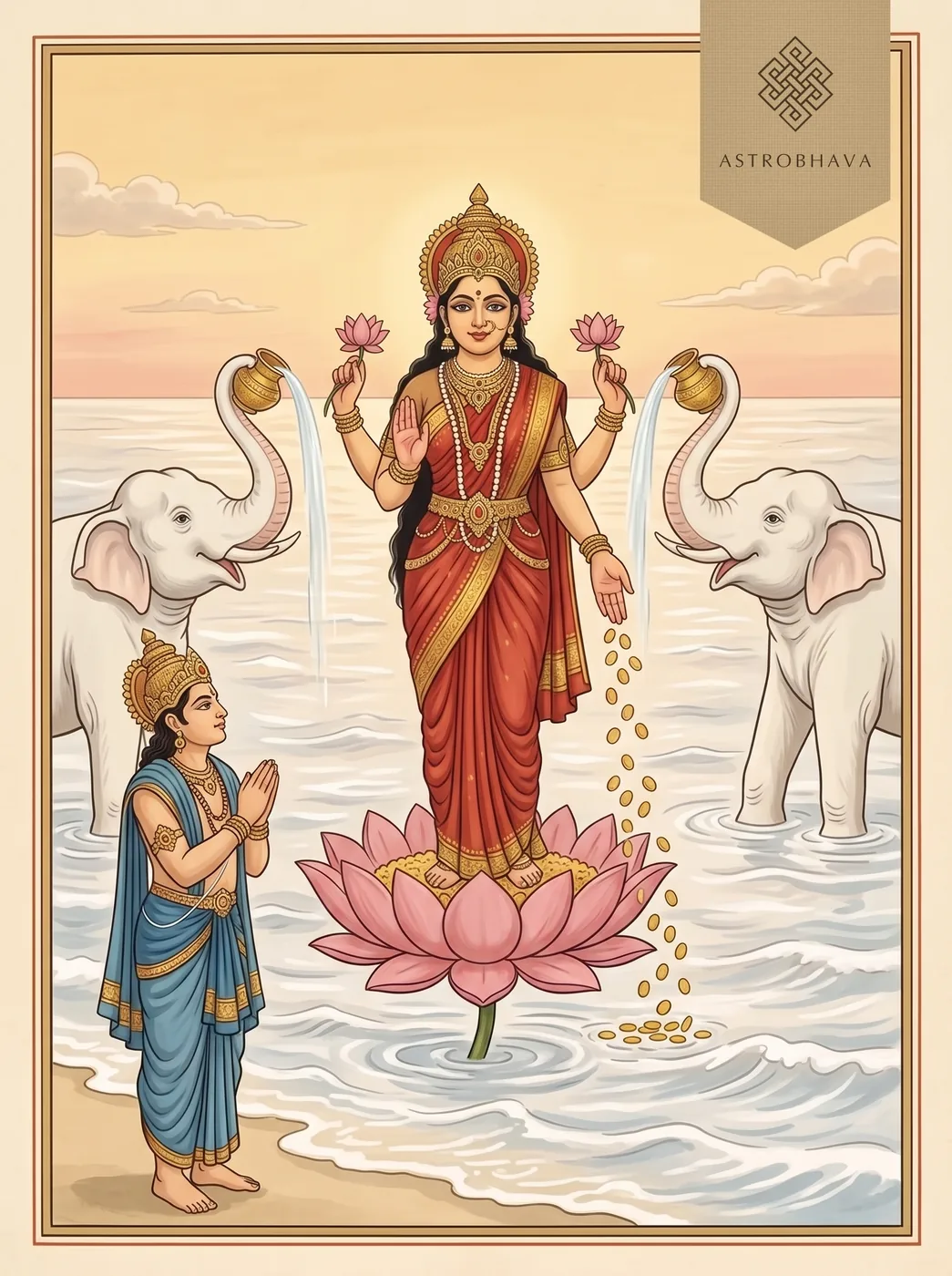
The Vishnu Purana sets Indra's hymn at the end of a long fall from fortune. According to its ninth chapter, the sage Durvasa, wandering in an ecstatic state, was given a garland of heavenly flowers by a celestial woman and threw it to Indra, who was riding his elephant Airavata. Indra hung it on the elephant's head; drawn by its scent, Airavata pulled it down and trampled it. Durvasa, who had called the garland a dwelling of Shri, cursed Indra's rule over the three worlds and refused to take the curse back. From then on, the Purana says, plants dried up, sacrifices stopped and the weakened devas were beaten by the asuras. Brahma sent them to Vishnu, the ocean of milk was churned, and when Shri came up from it and went to Vishnu, the devas won back their strength and Indra his throne. Only then did Indra sing the seventeen verses printed here; verse 7 recalls that the worlds were close to ruin while she was gone. Pleased, Shri offered him a boon. He asked for two: that she never again leave the three worlds, and that she never turn away from anyone who praises her with his hymn. She granted both, which is why the first reward verse on this page is spoken in her own voice.
The mantra, in six scripts
- नमस्ये
- namasye — I bow to
- सर्वलोकानां
- sarvalokānāṃ — of all the worlds
- जननीमब्जसम्भवाम्
- jananīm abjasambhavām — the mother, born of the lotus
- श्रियमुन्निद्रपद्माक्षीं
- śriyam unnidrapadmākṣīṃ — Shri, with eyes like open lotuses
- विष्णुवक्षःस्थलस्थिताम्
- viṣṇuvakṣaḥsthalasthitām — who dwells on Vishnu's chest
Mantra for Money lyrics in full
Indra's seventeen verses with three reward verses from the same chapter, then the Rinahara Ganapati Stotram with its meditation verse and reward verses. The printed closing line is given at the end.
All 35 verses, in Sanskrit, Tamil, Telugu, Kannada, Malayalam and English, each with its meaning. Choose a script:
Download the Mantra for Money PDFAll 35 verses with their meanings, in Sanskrit. Free to print and keep.
नमस्ये सर्वलोकानां जननीमब्जसम्भवाम् ।
श्रियमुन्निद्रपद्माक्षीं विष्णुवक्षःस्थलस्थिताम् ॥
நமஸ்யே ஸர்வலோகாநாம் ஜநநீமப்ஜஸம்பவாம் ।
ஶ்ரியமுந்நித்ரபத்மாக்ஷீம் விஷ்ணுவக்ஷஃஸ்தலஸ்திதாம் ॥
నమస్యే సర్వలోకానాం జననీమబ్జసమ్భవామ్ ।
శ్రియమున్నిద్రపద్మాక్షీం విష్ణువక్షఃస్థలస్థితామ్ ॥
ನಮಸ್ಯೇ ಸರ್ವಲೋಕಾನಾಂ ಜನನೀಮಬ್ಜಸಮ್ಭವಾಮ್ ।
ಶ್ರಿಯಮುನ್ನಿದ್ರಪದ್ಮಾಕ್ಷೀಂ ವಿಷ್ಣುವಕ್ಷಃಸ್ಥಲಸ್ಥಿತಾಮ್ ॥
നമസ്യേ സര്വലോകാനാം ജനനീമബ്ജസമ്ഭവാമ് ।
ശ്രിയമുന്നിദ്രപദ്മാക്ഷീം വിഷ്ണുവക്ഷഃസ്ഥലസ്ഥിതാമ് ॥
namasye sarvalokānāṃ jananīmabjasambhavām |
śriyamunnidrapadmākṣīṃ viṣṇuvakṣaḥsthalasthitām ||
I bow to Shri, mother of all the worlds, born of the lotus, whose eyes are like open lotuses and who dwells on the chest of Vishnu.
पद्मालयां पद्मकरां पद्मपत्रनिभेक्षणाम् ।
वन्दे पद्ममुखीं देवीं पद्मनाभप्रियामहम् ॥
பத்மாலயாம் பத்மகராம் பத்மபத்ரநிபேக்ஷணாம் ।
வந்தே பத்மமுகீம் தேவீம் பத்மநாபப்ரியாமஹம் ॥
పద్మాలయాం పద్మకరాం పద్మపత్రనిభేక్షణామ్ ।
వన్దే పద్మముఖీం దేవీం పద్మనాభప్రియామహమ్ ॥
ಪದ್ಮಾಲಯಾಂ ಪದ್ಮಕರಾಂ ಪದ್ಮಪತ್ರನಿಭೇಕ್ಷಣಾಮ್ ।
ವನ್ದೇ ಪದ್ಮಮುಖೀಂ ದೇವೀಂ ಪದ್ಮನಾಭಪ್ರಿಯಾಮಹಮ್ ॥
പദ്മാലയാം പദ്മകരാം പദ്മപത്രനിഭേക്ഷണാമ് ।
വന്ദേ പദ്മമുഖീം ദേവീം പദ്മനാഭപ്രിയാമഹമ് ॥
padmālayāṃ padmakarāṃ padmapatranibhekṣaṇām |
vande padmamukhīṃ devīṃ padmanābhapriyāmaham ||
I salute the lotus-faced devi who lives in the lotus, holds a lotus in her hand, has eyes like lotus petals and is dear to Padmanabha (Vishnu).
त्वं सिद्धिस्त्वं स्वधा स्वाहा सुधा त्वं लोकपावनी ।
सन्ध्या रात्रिः प्रभा भूतिर्मेधा श्रद्धा सरस्वती ॥
த்வம் ஸித்திஸ்த்வம் ஸ்வதா ஸ்வாஹா ஸுதா த்வம் லோகபாவநீ ।
ஸந்த்யா ராத்ரிஃ ப்ரபா பூதிர்மேதா ஶ்ரத்தா ஸரஸ்வதீ ॥
త్వం సిద్ధిస్త్వం స్వధా స్వాహా సుధా త్వం లోకపావనీ ।
సన్ధ్యా రాత్రిః ప్రభా భూతిర్మేధా శ్రద్ధా సరస్వతీ ॥
ತ್ವಂ ಸಿದ್ಧಿಸ್ತ್ವಂ ಸ್ವಧಾ ಸ್ವಾಹಾ ಸುಧಾ ತ್ವಂ ಲೋಕಪಾವನೀ ।
ಸನ್ಧ್ಯಾ ರಾತ್ರಿಃ ಪ್ರಭಾ ಭೂತಿರ್ಮೇಧಾ ಶ್ರದ್ಧಾ ಸರಸ್ವತೀ ॥
ത്വം സിദ്ധിസ്ത്വം സ്വധാ സ്വാഹാ സുധാ ത്വം ലോകപാവനീ ।
സന്ധ്യാ രാത്രിഃ പ്രഭാ ഭൂതിര്മേധാ ശ്രദ്ധാ സരസ്വതീ ॥
tvaṃ siddhistvaṃ svadhā svāhā sudhā tvaṃ lokapāvanī |
sandhyā rātriḥ prabhā bhūtirmedhā śraddhā sarasvatī ||
You are success; you are Svadha and Svaha, the offerings to ancestors and gods; you are nectar, the purifier of the worlds. You are twilight, night, radiance, prosperity, intelligence, faith and speech.
यज्ञविद्या महाविद्या गुह्यविद्या च शोभने ।
आत्मविद्या च देवि त्वं विमुक्तिफलदायिनी ॥
யஜ்ஞவித்யா மஹாவித்யா குஹ்யவித்யா ச ஶோபநே ।
ஆத்மவித்யா ச தேவி த்வம் விமுக்திபலதாயிநீ ॥
యజ్ఞవిద్యా మహావిద్యా గుహ్యవిద్యా చ శోభనే ।
ఆత్మవిద్యా చ దేవి త్వం విముక్తిఫలదాయినీ ॥
ಯಜ್ಞವಿದ್ಯಾ ಮಹಾವಿದ್ಯಾ ಗುಹ್ಯವಿದ್ಯಾ ಚ ಶೋಭನೇ ।
ಆತ್ಮವಿದ್ಯಾ ಚ ದೇವಿ ತ್ವಂ ವಿಮುಕ್ತಿಫಲದಾಯಿನೀ ॥
യജ്ഞവിദ്യാ മഹാവിദ്യാ ഗുഹ്യവിദ്യാ ച ശോഭനേ ।
ആത്മവിദ്യാ ച ദേവി ത്വം വിമുക്തിഫലദായിനീ ॥
yajñavidyā mahāvidyā guhyavidyā ca śobhane |
ātmavidyā ca devi tvaṃ vimuktiphaladāyinī ||
O radiant one, you are the knowledge of sacrifice, the great knowledge and the secret knowledge; and, O devi, you are the knowledge of the Self that gives the fruit of liberation.
आन्वीक्षिकी त्रयी वार्ता दण्डनीतिस्त्वमेव च ।
सौम्यासौम्यैर्जगद्रूपैस्त्वयैतद्देवि पूरितम् ॥
ஆந்வீக்ஷிகீ த்ரயீ வார்தா தண்டநீதிஸ்த்வமேவ ச ।
ஸௌம்யாஸௌம்யைர்ஜகத்ரூபைஸ்த்வயைதத்தேவி பூரிதம் ॥
ఆన్వీక్షికీ త్రయీ వార్తా దణ్డనీతిస్త్వమేవ చ ।
సౌమ్యాసౌమ్యైర్జగద్రూపైస్త్వయైతద్దేవి పూరితమ్ ॥
ಆನ್ವೀಕ್ಷಿಕೀ ತ್ರಯೀ ವಾರ್ತಾ ದಣ್ಡನೀತಿಸ್ತ್ವಮೇವ ಚ ।
ಸೌಮ್ಯಾಸೌಮ್ಯೈರ್ಜಗದ್ರೂಪೈಸ್ತ್ವಯೈತದ್ದೇವಿ ಪೂರಿತಮ್ ॥
ആന്വീക്ഷികീ ത്രയീ വാര്താ ദണ്ഡനീതിസ്ത്വമേവ ച ।
സൌമ്യാസൌമ്യൈര്ജഗദ്രൂപൈസ്ത്വയൈതദ്ദേവി പൂരിതമ് ॥
ānvīkṣikī trayī vārtā daṇḍanītistvameva ca |
saumyāsaumyairjagadrūpaistvayaitaddevi pūritam ||
You alone are reasoning, the three Vedas, the knowledge of livelihood and trade, and the science of government. O devi, through your gentle and fierce forms you fill this whole world.
का त्वन्या त्वामृते देवि सर्वयज्ञमयं वपुः ।
अध्यास्ते देवदेवस्य योगिचिन्त्यं गदाभृतः ॥
கா த்வந்யா த்வாம்ருதே தேவி ஸர்வயஜ்ஞமயம் வபுஃ ।
அத்யாஸ்தே தேவதேவஸ்ய யோகிசிந்த்யம் கதாப்ருதஃ ॥
కా త్వన్యా త్వామృతే దేవి సర్వయజ్ఞమయం వపుః ।
అధ్యాస్తే దేవదేవస్య యోగిచిన్త్యం గదాభృతః ॥
ಕಾ ತ್ವನ್ಯಾ ತ್ವಾಮೃತೇ ದೇವಿ ಸರ್ವಯಜ್ಞಮಯಂ ವಪುಃ ।
ಅಧ್ಯಾಸ್ತೇ ದೇವದೇವಸ್ಯ ಯೋಗಿಚಿನ್ತ್ಯಂ ಗದಾಭೃತಃ ॥
കാ ത്വന്യാ ത്വാമൃതേ ദേവി സര്വയജ്ഞമയം വപുഃ ।
അധ്യാസ്തേ ദേവദേവസ്യ യോഗിചിന്ത്യം ഗദാഭൃതഃ ॥
kā tvanyā tvāmṛte devi sarvayajñamayaṃ vapuḥ |
adhyāste devadevasya yogicintyaṃ gadābhṛtaḥ ||
O devi, who other than you dwells in the body of the god of gods, the mace-bearer, a body made of all sacrifices and meditated on by yogis?
त्वया देवि परित्यक्तं सकलं भुवनत्रयम् ।
विनष्टप्रायमभवत्त्वयेदानीं समेधितम् ॥
த்வயா தேவி பரித்யக்தம் ஸகலம் புவநத்ரயம் ।
விநஷ்டப்ராயமபவத்த்வயேதாநீம் ஸமேதிதம் ॥
త్వయా దేవి పరిత్యక్తం సకలం భువనత్రయమ్ ।
వినష్టప్రాయమభవత్త్వయేదానీం సమేధితమ్ ॥
ತ್ವಯಾ ದೇವಿ ಪರಿತ್ಯಕ್ತಂ ಸಕಲಂ ಭುವನತ್ರಯಮ್ ।
ವಿನಷ್ಟಪ್ರಾಯಮಭವತ್ತ್ವಯೇದಾನೀಂ ಸಮೇಧಿತಮ್ ॥
ത്വയാ ദേവി പരിത്യക്തം സകലം ഭുവനത്രയമ് ।
വിനഷ്ടപ്രായമഭവത്ത്വയേദാനീം സമേധിതമ് ॥
tvayā devi parityaktaṃ sakalaṃ bhuvanatrayam |
vinaṣṭaprāyamabhavattvayedānīṃ samedhitam ||
O devi, when you left them, all three worlds were nearly ruined; now they have flourished again through you.
दाराः पुत्रास्तथागारसुहृद्धान्यधनादिकम् ।
भवत्येतन्महाभागे नित्यं त्वद्वीक्षणान्नृणाम् ॥
தாராஃ புத்ராஸ்ததாகாரஸுஹ்ருத்தாந்யதநாதிகம் ।
பவத்யேதந்மஹாபாகே நித்யம் த்வத்வீக்ஷணாந்ந்ருணாம் ॥
దారాః పుత్రాస్తథాగారసుహృద్ధాన్యధనాదికమ్ ।
భవత్యేతన్మహాభాగే నిత్యం త్వద్వీక్షణాన్నృణామ్ ॥
ದಾರಾಃ ಪುತ್ರಾಸ್ತಥಾಗಾರಸುಹೃದ್ಧಾನ್ಯಧನಾದಿಕಮ್ ।
ಭವತ್ಯೇತನ್ಮಹಾಭಾಗೇ ನಿತ್ಯಂ ತ್ವದ್ವೀಕ್ಷಣಾನ್ನೃಣಾಮ್ ॥
ദാരാഃ പുത്രാസ്തഥാഗാരസുഹൃദ്ധാന്യധനാദികമ് ।
ഭവത്യേതന്മഹാഭാഗേ നിത്യം ത്വദ്വീക്ഷണാന്നൃണാമ് ॥
dārāḥ putrāstathāgārasuhṛddhānyadhanādikam |
bhavatyetanmahābhāge nityaṃ tvadvīkṣaṇānnṛṇām ||
The verse says that wife, sons, home, friends, grain, wealth and the rest come to people always from the glance of the blessed one.
शरीरारोग्यमैश्वर्यमरिपक्षक्षयः सुखम् ।
देवि त्वद्दृष्टिदृष्टानां पुरुषाणां न दुर्लभम् ॥
ஶரீராரோக்யமைஶ்வர்யமரிபக்ஷக்ஷயஃ ஸுகம் ।
தேவி த்வத்த்ருஷ்டித்ருஷ்டாநாம் புருஷாணாம் ந துர்லபம் ॥
శరీరారోగ్యమైశ్వర్యమరిపక్షక్షయః సుఖమ్ ।
దేవి త్వద్దృష్టిదృష్టానాం పురుషాణాం న దుర్లభమ్ ॥
ಶರೀರಾರೋಗ್ಯಮೈಶ್ವರ್ಯಮರಿಪಕ್ಷಕ್ಷಯಃ ಸುಖಮ್ ।
ದೇವಿ ತ್ವದ್ದೃಷ್ಟಿದೃಷ್ಟಾನಾಂ ಪುರುಷಾಣಾಂ ನ ದುರ್ಲಭಮ್ ॥
ശരീരാരോഗ്യമൈശ്വര്യമരിപക്ഷക്ഷയഃ സുഖമ് ।
ദേവി ത്വദ്ദൃഷ്ടിദൃഷ്ടാനാം പുരുഷാണാം ന ദുര്ലഭമ് ॥
śarīrārogyamaiśvaryamaripakṣakṣayaḥ sukham |
devi tvaddṛṣṭidṛṣṭānāṃ puruṣāṇāṃ na durlabham ||
O devi, for those on whom your gaze falls, health of body, prosperity, the end of hostile parties and happiness are not hard to obtain.
त्वं माता सर्वलोकानां देवदेवो हरिः पिता ।
त्वयैतद्विष्णुना चाम्ब जगद्व्याप्तं चराचरम् ॥
த்வம் மாதா ஸர்வலோகாநாம் தேவதேவோ ஹரிஃ பிதா ।
த்வயைதத்விஷ்ணுநா சாம்ப ஜகத்வ்யாப்தம் சராசரம் ॥
త్వం మాతా సర్వలోకానాం దేవదేవో హరిః పితా ।
త్వయైతద్విష్ణునా చామ్బ జగద్వ్యాప్తం చరాచరమ్ ॥
ತ್ವಂ ಮಾತಾ ಸರ್ವಲೋಕಾನಾಂ ದೇವದೇವೋ ಹರಿಃ ಪಿತಾ ।
ತ್ವಯೈತದ್ವಿಷ್ಣುನಾ ಚಾಮ್ಬ ಜಗದ್ವ್ಯಾಪ್ತಂ ಚರಾಚರಮ್ ॥
ത്വം മാതാ സര്വലോകാനാം ദേവദേവോ ഹരിഃ പിതാ ।
ത്വയൈതദ്വിഷ്ണുനാ ചാമ്ബ ജഗദ്വ്യാപ്തം ചരാചരമ് ॥
tvaṃ mātā sarvalokānāṃ devadevo hariḥ pitā |
tvayaitadviṣṇunā cāmba jagadvyāptaṃ carācaram ||
You are the mother of all the worlds and Hari, god of gods, is the father. O mother, this world of moving and unmoving things is pervaded by you and by Vishnu.
मा नः कोशं तथा गोष्ठं मा गृहं मा परिच्छदम् ।
मा शरीरं कलत्रं च त्यजेथाः सर्वपावनि ॥
மா நஃ கோஶம் ததா கோஷ்டம் மா க்ருஹம் மா பரிச்சதம் ।
மா ஶரீரம் கலத்ரம் ச த்யஜேதாஃ ஸர்வபாவநி ॥
మా నః కోశం తథా గోష్ఠం మా గృహం మా పరిచ్ఛదమ్ ।
మా శరీరం కలత్రం చ త్యజేథాః సర్వపావని ॥
ಮಾ ನಃ ಕೋಶಂ ತಥಾ ಗೋಷ್ಠಂ ಮಾ ಗೃಹಂ ಮಾ ಪರಿಚ್ಛದಮ್ ।
ಮಾ ಶರೀರಂ ಕಲತ್ರಂ ಚ ತ್ಯಜೇಥಾಃ ಸರ್ವಪಾವನಿ ॥
മാ നഃ കോശം തഥാ ഗോഷ്ഠം മാ ഗൃഹം മാ പരിച്ഛദമ് ।
മാ ശരീരം കലത്രം ച ത്യജേഥാഃ സര്വപാവനി ॥
mā naḥ kośaṃ tathā goṣṭhaṃ mā gṛhaṃ mā paricchadam |
mā śarīraṃ kalatraṃ ca tyajethāḥ sarvapāvani ||
O purifier of all, do not abandon our treasury, our cattle-shed, our home, our belongings, our body or our spouse.
मा पुत्रान्मा सुहृद्वर्गान्मा पशून्मा विभूषणम् ।
त्यजेथा मम देवस्य विष्णोर्वक्षःस्थलालये ॥
மா புத்ராந்மா ஸுஹ்ருத்வர்காந்மா பஶூந்மா விபூஷணம் ।
த்யஜேதா மம தேவஸ்ய விஷ்ணோர்வக்ஷஃஸ்தலாலயே ॥
మా పుత్రాన్మా సుహృద్వర్గాన్మా పశూన్మా విభూషణమ్ ।
త్యజేథా మమ దేవస్య విష్ణోర్వక్షఃస్థలాలయే ॥
ಮಾ ಪುತ್ರಾನ್ಮಾ ಸುಹೃದ್ವರ್ಗಾನ್ಮಾ ಪಶೂನ್ಮಾ ವಿಭೂಷಣಮ್ ।
ತ್ಯಜೇಥಾ ಮಮ ದೇವಸ್ಯ ವಿಷ್ಣೋರ್ವಕ್ಷಃಸ್ಥಲಾಲಯೇ ॥
മാ പുത്രാന്മാ സുഹൃദ്വര്ഗാന്മാ പശൂന്മാ വിഭൂഷണമ് ।
ത്യജേഥാ മമ ദേവസ്യ വിഷ്ണോര്വക്ഷഃസ്ഥലാലയേ ॥
mā putrānmā suhṛdvargānmā paśūnmā vibhūṣaṇam |
tyajethā mama devasya viṣṇorvakṣaḥsthalālaye ||
O you who dwell on the chest of my god Vishnu, the verse asks you not to abandon our sons, our circle of friends, our cattle or our ornaments.
सत्त्वेन सत्यशौचाभ्यां तथा शीलादिभिर्गुणैः ।
त्यज्यन्ते ते नराः सद्यः सन्त्यक्ता ये त्वयामले ॥
ஸத்த்வேந ஸத்யஶௌசாப்யாம் ததா ஶீலாதிபிர்குணைஃ ।
த்யஜ்யந்தே தே நராஃ ஸத்யஃ ஸந்த்யக்தா யே த்வயாமலே ॥
సత్త్వేన సత్యశౌచాభ్యాం తథా శీలాదిభిర్గుణైః ।
త్యజ్యన్తే తే నరాః సద్యః సన్త్యక్తా యే త్వయామలే ॥
ಸತ್ತ್ವೇನ ಸತ್ಯಶೌಚಾಭ್ಯಾಂ ತಥಾ ಶೀಲಾದಿಭಿರ್ಗುಣೈಃ ।
ತ್ಯಜ್ಯನ್ತೇ ತೇ ನರಾಃ ಸದ್ಯಃ ಸನ್ತ್ಯಕ್ತಾ ಯೇ ತ್ವಯಾಮಲೇ ॥
സത്ത്വേന സത്യശൌചാഭ്യാം തഥാ ശീലാദിഭിര്ഗുണൈഃ ।
ത്യജ്യന്തേ തേ നരാഃ സദ്യഃ സന്ത്യക്താ യേ ത്വയാമലേ ॥
sattvena satyaśaucābhyāṃ tathā śīlādibhirguṇaiḥ |
tyajyante te narāḥ sadyaḥ santyaktā ye tvayāmale ||
O pure one, those whom you abandon are at once abandoned by strength of mind, truth, purity, good conduct and the other virtues.
त्वया विलोकिताः सद्यः शीलाद्यैरखिलैर्गुणैः ।
कुलैश्वर्यैश्च युज्यन्ते पुरुषा निर्गुणा अपि ॥
த்வயா விலோகிதாஃ ஸத்யஃ ஶீலாத்யைரகிலைர்குணைஃ ।
குலைஶ்வர்யைஶ்ச யுஜ்யந்தே புருஷா நிர்குணா அபி ॥
త్వయా విలోకితాః సద్యః శీలాద్యైరఖిలైర్గుణైః ।
కులైశ్వర్యైశ్చ యుజ్యన్తే పురుషా నిర్గుణా అపి ॥
ತ್ವಯಾ ವಿಲೋಕಿತಾಃ ಸದ್ಯಃ ಶೀಲಾದ್ಯೈರಖಿಲೈರ್ಗುಣೈಃ ।
ಕುಲೈಶ್ವರ್ಯೈಶ್ಚ ಯುಜ್ಯನ್ತೇ ಪುರುಷಾ ನಿರ್ಗುಣಾ ಅಪಿ ॥
ത്വയാ വിലോകിതാഃ സദ്യഃ ശീലാദ്യൈരഖിലൈര്ഗുണൈഃ ।
കുലൈശ്വര്യൈശ്ച യുജ്യന്തേ പുരുഷാ നിര്ഗുണാ അപി ॥
tvayā vilokitāḥ sadyaḥ śīlādyairakhilairguṇaiḥ |
kulaiśvaryaiśca yujyante puruṣā nirguṇā api ||
Even people without merit, once you look on them, are at once joined with good conduct and every virtue, with good standing and prosperity.
स श्लाघ्यः स गुणी धन्यः स कुलीनः स बुद्धिमान् ।
स शूरः स च विक्रान्तो यस्त्वया देवि वीक्षितः ॥
ஸ ஶ்லாக்யஃ ஸ குணீ தந்யஃ ஸ குலீநஃ ஸ புத்திமாந் ।
ஸ ஶூரஃ ஸ ச விக்ராந்தோ யஸ்த்வயா தேவி வீக்ஷிதஃ ॥
స శ్లాఘ్యః స గుణీ ధన్యః స కులీనః స బుద్ధిమాన్ ।
స శూరః స చ విక్రాన్తో యస్త్వయా దేవి వీక్షితః ॥
ಸ ಶ್ಲಾಘ್ಯಃ ಸ ಗುಣೀ ಧನ್ಯಃ ಸ ಕುಲೀನಃ ಸ ಬುದ್ಧಿಮಾನ್ ।
ಸ ಶೂರಃ ಸ ಚ ವಿಕ್ರಾನ್ತೋ ಯಸ್ತ್ವಯಾ ದೇವಿ ವೀಕ್ಷಿತಃ ॥
സ ശ്ലാഘ്യഃ സ ഗുണീ ധന്യഃ സ കുലീനഃ സ ബുദ്ധിമാന് ।
സ ശൂരഃ സ ച വിക്രാന്തോ യസ്ത്വയാ ദേവി വീക്ഷിതഃ ॥
sa ślāghyaḥ sa guṇī dhanyaḥ sa kulīnaḥ sa buddhimān |
sa śūraḥ sa ca vikrānto yastvayā devi vīkṣitaḥ ||
O devi, the one you look upon is praised, virtuous, fortunate, well-born and wise; he is brave and full of valour.
सद्यो वैगुण्यमायान्ति शीलाद्याः सकला गुणाः ।
पराङ्मुखी जगद्धात्री यस्य त्वं विष्णुवल्लभे ॥
ஸத்யோ வைகுண்யமாயாந்தி ஶீலாத்யாஃ ஸகலா குணாஃ ।
பராங்முகீ ஜகத்தாத்ரீ யஸ்ய த்வம் விஷ்ணுவல்லபே ॥
సద్యో వైగుణ్యమాయాన్తి శీలాద్యాః సకలా గుణాః ।
పరాఙ్ముఖీ జగద్ధాత్రీ యస్య త్వం విష్ణువల్లభే ॥
ಸದ್ಯೋ ವೈಗುಣ್ಯಮಾಯಾನ್ತಿ ಶೀಲಾದ್ಯಾಃ ಸಕಲಾ ಗುಣಾಃ ।
ಪರಾಙ್ಮುಖೀ ಜಗದ್ಧಾತ್ರೀ ಯಸ್ಯ ತ್ವಂ ವಿಷ್ಣುವಲ್ಲಭೇ ॥
സദ്യോ വൈഗുണ്യമായാന്തി ശീലാദ്യാഃ സകലാ ഗുണാഃ ।
പരാങ്മുഖീ ജഗദ്ധാത്രീ യസ്യ ത്വം വിഷ്ണുവല്ലഭേ ॥
sadyo vaiguṇyamāyānti śīlādyāḥ sakalā guṇāḥ |
parāṅmukhī jagaddhātrī yasya tvaṃ viṣṇuvallabhe ||
O beloved of Vishnu, nurse of the world, when you turn your face away from someone, good conduct and all his virtues at once turn into faults.
न ते वर्णयितुं शक्ता गुणाञ्जिह्वापि वेधसः ।
प्रसीद देवि पद्माक्षि मास्मांस्त्याक्षीः कदाचन ॥
ந தே வர்ணயிதும் ஶக்தா குணாஞ்ஜிஹ்வாபி வேதஸஃ ।
ப்ரஸீத தேவி பத்மாக்ஷி மாஸ்மாம்ஸ்த்யாக்ஷீஃ கதாசந ॥
న తే వర్ణయితుం శక్తా గుణాఞ్జిహ్వాపి వేధసః ।
ప్రసీద దేవి పద్మాక్షి మాస్మాంస్త్యాక్షీః కదాచన ॥
ನ ತೇ ವರ್ಣಯಿತುಂ ಶಕ್ತಾ ಗುಣಾಞ್ಜಿಹ್ವಾಪಿ ವೇಧಸಃ ।
ಪ್ರಸೀದ ದೇವಿ ಪದ್ಮಾಕ್ಷಿ ಮಾಸ್ಮಾಂಸ್ತ್ಯಾಕ್ಷೀಃ ಕದಾಚನ ॥
ന തേ വര്ണയിതും ശക്താ ഗുണാഞ്ജിഹ്വാപി വേധസഃ ।
പ്രസീദ ദേവി പദ്മാക്ഷി മാസ്മാംസ്ത്യാക്ഷീഃ കദാചന ॥
na te varṇayituṃ śaktā guṇāñjihvāpi vedhasaḥ |
prasīda devi padmākṣi māsmāṃstyākṣīḥ kadācana ||
Even the tongue of Brahma cannot describe your qualities. Be gracious, O lotus-eyed devi, and never abandon us.
यश्च सायं तथा प्रातः स्तोत्रेणानेन मानवः ।
मां स्तोष्यति न तस्याहं भविष्यामि पराङ्मुखी ॥
யஶ்ச ஸாயம் ததா ப்ராதஃ ஸ்தோத்ரேணாநேந மாநவஃ ।
மாம் ஸ்தோஷ்யதி ந தஸ்யாஹம் பவிஷ்யாமி பராங்முகீ ॥
యశ్చ సాయం తథా ప్రాతః స్తోత్రేణానేన మానవః ।
మాం స్తోష్యతి న తస్యాహం భవిష్యామి పరాఙ్ముఖీ ॥
ಯಶ್ಚ ಸಾಯಂ ತಥಾ ಪ್ರಾತಃ ಸ್ತೋತ್ರೇಣಾನೇನ ಮಾನವಃ ।
ಮಾಂ ಸ್ತೋಷ್ಯತಿ ನ ತಸ್ಯಾಹಂ ಭವಿಷ್ಯಾಮಿ ಪರಾಙ್ಮುಖೀ ॥
യശ്ച സായം തഥാ പ്രാതഃ സ്തോത്രേണാനേന മാനവഃ ।
മാം സ്തോഷ്യതി ന തസ്യാഹം ഭവിഷ്യാമി പരാങ്മുഖീ ॥
yaśca sāyaṃ tathā prātaḥ stotreṇānena mānavaḥ |
māṃ stoṣyati na tasyāhaṃ bhaviṣyāmi parāṅmukhī ||
Lakshmi says: whoever praises me with this hymn in the evening and in the morning, from that person I will never turn my face away.
पठ्यते येषु चैवेयं गृहेषु श्रीस्तुतिर्मुने ।
अलक्ष्मीः कलहाधारा न तेष्वास्ते कदाचन ॥
பட்யதே யேஷு சைவேயம் க்ருஹேஷு ஶ்ரீஸ்துதிர்முநே ।
அலக்ஷ்மீஃ கலஹாதாரா ந தேஷ்வாஸ்தே கதாசந ॥
పఠ్యతే యేషు చైవేయం గృహేషు శ్రీస్తుతిర్మునే ।
అలక్ష్మీః కలహాధారా న తేష్వాస్తే కదాచన ॥
ಪಠ್ಯತೇ ಯೇಷು ಚೈವೇಯಂ ಗೃಹೇಷು ಶ್ರೀಸ್ತುತಿರ್ಮುನೇ ।
ಅಲಕ್ಷ್ಮೀಃ ಕಲಹಾಧಾರಾ ನ ತೇಷ್ವಾಸ್ತೇ ಕದಾಚನ ॥
പഠ്യതേ യേഷു ചൈവേയം ഗൃഹേഷു ശ്രീസ്തുതിര്മുനേ ।
അലക്ഷ്മീഃ കലഹാധാരാ ന തേഷ്വാസ്തേ കദാചന ॥
paṭhyate yeṣu caiveyaṃ gṛheṣu śrīstutirmune |
alakṣmīḥ kalahādhārā na teṣvāste kadācana ||
O sage, the verse says that in the houses where this praise of Shri is recited, Alakshmi, ill fortune that is the root of quarrels, never stays.
इति सकलविभूत्यवाप्तिहेतुः स्तुतिरियमिन्द्रमुखोद्गता हि लक्ष्म्याः ।
अनुदिनमिह पठ्यते नृभिर्यैर्वसति न तेषु कदाचिदप्यलक्ष्मीः ॥
இதி ஸகலவிபூத்யவாப்திஹேதுஃ ஸ்துதிரியமிந்த்ரமுகோத்கதா ஹி லக்ஷ்ம்யாஃ ।
அநுதிநமிஹ பட்யதே ந்ருபிர்யைர்வஸதி ந தேஷு கதாசிதப்யலக்ஷ்மீஃ ॥
ఇతి సకలవిభూత్యవాప్తిహేతుః స్తుతిరియమిన్ద్రముఖోద్గతా హి లక్ష్మ్యాః ।
అనుదినమిహ పఠ్యతే నృభిర్యైర్వసతి న తేషు కదాచిదప్యలక్ష్మీః ॥
ಇತಿ ಸಕಲವಿಭೂತ್ಯವಾಪ್ತಿಹೇತುಃ ಸ್ತುತಿರಿಯಮಿನ್ದ್ರಮುಖೋದ್ಗತಾ ಹಿ ಲಕ್ಷ್ಮ್ಯಾಃ ।
ಅನುದಿನಮಿಹ ಪಠ್ಯತೇ ನೃಭಿರ್ಯೈರ್ವಸತಿ ನ ತೇಷು ಕದಾಚಿದಪ್ಯಲಕ್ಷ್ಮೀಃ ॥
ഇതി സകലവിഭൂത്യവാപ്തിഹേതുഃ സ്തുതിരിയമിന്ദ്രമുഖോദ്ഗതാ ഹി ലക്ഷ്മ്യാഃ ।
അനുദിനമിഹ പഠ്യതേ നൃഭിര്യൈര്വസതി ന തേഷു കദാചിദപ്യലക്ഷ്മീഃ ॥
iti sakalavibhūtyavāptihetuḥ stutiriyamindramukhodgatā hi lakṣmyāḥ |
anudinamiha paṭhyate nṛbhiryairvasati na teṣu kadācidapyalakṣmīḥ ||
Thus this praise of Lakshmi, which came from the mouth of Indra, is a cause of gaining every kind of prosperity. The verse says that ill fortune never lives with those who recite it here every day.
सिन्दूरवर्णं द्विभुजं गणेशं लम्बोदरं पद्मदले निविष्टम् ।
ब्रह्मादिदेवैः परिसेव्यमानं सिद्धैर्युतं तं प्रणमामि देवम् ॥
ஸிந்தூரவர்ணம் த்விபுஜம் கணேஶம் லம்போதரம் பத்மதலே நிவிஷ்டம் ।
ப்ரஹ்மாதிதேவைஃ பரிஸேவ்யமாநம் ஸித்தைர்யுதம் தம் ப்ரணமாமி தேவம் ॥
సిన్దూరవర్ణం ద్విభుజం గణేశం లమ్బోదరం పద్మదలే నివిష్టమ్ ।
బ్రహ్మాదిదేవైః పరిసేవ్యమానం సిద్ధైర్యుతం తం ప్రణమామి దేవమ్ ॥
ಸಿನ್ದೂರವರ್ಣಂ ದ್ವಿಭುಜಂ ಗಣೇಶಂ ಲಮ್ಬೋದರಂ ಪದ್ಮದಲೇ ನಿವಿಷ್ಟಮ್ ।
ಬ್ರಹ್ಮಾದಿದೇವೈಃ ಪರಿಸೇವ್ಯಮಾನಂ ಸಿದ್ಧೈರ್ಯುತಂ ತಂ ಪ್ರಣಮಾಮಿ ದೇವಮ್ ॥
സിന്ദൂരവര്ണം ദ്വിഭുജം ഗണേശം ലമ്ബോദരം പദ്മദലേ നിവിഷ്ടമ് ।
ബ്രഹ്മാദിദേവൈഃ പരിസേവ്യമാനം സിദ്ധൈര്യുതം തം പ്രണമാമി ദേവമ് ॥
sindūravarṇaṃ dvibhujaṃ gaṇeśaṃ lambodaraṃ padmadale niviṣṭam |
brahmādidevaiḥ parisevyamānaṃ siddhairyutaṃ taṃ praṇamāmi devam ||
I bow to that god Ganesha, vermilion in colour, two-armed and big-bellied, seated on a lotus petal, served by Brahma and the other gods and accompanied by the siddhas.
सृष्ट्यादौ ब्रह्मणा सम्यक्पूजितः फलसिद्धये ।
सदैव पार्वतीपुत्रः ऋणनाशं करोतु मे ॥
ஸ்ருஷ்ட்யாதௌ ப்ரஹ்மணா ஸம்யக்பூஜிதஃ பலஸித்தயே ।
ஸதைவ பார்வதீபுத்ரஃ ருணநாஶம் கரோது மே ॥
సృష్ట్యాదౌ బ్రహ్మణా సమ్యక్పూజితః ఫలసిద్ధయే ।
సదైవ పార్వతీపుత్రః ఋణనాశం కరోతు మే ॥
ಸೃಷ್ಟ್ಯಾದೌ ಬ್ರಹ್ಮಣಾ ಸಮ್ಯಕ್ಪೂಜಿತಃ ಫಲಸಿದ್ಧಯೇ ।
ಸದೈವ ಪಾರ್ವತೀಪುತ್ರಃ ಋಣನಾಶಂ ಕರೋತು ಮೇ ॥
സൃഷ്ട്യാദൌ ബ്രഹ്മണാ സമ്യക്പൂജിതഃ ഫലസിദ്ധയേ ।
സദൈവ പാര്വതീപുത്രഃ ഋണനാശം കരോതു മേ ॥
sṛṣṭyādau brahmaṇā samyakpūjitaḥ phalasiddhaye |
sadaiva pārvatīputraḥ ṛṇanāśaṃ karotu me ||
He was duly worshipped by Brahma at the beginning of creation so that its fruit would be achieved. May the son of Parvati always destroy my debt.
त्रिपुरस्य वधात्पूर्वं शम्भुना सम्यगर्चितः ।
सदैव पार्वतीपुत्रः ऋणनाशं करोतु मे ॥
த்ரிபுரஸ்ய வதாத்பூர்வம் ஶம்புநா ஸம்யகர்சிதஃ ।
ஸதைவ பார்வதீபுத்ரஃ ருணநாஶம் கரோது மே ॥
త్రిపురస్య వధాత్పూర్వం శమ్భునా సమ్యగర్చితః ।
సదైవ పార్వతీపుత్రః ఋణనాశం కరోతు మే ॥
ತ್ರಿಪುರಸ್ಯ ವಧಾತ್ಪೂರ್ವಂ ಶಮ್ಭುನಾ ಸಮ್ಯಗರ್ಚಿತಃ ।
ಸದೈವ ಪಾರ್ವತೀಪುತ್ರಃ ಋಣನಾಶಂ ಕರೋತು ಮೇ ॥
ത്രിപുരസ്യ വധാത്പൂര്വം ശമ്ഭുനാ സമ്യഗര്ചിതഃ ।
സദൈവ പാര്വതീപുത്രഃ ഋണനാശം കരോതു മേ ॥
tripurasya vadhātpūrvaṃ śambhunā samyagarcitaḥ |
sadaiva pārvatīputraḥ ṛṇanāśaṃ karotu me ||
He was duly worshipped by Shambhu (Shiva) before the slaying of Tripura. May the son of Parvati always destroy my debt.
हिरण्यकशिप्वादीनां वधार्थे विष्णुनार्चितः ।
सदैव पार्वतीपुत्रः ऋणनाशं करोतु मे ॥
ஹிரண்யகஶிப்வாதீநாம் வதார்தே விஷ்ணுநார்சிதஃ ।
ஸதைவ பார்வதீபுத்ரஃ ருணநாஶம் கரோது மே ॥
హిరణ్యకశిప్వాదీనాం వధార్థే విష్ణునార్చితః ।
సదైవ పార్వతీపుత్రః ఋణనాశం కరోతు మే ॥
ಹಿರಣ್ಯಕಶಿಪ್ವಾದೀನಾಂ ವಧಾರ್ಥೇ ವಿಷ್ಣುನಾರ್ಚಿತಃ ।
ಸದೈವ ಪಾರ್ವತೀಪುತ್ರಃ ಋಣನಾಶಂ ಕರೋತು ಮೇ ॥
ഹിരണ്യകശിപ്വാദീനാം വധാര്ഥേ വിഷ്ണുനാര്ചിതഃ ।
സദൈവ പാര്വതീപുത്രഃ ഋണനാശം കരോതു മേ ॥
hiraṇyakaśipvādīnāṃ vadhārthe viṣṇunārcitaḥ |
sadaiva pārvatīputraḥ ṛṇanāśaṃ karotu me ||
He was worshipped by Vishnu for the slaying of Hiranyakashipu and the others. May the son of Parvati always destroy my debt.
महिषस्य वधे देव्या गणनाथः प्रपूजितः ।
सदैव पार्वतीपुत्रः ऋणनाशं करोतु मे ॥
மஹிஷஸ்ய வதே தேவ்யா கணநாதஃ ப்ரபூஜிதஃ ।
ஸதைவ பார்வதீபுத்ரஃ ருணநாஶம் கரோது மே ॥
మహిషస్య వధే దేవ్యా గణనాథః ప్రపూజితః ।
సదైవ పార్వతీపుత్రః ఋణనాశం కరోతు మే ॥
ಮಹಿಷಸ್ಯ ವಧೇ ದೇವ್ಯಾ ಗಣನಾಥಃ ಪ್ರಪೂಜಿತಃ ।
ಸದೈವ ಪಾರ್ವತೀಪುತ್ರಃ ಋಣನಾಶಂ ಕರೋತು ಮೇ ॥
മഹിഷസ്യ വധേ ദേവ്യാ ഗണനാഥഃ പ്രപൂജിതഃ ।
സദൈവ പാര്വതീപുത്രഃ ഋണനാശം കരോതു മേ ॥
mahiṣasya vadhe devyā gaṇanāthaḥ prapūjitaḥ |
sadaiva pārvatīputraḥ ṛṇanāśaṃ karotu me ||
Gananatha, leader of the ganas, was worshipped by the Devi at the slaying of Mahisha. May the son of Parvati always destroy my debt.
तारकस्य वधात्पूर्वं कुमारेण प्रपूजितः ।
सदैव पार्वतीपुत्रः ऋणनाशं करोतु मे ॥
தாரகஸ்ய வதாத்பூர்வம் குமாரேண ப்ரபூஜிதஃ ।
ஸதைவ பார்வதீபுத்ரஃ ருணநாஶம் கரோது மே ॥
తారకస్య వధాత్పూర్వం కుమారేణ ప్రపూజితః ।
సదైవ పార్వతీపుత్రః ఋణనాశం కరోతు మే ॥
ತಾರಕಸ್ಯ ವಧಾತ್ಪೂರ್ವಂ ಕುಮಾರೇಣ ಪ್ರಪೂಜಿತಃ ।
ಸದೈವ ಪಾರ್ವತೀಪುತ್ರಃ ಋಣನಾಶಂ ಕರೋತು ಮೇ ॥
താരകസ്യ വധാത്പൂര്വം കുമാരേണ പ്രപൂജിതഃ ।
സദൈവ പാര്വതീപുത്രഃ ഋണനാശം കരോതു മേ ॥
tārakasya vadhātpūrvaṃ kumāreṇa prapūjitaḥ |
sadaiva pārvatīputraḥ ṛṇanāśaṃ karotu me ||
He was worshipped by Kumara (Skanda) before the slaying of Taraka. May the son of Parvati always destroy my debt.
भास्करेण गणेशो हि पूजितश्छविसिद्धये ।
सदैव पार्वतीपुत्रः ऋणनाशं करोतु मे ॥
பாஸ்கரேண கணேஶோ ஹி பூஜிதஶ்சவிஸித்தயே ।
ஸதைவ பார்வதீபுத்ரஃ ருணநாஶம் கரோது மே ॥
భాస్కరేణ గణేశో హి పూజితశ్ఛవిసిద్ధయే ।
సదైవ పార్వతీపుత్రః ఋణనాశం కరోతు మే ॥
ಭಾಸ್ಕರೇಣ ಗಣೇಶೋ ಹಿ ಪೂಜಿತಶ್ಛವಿಸಿದ್ಧಯೇ ।
ಸದೈವ ಪಾರ್ವತೀಪುತ್ರಃ ಋಣನಾಶಂ ಕರೋತು ಮೇ ॥
ഭാസ്കരേണ ഗണേശോ ഹി പൂജിതശ്ഛവിസിദ്ധയേ ।
സദൈവ പാര്വതീപുത്രഃ ഋണനാശം കരോതു മേ ॥
bhāskareṇa gaṇeśo hi pūjitaśchavisiddhaye |
sadaiva pārvatīputraḥ ṛṇanāśaṃ karotu me ||
Ganesha was worshipped by the Sun to gain his brilliance. May the son of Parvati always destroy my debt.
शशिना कान्तिवृद्ध्यर्थं पूजितो गणनायकः ।
सदैव पार्वतीपुत्रः ऋणनाशं करोतु मे ॥
ஶஶிநா காந்திவ்ருத்த்யர்தம் பூஜிதோ கணநாயகஃ ।
ஸதைவ பார்வதீபுத்ரஃ ருணநாஶம் கரோது மே ॥
శశినా కాన్తివృద్ధ్యర్థం పూజితో గణనాయకః ।
సదైవ పార్వతీపుత్రః ఋణనాశం కరోతు మే ॥
ಶಶಿನಾ ಕಾನ್ತಿವೃದ್ಧ್ಯರ್ಥಂ ಪೂಜಿತೋ ಗಣನಾಯಕಃ ।
ಸದೈವ ಪಾರ್ವತೀಪುತ್ರಃ ಋಣನಾಶಂ ಕರೋತು ಮೇ ॥
ശശിനാ കാന്തിവൃദ്ധ്യര്ഥം പൂജിതോ ഗണനായകഃ ।
സദൈവ പാര്വതീപുത്രഃ ഋണനാശം കരോതു മേ ॥
śaśinā kāntivṛddhyarthaṃ pūjito gaṇanāyakaḥ |
sadaiva pārvatīputraḥ ṛṇanāśaṃ karotu me ||
The leader of the ganas was worshipped by the Moon for the increase of its glow. May the son of Parvati always destroy my debt.
पालनाय च तपसां विश्वामित्रेण पूजितः ।
सदैव पार्वतीपुत्रः ऋणनाशं करोतु मे ॥
பாலநாய ச தபஸாம் விஶ்வாமித்ரேண பூஜிதஃ ।
ஸதைவ பார்வதீபுத்ரஃ ருணநாஶம் கரோது மே ॥
పాలనాయ చ తపసాం విశ్వామిత్రేణ పూజితః ।
సదైవ పార్వతీపుత్రః ఋణనాశం కరోతు మే ॥
ಪಾಲನಾಯ ಚ ತಪಸಾಂ ವಿಶ್ವಾಮಿತ್ರೇಣ ಪೂಜಿತಃ ।
ಸದೈವ ಪಾರ್ವತೀಪುತ್ರಃ ಋಣನಾಶಂ ಕರೋತು ಮೇ ॥
പാലനായ ച തപസാം വിശ്വാമിത്രേണ പൂജിതഃ ।
സദൈവ പാര്വതീപുത്രഃ ഋണനാശം കരോതു മേ ॥
pālanāya ca tapasāṃ viśvāmitreṇa pūjitaḥ |
sadaiva pārvatīputraḥ ṛṇanāśaṃ karotu me ||
He was worshipped by Vishvamitra for the protection of his austerities. May the son of Parvati always destroy my debt.
इदं ऋणहरं स्तोत्रं तीव्रदारिद्र्यनाशनम् ।
एकवारं पठेन्नित्यं वर्षमेकं समाहितः ॥
இதம் ருணஹரம் ஸ்தோத்ரம் தீவ்ரதாரித்ர்யநாஶநம் ।
ஏகவாரம் படேந்நித்யம் வர்ஷமேகம் ஸமாஹிதஃ ॥
ఇదం ఋణహరం స్తోత్రం తీవ్రదారిద్ర్యనాశనమ్ ।
ఏకవారం పఠేన్నిత్యం వర్షమేకం సమాహితః ॥
ಇದಂ ಋಣಹರಂ ಸ್ತೋತ್ರಂ ತೀವ್ರದಾರಿದ್ರ್ಯನಾಶನಮ್ ।
ಏಕವಾರಂ ಪಠೇನ್ನಿತ್ಯಂ ವರ್ಷಮೇಕಂ ಸಮಾಹಿತಃ ॥
ഇദം ഋണഹരം സ്തോത്രം തീവ്രദാരിദ്ര്യനാശനമ് ।
ഏകവാരം പഠേന്നിത്യം വര്ഷമേകം സമാഹിതഃ ॥
idaṃ ṛṇaharaṃ stotraṃ tīvradāridryanāśanam |
ekavāraṃ paṭhennityaṃ varṣamekaṃ samāhitaḥ ||
This hymn removes debt and destroys severe poverty. The verse says one should recite it once every day for a year with a collected mind.
दारिद्र्यं दारुणं त्यक्त्वा कुबेरसमतां व्रजेत् ।
फडन्तोऽयं महामन्त्रः सार्धपञ्चदशाक्षरः ॥
தாரித்ர்யம் தாருணம் த்யக்த்வா குபேரஸமதாம் வ்ரஜேத் ।
படந்தோயம் மஹாமந்த்ரஃ ஸார்தபஞ்சதஶாக்ஷரஃ ॥
దారిద్ర్యం దారుణం త్యక్త్వా కుబేరసమతాం వ్రజేత్ ।
ఫడన్తోఽయం మహామన్త్రః సార్ధపఞ్చదశాక్షరః ॥
ದಾರಿದ್ರ್ಯಂ ದಾರುಣಂ ತ್ಯಕ್ತ್ವಾ ಕುಬೇರಸಮತಾಂ ವ್ರಜೇತ್ ।
ಫಡನ್ತೋಽಯಂ ಮಹಾಮನ್ತ್ರಃ ಸಾರ್ಧಪಞ್ಚದಶಾಕ್ಷರಃ ॥
ദാരിദ്ര്യം ദാരുണം ത്യക്ത്വാ കുബേരസമതാം വ്രജേത് ।
ഫഡന്തോഽയം മഹാമന്ത്രഃ സാര്ധപഞ്ചദശാക്ഷരഃ ॥
dāridryaṃ dāruṇaṃ tyaktvā kuberasamatāṃ vrajet |
phaḍanto'yaṃ mahāmantraḥ sārdhapañcadaśākṣaraḥ ||
The verse says such a person leaves cruel poverty behind and becomes equal to Kubera. This great mantra ends in phat and has fifteen and a half syllables.
एकविंशतिसङ्ख्याभिः पुरश्चरणमीरितम् ।
सहस्रावर्तनात्सम्यक् षण्मासं प्रियतां व्रजेत् ॥
ஏகவிம்ஶதிஸங்க்யாபிஃ புரஶ்சரணமீரிதம் ।
ஸஹஸ்ராவர்தநாத்ஸம்யக் ஷண்மாஸம் ப்ரியதாம் வ்ரஜேத் ॥
ఏకవింశతిసఙ్ఖ్యాభిః పురశ్చరణమీరితమ్ ।
సహస్రావర్తనాత్సమ్యక్ షణ్మాసం ప్రియతాం వ్రజేత్ ॥
ಏಕವಿಂಶತಿಸಙ್ಖ್ಯಾಭಿಃ ಪುರಶ್ಚರಣಮೀರಿತಮ್ ।
ಸಹಸ್ರಾವರ್ತನಾತ್ಸಮ್ಯಕ್ ಷಣ್ಮಾಸಂ ಪ್ರಿಯತಾಂ ವ್ರಜೇತ್ ॥
ഏകവിംശതിസങ്ഖ്യാഭിഃ പുരശ്ചരണമീരിതമ് ।
സഹസ്രാവര്തനാത്സമ്യക് ഷണ്മാസം പ്രിയതാം വ്രജേത് ॥
ekaviṃśatisaṅkhyābhiḥ puraścaraṇamīritam |
sahasrāvartanātsamyak ṣaṇmāsaṃ priyatāṃ vrajet ||
Its preliminary practice is said to be twenty-one recitations. The verse says that by a thousand repetitions done properly for six months one becomes dear (to the deity).
बृहस्पतिसमो ज्ञाने धने धनपतिर्भवेत् ।
अस्यैवायुतसङ्ख्याभिः पुरश्चरणमीरितम् ॥
ப்ருஹஸ்பதிஸமோ ஜ்ஞாநே தநே தநபதிர்பவேத் ।
அஸ்யைவாயுதஸங்க்யாபிஃ புரஶ்சரணமீரிதம் ॥
బృహస్పతిసమో జ్ఞానే ధనే ధనపతిర్భవేత్ ।
అస్యైవాయుతసఙ్ఖ్యాభిః పురశ్చరణమీరితమ్ ॥
ಬೃಹಸ್ಪತಿಸಮೋ ಜ್ಞಾನೇ ಧನೇ ಧನಪತಿರ್ಭವೇತ್ ।
ಅಸ್ಯೈವಾಯುತಸಙ್ಖ್ಯಾಭಿಃ ಪುರಶ್ಚರಣಮೀರಿತಮ್ ॥
ബൃഹസ്പതിസമോ ജ്ഞാനേ ധനേ ധനപതിര്ഭവേത് ।
അസ്യൈവായുതസങ്ഖ്യാഭിഃ പുരശ്ചരണമീരിതമ് ॥
bṛhaspatisamo jñāne dhane dhanapatirbhavet |
asyaivāyutasaṅkhyābhiḥ puraścaraṇamīritam ||
The verse says one becomes equal to Brihaspati in knowledge and Dhanapati (Kubera) in wealth. Its preliminary practice is also said to be ten thousand recitations.
लक्षमावर्तनात्सम्यग्वाञ्छितं फलमाप्नुयात् ।
भूतप्रेतपिशाचानां नाशनं स्मृतिमात्रतः ॥
லக்ஷமாவர்தநாத்ஸம்யக்வாஞ்சிதம் பலமாப்நுயாத் ।
பூதப்ரேதபிஶாசாநாம் நாஶநம் ஸ்ம்ருதிமாத்ரதஃ ॥
లక్షమావర్తనాత్సమ్యగ్వాఞ్ఛితం ఫలమాప్నుయాత్ ।
భూతప్రేతపిశాచానాం నాశనం స్మృతిమాత్రతః ॥
ಲಕ್ಷಮಾವರ್ತನಾತ್ಸಮ್ಯಗ್ವಾಞ್ಛಿತಂ ಫಲಮಾಪ್ನುಯಾತ್ ।
ಭೂತಪ್ರೇತಪಿಶಾಚಾನಾಂ ನಾಶನಂ ಸ್ಮೃತಿಮಾತ್ರತಃ ॥
ലക്ഷമാവര്തനാത്സമ്യഗ്വാഞ്ഛിതം ഫലമാപ്നുയാത് ।
ഭൂതപ്രേതപിശാചാനാം നാശനം സ്മൃതിമാത്രതഃ ॥
lakṣamāvartanātsamyagvāñchitaṃ phalamāpnuyāt |
bhūtapretapiśācānāṃ nāśanaṃ smṛtimātrataḥ ||
The verse says that by a hundred thousand repetitions done properly one gains the desired fruit, and that merely remembering it drives away spirits, ghosts and goblins.
इति श्रीकृष्णयामलतन्त्रान्तर्गतं उमामहेश्वरसंवादे ऋणहरगणपतिस्तोत्रं सम्पूर्णम् ॥
இதி ஶ்ரீக்ருஷ்ணயாமலதந்த்ராந்தர்கதம் உமாமஹேஶ்வரஸம்வாதே ருணஹரகணபதிஸ்தோத்ரம் ஸம்பூர்ணம் ॥
ఇతి శ్రీకృష్ణయామలతన్త్రాన్తర్గతం ఉమామహేశ్వరసంవాదే ఋణహరగణపతిస్తోత్రం సమ్పూర్ణమ్ ॥
ಇತಿ ಶ್ರೀಕೃಷ್ಣಯಾಮಲತನ್ತ್ರಾನ್ತರ್ಗತಂ ಉಮಾಮಹೇಶ್ವರಸಂವಾದೇ ಋಣಹರಗಣಪತಿಸ್ತೋತ್ರಂ ಸಮ್ಪೂರ್ಣಮ್ ॥
ഇതി ശ്രീകൃഷ്ണയാമലതന്ത്രാന്തര്ഗതം ഉമാമഹേശ്വരസംവാദേ ഋണഹരഗണപതിസ്തോത്രം സമ്പൂര്ണമ് ॥
iti śrīkṛṣṇayāmalatantrāntargataṃ umāmaheśvarasaṃvāde ṛṇaharagaṇapatistotraṃ sampūrṇam ||
Thus ends the Rinahara Ganapati Stotram, from the dialogue of Uma and Maheshvara within the Shri Krishna Yamala Tantra.
The syllable people get wrong
In Lakshmi Verse 5, ānvīkṣikī (the science of reasoning) is often said 'an-vik-shiki' with short vowels; it has three long vowels, aan-veek-shi-kee, and the kṣ is one cluster said together, not split as k-sh.
Other texts for wealth and debt
- Lakshmi Kubera MantraIts mantras ask 'mama grihe dhanam puraya puraya', fill my home with wealth, and call on Kubera, keeper of riches.
- Kanakadhara StotramIts verses ask 'sa me shriyam dishatu', may she grant me prosperity, under her glance of gold.
- Sri SuktamThe Vedic hymn asks for gold and cattle and says 'alakshmim nashayamy aham', I drive out ill fortune.
- Mahalakshmi AshtakamIts phala says one reading it twice daily is 'dhanadhanyasamanvitah', endowed with wealth and grain.
- Daridrya Dahana Shiva StotramEvery verse ends 'daridryaduhkhadahanaya namah shivaya', to Shiva who burns away poverty and sorrow.
- Rinamochana Ganapathi MantraIts mantra 'ganesha rinam chhindhi' asks Ganesha to cut through debt; the dhyana names him Rinamochaka.
- Runa Vimochana Narasimha MantraNarasimha is saluted as 'rinavimochanaya namah', the one who frees from debt.
- Saptashloki DurgaIts second verse, 'durge smrita', calls Durga the remover of poverty, pain and fear.
Questions
Have your chart read before you decide
Chanting is yours to do, and free. But which deity your situation calls for — and whether a mantra alone is the right response — depends on your chart. Sometimes it is; sometimes it is not.
- Over 30 years in the Guru–Sishya Parampara, from the age of five
- He reads every chart himself — 60 minutes, one to one, never delegated
- Charts are read only between sunrise and sunset, following tradition