Weekday Mantras: Monday to Sunday
ध्यायेन्नित्यं महेशं रजतगिरिनिभं चारुचंद्रावतंसं रत्नाकल्पोज्ज्वलांगं परशुमृगवराभीतिहस्तं प्रसन्नम् । पद्मासीनं समंतात्स्तुतममरगणैर्व्याघ्रकृत्तिं वसानं विश्वाद्यं विश्ववंद्यं निखिलभयहरं पंचवक्त्रं त्रिनेत्रम् ॥Also known as Vara Vrata Mantras
In Devanagari, Tamil, Telugu, Kannada, Malayalam and English — with the meaning of every word, and the one syllable most people pronounce wrongly.
 The Navagraha Homam, performed for youBook →
What the Weekday Mantras: Monday to Sunday is
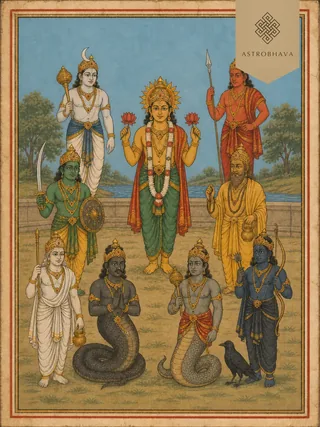
Weekday mantras are the verses the vow digests tie to one day of the week, from the Monday mantra of Shiva's Somavara vow to the Saturday prayers to Shani. Each day has its ruling graha: Sunday Surya, Monday Chandra, Tuesday Mangala, Wednesday Budha, Thursday Brihaspati, Friday Shukra and Saturday Shani, and the verses here come from that day's vow (vara vrata) as the digests give it. Monday has two: a meditation on five-faced Shiva wearing the crescent moon, from the Monday puja of Vishvanatha Sharma's Vratraja, found with two words changed in the Shiva Purana, Vidyeshvara Samhita 20.52; and the prayer said on taking up the vow, which the Vratraja quotes as from the Bhavishya Purana. Wednesday pairs the Matsya Purana's image of Budha (94.4) with the prayer of the Budhavara vow. Saturday has six rows from the Bhavishya Purana's Saturday vow, Uttara Parva 114.39-42 and 114.47, ending with a salutation to the peepal tree. Friday carries no verse. The Tuesday mantra has its own page at /mantra/tuesday-mantra/, the Thursday mantra at /mantra/thursday-mantra/ and the Sunday mantra at /mantra/sunday-mantra/.
Pippalada and the Saturday Vow
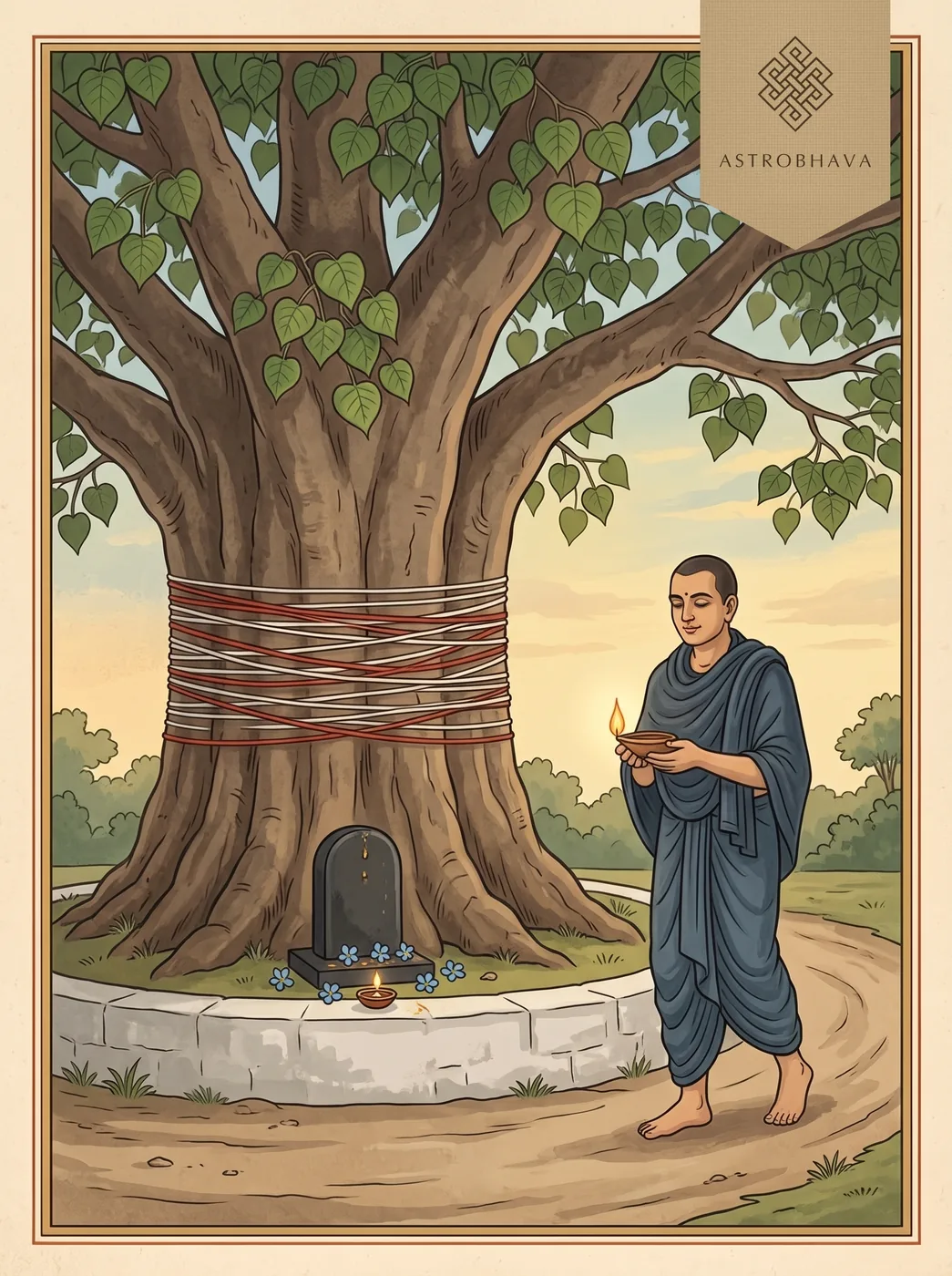
The Saturday verses sit inside a story Krishna tells Yudhishthira in the Bhavishya Purana, Uttara Parva 114. In the Treta age, in a famine, the sage Kaushika fled with his family and abandoned his small son on the road. The boy stayed under a peepal tree, living on its fruit and on water from a well, and kept up hard austerity. Narada found him and taught him the Vedas and the twelve-syllable mantra of Vishnu, and Vishnu appeared and granted him knowledge. The boy then asked Narada which graha had caused his suffering. Told it was Shani, he looked up in anger, and his gaze threw Shani out of the sky; Shani struck a mountain peak and was left lame. Brahma, Rudra, Indra and Agni came to calm him. They named him Pippalada, 'eater of peepal fruit', and said that Shani was not to blame: a slow mover through the stars, he gives results both good and bad. They then laid down the Saturday vow, kept for a year with gifts of oil and closing with an iron image of Shani given away. For it the chapter gives the prayer Shani once revealed in a dream to King Nala after Nala had lost his kingdom: Mantras 1-3 here, with Shani's own words as the Phala Shruti. Pippalada then worshipped Shani with folded hands in Prarthana 1.
The mantra, in six scripts
- ध्यायेन्नित्यं
- dhyāyennityaṃ — one should always meditate on
- महेशं
- maheśaṃ — Mahesha, the great god (Shiva)
- रजतगिरिनिभं
- rajatagirinibhaṃ — like a mountain of silver
- चारुचंद्रावतंसं
- cārucaṃdrāvataṃsaṃ — with the lovely moon as crown ornament
- रत्नाकल्पोज्ज्वलांगं
- ratnākalpojjvalāṃgaṃ — body shining with jewelled ornaments
- परशुमृगवराभीतिहस्तं
- paraśumṛgavarābhītihastaṃ — hands with axe, deer, boon and fearlessness
- प्रसन्नम्
- prasannam — gracious
Weekday Mantras: Monday to Sunday lyrics in full
Ten verses in day order: two for Monday, two for Wednesday and six for Saturday. Friday has no verse, and Tuesday, Thursday and Sunday are printed on their own pages.
All 10 verses, in Sanskrit, Tamil, Telugu, Kannada, Malayalam and English, each with its meaning. Choose a script:
Download the Weekday Mantras: Monday to Sunday PDFAll 10 verses with their meanings, in Sanskrit. Free to print and keep.
ध्यायेन्नित्यं महेशं रजतगिरिनिभं चारुचंद्रावतंसं रत्नाकल्पोज्ज्वलांगं परशुमृगवराभीतिहस्तं प्रसन्नम् ।
पद्मासीनं समंतात्स्तुतममरगणैर्व्याघ्रकृत्तिं वसानं विश्वाद्यं विश्ववंद्यं निखिलभयहरं पंचवक्त्रं त्रिनेत्रम् ॥
த்யாயேந்நித்யம் மஹேஶம் ரஜதகிரிநிபம் சாருசம்த்ராவதம்ஸம் ரத்நாகல்போஜ்ஜ்வலாம்கம் பரஶும்ருகவராபீதிஹஸ்தம் ப்ரஸந்நம் ।
பத்மாஸீநம் ஸமம்தாத்ஸ்துதமமரகணைர்வ்யாக்ரக்ருத்திம் வஸாநம் விஶ்வாத்யம் விஶ்வவம்த்யம் நிகிலபயஹரம் பம்சவக்த்ரம் த்ரிநேத்ரம் ॥
ధ్యాయేన్నిత్యం మహేశం రజతగిరినిభం చారుచంద్రావతంసం రత్నాకల్పోజ్జ్వలాంగం పరశుమృగవరాభీతిహస్తం ప్రసన్నమ్ ।
పద్మాసీనం సమంతాత్స్తుతమమరగణైర్వ్యాఘ్రకృత్తిం వసానం విశ్వాద్యం విశ్వవంద్యం నిఖిలభయహరం పంచవక్త్రం త్రినేత్రమ్ ॥
ಧ್ಯಾಯೇನ್ನಿತ್ಯಂ ಮಹೇಶಂ ರಜತಗಿರಿನಿಭಂ ಚಾರುಚಂದ್ರಾವತಂಸಂ ರತ್ನಾಕಲ್ಪೋಜ್ಜ್ವಲಾಂಗಂ ಪರಶುಮೃಗವರಾಭೀತಿಹಸ್ತಂ ಪ್ರಸನ್ನಮ್ ।
ಪದ್ಮಾಸೀನಂ ಸಮಂತಾತ್ಸ್ತುತಮಮರಗಣೈರ್ವ್ಯಾಘ್ರಕೃತ್ತಿಂ ವಸಾನಂ ವಿಶ್ವಾದ್ಯಂ ವಿಶ್ವವಂದ್ಯಂ ನಿಖಿಲಭಯಹರಂ ಪಂಚವಕ್ತ್ರಂ ತ್ರಿನೇತ್ರಮ್ ॥
ധ്യായേന്നിത്യം മഹേശം രജതഗിരിനിഭം ചാരുചംദ്രാവതംസം രത്നാകല്പോജ്ജ്വലാംഗം പരശുമൃഗവരാഭീതിഹസ്തം പ്രസന്നമ് ।
പദ്മാസീനം സമംതാത്സ്തുതമമരഗണൈര്വ്യാഘ്രകൃത്തിം വസാനം വിശ്വാദ്യം വിശ്വവംദ്യം നിഖിലഭയഹരം പംചവക്ത്രം ത്രിനേത്രമ് ॥
dhyāyennityaṃ maheśaṃ rajatagirinibhaṃ cārucaṃdrāvataṃsaṃ ratnākalpojjvalāṃgaṃ paraśumṛgavarābhītihastaṃ prasannam |
padmāsīnaṃ samaṃtātstutamamaragaṇairvyāghrakṛttiṃ vasānaṃ viśvādyaṃ viśvavaṃdyaṃ nikhilabhayaharaṃ paṃcavaktraṃ trinetram ||
One should meditate always on Mahesha (Shiva), white like a mountain of silver, wearing the lovely crescent moon as his crown ornament, his body shining with jewelled ornaments, holding an axe and a deer and showing the gestures of granting boons and removing fear, gracious in look. He sits on a lotus, praised on every side by the hosts of gods, wears a tiger skin, is the first cause of the universe and worshipped by all of it, removes every fear, and has five faces and three eyes.
गृह्णामि भवरोगार्तः सोमवारव्रतौषधम् ।
व्रतेनानेन मे प्रीतौ भवेतां पार्वतीश्वरौ ॥
க்ருஹ்ணாமி பவரோகார்தஃ ஸோமவாரவ்ரதௌஷதம் ।
வ்ரதேநாநேந மே ப்ரீதௌ பவேதாம் பார்வதீஶ்வரௌ ॥
గృహ్ణామి భవరోగార్తః సోమవారవ్రతౌషధమ్ ।
వ్రతేనానేన మే ప్రీతౌ భవేతాం పార్వతీశ్వరౌ ॥
ಗೃಹ್ಣಾಮಿ ಭವರೋಗಾರ್ತಃ ಸೋಮವಾರವ್ರತೌಷಧಮ್ ।
ವ್ರತೇನಾನೇನ ಮೇ ಪ್ರೀತೌ ಭವೇತಾಂ ಪಾರ್ವತೀಶ್ವರೌ ॥
ഗൃഹ്ണാമി ഭവരോഗാര്തഃ സോമവാരവ്രതൌഷധമ് ।
വ്രതേനാനേന മേ പ്രീതൌ ഭവേതാം പാര്വതീശ്വരൌ ॥
gṛhṇāmi bhavarogārtaḥ somavāravratauṣadham |
vratenānena me prītau bhavetāṃ pārvatīśvarau ||
Afflicted by the sickness of worldly existence, I take up the Monday vow as its medicine. By this vow may Parvati and Shiva be pleased with me.
पीतमाल्याम्बरधरः कर्णिकारसमद्युतिः ।
खड्गचर्मगदापाणिः सिंहस्थो वरदो बुधः ॥
பீதமால்யாம்பரதரஃ கர்ணிகாரஸமத்யுதிஃ ।
கட்கசர்மகதாபாணிஃ ஸிம்ஹஸ்தோ வரதோ புதஃ ॥
పీతమాల్యామ్బరధరః కర్ణికారసమద్యుతిః ।
ఖడ్గచర్మగదాపాణిః సింహస్థో వరదో బుధః ॥
ಪೀತಮಾಲ್ಯಾಮ್ಬರಧರಃ ಕರ್ಣಿಕಾರಸಮದ್ಯುತಿಃ ।
ಖಡ್ಗಚರ್ಮಗದಾಪಾಣಿಃ ಸಿಂಹಸ್ಥೋ ವರದೋ ಬುಧಃ ॥
പീതമാല്യാമ്ബരധരഃ കര്ണികാരസമദ്യുതിഃ ।
ഖഡ്ഗചര്മഗദാപാണിഃ സിംഹസ്ഥോ വരദോ ബുധഃ ॥
pītamālyāmbaradharaḥ karṇikārasamadyutiḥ |
khaḍgacarmagadāpāṇiḥ siṃhastho varado budhaḥ ||
Budha wears yellow garlands and yellow garments and glows like the golden karnikara flower. He holds a sword, a shield and a mace, is seated on a lion, and grants boons.
बुध त्वं बुद्धिजनको बोधदः सर्वदा नृणाम् ।
तत्त्वावबोधं कुरुषे सोमपुत्र नमो नमः ॥
புத த்வம் புத்திஜநகோ போததஃ ஸர்வதா ந்ருணாம் ।
தத்த்வாவபோதம் குருஷே ஸோமபுத்ர நமோ நமஃ ॥
బుధ త్వం బుద్ధిజనకో బోధదః సర్వదా నృణామ్ ।
తత్త్వావబోధం కురుషే సోమపుత్ర నమో నమః ॥
ಬುಧ ತ್ವಂ ಬುದ್ಧಿಜನಕೋ ಬೋಧದಃ ಸರ್ವದಾ ನೃಣಾಮ್ ।
ತತ್ತ್ವಾವಬೋಧಂ ಕುರುಷೇ ಸೋಮಪುತ್ರ ನಮೋ ನಮಃ ॥
ബുധ ത്വം ബുദ്ധിജനകോ ബോധദഃ സര്വദാ നൃണാമ് ।
തത്ത്വാവബോധം കുരുഷേ സോമപുത്ര നമോ നമഃ ॥
budha tvaṃ buddhijanako bodhadaḥ sarvadā nṛṇām |
tattvāvabodhaṃ kuruṣe somaputra namo namaḥ ||
O Budha, you are the one who gives rise to intelligence and always grants understanding to people. You bring about the knowing of the truth; O son of Soma, salutations to you again and again.
क्रोडं नीलाञ्जनप्रख्यं नीलवर्णसमस्रजम् ।
छायामार्तण्डसम्भूतं नमस्यामि शनैश्चरम् ॥
க்ரோடம் நீலாஞ்ஜநப்ரக்யம் நீலவர்ணஸமஸ்ரஜம் ।
சாயாமார்தண்டஸம்பூதம் நமஸ்யாமி ஶநைஶ்சரம் ॥
క్రోడం నీలాఞ్జనప్రఖ్యం నీలవర్ణసమస్రజమ్ ।
ఛాయామార్తణ్డసమ్భూతం నమస్యామి శనైశ్చరమ్ ॥
ಕ್ರೋಡಂ ನೀಲಾಞ್ಜನಪ್ರಖ್ಯಂ ನೀಲವರ್ಣಸಮಸ್ರಜಮ್ ।
ಛಾಯಾಮಾರ್ತಣ್ಡಸಮ್ಭೂತಂ ನಮಸ್ಯಾಮಿ ಶನೈಶ್ಚರಮ್ ॥
ക്രോഡം നീലാഞ്ജനപ്രഖ്യം നീലവര്ണസമസ്രജമ് ।
ഛായാമാര്തണ്ഡസമ്ഭൂതം നമസ്യാമി ശനൈശ്ചരമ് ॥
kroḍaṃ nīlāñjanaprakhyaṃ nīlavarṇasamasrajam |
chāyāmārtaṇḍasambhūtaṃ namasyāmi śanaiścaram ||
I bow to Shanaishchara, born of Chhaya and Martanda the Sun, dark like blue collyrium and wearing a garland of blue colour.
नमोऽर्कपुत्राय शनैश्चराय नीहारवर्णाञ्जनमेचकाय ।
श्रुत्वा रहस्यं भवकामदश्च फलप्रदो मे भव सूर्यपुत्र ॥
நமோர்கபுத்ராய ஶநைஶ்சராய நீஹாரவர்ணாஞ்ஜநமேசகாய ।
ஶ்ருத்வா ரஹஸ்யம் பவகாமதஶ்ச பலப்ரதோ மே பவ ஸூர்யபுத்ர ॥
నమోఽర్కపుత్రాయ శనైశ్చరాయ నీహారవర్ణాఞ్జనమేచకాయ ।
శ్రుత్వా రహస్యం భవకామదశ్చ ఫలప్రదో మే భవ సూర్యపుత్ర ॥
ನಮೋಽರ್ಕಪುತ್ರಾಯ ಶನೈಶ್ಚರಾಯ ನೀಹಾರವರ್ಣಾಞ್ಜನಮೇಚಕಾಯ ।
ಶ್ರುತ್ವಾ ರಹಸ್ಯಂ ಭವಕಾಮದಶ್ಚ ಫಲಪ್ರದೋ ಮೇ ಭವ ಸೂರ್ಯಪುತ್ರ ॥
നമോഽര്കപുത്രായ ശനൈശ്ചരായ നീഹാരവര്ണാഞ്ജനമേചകായ ।
ശ്രുത്വാ രഹസ്യം ഭവകാമദശ്ച ഫലപ്രദോ മേ ഭവ സൂര്യപുത്ര ॥
namo'rkaputrāya śanaiścarāya nīhāravarṇāñjanamecakāya |
śrutvā rahasyaṃ bhavakāmadaśca phalaprado me bhava sūryaputra ||
Salutation to Shanaishchara, son of the Sun, dark as collyrium and grey as mist. Having heard this secret prayer, O son of the Sun, grant my wishes in this world and be the giver of good results to me.
नमोऽस्तु प्रेतराजाय कृष्णदेहाय वै नमः ।
शनैश्चराय क्रूराय शुद्धबुद्धिप्रदायिने ॥
நமோஸ்து ப்ரேதராஜாய க்ருஷ்ணதேஹாய வை நமஃ ।
ஶநைஶ்சராய க்ரூராய ஶுத்தபுத்திப்ரதாயிநே ॥
నమోఽస్తు ప్రేతరాజాయ కృష్ణదేహాయ వై నమః ।
శనైశ్చరాయ క్రూరాయ శుద్ధబుద్ధిప్రదాయినే ॥
ನಮೋಽಸ್ತು ಪ್ರೇತರಾಜಾಯ ಕೃಷ್ಣದೇಹಾಯ ವೈ ನಮಃ ।
ಶನೈಶ್ಚರಾಯ ಕ್ರೂರಾಯ ಶುದ್ಧಬುದ್ಧಿಪ್ರದಾಯಿನೇ ॥
നമോഽസ്തു പ്രേതരാജായ കൃഷ്ണദേഹായ വൈ നമഃ ।
ശനൈശ്ചരായ ക്രൂരായ ശുദ്ധബുദ്ധിപ്രദായിനേ ॥
namo'stu pretarājāya kṛṣṇadehāya vai namaḥ |
śanaiścarāya krūrāya śuddhabuddhipradāyine ||
Salutation to the king of departed spirits, salutation to the dark-bodied one. Salutation to Shanaishchara, the stern one, who gives a pure understanding.
य एभिर्नामभिः स्तौति तस्य तुष्टो भवाम्यहम् ।
मदीयं तु भयं तस्य स्वप्नेऽपि न भविष्यति ॥
ய ஏபிர்நாமபிஃ ஸ்தௌதி தஸ்ய துஷ்டோ பவாம்யஹம் ।
மதீயம் து பயம் தஸ்ய ஸ்வப்நேபி ந பவிஷ்யதி ॥
య ఏభిర్నామభిః స్తౌతి తస్య తుష్టో భవామ్యహమ్ ।
మదీయం తు భయం తస్య స్వప్నేఽపి న భవిష్యతి ॥
ಯ ಏಭಿರ್ನಾಮಭಿಃ ಸ್ತೌತಿ ತಸ್ಯ ತುಷ್ಟೋ ಭವಾಮ್ಯಹಮ್ ।
ಮದೀಯಂ ತು ಭಯಂ ತಸ್ಯ ಸ್ವಪ್ನೇಽಪಿ ನ ಭವಿಷ್ಯತಿ ॥
യ ഏഭിര്നാമഭിഃ സ്തൌതി തസ്യ തുഷ്ടോ ഭവാമ്യഹമ് ।
മദീയം തു ഭയം തസ്യ സ്വപ്നേഽപി ന ഭവിഷ്യതി ॥
ya ebhirnāmabhiḥ stauti tasya tuṣṭo bhavāmyaham |
madīyaṃ tu bhayaṃ tasya svapne'pi na bhaviṣyati ||
Shani speaks: whoever praises me with these names, I am pleased with him. The verse says that fear coming from Shani will not reach that person even in a dream.
कोणस्थः पिङ्गलो बभ्रुः कृष्णो रौद्रोऽन्तको यमः ।
सौरिः शनैश्चरो मन्दः प्रीयतां मे ग्रहोत्तमः ॥
கோணஸ்தஃ பிங்கலோ பப்ருஃ க்ருஷ்ணோ ரௌத்ரோந்தகோ யமஃ ।
ஸௌரிஃ ஶநைஶ்சரோ மந்தஃ ப்ரீயதாம் மே க்ரஹோத்தமஃ ॥
కోణస్థః పిఙ్గలో బభ్రుః కృష్ణో రౌద్రోఽన్తకో యమః ।
సౌరిః శనైశ్చరో మన్దః ప్రీయతాం మే గ్రహోత్తమః ॥
ಕೋಣಸ್ಥಃ ಪಿಙ್ಗಲೋ ಬಭ್ರುಃ ಕೃಷ್ಣೋ ರೌದ್ರೋಽನ್ತಕೋ ಯಮಃ ।
ಸೌರಿಃ ಶನೈಶ್ಚರೋ ಮನ್ದಃ ಪ್ರೀಯತಾಂ ಮೇ ಗ್ರಹೋತ್ತಮಃ ॥
കോണസ്ഥഃ പിങ്ഗലോ ബഭ്രുഃ കൃഷ്ണോ രൌദ്രോഽന്തകോ യമഃ ।
സൌരിഃ ശനൈശ്ചരോ മന്ദഃ പ്രീയതാം മേ ഗ്രഹോത്തമഃ ॥
koṇasthaḥ piṅgalo babhruḥ kṛṣṇo raudro'ntako yamaḥ |
sauriḥ śanaiścaro mandaḥ prīyatāṃ me grahottamaḥ ||
Konastha, Pingala the tawny, Babhru the brown, Krishna the dark, Raudra the fierce, Antaka the ender, Yama, Sauri the son of Surya, Shanaishchara the slow mover and Manda the slow one: may Shani, best of the planets, be pleased with me.
मूलतो ब्रह्मरूपाय मध्यतो विष्णुरूपिणे ।
अग्रतः शिवरूपाय वृक्षराजाय ते नमः ॥
மூலதோ ப்ரஹ்மரூபாய மத்யதோ விஷ்ணுரூபிணே ।
அக்ரதஃ ஶிவரூபாய வ்ருக்ஷராஜாய தே நமஃ ॥
మూలతో బ్రహ్మరూపాయ మధ్యతో విష్ణురూపిణే ।
అగ్రతః శివరూపాయ వృక్షరాజాయ తే నమః ॥
ಮೂಲತೋ ಬ್ರಹ್ಮರೂಪಾಯ ಮಧ್ಯತೋ ವಿಷ್ಣುರೂಪಿಣೇ ।
ಅಗ್ರತಃ ಶಿವರೂಪಾಯ ವೃಕ್ಷರಾಜಾಯ ತೇ ನಮಃ ॥
മൂലതോ ബ്രഹ്മരൂപായ മധ്യതോ വിഷ്ണുരൂപിണേ ।
അഗ്രതഃ ശിവരൂപായ വൃക്ഷരാജായ തേ നമഃ ॥
mūlato brahmarūpāya madhyato viṣṇurūpiṇe |
agrataḥ śivarūpāya vṛkṣarājāya te namaḥ ||
Salutation to you, king of trees, who are Brahma at the root, Vishnu in the middle and Shiva at the crown.
The syllable people get wrong
In pārvatīśvarau (Monday Prarthana 1) the closing -au is the dual ending, 'Parvati and Ishvara, the two together'; say 'paar-va-tee-shva-rau' with the final 'au' as in 'cow'. Saying 'Parvatishvara' turns the pair into one, Parvati's husband alone.
When the Weekday Mantras: Monday to Sunday is chanted
Festival. Weekly vows (vara vratas)
Questions
Have your chart read before you decide
Chanting is yours to do, and free. But which deity your situation calls for — and whether a mantra alone is the right response — depends on your chart. Sometimes it is; sometimes it is not.
- Over 30 years in the Guru–Sishya Parampara, from the age of five
- He reads every chart himself — 60 minutes, one to one, never delegated
- Charts are read only between sunrise and sunset, following tradition